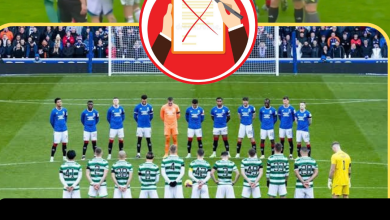
Just when Lawrence Shankland was finding his form as a Rangers striker and captain, rediscovering the lethal touch in front of goal that made him such a coveted signing in the first place, he was struck down by injury. With barely five minutes gone in Saturday’s 1-0 victory over Motherwell, Shankland grasped his hamstring and immediately signalled to the bench that his afternoon was over. It looked bad in the moment, and manager Derek McInnes confirmed as much soon after, describing it to BBC Scotland as looking “quite significant” and drawing an uncomfortable parallel to a similar injury Shankland suffered at Hearts the previous January.
That single moment has reshaped the entire attacking conversation at Ibrox. Rangers now find themselves needing to answer a genuinely difficult question with real urgency: in the absence of their captain and leading scorer, who is actually going to carry the goal threat? The candidates who remain — Kevin Kelsy, Ryan Naderi, and Bojan Miovski — each come with question marks attached, and the early evidence, while not without promise, doesn’t offer McInnes an obviously reassuring answer.
The frustration around Shankland’s injury is compounded significantly by the timing. This wasn’t a case of a struggling player picking up an untimely knock during a difficult run of form. Quite the opposite. After a slow start to what McInnes has since described as his “dream move” to Rangers, one that saw him left out of the squad entirely for three successive matches earlier in the campaign, Shankland had only just begun to turn things around. He returned to the side against Aberdeen and scored three goals across his next two matches — netting from the penalty spot against Aberdeen before following that up with a double in the win over Falkirk.
McInnes was explicit about how much that spell of form meant, both to Shankland personally and to the team more broadly, noting after the Motherwell match that it was disappointing precisely because his captain had been leading the line and scoring regularly in the weeks prior. Having finally settled into the side and begun building attacking understanding with players like Kim Min-Su, Djeidi Gassama, and Findlay Curtis, Shankland was starting to look like the focal point Rangers had signed him to be. That progress has now been abruptly halted, with the club braced for an absence that could run anywhere from two to three-and-a-half months depending on which specific reporting is to be believed, with figures ranging from roughly eight weeks up to fourteen weeks circulating in the days since the injury occurred.
Whatever the precise timeline turns out to be once scan results are fully assessed, the practical reality for McInnes is the same: Rangers are going to be without their captain and top scorer for a significant chunk of the season, at exactly the moment their attacking play appeared to be clicking into gear.
Shankland’s injury doesn’t arrive in a vacuum. It lands on top of an already difficult attacking picture at Ibrox, with Youssef Chermiti already ruled out through a serious knee injury that some reports suggest could keep him sidelined for the remainder of the entire season. Taken together, the scale of what Rangers have lost becomes considerably clearer: Shankland and Chermiti combined for 31 league goals between them last season, with both forwards sitting among the division’s top scorers, trailing only Motherwell’s Tawanda Maswanhise and Celtic midfielder Benjamin Nygren in the overall charts. Shankland’s 16 league goals for Hearts and Chermiti’s 15 for Rangers represented genuinely elite output at Scottish Premiership level.
With both of those players now unavailable, McInnes is essentially being asked to replace close to two-thirds of a goal a game’s worth of attacking output, drawn from two of the most reliable finishers in the entire league, using a striking department that has been left considerably thinner than anyone at the club would have wanted heading into a run of fixtures that includes an Old Firm double-header against Celtic. It’s a genuinely stern test of Rangers’ squad depth, and one that arrives far sooner than McInnes would have chosen.
Of the options now available to McInnes, it’s Kevin Kelsy who appears set to shoulder the heaviest burden. Signed from Portland Timbers on deadline day for a reported fee in the region of £9.2million, Kelsy’s arrival was framed as a statement of genuine ambition from the Ibrox hierarchy — the kind of significant financial outlay that suggested the club believed they were getting a forward capable of leading the line at the highest level Scottish football has to offer.
Kelsy has already had a taste of first-team action, coming off the bench against Motherwell and striking the crossbar during his cameo — a promising sign, if a fairly small one, of the kind of direct goal threat he might offer once fully settled. It’s also worth noting the circumstances surrounding his introduction: reports suggest the 22-year-old had felt stiff heading into the Motherwell match, a consequence of the travel and training schedule either side of finalising his move from the United States, which is hardly the ideal preparation for a player who may now be required to lead the line in a matter of days rather than weeks.
His underlying numbers from his time in MLS offer a genuinely mixed picture when it comes to assessing whether he’s likely to be the reliable goalscoring option Rangers desperately need. Across his time with Portland Timbers, formerly of Shakhtar Donetsk, Kelsy delivered 16 goals and six assists in 53 appearances, 32 of which came as starts — solid, if unspectacular, output that doesn’t necessarily scream “elite goalscorer” on its own. More pointedly, when his numbers are looked at across his most recent run of matches, Kelsy has managed 13 goals in his last 46 games, working out to roughly one goal every 190 minutes played. That’s a return that raises legitimate questions about whether Rangers have actually signed the kind of out-and-out finisher their attacking situation now urgently requires.
Former Ibrox midfielder Ian McCall didn’t shy away from raising exactly that concern when speaking on Sportsound. McCall pointed to Rangers missing too many chances during the second half of the Motherwell win specifically, and was direct in stating that Shankland’s injury is a genuine worry precisely because, in his assessment, neither Kelsy nor Naderi look like natural finishers. That’s a fairly blunt verdict from someone with genuine inside knowledge of the club and the demands of playing up front for Rangers, and it underlines the scale of the challenge facing McInnes as he tries to plug the goalscoring gap left by his captain’s injury.
Of course, it’s worth stressing that it remains far too early to draw firm conclusions about Kelsy’s ability to fill the void left by Shankland. He’s barely had any minutes on the pitch in a Rangers shirt, hasn’t had the settling-in period any new signing would ordinarily be afforded, and is being judged on a small handful of appearances and a body of statistical evidence from an entirely different league and level of competition. Strikers moving from MLS to European football carry a genuinely mixed track record in terms of how quickly and successfully they adapt, and Kelsy’s specific attributes — his physical profile, decision-making in the box, and finishing technique — will ultimately determine which category he falls into far more reliably than any historical average ever could.:
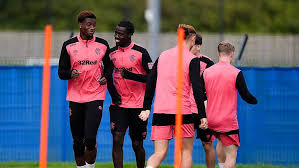
While Kelsy represents the long-term hope, it’s Ryan Naderi who has already delivered when called upon. The German forward replaced Shankland just minutes into the Motherwell match and needed only around four minutes on the pitch to make his mark, scoring the game’s only goal to secure the three points for Rangers. It was exactly the kind of contribution that can define a season for a squad player — stepping into an unplanned opportunity created by misfortune elsewhere in the side and delivering precisely when the team needed him most.
That goal took Naderi’s tally to three for the season across all competitions, and McInnes has been notably complimentary about other aspects of his game beyond simply his finishing, praising his pressing intensity and physical presence as genuine assets that add something different to the team’s attacking approach. Those qualities matter, particularly for a manager looking to build a cohesive pressing and attacking structure rather than relying purely on individual moments of quality up front.
Naderi’s own backstory adds some useful context to his current situation. Rangers moved for the towering forward back in February rather than waiting for the summer transfer window, a decision that reflected genuine urgency and belief in his qualities at the time. However, his early Ibrox career was disrupted by an injury of his own, sustained shortly after scoring his first league goal for the club against Dundee United in April, which limited him to only a peripheral role during Rangers’ eventual title run-in last season. That history suggests a player who, when fit and given a run of games, has shown flashes of the goal threat the club originally signed him for — but whose recent history also carries its own fitness question marks that will need managing carefully given the scale of responsibility now potentially heading his way.
Whether Naderi can sustain the kind of instant impact he showed against Motherwell across a longer run of starts, rather than fleeting substitute cameos, remains to be seen. But his performance at the weekend has undoubtedly strengthened his claim to regular involvement in McInnes’s plans over the coming weeks, and he now looks set to be a central figure in however the manager chooses to reshape his attack in Shankland’s absence.
The third option technically available to McInnes is Bojan Miovski, though his situation is complicated by factors that extend well beyond simple form or fitness. The Macedonian striker remains on Rangers’ books, and with the club’s attacking options suddenly stretched thin, there’s a reasonable argument that his services could genuinely be needed in the weeks ahead.
The reality, though, is considerably messier. Miovski has struggled to build any kind of consistent run of matches since arriving at Ibrox, featuring only sporadically and finding himself out of the matchday squad entirely for a significant portion of Rangers’ fixtures so far this season. Compounding that, reports in recent days have suggested Miovski himself is eager to leave the club, having parted ways with his representation shortly after the summer transfer window closed — a move widely interpreted within football circles as a clear signal of a player looking to force through an exit rather than fight for a route back into regular contention.
That combination of circumstances makes Miovski a considerably less reliable option than either Kelsy or Naderi, regardless of his technical ability or the goalscoring pedigree that persuaded Rangers to pay £2.6million for him little more than a year ago. A player who appears to want out of a football club, and who has already fallen so far down the pecking order that he’s routinely been left out of squads entirely, is unlikely to be first in line for a central attacking role, even amid a genuine goalscoring crisis. McInnes may simply have too little confidence, both in Miovski’s current fitness and sharpness and in his overall commitment to the cause, to lean on him heavily during this period, however tempting the idea of an experienced, previously prolific option might otherwise be.
For all the legitimate concerns swirling around Rangers’ attacking options, it would be inaccurate to paint an entirely bleak picture of where the team currently stands. McInnes himself was keen to stress that there were more positives than negatives to take from the Motherwell victory, even accounting for the loss of his captain and the missed chances that followed.
The most significant of those positives centred on the manner in which Rangers created their attacking opportunities. After a spell of unimaginative, uninspiring, and ultimately unsuccessful attacking play during the club’s early European qualifying matches this season, the win over Motherwell offered a genuinely encouraging sign that the team’s approach play has improved considerably. Rangers attacked with far greater purpose and created numerous clear-cut chances throughout the match — the underlying process, in other words, looked considerably healthier than the eventual, fairly narrow scoreline might suggest on its own.
That distinction matters a great deal when assessing how concerned Rangers fans should genuinely be about life without Shankland. A team that’s creating high-quality chances but simply lacking a clinical finisher to convert them faces a fundamentally different — and arguably more solvable — problem than a team that’s struggling to create anything of note in the final third. If McInnes’s side can continue generating the volume and quality of opportunities they managed against Motherwell, there remains a reasonable chance that whichever combination of Kelsy, Naderi, and potentially others end up leading the line will eventually start converting a healthier share of those chances, even if neither individually profiles as a prolific out-and-out goalscorer in the mould of Shankland at his best.
Rangers won’t have long to wait before finding out how their reshaped attack copes under genuine pressure. A rearranged Premiership fixture against St Mirren arrives in midweek, offering a first opportunity to see how McInnes chooses to configure his forward line without Shankland available, and giving early indications of whether Kelsy is deemed ready to start or whether Naderi’s match-winning cameo has earned him the nod instead.
That St Mirren match, though, is merely a prelude to the fixtures that will really define this period for Rangers: a double-header against Celtic, contested across both the Premier Sports Cup and the Premiership. Facing Rangers’ fiercest rivals without their captain and top scorer available represents about as demanding a test as McInnes’s revamped attack could possibly face this early into the transition, and however Kelsy, Naderi, and the rest of the squad perform in those fixtures is likely to shape perceptions of Rangers’ title and cup ambitions for a considerable stretch of the season to come.
There’s also a broader structural challenge McInnes must navigate at the same time. Shankland’s absence isn’t the club’s only significant personnel void this season — the departure of James Tavernier for a move to Israel has already forced a substantial rebuild of the right-back position, adding another layer of reconstruction work to a squad and coaching staff already dealing with considerable upheaval. Balancing the competing demands of solving the goalscoring puzzle up front while simultaneously managing defensive reshuffling elsewhere represents a genuinely significant juggling act for McInnes as he tries to keep Rangers’ promising early-season momentum intact.
For a manager already facing reported questions over the long-term security of his position, having only won around half of his matches in charge so far, the way this attacking crisis is handled carries real significance beyond just the immediate results on the pitch. A settled, productive spell in Shankland’s absence — one where Kelsy and Naderi in particular step up and demonstrate they can carry genuine goal threat, even without matching their captain’s individual output directly — would offer a powerful signal that Rangers possess the kind of squad depth capable of absorbing significant setbacks without derailing the broader campaign.
Conversely, a prolonged struggle in front of goal, particularly if it coincides with disappointing results in the upcoming St Mirren fixture or, more critically, against Celtic, would only intensify the scrutiny McInnes is already facing. Goals, or the lack of them, have a way of dominating narratives around a manager’s tenure regardless of how well other aspects of the team’s play might be functioning, and with Ian McCall’s pointed concerns about the finishing ability of both Kelsy and Naderi already public, the pressure on both forwards to prove that assessment wrong will only grow with each passing fixture that Shankland remains sidelined
Rangers find themselves at a genuinely pivotal moment in their season, forced to solve an urgent attacking puzzle they had no real time to prepare for. With Shankland facing a lengthy absence and Chermiti already ruled out for an extended period, if not the entire campaign, the burden of carrying Rangers’ goal threat has fallen unexpectedly onto Kevin Kelsy and Ryan Naderi, with Bojan Miovski a considerably less reliable third option given his own separate circumstances.
Neither Kelsy nor Naderi arrives with the kind of statistical pedigree that guarantees a seamless transition into the role Shankland was fulfilling so effectively before his injury, and legitimate voices within the Scottish game, including Ian McCall, have already raised pointed questions about whether either forward genuinely profiles as a natural finisher at this level. Yet there are also reasons for cautious optimism, chief among them the marked improvement in Rangers’ overall attacking approach and chance creation on display against Motherwell, even in the very match that claimed their captain.
How this situation resolves itself over the coming weeks — through the St Mirren fixture, the Old Firm double-header against Celtic, and beyond — will go a long way toward determining not just Rangers’ immediate results, but the broader trajectory of Derek McInnes’s season, and quite possibly his tenure, as Ibrox. For now, all McInnes can do is trust the underlying process his team showed glimpses of against Motherwell, back his remaining options to sharpen their finishing under pressure, and hope that whatever timeline eventually emerges for Shankland’s recovery proves shorter than currently feared.