McINNES CONFIRMS RANGERS CLOSING IN ON EIGHTH SIGNING OF SUMMER AS ANTMAN HEADS FOR EXIT DOOR BEFORE DUNDEE UNITED CLASH

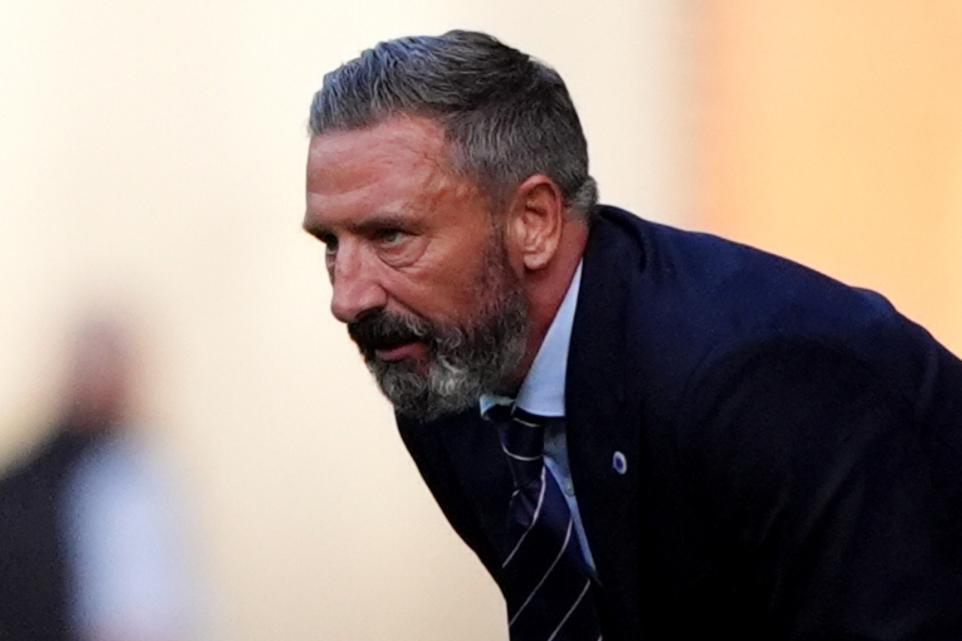
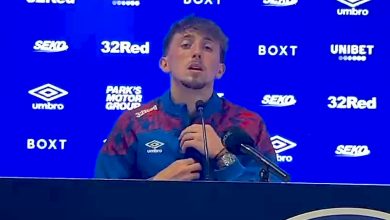
Derek McInnes has used his latest pre-match media duties to confirm that Rangers are on the verge of completing the signing of Olwethu Makhanya, the latest piece of business in what has already been one of the busiest transfer windows the Ibrox club has conducted in recent memory, and the Gers boss has made clear he is still hopeful of squeezing in at least one further addition before his side travel to face Dundee United in Friday night’s Scottish Premiership curtain-raiser. With the domestic season now only days away, McInnes finds himself in the increasingly familiar position of trying to finalise incoming transfers against the backdrop of a fixture list that waits for nobody, and his comments this week offer supporters the clearest picture yet of exactly where things stand across a number of ongoing deals, both incoming and outgoing, as the Ibrox rebuild continues at pace.
Makhanya, a 22-year-old centre-back currently on the books at Philadelphia Union in Major League Soccer, is understood to be closing in on a move to Glasgow after recently featuring for South Africa at the World Cup, a tournament appearance that will have done his profile no harm at all as Rangers finalise the paperwork on what is being reported as a deal worth in the region of £3m. Assuming the transfer goes through as expected, Makhanya will become the eighth new arrival at Ibrox this summer, underlining just how extensively McInnes and the club’s recruitment staff have gone about reshaping the playing squad since the end of the previous campaign. It is a rate of turnover that would have been almost unthinkable at Rangers only a few years ago, but it reflects both the scale of investment being made available by the ownership group and the scope of the rebuilding job McInnes clearly feels is required if the club is to challenge seriously on multiple fronts this season.
The South African defender’s arrival would mark the second centre-back addition of the summer, following on from the loan deal that brought Ben Godfrey to Ibrox from Atalanta earlier in the window. Godfrey’s move already represented a significant coup for Rangers given his Premier League pedigree, and adding a younger, more athletic option alongside him in Makhanya suggests McInnes is determined to build genuine depth and competition at the heart of his defence rather than relying on a single upgrade to solve what has clearly been identified as an area of the squad requiring urgent attention. Not every target has come off during the process, however, with Rangers understood to have missed out on a separate deal to sign Sankhoun Diawara from French side Troyes, a reminder that even a transfer window as productive as this one has not been entirely free of setbacks or disappointments along the way.
Speaking about the Makhanya deal specifically, McInnes struck a confident tone, indicating that an official announcement on the defender’s arrival is close at hand and describing the situation as looking promising from the club’s perspective. He also took the opportunity to outline what Rangers believe they are getting in the young centre-back, pointing to his physical attributes and underlying potential as key factors behind the club’s interest, while acknowledging that the step up from Major League Soccer and a different footballing culture altogether will represent a genuine adjustment for the player. McInnes nonetheless expressed confidence that Makhanya possesses the attributes required to adapt successfully to the demands of Scottish football, a belief that will presumably have been shaped by whatever scouting reports and background checks the club has conducted on the player throughout the negotiation process. It is one thing to bring a player over on the strength of statistics and video clips from another continent entirely, and quite another to see that translate successfully onto a Scottish Premiership pitch in the depths of a Scottish winter, and McInnes will be well aware that the true test of this particular piece of business will only begin once Makhanya is actually thrown into competitive action.
Crucially, McInnes did not attempt to disguise the fact that even with Makhanya’s imminent arrival, Rangers still consider defensive numbers to be a pressing concern heading into the new campaign. The manager was candid in acknowledging that his side remain short in that department overall, suggesting that at least one further defensive addition, and quite possibly two, will be required before the transfer window eventually shuts if the club is to feel properly equipped for the rigours of a long season across domestic and European competition. That admission alone tells its own story about how seriously the coaching staff regard the current balance of the squad, and it explains why so much of the summer’s business has been concentrated specifically on shoring up the back line rather than spreading resources more evenly across every area of the pitch.
Beyond Makhanya, McInnes also confirmed that Rangers remain actively engaged in trying to push through a separate defensive addition before Friday’s trip to Tannadice, describing the target in question as an important one given the specific area of the pitch it would address. While he stopped short of naming the player or club involved, his language left little doubt that this is regarded as a genuine priority rather than a speculative or opportunistic pursuit, and he expressed cautious optimism that both deals, Makhanya’s and this second, as yet unconfirmed target, could realistically be tied up in time for the players in question to be involved, or at the very least registered and eligible, for the opening league fixture of the season. Whether that timeline proves achievable given the often unpredictable nature of late-window negotiations remains to be seen, but the manager’s willingness to publicly flag his hope that both deals land before Friday suggests talks are at an advanced enough stage to warrant genuine optimism rather than simply managing expectations for the sake of it.
The picture on the outgoing side of Rangers’ business this summer has been just as significant, and one departure in particular has been finalised in the past few days. Oliver Antman is set to leave Ibrox after a single season at the club, with a move to Belgian side Anderlecht now agreed and the winger having already travelled to complete the necessary formalities. Rangers are understood to stand to recoup a fee in excess of £4m from the sale, representing a healthy return on a player who arrived at the club only twelve months ago and whose Ibrox career, while not without its moments, ultimately failed to establish him as a consistent first-team fixture under the current regime. McInnes confirmed that terms had been agreed on the move and that Antman had already begun the process of finalising his switch to Belgium, adding that he expects the change of scenery to work out well for the player going forward.
The sale of Antman fits into a broader pattern of Rangers using this transfer window not simply to bring in new faces, but to actively trim and reshape the existing squad in ways that free up resources, wage budget and squad slots for the kind of targeted defensive reinforcements McInnes has been so vocal about needing. Selling a player for a healthy profit after just a single season, rather than allowing him to drift into peripheral status for a second consecutive year, reflects a degree of pragmatism from the Ibrox hierarchy that has not always been a hallmark of the club’s recruitment strategy in years gone by. It suggests a recruitment department and coaching staff working in closer alignment than has sometimes been the case previously, identifying when a piece of business simply is not working out and moving swiftly to correct course rather than allowing sunk costs to dictate squad decisions for longer than necessary.
Taken together, the news around Makhanya’s imminent arrival, the ongoing pursuit of at least one further defensive target, and Antman’s exit to Anderlecht paints a picture of a Rangers squad still being actively refined even at this relatively late stage of pre-season preparations. McInnes has been remarkably transparent throughout this process about where he believes his squad still requires strengthening, and his repeated emphasis on defensive numbers in particular suggests this is likely to remain the primary focus of Rangers’ remaining transfer business right up until the window finally closes. Given how much has already been accomplished in terms of incoming transfers this summer, with Makhanya poised to become the eighth new arrival, it would be easy to assume the bulk of the heavy lifting has already been done, but McInnes’s comments this week make clear that he does not share that view, at least not when it comes to the specific issue of defensive depth heading into a season that will demand consistency and squad rotation across multiple competitions.
The timing of all this activity, arriving just days before the visit to Dundee United, adds an extra layer of urgency to proceedings. Registering new signings in time for matchday, particularly those arriving from outside the UK who may require international clearance or work permit processing, is rarely a straightforward administrative exercise, and clubs across Scottish football have found themselves occasionally caught out by deals that are agreed in principle but not completed in time for a player to actually feature in an upcoming fixture. McInnes’s cautious framing around both Makhanya and the unnamed second target, hopeful rather than certain that either or both could be involved against Dundee United, reflects an awareness of exactly these kinds of practical complications, and supporters would do well to treat Friday’s team news with a degree of patience rather than assuming either deal will necessarily be concluded in time regardless of how advanced negotiations currently appear to be.
For all the focus on defensive reinforcements, the broader context of Rangers’ transfer window this summer cannot be separated from the wider changes taking place across the rest of the squad, from the captaincy decision that saw Lawrence Shankland handed the armband so soon after his own arrival from Hearts, to the ongoing uncertainty surrounding contracted players such as Nicolas Raskin whose long-term futures remain the subject of speculation. McInnes is clearly operating across multiple fronts simultaneously, managing incoming transfers, potential departures, and the delicate internal politics of establishing a new leadership structure within the dressing room, all while preparing his squad for a competitive season opener against a Dundee United side who have developed a reputation in recent years for making life difficult for the Glasgow clubs on their travels. Balancing all of these moving parts in the final days before a ball is even kicked competitively represents an enormous logistical and man-management challenge, and the coming days will offer an early indication of just how successfully McInnes has managed to bring so many overlapping threads together before Friday night’s kick-off at Tannadice.
There is also a useful comparison to be drawn between Makhanya’s move and the broader trend of Scottish Premiership clubs increasingly looking toward Major League Soccer as a source of recruitment. For a long time, the transfer traffic between the United States and Scotland ran overwhelmingly in one direction, with MLS clubs picking up experienced, often ageing, European talent looking for one final lucrative contract rather than the other way around. That pattern has begun to shift meaningfully in recent seasons as MLS academies and recruitment networks have improved, producing a steadier stream of younger, athletic prospects who represent significantly better value than equivalent talent already established within European leagues. Rangers dipping into that market for a 22-year-old centre-back fresh off a World Cup appearance for South Africa reflects a wider recognition across Scottish football that MLS is no longer simply a retirement destination for the continent’s more recognisable names, but an increasingly credible pipeline of talent in its own right, one that clubs with more modest transfer budgets than the Premier League’s leading sides can realistically compete in.
The World Cup exposure Makhanya picked up with South Africa is also likely to have played a part in accelerating Rangers’ interest, offering the club a concentrated window of high-level competitive footage against strong opposition that might otherwise have taken an entire MLS season to accumulate. Tournament football has a habit of either making or breaking reputations very quickly, and a solid campaign on that stage, even for a nation that did not progress especially deep into the competition, tends to sharpen recruitment interest considerably. It would not be unreasonable to suggest that Makhanya’s stock rose specifically because of his World Cup involvement, turning what might have been a slower-moving negotiation into the kind of deal Rangers appear keen to push through relatively quickly before other suitors from elsewhere in Europe had the chance to take a similarly close look at him.
The missed opportunity to land Sankhoun Diawara from Troyes is also worth dwelling on briefly, if only because it illustrates that not every defensive target Rangers have pursued this summer has gone according to plan. Transfer windows rarely run entirely smoothly even for clubs conducting as much productive business as Rangers have managed this year, and losing out on a specific target, whether due to competing interest from elsewhere, valuation disagreements, or the player’s own personal preference, is simply part of the ordinary rhythm of recruitment at every level of the professional game. That Rangers were able to pivot toward alternative targets such as Makhanya relatively quickly after missing out on Diawara suggests a recruitment operation with sufficient depth in its scouting network to avoid becoming overly reliant on any single target, a quality that will likely prove valuable again before this particular window eventually closes.
For a player like Antman, meanwhile, a move to Anderlecht represents a return to a footballing environment that may ultimately suit his style better than what he encountered during his solitary season in Scotland. Belgian football has increasingly established itself as a competitive proving ground for players looking to rebuild momentum or re-establish their reputation following a difficult spell elsewhere, and Anderlecht in particular has a long history of developing and showcasing attacking talent to a wider European audience. Whether Antman goes on to flourish in that environment remains to be seen, but the structure of the move, a club with genuine European pedigree and a track record of nurturing wide attacking players, offers at least a reasonable foundation for him to rediscover the kind of form that first attracted Rangers’ interest twelve months ago.
Ultimately, the defining theme of Rangers’ summer has been transformation on a scale rarely seen at Ibrox in recent seasons, and McInnes’s latest comments only reinforce just how far that process still has to run even with the new campaign now only days away. Whether Makhanya and the club’s other defensive target both arrive in time to feature against Dundee United, or whether either deal slips beyond the opening weekend, McInnes has made his priorities unmistakably clear, and Rangers supporters can expect the remaining days of this transfer window to be dominated by exactly the kind of defensive business the manager has now publicly flagged as his most pressing concern