Mikey Moore’s Future: Why Tottenham Are Sending Their Brightest Academy Prospect Back Out on Loan

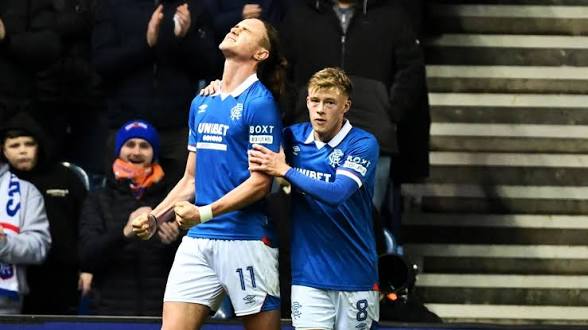
Tottenham Hotspur’s decision on Mikey Moore has become one of the more closely watched subplots of the club’s 2026 summer rebuild. Despite being talked up as one of the most gifted teenagers to emerge from the Hotspur Way academy in years, Moore is on the verge of being loaned out for a second consecutive season — a call driven not by any loss of faith in his ability, but by the practical realities of Roberto De Zerbi’s squad-building priorities and a first-team picture that currently has no room for a developing 18-year-old winger.
It’s worth being precise about what is, and isn’t, happening. There is no permanent sale in the works. Tottenham rate Moore highly enough that he remains under contract with the club until the end of the 2029-30 season, a deal signed when he was still a teenager working his way through the age groups. That contract, extending him well into his early twenties, tells its own story: this is a player the club considers part of its long-term core, not someone being quietly moved on.
What is happening is more nuanced. According to reporting from GiveMeSport, De Zerbi has effectively told Moore that there’s no pathway for him at Tottenham this coming season. That’s a blunt assessment from a manager who has arrived at the club with a specific, urgent mandate — and it puts Moore in a familiar position for gifted young players at ambitious clubs: too good to sell, not yet needed enough to start.
Sports Mole has reported that Tottenham have made their intentions clear to the player and his representatives, informing him that the club intend to send him out on loan again for the 2026-27 campaign. That framing — informing him, rather than consulting him — suggests this is being treated internally as close to a settled matter, even if the final destination remains open.
To understand why Moore is such a hot commodity despite still being a teenager, you have to look at what happened during his 2025-26 season at Ibrox. Moore arrived in Glasgow as an unproven prospect and left as one of the most talked-about young attackers in Scottish football.
The raw numbers alone justify the buzz. Sports Mole’s coverage put his output at seven goals and four assists in his season with the Scottish Premiership giants, while GiveMeSport’s reporting corroborates a similarly striking overall workload, noting he made 47 appearances across all competitions for Rangers during the campaign. Put together, that’s eleven direct goal contributions across a demanding season in a competitive top flight — an excellent return for any winger his age, let alone one making the jump from academy football to a first team fighting on multiple fronts.
The individual recognition matched the output. Moore didn’t just contribute statistically; he was formally recognised as one of the best young players in the country, picking up the PFA Scotland Young Player of the Year award as well as Rangers’ own Young Player of the Year prize for the 2025-26 campaign. Winning both the league-wide young player honour and his own club’s internal award in the same season is a strong signal that his impact wasn’t a flash in the pan — it was recognised by his peers, by the wider football media covering the Scottish game, and by the club itself.
There was symbolism attached to his season too. Old Firm derbies carry a weight all their own in Scottish football, and Moore delivered on that stage, contributing to an Old Firm win over Celtic in January that finished 3-1. Scoring or assisting in a match of that magnitude, at that age, on loan, in a foreign football culture, tends to fast-track a young player’s reputation in a way that routine mid-table victories never quite do. It’s the kind of moment that gets replayed, that fans remember, and that convinces a club’s hierarchy the player is worth fighting to bring back.
Beyond the headline numbers, there are more textured accounts of how the season actually unfolded. One report on Moore’s time in Glasgow described a slower start followed by a significant upturn in form that coincided with a managerial change at the club, after which the teenager settled into a more prominent offensive role. Regardless of the exact shape of that in-season arc, the destination was the same: a player who arrived with potential and left with proof.
The key to understanding Tottenham’s stance isn’t really about Moore’s ability at all — by most accounts, nobody at the club doubts that he has a top-level future. The issue is timing, and specifically the situation Roberto De Zerbi has inherited.
De Zerbi has taken charge of a Tottenham side that has endured back-to-back difficult league campaigns, and reporting suggests the club has finished 17th in the Premier League in consecutive seasons. That is not the backdrop against which a manager typically gambles on bedding in a promising but unproven 18-year-old in a specific attacking role he is simultaneously trying to strengthen with the addition of established, ready-made talent.
Tottenham’s summer business backs this up. The club has already added experienced Premier League and international quality across multiple positions, with Andy Robertson, Marcos Senesi, Martin Dubravka, Jan Paul van Hecke and Mateus Fernandes all arriving, alongside a reported agreement for Sandro Tonali worth in the region of £100 million. In attack specifically, GiveMeSport’s reporting names Manchester City’s Savinho as the club’s current priority attacking target — which underlines the point: De Zerbi isn’t assembling a squad of hopeful prospects, he’s assembling a squad built to win now.
Against that backdrop, keeping Moore around as a fringe attacking option makes little sense from a footballing perspective, even if it might seem sentimentally appealing given his upbringing through the academy. A young winger competing for minutes behind proven, well-paid attacking recruits is far less likely to develop than one playing 40-plus competitive matches at a club where he is a first-choice or near-first-choice starter, as he was at Rangers.
There’s also a scheduling factor at play. With Tottenham not participating in European competition next season, De Zerbi’s squad has fewer fixtures overall — which in turn means fewer opportunities for fringe players to accumulate minutes, even in rotation. That absence of continental football, which might in another context be seen as freeing up squad depth for prospects, actually works against Moore’s case for staying, since it shrinks the total pool of available game time across the board.
Interestingly, Moore isn’t the only academy graduate facing this squeeze. Reports have drawn a comparison with Lucas Bergvall, another highly regarded young Tottenham player whose position under De Zerbi is similarly uncertain — suggesting this isn’t a decision specific to Moore’s profile, but part of a broader pattern in how the new manager is approaching squad construction. Young, promising players without an immediate route to regular first-team football appear to be systematically nudged toward loan spells or squad rotation battles they’re unlikely to win outright.
If the “whether” of a loan seems close to resolved, the “where” remains a genuinely open question — and a more interesting one, given the range of suitors reportedly circling.
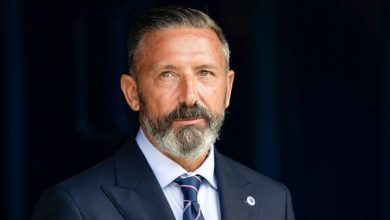
Rangers’ interest hasn’t gone away.** Given how well the arrangement worked for both parties last season, it would be a surprise if Rangers weren’t in the mix, and reporting confirms they are. There is a wrinkle, however: the managerial situation at Ibrox has shifted since Moore’s spell there ended. Reports indicate that Rangers had been keen to re-sign the teenager while Danny Röhl was in charge, and that after Röhl’s departure, the club’s move to Derek McInnes as manager has not dampened that interest. Still, a change of manager at any club can alter recruitment priorities, and Rangers’ pursuit will likely depend partly on how McInnes himself views Moore’s fit within his own tactical plans, separate from whatever appeal existed under his predecessor. For his own part, Moore has been open about the possibility of a return, having reportedly acknowledged he’d be willing to go back to Ibrox for a second season.
Borussia Dortmund have emerged as serious contenders Perhaps the most eye-catching development is interest from the Bundesliga, and specifically from Borussia Dortmund. Football Insider’s reporting, relayed through follow-up coverage, states that Dortmund are one of three clubs pushing to sign Moore on loan from Spurs this summer. What makes this particularly notable is the added detail that Dortmund’s interest in Moore predates his move to Tottenham entirely — the German club were reportedly keen on signing him before he ever put pen to paper on professional terms in North London. That’s a meaningful signal: it suggests Dortmund’s admiration for Moore isn’t a reaction to a single hot loan season at Rangers, but a longer-standing scouting conviction that they’re now trying to act on.
A wider net of European suitors. Dortmund aren’t the only Bundesliga club credited with interest — Köln have also been mentioned as keen on arranging a deal. Meanwhile, in the Eredivisie, PSV Eindhoven’s reported interest comes with an added structural wrinkle: they are said to be hoping to include a purchase option as part of any prospective loan agreement, which would be a departure from the straightforward, option-free loan structure that defined his Rangers spell. Whether Tottenham would entertain a loan-with-option arrangement for a player they’ve just tied down to a long-term deal remains to be seen, but its mere presence in the mix illustrates how seriously overseas clubs are treating this opportunity.
A domestic wildcard. There has also been speculation — treated with appropriate caution given its more circumstantial nature — that Tottenham explored the idea of loaning Moore to West Ham as part of a broader negotiation involving the transfer of Mateus Fernandes to Spurs. If accurate, this would represent an entirely different kind of loan move: not primarily about Moore’s development, but as a subsidiary piece of a larger transfer negotiation between two Premier League clubs. It’s a reminder that decisions like these are rarely made in isolation from a club’s other business.
## The Pre-Season Checkpoint
All parties appear to be waiting on the same moment: Moore’s return to Tottenham for the start of pre-season. Reports indicate the squad is due back at Hotspur Way around July 10, and De Zerbi has reportedly made clear he wants to take a close, direct look at Moore in training before finalising anything.
That approach is worth taking at face value rather than dismissing as a formality. A new manager inheriting a squad — especially one making wholesale changes elsewhere — has every incentive to form his own first-hand judgment of a talented academy player rather than relying purely on secondhand reports of a loan spell played under an entirely different set of coaches, teammates, and tactical demands. It’s entirely possible, even if considered unlikely by most reporting, that a strong pre-season could alter the calculus. More probable, based on the weight of current reporting, is that De Zerbi’s mind is largely made up and pre-season will simply confirm what’s already been communicated to the player: he’ll be playing his football elsewhere in 2026-27.
Notably, Tottenham’s own pre-season schedule adds an unusual backdrop to this. The club has organised fixtures in Australia and New Zealand, including a clash against Sydney FC and Chelsea in Sydney and a match against Auckland FC, alongside a single home friendly against Hoffenheim. That itinerary has itself drawn some criticism from football figures who feel the club’s home fanbase is being underserved this summer, and who have questioned the physical toll of a long-haul tour on the squad. Whatever the wider merits of that debate, it’s the environment in which De Zerbi will be running his eye over Moore and the rest of his squad before final loan decisions are locked in.
## What Tottenham Are Signalling By Doing This
Zooming out, the handling of Moore’s situation tells us something about how De Zerbi intends to run his football department more broadly. This is a manager who has been given a clear mandate to fix a club that has underperformed for two straight seasons, and who has moved decisively and expensively to reshape multiple positions with proven, ready-made talent. In that context, a loan for Moore isn’t a slight — it’s a pragmatic decision consistent with everything else the club has done this summer.
Crucially, the long-term contract extension Moore signed, running through 2029-30, should be read as a statement of intent from the club’s hierarchy rather than a contradiction of the loan decision. Tottenham are not hedging on Moore’s talent; they’re simply choosing to develop it somewhere he’ll get consistent senior football, rather than risk stunting his progress on the fringes of a squad being actively rebuilt around established names.
For Moore himself, the situation — while not entirely of his choosing — isn’t a bad outcome. He goes into this pre-season as a proven Scottish Premiership performer, an award winner, and a player with genuine transfer interest from clubs across three different European leagues. Few 18-year-olds face that kind of market interest, and however the destination shakes out — a return to Ibrox, a Bundesliga switch to Dortmund or Köln, an Eredivisie move to PSV, or something else entirely — Moore looks set to spend next season playing regular, competitive first-team football rather than fighting for token minutes in North London. That, in the long run, may prove to be exactly the trajectory Tottenham are hoping will bring him back as a genuinely first-team-ready player when his current deal eventually calls for that next step up.