Mikey Moore’s Rangers Departure: Why the Spurs Wonderkid Chose Germany Over a Return to Ibrox

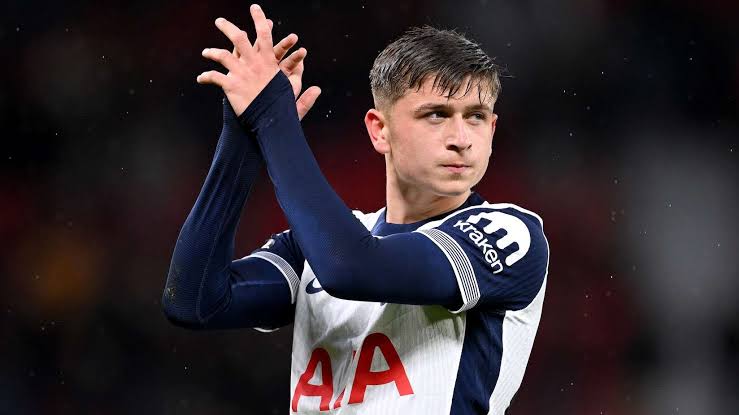
Few loan stories in recent Scottish football history have captured quite the same level of intrigue as Mikey Moore’s season at Rangers. A teenager who arrived at Ibrox as an unproven prospect left twelve months later as one of the most talked-about young wingers in Britain — and yet, despite widespread hopes among Rangers supporters that he might return for a second spell, or even sign permanently, Moore instead chose an entirely different path: a fresh loan move to Germany, and 1. FC Köln of the Bundesliga. Understanding why requires looking closely at how his Ibrox stint unfolded, what changed at both Rangers and Tottenham in the months that followed, and just how competitive the race for his signature ultimately became.
Moore’s move to Rangers was confirmed as the eighth new signing of Russell Martin’s summer rebuild, with the 17-year-old already carrying the “wonderkid” tag from a number of former managers, teammates and academy coaches who had hailed him as one of Britain’s most exciting young talents. He had progressed through Tottenham’s academy since the age of seven, having made his senior debut against Manchester City in May 2024, becoming the youngest player in Spurs’ history to feature in the Premier League at just 16 years and 277 days old. That kind of precocious breakthrough — a genuine first-team debut for one of the Premier League’s bigger clubs, achieved before most of his peers had even left school — had marked Moore out as a special talent long before Rangers came calling.
His pedigree extended beyond the Premier League too. Moore’s European bow had come in a 3-0 win over Qarabağ in the UEFA Europa League, with the teenager going on to feature a handful of times as Tottenham secured the competition that season. He had played under Ange Postecoglou during that period, scoring his first senior goal for the club in a Europa League fixture against Elfsborg in January, before Spurs went on to memorably win the competition in May, beating Manchester United 1-0 in the final in Bilbao. That trophy-winning pedigree, allied to his record-breaking Premier League debut, meant Moore arrived at Ibrox with genuine first-team European experience already under his belt — a rare profile for a loan signing at that age.
Rangers head coach Russell Martin was effusive in his welcome, describing Moore as “a player with huge potential,” and pointing to the fact that Tottenham had entrusted him with regular minutes in both the Premier League and Europa League over the preceding eighteen months as testament to his quality. Sporting director Kevin Thelwell went further still, revealing that there had been “significant interest from elsewhere” in Moore and expressing delight that the player had chosen Rangers at that stage of his career, describing him as someone who would “enhance our attacking unit” by stepping into “an ambitious, demanding environment.” Moore himself struck a similarly positive tone about the move, explaining that the new head coach and the way Rangers played made it “a pretty easy decision” to come to Glasgow
Moore’s first months in Scottish football were not without their challenges. By his own admission, and according to reporting on his season, he endured a difficult start in Glasgow before eventually growing into life at Ibrox. That kind of adjustment period is far from unusual for a teenager transitioning from academy and fringe first-team football in England to the physical demands of a new league, a new country, and a new set of expectations — but what made Moore’s story notable was just how emphatically he turned things around.
Part of what fuelled his development, by his own account, was a wider personal ambition that had already made headlines before he’d fully established himself at Rangers: Moore caused something of a stir shortly after his arrival from Spurs by revealing a lofty career aim of becoming one of the best players in the world, a target he remained unrepentant about even as questions were raised over the boldness of the claim from an 18-year-old still finding his feet in a new league. He underlined his growing importance to the side by scoring the clinching goal in a 3-1 win away at Celtic — a result and a moment that firmly established him as a fan favourite at Ibrox. Scoring a decisive goal in an Old Firm fixture, arguably the highest-pressure occasion in Scottish club football, represented about as strong a statement as a young loan player could make in cementing his place in supporters’ affections.
**The Numbers Behind the Breakthrough Season**
Quantifying exactly how good Moore’s season at Rangers was depends slightly on which point in the campaign is being measured and which data source is consulted, but the broad picture across multiple sources is consistent: Moore was one of the Scottish Premiership’s most productive attacking players outside the traditional Old Firm duopoly of Rangers and Celtic themselves.
By the conclusion of his loan, Moore had made a significant impact in Scotland, scoring seven goals and providing four assists across 2,778 minutes in the Scottish Premiership, establishing himself as one of the most exciting young players in the division. Separate reporting broadly corroborates that scoring return, with Moore’s seven goals for the campaign credited as a key factor behind him claiming PFA Scotland’s Young Player of the Year award, an achievement made all the more notable given the difficult start he’d endured in Glasgow before finding his form.
Winning a PFA Scotland individual award as an 18-year-old on loan from an English Premier League club represents a significant marker of just how impactful his season proved to be — it’s an honour voted on by fellow professionals within the Scottish game, meaning Moore’s performances were being recognised not simply by pundits or supporters, but by players who had faced him week in, week out across the campaign.
During his time at Ibrox, there had been genuine talk of a longer-term future taking shape. Under previous head coach Danny Röhl, Rangers had intimated a desire to make the 18-year-old’s spell at Ibrox permanent — a suggestion that would have represented the strongest possible endorsement of his loan season, converting what began as a season-long arrangement into a full transfer.
That possibility, however, did not survive a change in circumstances at the club. By the time the following transfer window arrived, that permanent move now appeared “dead in the water,” with a fresh challenge elsewhere emerging as Moore’s preferred option instead. The reporting doesn’t specify every detail behind why the permanent approach fell away, but the shift in management at Rangers — with Röhl, the coach who had reportedly pushed for a permanent deal, no longer in position by the time the matter came to a head — appears to be a significant factor in why the pathway to an Ibrox future closed off.
With his loan spell concluded, Moore returned to parent club Tottenham, where new coach Roberto De Zerbi was expected to evaluate him during pre-season before making a final decision on his role heading into the 2026/27 campaign. That evaluation period is a standard part of the process for any returning loanee, but it carried extra significance in Moore’s case given the managerial change at Spurs — De Zerbi arriving as head coach meant Moore’s Rangers form, impressive as it was, would need to be reassessed fresh by a new set of coaching eyes rather than simply banked as evidence for an assured route into the first team.
Despite plenty of minutes and bright moments during Tottenham’s pre-season matches under De Zerbi, reports indicated that all parties ultimately agreed a further loan move would be best for the continued development of the versatile forward. That outcome, while perhaps a slight disappointment for those hoping his breakout Rangers form might translate immediately into regular Premier League minutes, reflects a fairly common pattern for highly-rated young English players: a strong loan season is often followed not by an immediate step up to the parent club’s first team, but by a further loan at a marginally higher level, allowing continued regular football rather than a risk of stalling on the fringes of a Premier League squad.
There is also a contractual dimension worth noting here. Separate reporting indicates Moore had signed a new long-term contract with Tottenham around this period, tying him to the club for the foreseeable future even as the specifics of his next loan destination were being finalised — a sign that, whatever the immediate plan for regular football, Spurs viewed him as a genuine part of their long-term first-team project rather than simply a squad player to be moved on
What’s particularly striking about Moore’s next move is just how many clubs were reportedly interested in taking him on loan — a level of competition that underlines how significantly his stock had risen over the course of a single Scottish Premiership season.
Middlesbrough had already expressed a desire to take Moore on loan, with the added appeal of pairing him up with old Tottenham academy teammate Will Lankshear, who had moved to Teesside earlier in the same window as part of a £20 million package. That kind of reunion — two academy contemporaries linking up together at Championship level — would have been an appealing, relatively low-risk option for Moore’s continued development in English football. However, Moore himself was understood to prefer a move abroad, specifically to one of the top five leagues in Europe, rather than remaining in the English second tier.
That preference for continental football opened the door to interest from some of Europe’s biggest academies and clubs. Borussia Dortmund registered interest at the very start of the summer transfer window, but wanted the deal structured with an option to purchase Moore included as part of any season-long loan arrangement — a condition Tottenham ultimately rejected, unwilling to build in a route for Dortmund to sign him permanently down the line. That rejection from Spurs speaks to the value the north London club now placed on Moore following his Rangers breakthrough: rather than allowing a potential permanent exit to be quietly built into a loan agreement, Tottenham held firm on retaining full control over his long-term future.
With Dortmund’s structure rejected, interest from elsewhere in the Bundesliga remained strong regardless. A straight loan proposal — without the purchase option Dortmund had wanted — did not put off two further German clubs, Köln and Hamburg, both of whom continued to pursue a deal, while teams from LaLiga had also made enquiries to Tottenham over a possible move to Spain. That level of interest from three different clubs across two of Europe’s biggest leagues, on top of the earlier Dortmund and Middlesbrough links, illustrates just how dramatically Moore’s market value and profile had shifted over the course of a single loan season in Scotland.
Ultimately, it was Köln who won out in the chase for Moore’s signature. German side Köln led the race to sign him, with reports at the time framing the move as Tottenham being poised to let the “former Rangers starlet” leave the club on loan for a fresh continental challenge. The deal was completed in the 2026 summer transfer window, sending Moore to the Bundesliga for what represents his first senior experience of football outside Britain.
His player profile confirms the move formally, listing his current status as being on loan at 1. FC Köln from Tottenham Hotspur, wearing the number 47 shirt, with his Rangers loan spell during the 2025-26 season recorded as producing 33 appearances and 7 goals, immediately followed by the switch to Köln for the 2026-27 campaign. So far, his involvement in Germany has been limited, with just one senior appearance registered to date at his new club — an entirely unremarkable early data point for a player still adjusting to a new country, league, coaching staff, and dressing room, and one that shouldn’t be read as any kind of verdict on how his time in Germany will ultimately unfold.
Pulling the full picture together, it’s worth reflecting on exactly why Rangers weren’t able to retain Moore for a second season, either on loan or permanently, despite his obvious impact and popularity at Ibrox. Several factors appear to have combined against a return to Scotland.
First, and perhaps most significantly, Moore’s own stated preference clearly shifted toward continental European football at one of the traditional “top five” leagues — a category that, by any conventional definition, does not include the Scottish Premiership, however strong his individual season there had been. Having already proven himself capable of performing consistently and scoring important goals outside the base level of the Championship equivalent, Moore and his advisors appear to have judged that his development would be better served by testing himself in one of Europe’s genuinely elite footballing environments, rather than returning to a level he had, in football terms, already conquered.
Second, the managerial change at Rangers itself likely played some role. Whatever informal understanding or ambition existed under Danny Röhl regarding a permanent move seems not to have carried over cleanly once that regime ended, removing what had appeared to be Rangers’ strongest card in the pursuit of turning Moore’s loan into something more lasting.
Third, and simply as a matter of competitive market dynamics, Rangers were never going to be able to compete with the calibre of interest circling Moore by the summer of 2026. A Bundesliga move — accompanied by serious interest from a second Bundesliga club and enquiries from LaLiga — represented a genuine step up in level from Scottish football, and it would have taken an extraordinary set of circumstances, financial or otherwise, for Rangers to have persuaded Moore and Tottenham that a second Ibrox loan represented a better developmental option than continental European football.
For Rangers, Moore’s departure to Köln represents both a natural conclusion to a hugely successful loan arrangement and a reminder of the inherent limitations clubs face when developing top young talent on temporary deals rather than permanent transfers. Moore’s PFA Scotland Young Player of the Year award, his Old Firm goal against Celtic, and his overall statistical output across the season stand as a genuine highlight of Rangers’ recent recruitment under the loan market — but, as is so often the case with the very best loan talents, the player’s rapid improvement inevitably attracted a level of interest that a Scottish club, however historically significant, was always going to struggle to match once Europe’s bigger leagues cam
For Moore himself, the move to Köln represents the next logical step in a career that has, by his own explicitly stated ambition, far grander destinations in mind than either English Championship football or a second season in Scotland. Germany’s Bundesliga has an established reputation as a league that develops young attacking talent effectively, giving emerging players genuine first-team opportunities rather than simply squad rotation minutes — precisely the kind of environment Moore appears to have been seeking when weighing his options over the summer.
Whether his early, limited involvement at Köln develops into the kind of breakthrough campaign he enjoyed at Ibrox remains to be seen. What’s clear is that his season in Scotland — from a difficult opening spell, through to an Old Firm goal, a PFA Young Player of the Year award, and ultimately a genuinely competitive multi-club chase for his signature across two of Europe’s major leagues — stands as a case study in exactly the kind of loan move that can transform a promising young player’s career trajectory, even if, in the end, the club that hosted his breakthrough season wasn’t the one to benefit from what came next.