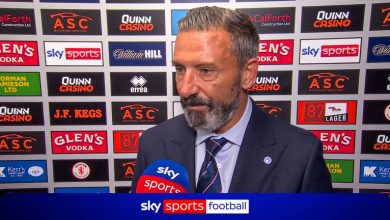
Rangers must go all out to sign 122-cap free-agent international as Shankland injury update emerges

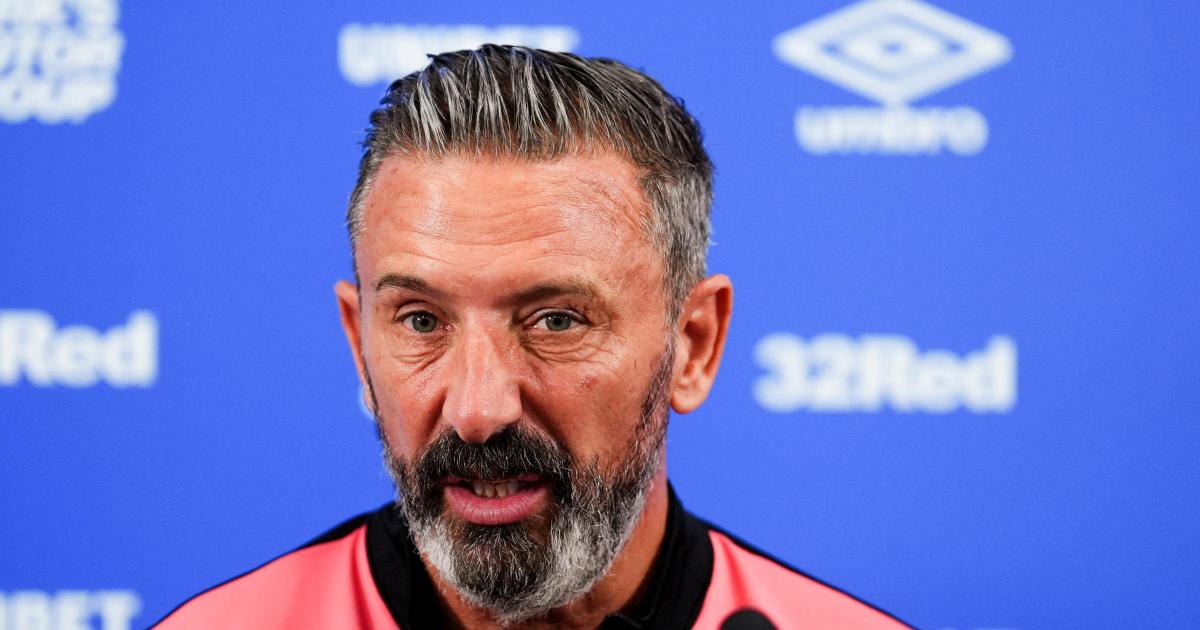
Rangers’ promising start to life under Derek McInnes has been thrown into disarray by an injury crisis at the sharp end of the pitch that few could have predicted just weeks ago. With two of the club’s most important attacking players now sidelined for extended periods, Ibrox finds itself in the uncomfortable position of needing reinforcements just months after a summer spending spree that was supposed to solve exactly this kind of problem. Here’s the full picture of how Rangers arrived at this point, and what options the club may now be forced to consider.
To understand the scale of the current crisis, it helps to remember just how significant Lawrence Shankland’s arrival at Ibrox was meant to be. The striker completed a move to Rangers from bitter rivals Hearts in the summer, activating a break clause in his Tynecastle contract to join on a two-year deal with an option for a third season. It was, by his own admission, the fulfilment of a boyhood dream — Shankland grew up a Rangers supporter, coming through the ranks at Queen’s Park before a circuitous route through Aberdeen, loan spells, Ayr United, Dundee United, and a season in Belgium with Beerschot eventually led him back to Scotland and a prolific four-year stint at Hearts, where he scored 88 goals in 171 appearances and captained the side to a runner-up finish in the Premiership.
His move to Rangers reunited him with former Hearts boss Derek McInnes and teammate Cammy Devlin, both of whom had also made the switch to Ibrox, and Shankland wasted little time establishing himself as the club’s new captain and focal point in attack. Early results were promising: he scored in successive matches, including a match-winning brace against Falkirk that showcased exactly the composed, clinical finishing that made him one of the most reliable goalscorers in Scottish football over the preceding several seasons. For a Rangers side trying to knit together a raft of new arrivals under a new head coach, Shankland’s importance went well beyond his goal output — his leadership and know-how were seen as central to stabilising a squad in transition
Shankland lasted just six to eight minutes of Rangers’ 1-0 win over Motherwell at Ibrox before pulling up clutching the back of his leg. He was replaced by fellow striker Ryan Naderi, who went on to score the only goal of the match — a silver lining that did little to offset the alarm surrounding his captain’s fitness. McInnes, who was watching from the stands while serving a two-match touchline ban, revealed afterwards that Shankland himself feared the worst, having recognised the sensation from a near-identical injury suffered during his time at Hearts.
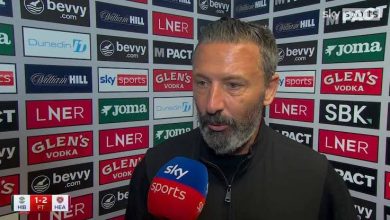
“He has a similar feeling to the hamstring injury he had at Hearts last January,” McInnes explained. “We don’t want to speculate too much but he says it feels similar, in the same area, so we’ll get him scanned on Monday.” That previous injury, suffered in a Scottish Cup penalty shootout defeat to Falkirk in January, had kept Shankland out for between six and eight weeks and derailed Hearts’ title challenge at a crucial stage of the season. The parallel was not lost on anyone at Ibrox.
McInnes offered a possible explanation for the recurrence, pointing to a change in playing surface as a contributing factor. “His output was really high on Wednesday at Falkirk on the 4G,” he said. “Sometimes going from pitch to pitch, different surface, can maybe make you a wee bit more vulnerable. But he says he felt fine going into the game and there was nothing really that he did in the game that he was aware of, he just felt it pull up.” It’s a reminder of one of the more unglamorous realities of Scottish football, where synthetic and grass pitches often alternate from week to week, placing extra strain on players’ bodies in ways that are difficult to fully mitigate.
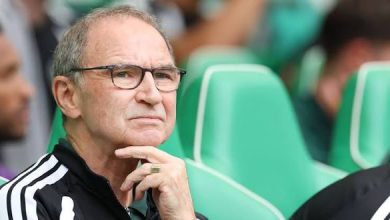
The scan confirmed the fear: a genuine tear, with McInnes outlining a recovery window of three to four months in a best-to-worst-case scenario. “I think best case scenario, three months, probably worst case scenario in terms of time about four months,” he said. That timeline is significant not just for Rangers’ domestic campaign but for Shankland’s international prospects too — the injury rules him out of Scotland’s upcoming Nations League fixtures against Slovenia (twice), Switzerland, and North Macedonia, meaning he’ll miss the opening six games under new national team head coach Sébastien Pocognoli, denying him the chance to make an early impression on the Belgian.
Domestically, the timing could hardly be worse. Shankland is now almost certain to miss the Premier Sports Cup tie against Celtic and the follow-up Premiership clash at Parkhead just a week later — a daunting back-to-back Old Firm double-header that Rangers will now have to negotiate without their captain and primary goal threat, just as he was beginning to find his scoring
What makes the situation genuinely alarming for Rangers, rather than simply an unfortunate individual setback, is that Shankland’s injury did not occur in isolation. The club had already lost another key forward, Youssef Chermiti, for the remainder of the season after he suffered anterior cruciate ligament damage the previous month. An ACL injury is amongst the most serious a footballer can sustain, typically requiring the better part of a year to fully recover from, and Chermiti’s loss represented a significant blow to Rangers’ attacking depth even before Shankland’s hamstring gave way.
McInnes was candid about the scale of the double misfortune. “Obviously if somebody had said to me walking in the door that Chermiti and Shankland were going to suffer significant injuries, you’d have felt the weight of that,” he admitted. It’s a rare moment of a manager openly acknowledging just how difficult the hand he’s been dealt has become — two of his attacking options, both capable of guaranteeing goals at Premiership level, sidelined within weeks of one another.
Rangers’ response to the Chermiti injury had already been to move decisively in the transfer market, breaking with typical prudence to sign Venezuelan international Kevin Kelsy from Portland Timbers in a deal worth around £9 million — a significant outlay by the club’s recent standards, and one that would have represented smart pre-emptive business had Shankland’s fitness held up. McInnes was full of praise for the move, describing Kelsy as “such a good bit of business” and highlighting his physical attributes: “He’s such a good mover, strong boy.”
Kelsy made his debut off the bench against Falkirk alongside Naderi and had a good early chance to open his account, though he was ultimately unable to convert it. With Shankland now also sidelined, the burden on Kelsy to adapt quickly to Scottish football has increased substantially and unexpectedly early in his Ibrox career. He’s shifted from being a long-term investment brought in to share the goalscoring load with Chermiti’s replacement duties, to potentially becoming Rangers’ most senior fit senior striker inside his first few weeks at the club — an enormous ask for any player new to a league, let alone one making the jump from MLS to the physical demands of Scottish Premiership football and Old Firm
With both of his senior strikers now unavailable, McInnes has been forthright about where the goalscoring burden must now fall. Ryan Naderi, who scored the winner against Motherwell after replacing Shankland, and Bojan Miovski are both expected to play significantly more prominent roles than would have been anticipated at the start of the campaign. “We just need to support him as we do with all our injured players, but having him and Youssef out, guys who guarantee you goals at Premiership level, there’s no doubt it’s a blow for us,” McInnes said, before striking a note of cautious optimism about the opportunity this creates elsewhere in the squad. “But their disappointments are other people’s opportunities as you’ve seen, even from Saturday, Ryan getting his goal and Kevin getting introduced.”
That’s the kind of measured, glass-half-full framing managers often reach for in moments of genuine difficulty, and there’s something to it — injury crises can accelerate the development of squad players who might otherwise have remained on the periphery. But it doesn’t change the fundamental calculus facing Rangers over the coming months: a testing run of fixtures, including the Old Firm double-header against Celtic, needs to be navigated with a significantly weakened forward line, relying on players who, whatever their promise, don’t yet have Shankland’s proven goalscoring pedigree at thiis
This is the backdrop against which any talk of Rangers dipping into the free agent market has to be understood. It’s a well-worn pattern in football: when injuries strike simultaneously in one department, clubs often turn to the pool of out-of-contract players as a faster, cheaper route to reinforcement than a formal transfer, since no fee or selling club’s cooperation is required — only personal terms and a medical need to be agreed.
There’s no shortage of experienced, well-travelled attacking options currently without a club heading into the back end of 2026. Jamie Vardy, who left Leicester City after thirteen years at the club and spent last season with Italian side Cremonese before their relegation to Serie B, has been repeatedly linked with a return to England’s lower divisions, with Wrexham, Sheffield Wednesday, and West Ham all reportedly showing interest — and separate reports earlier in the year floated Rangers as an admirer, drawn to his proven goalscoring record and relentless work ethic even at this late stage of his career. Riyad Mahrez, a five-time Premier League winner, became a free agent after Al Ahli terminated his contract, having scored 37 goals in 122 appearances for the Saudi club since his 2023 move from Manchester City. Karim Benzema, the 2022 Ballon d’Or winner, remains without a club after leaving Al Hilal, with speculation persisting over whether the former Real Madrid forward might even be edging toward retirement rather than another move. Further down the list of prominent free agents are players like Luka Modric, whose future at AC Milan has been uncertain pending a decision on a contract extension option, and David Alaba, available since leaving Real Madrid over the summer.
None of these names have been definitively and specifically confirmed as live Rangers targets in connection with the current crisis, and it would be irresponsible to present speculation as fact. What can be said with confidence is that the profile Rangers would logically be searching for — an experienced, proven goalscorer capable of stepping into a first-team role with minimal adaptation time, available without a transfer fee — is exactly the type of player found in this free agent pool, and it would be entirely unsurprising, given the club’s history of using the free agent market opportunistically (as with previous signings of Dan Neil and others), for Rangers to explore that avenue again
It’s worth situating this crisis within the broader picture of Rangers’ summer business, which was itself unusually active. The club made roughly a dozen new additions before the transfer deadline, including Shankland himself, in what was widely seen as a serious statement of intent under McInnes. The volume of incomings reflected an evident desire to overhaul a squad that had underwhelmed relative to its resources for several seasons, with Rangers finishing third in the Premiership the previous campaign — some way adrift of Celtic and Hearts, the latter’s own near-miss title challenge only reinforcing just how competitive the division has become beyond the traditional Old Firm duopoly.
That context matters here. A club investing as heavily as Rangers did over the summer, with genuine designs on closing the gap to Celtic, cannot afford for two of its principal attacking outlets to be sidelined simultaneously without it materially affecting those ambitions. The upcoming Old Firm double-header — a Premier Sports Cup tie at Ibrox followed by a Premiership fixture at Parkhead just a week later — represents precisely the kind of high-stakes, high-visibility moment where the absence of a proven goalscorer is felt most acutely. Missing Shankland for those two fixtures alone could have outsized consequences for Rangers’ season, quite apart from the cumulative effect of a three-to-four-month absence across the wider campaign.
There is, admittedly, a limit to how definitively this situation can be assessed while key details remain unconfirmed — specifically, whichever individual free agent target the original headline in question was referring to. What is beyond dispute is the severity of the underlying problem: Rangers have lost two senior strikers to serious injuries within the space of roughly a month, their £9 million summer signing Kevin Kelsy is being asked to adapt to a new league and a first-team starting role far sooner than anticipated, and their new captain — signed specifically to solve the club’s long-standing goalscoring inconsistency — now faces a lengthy spell on the sidelines just as he was beginning to repay that faith.
Whether Rangers ultimately move for a specific free agent, promote further from within the existing squad, or attempt to find a solution elsewhere in the January transfer window, the pressure on McInnes to manage this period effectively is considerable. The manager’s own comments strike the right note publicly — support for the injured players, opportunity for those stepping up — but there’s no disguising that a club with Rangers’ ambitions cannot simply absorb the loss of two frontline strikers without it being felt in results, particularly against a Celtic side that will show no mercy for a weakened opponent in the biggest fixtures of the Scottish football calendar.