Nicolas Raskin’s potential transfer from Rangers to Beşiktaş stalled in early September 2026

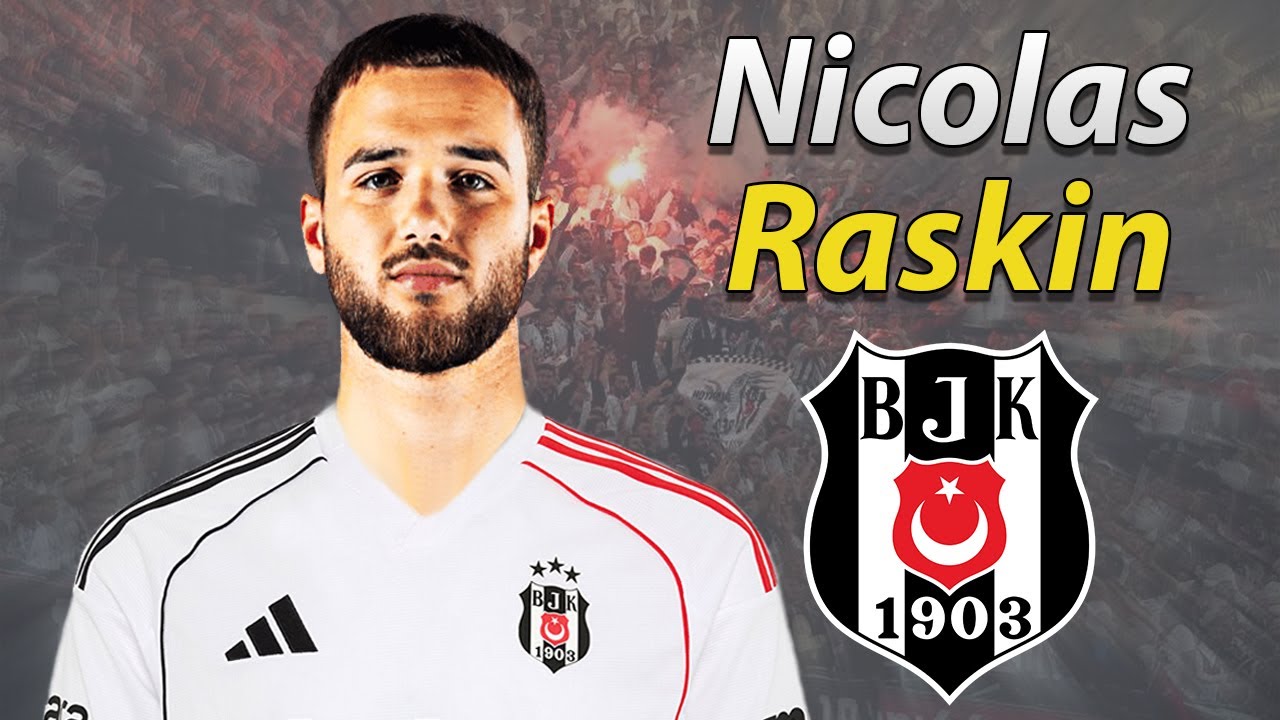
Few sagas in recent Scottish transfer history have proven as stubbornly unresolved as Nicolas Raskin’s on-again, off-again move to Beşiktaş. What began as speculative interest from Istanbul evolved, across the course of 2025 and into 2026, into a genuine, repeated near-miss — a deal that has now stalled not once but at least twice, in two entirely different transfer windows, each time collapsing at what looked like the final hurdle. To understand why this particular transfer refuses to either happen or die, it’s worth tracing the full arc: who Raskin is, how the interest developed, why September’s deadline-day drama fizzled out, and what happened when the story resurfaced months later during Turkey’s own transfer window.
Raskin arrived at Rangers from Standard Liège in January 2023, signing a four-and-a-half-year contract that, notably, still has time to run — a detail that has shaped every subsequent negotiation over his future. He’s a versatile central midfielder capable of operating as a deep-lying six or further forward as an eight, a profile that makes him attractive to a wide range of tactical systems, and one that Turkish suitors in particular have prized.
His numbers in Scotland speak for themselves. In the 2025/26 season alone, Raskin featured in 50 matches for Rangers across all competitions, playing 4,204 minutes and contributing 7 goals and 9 assists — productive output for a midfielder whose primary remit is control and progression rather than direct goal involvement. Data from FotMob shows that during the Scottish Premiership portion of that campaign, he ranked highly among his positional peers for assists, minutes played, and overall match rating, underlining his status as one of the division’s standout central midfielders. His performances also earned him silverware, with a League Cup winner’s medal from the 2023/24 season already on his résumé at Ibrox.
What transformed Raskin from a well-regarded Scottish Premiership performer into a genuine transfer target with continental interest, though, was his form for the Belgian national team. Reports consistently link the surge in serious transfer interest to his performances for Belgium at the World Cup, where he impressed on the biggest stage available to any footballer. That kind of exposure tends to accelerate a player’s market value and visibility overnight, and Raskin’s case was no exception — suddenly, a player who had been steadily building a reputation within Scotland was being talked about as someone ready for a step up, with suitors circling accordingly.
The interest from Beşiktaş wasn’t a sudden late-window impulse. It had been building for the best part of a year before the September 2026 deadline-day drama. As early as October 2025, Turkish reports indicated that Beşiktaş head coach Sergen Yalçın had specifically requested reinforcements in central midfield, and had identified Raskin — then 24 — as his top target for that position, prizing his ability to play both in a deeper holding role and further up the pitch. Turkish outlet A Spor reported that Yalçın discussed the move directly with club president Serdal Adalı, with Raskin placed at the very top of Beşiktaş’s midfield transfer list.
That interest persisted and intensified through the following months. By October, Turkish coverage was already describing an active “operation” from Beşiktaş to sign Raskin, with reports suggesting the club planned to move for him during the upcoming winter transfer window, with reinforcements to defense and midfield both viewed as priorities. There was also a personal dimension to the interest: reports indicated that Vaclav Cerny, a winger who had previously spent time on loan at Rangers from Wolfsburg before eventually representing Beşiktaş, had effectively vouched for Raskin internally — acting, in the language used by Turkish media, almost as a guarantor for the move, presumably speaking to what life at the club and in Istanbul would be like.
This slow-burn courtship meant that by the time the major European transfer windows approached their September 2026 deadline, Beşiktaş’s interest in Raskin was not a fresh storyline but the culmination of nearly a year of positioning. The question was never really whether Beşiktaş wanted him — that had been clear for months — but whether a deal could actually be structured that Rangers would accept, and whether Raskin himself, given his contract situation and his elevated profile after the World Cup, would be willing to leave in a manner and for a fee that suited both clubs.
The saga reached its first real crescendo as the major European leagues’ summer transfer window approached its close. On deadline day itself, Turkish outlets reported significant movement. According to journalist Tayfun Akkaya’s reporting, picked up by beIN Sports Turkey, Beşiktaş had tightened their contacts over Raskin and accelerated the process, with a principle agreement reportedly reached between the two clubs over the transfer of the 25-year-old Belgian. The report went further, suggesting that if the deal could be fully finalized and the official paperwork completed in time, Beşiktaş were planning to fly Raskin to Istanbul that same night, however late, to get the move over the line before the window shut.
A separate report from Halk TV added more specific detail, describing the move as a loan with an option to buy, and suggesting that with Rangers, an agreement had effectively been struck, leaving only the final personal terms to be negotiated directly with the player. That report also noted the timing pressure Beşiktaş were under: with theÑ deadline for UEFA squad list submissions fast approaching, the club needed the deal signed, sealed, and delivered within hours, not days. There was even a specific football incentive dangled in Turkish coverage — if given the green light quickly enough, Raskin could potentially have been registered in time to feature in Beşiktaş’s upcoming derby against Fenerbahçe, a fixture significant enough that Turkish outlets flagged it as a reason for urgencye4
Belgian broadcaster Sporza was covering the same story in real time and captured a similar picture, but with an important nuance: while Beşiktaş reportedly had an agreement in place with Rangers regarding Raskin, the report also noted that, despite Raskin’s own desire to leave, no offer had actually landed at Rangers by deadline day that the Scottish club considered acceptable enough to sanction a sale. That distinction — a reported “agreement in principle” on one hand, and no bid Rangers were prepared to accept on the other — captures precisely why the deal ultimately stalled rather than completed.
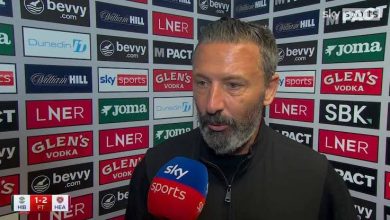
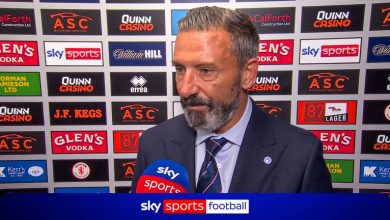
As the speculation intensified, it fell to Rangers head coach Derek McInnes to address the situation publicly, and his comments offer useful insight into how the club was actually managing the process from the inside, as opposed to how it was being portrayed in Turkish media. Speaking ahead of a match against Falkirk, McInnes was direct in stating that no offer had arrived at Rangers that the club could meaningfully consider — despite what he acknowledged had been “a lot of movement” and speculation surrounding Raskin’s potential departure
Rather than framing this as a source of tension or distraction, McInnes struck a notably calm tone about Raskin’s mentality and application throughout the process. He described the midfielder as having been “first class” since returning to the squad following his World Cup exertions with Belgium, praising both his conditioning and his attitude in training. His message was essentially one of business as usual: until an offer arrived that Rangers judged worth entertaining, Raskin would simply continue training and playing as normal.
This is a notable pattern in modern football — a club publicly maintaining that a player central to transfer speculation remains fully committed and professionally focused, even as reports elsewhere suggest a move is close to being finalized. It also underscores an important point about the structure of this deal: Rangers were operating from a position of some leverage. With Raskin under contract into 2027, there was no obligation on Rangers’ part to sanction a departure on anything other than their own terms, and McInnes’s comments reflected a club willing to let the speculation play out without feeling pressured into accepting a deal it saw as unsatisfactory
Pulling together the reporting from that period, a fairly clear picture emerges of why the September move didn’t happen despite reports of an “agreement.” The most plausible explanation is a mismatch between what was being informally discussed between the clubs — described variously as a principle agreement or an agreed framework — and what Rangers were actually prepared to accept as a binding, finalized bid. Turkish reports emphasized speed and optimism, framing the deal as something that could be completed within hours if paperwork allowed. Belgian and Scottish coverage was more cautious, consistently noting that no offer had reached the level Rangers required.
Given Raskin’s contract situation — over a year and a half still to run at that point — Rangers were under no real pressure to accept anything less than a fee (or loan structure) that fully reflected his rising value after his World Cup performances. It’s a familiar transfer-window dynamic: a release of information suggesting a deal is close, followed by the actual mechanics of the transfer failing to align in time, whether over structure, fee, personal terms, or simple logistics of completing international paperwork before a hard deadline. Whatever the precise sticking point, the September version of this transfer ultimately didn’t happen. Raskin remained a Rangers player when the major leagues’ window shut
What makes this saga particularly notable, though, is that it didn’t end there. Turkey’s domestic transfer window — like several countries outside the “big five” European leagues — operates on a different closing schedule than England, Scotland, and the rest of the major markets. That created a second opportunity for the deal to be revisited, and revisited it was.
According to a later Scotsman report, Rangers ultimately rejected a loan approach from Beşiktaş for Raskin — even though reports at the time had again claimed a deal was already agreed between the clubs. This second attempt saw Raskin actually left out of the Rangers matchday squad for two consecutive matches amid the uncertainty, a much more concrete sign of a transfer genuinely being close than anything seen in September, when Raskin had continued training and playing normally throughout. The framing from Scottish media in this instance was notably stronger too: Rangers were described as having been expected to cash in on the 25-year-old, given his World Cup form, suggesting a genuine expectation inside the game that this second attempt might finally be the one to succeed.
The specifics reported this time were more developed than in September. Rather than a straightforward permanent transfer or a vague “agreement in principle,” this iteration of the deal was described as a loan with an option to buy, with a verbal agreement reportedly reached and only personal terms left outstanding before Rangers, in a surprising twist, opted to reject the approach entirely — despite that same approach reportedly including a significant up-front loan fee, which would typically be an attractive structure for a selling club wary of a discounted permanent sale.
The urgency on Beşiktaş’s side this time round was tied not to a domestic derby, as in the September reporting, but to European competition: the Istanbul club needed Raskin registered before a specific deadline in order to include him in their Europa League squad, with a tie against Celtic — the very league Raskin was playing in — scheduled for early November. There’s a layer of irony in that detail: had the move gone through in time, Raskin could conceivably have faced his former club, in the same city he’d just left, within weeks of completing the transfer.l
One thread that runs through multiple stages of this saga, without ever quite becoming the central story, is Rangers’ own interest in Beşiktaş winger Vaclav Cerny. Cerny had previously spent time on loan at Ibrox from Wolfsburg before later representing Beşiktaş, giving him firsthand experience of Scottish football and, reportedly, a role in vouching for Raskin’s move as far back as the initial approaches in late 2025. Given that dynamic, and the fact that Rangers had shown their own summer interest in bringing Cerny back to Glasgow, it would have been a reasonably tidy narrative if the Raskin negotiations had evolved into some kind of swap arrangement, with one player moving in each direction.
Reporting has been consistent, however, in stating that this wasn’t the case: despite parallel interest in Cerny from Rangers’ side, the Raskin negotiations were not believed to involve any kind of player exchange, and the two situations were treated by both clubs as separate transfer matters rather than a package deal. It’s a useful reminder that even when two clubs have overlapping interests in different players, modern transfer negotiations don’t always neatly combine those threads into a single structured deal — sometimes parallel interest really is just parallel interest.
Taken together, the two stalled attempts to move Raskin from Ibrox to Istanbul reveal something instructive about how transfer sagas like this actually unfold in practice, as distinct from how they’re often reported in real time. Both in September and in the later window, initial reports — largely originating from Turkish outlets close to Beşiktaş — described agreements as essentially done, framed around optimistic timelines and specific match deadlines the player might be available for. Both times, the actual outcome fell short of that framing, with Rangers ultimately either failing to receive an acceptable offer or, in the second instance, actively rejecting an approach that had reportedly progressed to a verbal agreement
This gap between reported near-certainty and eventual outcome isn’t unusual in football transfer coverage more broadly, but it’s been particularly pronounced in Raskin’s case, given how many separate news cycles it has generated without a resolution. It also speaks to Rangers’ apparent strategy throughout: rather than treating Beşiktaş’s interest as pressure to complete a sale, the club appears to have consistently held out for terms it considered fully satisfactory, twice declining to proceed even when outside reporting suggested a deal was close to being finalized.
As things stand, Raskin remains contracted to Rangers, his deal running into 2027, and the Beşiktaş pursuit has now failed to convert into an actual transfer on at least two separate occasions across two different transfer windows. Whether a third attempt materializes — in a future window, whether that’s the upcoming winter period for the major European leagues or another cycle of Turkey’s own transfer calendar — remains to be seen. What does seem clear from the pattern established so far is that any future deal will need to clear a genuinely firm bar in Rangers’ eyes, whether structured as a permanent sale or a loan with an option to buy, before the club is willing to let a player of Raskin’s growing profile leave Ibrox.
For Beşiktaş, the persistence of their interest — stretching back to at least October 2025 and surviving two failed attempts to actually get the deal done — suggests a club genuinely convinced Raskin fits a specific tactical need in central midfield, rather than one chasing a fashionable name on the back of a single good tournament. For Rangers and for Raskin himself, the situation leaves an open question that Scottish football will likely keep returning to with each passing transfer window: whether this is a transfer that eventually happens on Rangers’ terms, or one that continues to generate speculation without ever quite crossing the finish line.