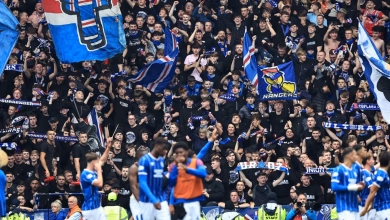
Mohamed Salah has Rangers transfer key over Ibrox hero’s Govan return, Liverpool icon move may spark domino effect

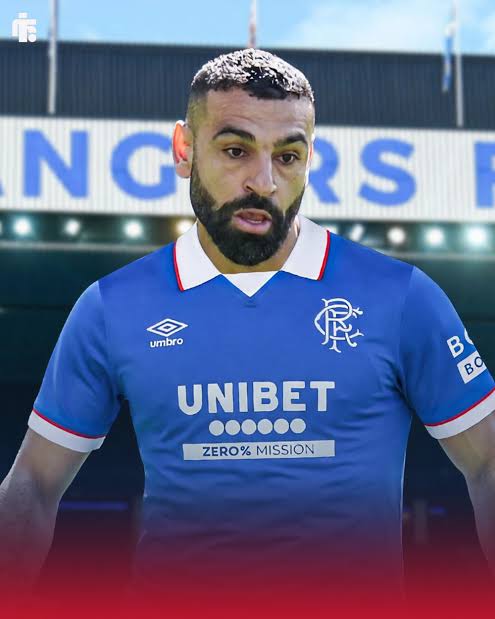
Mohamed Salah has Rangers transfer key over Ibrox hero’s Govan return, Liverpool icon move may spark domino effect⚽ Why A Mohamed Salah Move Away From Liverpool Could Be The Key That Unlocks A Vaclav Cerny Return To Ibrox
Rangers supporters have grown accustomed to transfer sagas taking unexpected twists this summer, but few developments have been quite as intriguing as the idea that a potential Mohamed Salah departure from Liverpool could end up being the domino that finally allows a popular former Ibrox winger to make his way back to Govan. According to reports, the fate of a possible Vaclav Cerny return to Rangers may hinge, at least in part, on what happens with the Liverpool icon and his own next move, creating one of those strange, interconnected transfer chains that football so often produces.
The backdrop to all of this is Rangers’ ongoing search for attacking reinforcements as Derek McInnes continues to reshape his squad following a summer of significant turnover under his stewardship. Wingers in particular remain firmly on the agenda at Ibrox, a reflection of the system McInnes prefers to deploy. The manager’s favoured 4-4-2 shape places real emphasis on creativity and end product from the wide areas, meaning genuine, proven quality out wide is not simply a luxury for this Rangers side but close to a necessity if the team is going to function the way McInnes wants it to. It is against that backdrop that renewed talk of a Cerny return has started to gather pace.
For anyone who followed Rangers closely during his previous spell in Govan, the appeal of bringing Cerny back is not difficult to understand. The winger enjoyed an excellent loan spell from Wolfsburg during the 2024-25 campaign, establishing himself as a genuine fans’ favourite through a combination of end product, flair and consistency that made him one of the more eye-catching performers in the Rangers side during that period. That loan spell, however, was not converted into a permanent Ibrox stay, with Cerny instead completing a permanent move to Turkish side Besiktas the following summer. For Rangers supporters who had grown fond of watching him operate on the flank, that departure represented something of a missed opportunity, and the possibility of him now returning to Scotland carries an obvious emotional appeal on top of the practical benefits a player of his quality could bring to McInnes’s attacking options.
The complication, as with so many modern transfer sagas, comes down to money. A move to bring Cerny back to Ibrox has been described as an expensive one for Rangers to pull off, and it is easy to see why given the financial realities involved. This is where Salah’s situation becomes relevant. Besiktas, the club who currently hold Cerny’s registration, are reportedly keen on completing a blockbuster deal for Salah following his departure from Liverpool, and it is that pursuit which could end up creating the pathway for Cerny to leave Turkey and make his way back to Scotland. The logic driving these reports suggests that welcoming a player of Salah’s global stature would represent such a significant shift in Besiktas’s attacking plans and wage structure that it could free up the space, financially and tactically, for Cerny to depart and return to the Premiership.
Speaking on the matter, transfer journalist Ekrem Konkur addressed how the situation around Rangers and Cerny has evolved. According to Konkur, the conditions surrounding a potential return to Ibrox for the winger have shifted in Rangers’ favour, with a departure from his current Turkish club now looking more plausible than it previously did. Central to that shift, in his view, is the anticipated arrival of Salah at Besiktas, a move which he suggested could be the very development that facilitates Cerny’s own exit. Konkur also indicated that a fee in the region of ten million euros could be sufficient to get a deal for the winger over the line, a figure that, while still substantial, would represent a considerably more attainable target for Rangers than some of the higher valuations that have previously been floated in connection with the Dutch-born forward.
That assessment, however, sits in some contrast to the picture painted earlier in the summer by fellow transfer journalist Pete O’Rourke, whose comments on the Inside Track highlighted just how financially complex a deal of this nature would be for Rangers to engineer. O’Rourke was direct in outlining the scale of the challenge facing the Ibrox club, describing the financial side of any potential deal as one that would prove genuinely difficult to navigate. He pointed out that it would take an extremely substantial offer from Rangers to persuade Besiktas to part with a player they only signed for around five million euros the previous summer, and that any club looking to sell in that scenario would naturally be seeking to recoup that initial outlay and more, given how well Cerny has settled in Turkey and the contract terms he is understood to be operating under.
O’Rourke’s central point was that Besiktas would be under no financial pressure to sell Cerny at a knockdown price, and that Rangers would therefore need to be prepared to meet a valuation considerably higher than what many supporters might consider reasonable for a winger returning to a smaller league on paper, even one where he previously excelled during his loan spell. Given those financial dynamics, O’Rourke suggested that Rangers and McInnes might be better served exploring other markets and other targets to strengthen their options out wide in the closing weeks of the transfer window, rather than banking on a move for a player whose current club may have little incentive to negotiate a straightforward exit.
It is precisely this financial tension that makes the Salah dimension so significant. If Besiktas’s move for the Liverpool forward does materialise, it could fundamentally reshape the club’s wage bill and squad planning in a way that changes their calculus around Cerny entirely. A club bringing in a player of Salah’s profile would likely need to make room, both in terms of squad numbers and financial commitments, and history has shown that big-name arrivals at clubs outside Europe’s traditional top leagues often precipitate a reshuffling of other player situations as a result. Should that scenario play out as reported, Rangers could suddenly find themselves negotiating from a considerably stronger position than the one O’Rourke described only weeks earlier, with Besiktas potentially more amenable to a sale in order to help offset the financial commitment involved in bringing in a marquee attacking signing of their own.
For Rangers and McInnes, the situation represents both an opportunity and a lesson in the unpredictable nature of the modern transfer market, where deals hundreds of miles away and seemingly unconnected to Ibrox can have a direct bearing on which targets become realistically achievable. Supporters will understandably be watching developments in Istanbul just as closely as anything happening domestically, given how directly the Salah situation could end up shaping Rangers’ own business in these final weeks of the window.
Amid all this speculation, McInnes has continued pressing ahead with strengthening other areas of his squad, and the club’s most recent confirmed arrival offers a useful reminder of the broader recruitment strategy underpinning this summer’s rebuild. Vanja Dragojevic became the latest name to join the Ibrox ranks after completing his move from Partizan Belgrade, and speaking to club media following the switch, the young midfielder offered an insight into both the process behind his transfer and his motivations for choosing Rangers at this stage of his career.
Dragojevic described the move as a source of genuine pride, explaining how happy he felt to be joining a club of Rangers’ size and stature. He spoke about viewing the transfer as a significant opportunity, one he was eager to embrace fully from the moment discussions began. According to the midfielder, interest from Rangers first emerged around three months prior to the deal being finalised, and he revealed that even at that early stage, he recognised something in the club’s identity that resonated with his own approach to the game, describing the winning mentality associated with Rangers as something that felt compatible with his own mentality as a player.
He also touched on the history and stature of the club more broadly, acknowledging the calibre of players who have represented Rangers over the years and expressing appreciation for the reputation of the club’s supporters, whom he clearly views as a significant part of the appeal of joining. Beyond the football romance of the move, Dragojevic also framed the transfer in terms of his own development, both as a footballer and as a person, suggesting he views his time in Scotland as an environment that will help him grow in multiple respects rather than simply representing a step up in terms of profile or competition level.
Interestingly, Dragojevic also referenced conversations that took place during the negotiation process, indicating that he had discussions with a figure at the club who himself had a lengthy association with Rangers as a player and understood the institution intimately. That connection, combined with conversations he had with his family before ultimately committing to the move, appears to have played a meaningful role in convincing him that this was the right moment to make the switch. He specifically highlighted his belief in McInnes as a manager, describing him as someone possessing both strong footballing acumen and the right mentality to lead the club forward, factors which clearly weighed heavily in his eventual decision to sign.
Taken together, the Dragojevic situation and the ongoing Cerny speculation paint a picture of a Rangers recruitment operation working across multiple fronts simultaneously this summer, balancing long-term development signings with more immediate, proven quality options where budget and circumstance allow. It also underlines just how interconnected modern football’s transfer landscape has become, with a move as seemingly distant as Mohamed Salah’s next career step in Turkey potentially holding real consequences for whether a popular ex-Ibrox performer completes an emotional return to Scotland.
For now, nothing regarding Cerny is confirmed, and the financial obstacles O’Rourke outlined remain very real barriers that Rangers would need to overcome even if Besiktas’s stance does soften as a consequence of any Salah arrangement. Supporters will be well aware from experience that transfer stories involving multiple clubs, agents and shifting valuations rarely move in straight lines, and there is every chance this saga continues to twist and turn over the coming weeks before any resolution, one way or another, becomes clear. What does seem apparent, though, is that Rangers’ interest in bringing a proven, high-quality winger back into the fold remains genuine, and that the club’s business in the final stretch of this transfer window may well be shaped as much by events unfolding at Besiktas and around Salah’s own future as by anything happening directly within Rangers’ control.
Whether it is Dragojevic settling into his new surroundings after a move built on patience and genuine mutual interest stretching back months, or the possibility of Cerny making an emotional and long-awaited return to a club where he already holds hero status among sections of the support, this window continues to offer plenty of intrigue for Rangers supporters to follow closely as the deadline edges nearer and McInnes looks to put the finishing touches to his rebuilt squad ahead of a season that will demand strength in depth across every area of the pitch, wide areas most definitely included given how central they are to the manager’s preferred way of playing.
#RangersFC #DerekMcInnes #VaclavCerny #MohamedSalah #IbroxNews #VanjaDragojevic #ScottishFootball #Besiktas #Liverpool #SPFL