Nico Raskin’s Rangers Future Under Scrutiny As Belgian Watches On From The Bench

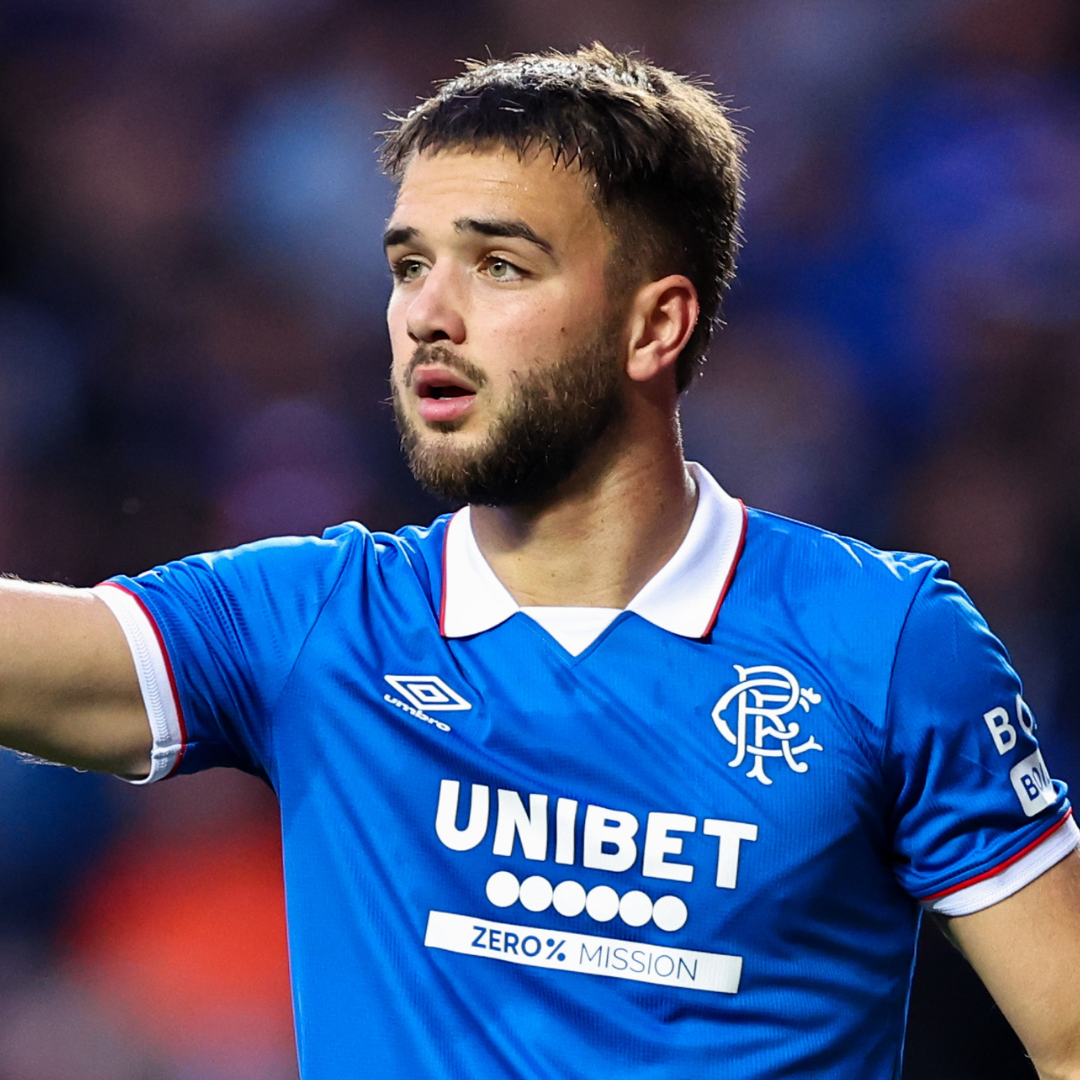
Nico Raskin’s long-term future at Rangers has once again become the dominant talking point around Ibrox, after the Belgium international found himself an unused substitute for the Conference League play-off first leg against Jablonec. For a player who has spent much of the summer being talked about as the club’s most saleable asset — and its most likely departure before the transfer window closes — that decision from Derek McInnes has been picked over by supporters and pundits alike, each looking for clues as to what it might mean for Raskin’s immediate future in Govan.
It is a pattern that has become increasingly familiar throughout this transfer window. Every start, every omission, and every substitution involving Raskin has been read as a signal, however small, about where his Rangers career currently stands. That level of scrutiny is not accidental. Few players at the club carry the same combination of proven quality, resale value, and genuine transfer interest as the Belgian midfielder, and with the window edging toward its final stages, patience among supporters for clarity over his situation is wearing thin.
Rangers’ matchday squad for the visit of Jablonec included Raskin among the substitutes rather than in Derek McInnes’s starting eleven, a decision that immediately prompted debate given the midfielder’s status as arguably the club’s most important player on the pitch. For some observers, leaving out a player of Raskin’s calibre for a must-not-lose European tie, at a time when his future is so uncertain, looked like an unusual piece of squad management — particularly with Rangers having invested heavily in reshaping their midfield options over the course of the summer.
That reshaping has been extensive. Derek McInnes has brought in a series of new midfield options during his time in the Ibrox hot-seat, including Dan Neil, Cammy Devlin, and Vanja Dragojevic, each arriving with the specific brief of adding depth and competition to the middle of the park. On paper, that gives McInnes genuine alternatives to call upon regardless of Raskin’s situation, and it has fuelled speculation in some quarters that the club has been quietly preparing for life without their prized Belgian all along.
Yet the picture is more complicated than a simple story of a club shutting a departing player out of its plans. McInnes started Raskin in Rangers’ most recent Premiership fixture before the Jablonec tie, using him prominently in a side that produced one of its most encouraging attacking performances of the season. That inconsistency — starting Raskin in one significant fixture only to leave him among the substitutes in the next — is precisely the kind of detail that has kept speculation about his future so animated, with different observers drawing opposite conclusions from the same set of facts.
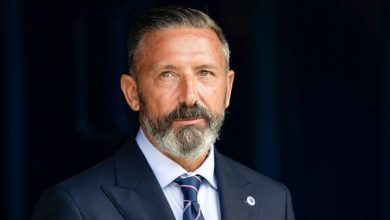
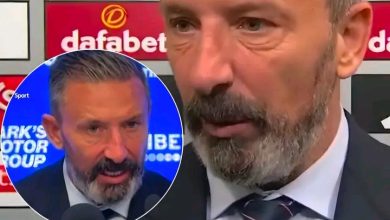
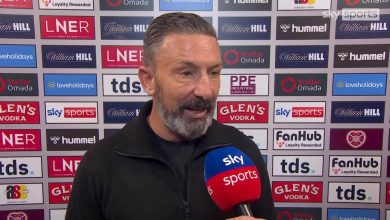
Central to understanding Rangers’ approach to Raskin this summer has been Derek McInnes’s own public characterisation of the situation. Speaking earlier in the transfer window, McInnes acknowledged that his prize midfielder could be the subject of significant interest following an impressive World Cup campaign with Belgium, describing him as a potential “flight risk” as a result. That admission, delivered with unusual candour for a manager discussing one of his best players, effectively confirmed what had already become an open secret around Ibrox: that Raskin’s departure this summer was considered a live and realistic possibility by those inside the club, not simply outside speculation generated by agents or interested suitors.
McInnes’s comments at the time struck a pragmatic tone. Rather than attempting to play down the interest or insist that Raskin was untouchable regardless of any offers, the Rangers manager instead pointed to the reinforcements already brought into the engine room as evidence the club had planned sensibly for either outcome — welcoming Raskin’s continued involvement if no suitable offer arrived, while ensuring the squad would not be left short if a departure did materialise before deadline day. It was a rare piece of transparency from a manager on a subject clubs typically prefer to keep close to their chest, and it set the tone for a summer in which Raskin’s situation has rarely been far from the back pages
Understanding why Raskin’s situation carries such significance requires looking beyond team selection and into the financial context surrounding Rangers this summer. The club has been notably active in the transfer market under Derek McInnes, bringing in numerous new faces as part of a wider squad rebuild, and that level of investment inevitably raises questions about how such spending is being funded and sustained within the constraints of financial fair play regulations that govern clubs competing in European competition.
Raskin, as the club’s most valuable and most coveted asset, sits at the heart of that financial calculus. Reports throughout the window have suggested interest from clubs across Europe, including sides in Italy and Spain, along with sustained scouting interest from a number of Premier League and Championship clubs over an extended period. That breadth of interest underlines the regard in which Raskin is held outside Scotland, and it gives Rangers genuine leverage in any negotiation, even as it raises the obvious question of when, rather than whether, that interest might convert into a concrete, accepted offer.
The scale of Rangers’ summer outlay adds urgency to that question. A club that has committed significant funds to strengthening multiple positions across the pitch will, in the ordinary course of football finance, need to balance those outgoings with incoming transfer fees, particularly given the pressures that come from European competition rules around spending relative to revenue. A sale of Raskin, given his profile and valuation, would represent by far the most straightforward way for Rangers to generate a significant fee this window, offering both a financial release valve and a means of justifying the club’s continued investment elsewhere in the squad.
For those trying to read meaning into Raskin’s periodic omissions from the Rangers side this season, it is worth noting that this is far from unfamiliar territory for the Belgian. He endured a genuinely difficult spell under a previous Rangers manager, during which he was repeatedly left out of significant matches — including an Old Firm derby against Celtic — with his head coach at the time explicitly citing the impact of ongoing transfer speculation on his form and standing within the squad.
Raskin has since spoken candidly about how difficult that period was for him personally, describing the sense that an unfair picture had been painted of his situation and admitting that he struggled, both physically and mentally, to consistently perform at his best while his long-term future hung in the balance. That he has been through a broadly similar experience before — uncertainty over his future affecting his match involvement, followed eventually by a return to first-team prominence once matters settled — offers some context for how the current speculation might ultimately resolve itself, even if the specific destination and financial details differ from his previous transfer saga.
Importantly, on the last occasion speculation over his future reached a similar fever pitch, Raskin ultimately remained at Ibrox, going on to reestablish himself as one of the club’s most important and highly rated performers. Whether this summer follows a similar path — sustained interest, prolonged uncertainty, but an eventual continuation of his Rangers career — or ends instead with a departure before the window closes remains, at this stage, a genuinely open question.
Should Raskin’s Rangers career come to an end this summer, the impact would be felt keenly both on the pitch and around the club more broadly. He has established himself as arguably the side’s most creative and technically accomplished midfield presence, someone capable of dictating tempo and unlocking defences in a way few of his teammates can consistently replicate. Replacing that specific skill set, even with the added depth McInnes has brought into the squad this summer, would represent a genuine footballing challenge regardless of the financial upside such a sale would deliver.
There is also a symbolic dimension to any potential departure. Raskin has become something of a totemic figure for supporters over recent seasons, admired not only for his ability on the ball but for the way he has navigated previous periods of uncertainty and criticism with a public display of commitment to the shirt. A sale, however financially prudent, would inevitably be viewed by sections of the support as another instance of the club’s best player being sold on to fund reinforcements elsewhere — a familiar and often uncomfortable dynamic for clubs operating in leagues without the financial muscle of Europe’s traditional powerhouses.
For Derek McInnes personally, the situation presents a delicate balancing act. He has publicly acknowledged the reality of Raskin’s situation without appearing to actively push him toward the exit, has continued to select him for significant matches even amid swirling transfer talk, and has simultaneously strengthened his midfield options to ensure the club is not left short regardless of the outcome. It is a measured, pragmatic approach — one that avoids the kind of public falling out that characterised Raskin’s previous period of exclusion under a different manager, while still leaving the door open, implicitly, to a sale should the right offer materialise
As things stand, Nico Raskin remains a Rangers player, still involved in Derek McInnes’s matchday squads, still training with his teammates, and still, by his manager’s own admission, someone whose long-term Ibrox future cannot be guaranteed given the level of interest he continues to attract. That combination of continued involvement and persistent uncertainty is likely to remain the dominant theme surrounding his situation until either a concrete transfer materialises or the window closes with him still contracted to the club.
For now, supporters are left to parse every squad selection, every substitution, and every training-ground photograph for signs of what might come next — a familiar, if uncomfortable, ritual for any club watching one of its most prized assets attract sustained interest from elsewhere. Whether Thursday’s decision to name Raskin among the substitutes for the Jablonec tie proves to be a meaningful signal of an impending departure, or simply routine squad rotation from a manager managing a heavy fixture schedule across domestic and European competition, is something only time — and the closing days of the transfer window — will ultimately reveal.
What is clear is that Rangers’ handling of the situation, and Raskin’s own response to it, will be watched closely by a support well versed in the emotional rollercoaster that accompanies transfer speculation involving one of their own. Having been through a comparable period of uncertainty before and emerged the other side as an even more important figure within the squad, Raskin may yet prove capable of doing so again — but with genuine, sustained interest from clubs across multiple leagues, and a club that has been open about the financial realities shaping its transfer strategy this summer, a departure before the window shuts can certainly not be ruled out