RANGERS EXPLAIN SITUATION WITH LAWRENCE SHANKLAND AFTER CAPTAIN DROPS OUT OF STARTING XI

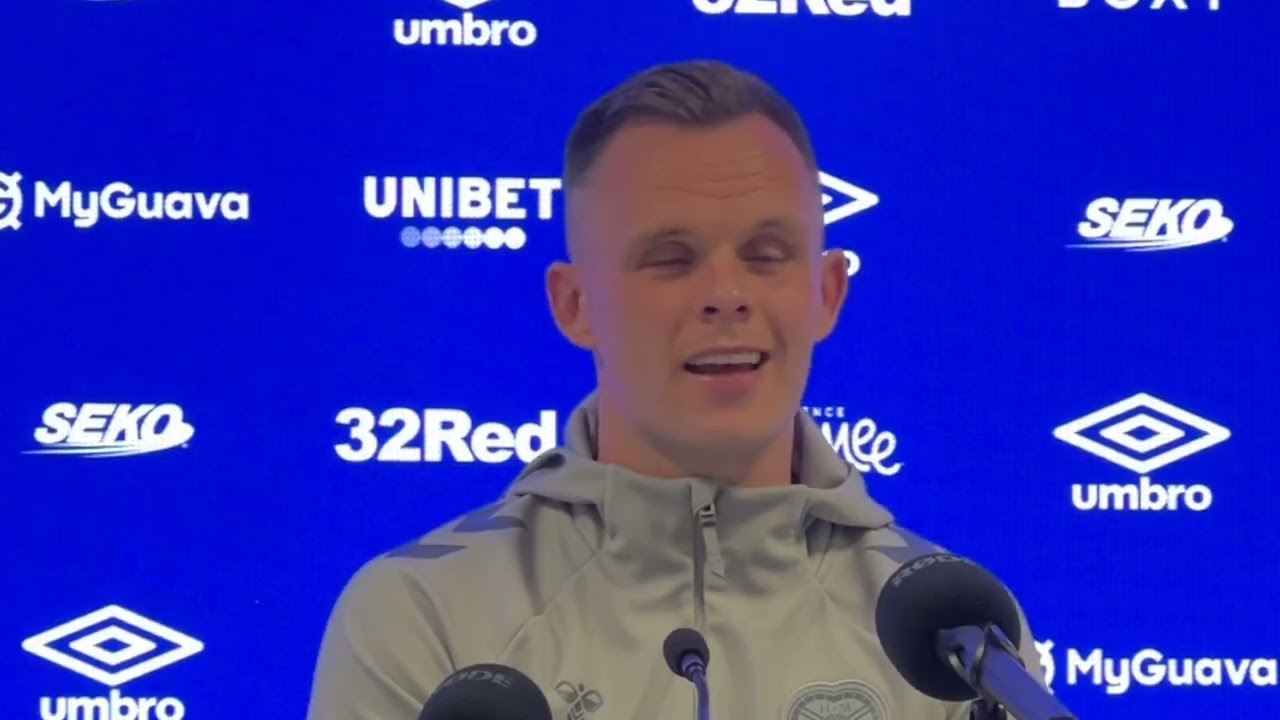
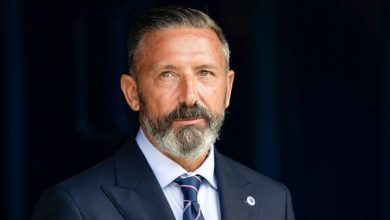
Derek McInnes has offered an insight into the thinking behind one of the more eye-catching selection calls of his young Rangers tenure so far, leaving club captain Lawrence Shankland out of the starting eleven for the Scottish League Cup tie against St Mirren at Ibrox. It proved to be a decision that paid off in emphatic fashion, with Rangers running out 5-1 winners to secure McInnes’s first win since taking charge, but the sight of the skipper starting on the bench, with the armband passed instead to Nicolas Raskin, has understandably become one of the bigger talking points to emerge from a chaotic opening month of the new season at Ibrox.
To understand why McInnes made the call, it helps to rewind slightly to the context surrounding it. Rangers arrived at the St Mirren fixture having failed to win any of their first four competitive matches of the season, a run that included a shock Europa League qualifying exit at the hands of Polish side Jagiellonia Bialystok, a result that dropped the club into the Conference League play-offs and left supporters and pundits alike questioning what exactly was going wrong under the new head coach. Shankland, so influential during his time working under McInnes at Hearts, had struggled to find his best form in a Rangers shirt during that difficult opening stretch, and while he did convert a penalty against Jagiellonia to briefly level the aggregate score, the overall consensus among former players and broadcasters covering the game was that his performances hadn’t yet matched the standard expected of a club captain leading the line.
That sentiment was voiced fairly bluntly by respected football journalist Tom English, who didn’t hold back when assessing Shankland’s early-season form following the Europa League exit, questioning why the striker continued to start matches and suggesting he looked a shadow of the player who’d been so prolific during his time at Tynecastle. It’s the kind of public scrutiny that comes with the captaincy at a club the size of Rangers, and while McInnes has previously spoken about wanting to share that burden of responsibility around the squad rather than leaving one man to constantly front up after difficult results, the pressure on Shankland specifically had clearly been building in the days leading up to the St Mirren game.
Rather than a straightforward dropping born purely out of frustration with individual form, though, the decision against St Mirren appears to have been at least partly rooted in a broader tactical rethink. With Rangers having shipped goals and looked exposed through the middle of the pitch in their opening matches, McInnes opted for a reshaped midfield that afternoon, bringing in Raskin to anchor things alongside Vanja Dragojevic and Tochi Chukwuani, while handing the central attacking role to Ryan Naderi rather than his captain. The logic, according to analysis from those closely following the game, centred on legs and running power. Naderi offered considerably more mobility and pressing range than Shankland is naturally able to provide, and with an extra body added into midfield to offer better cover and more progressive passing options, Rangers finally looked like a team capable of transitioning at pace rather than being stretched and picked apart on the counter, which had been a recurring problem through the opening weeks of the campaign.
The upturn in performance was immediate and, by most accounts, fairly striking. Naderi opened the scoring with his first goal since April, summer signing Dragojevic added a stunning long-range volley for his first goal in Rangers colours, and debutant James Penrice, deployed at left-back after his international clearance came through only the night before the match, capped an impressive full debut with an assist and a goal of his own. Djeidi Gassama also got in on the act as Rangers ran riot in the second half, eventually putting five goals past a St Mirren side that had arrived at Ibrox full of confidence, having won their previous two matches heading into the tie. It was, by some distance, Rangers’s most convincing attacking display of the season, and it came with Shankland watching on from the substitutes’ bench for large parts of the game, only introduced from the bench past the hour mark once the result was already put well beyond doubt.
Perhaps the more symbolically significant detail from the afternoon, though, was the captaincy itself. Rather than handing the armband to another senior figure purely for the day, McInnes let Raskin lead the team out and wear it throughout, despite the Belgian midfielder’s long-term Ibrox future continuing to be the subject of ongoing transfer speculation throughout the summer window. Raskin repaid that trust with a commanding, high-energy box-to-box performance that was widely regarded as one of the best individual displays from a Rangers player so far this season, driving the team forward from deep and setting the tone for the eventual rout. It made for a slightly unusual scene, a player whose long-term commitment to the club has been repeatedly questioned leading the side out in place of the man specifically appointed captain by McInnes only a few weeks earlier, but on the balance of what unfolded on the pitch, it’s hard to argue the decision didn’t work exactly as intended.
None of this should be read as a permanent demotion or any kind of falling out between manager and captain, and it’s worth stressing that context matters here. This was a League Cup tie against lower-league opposition on paper, exactly the kind of fixture where rotation and experimentation are common practice for any manager trying to find the right formula early in a season, and McInnes had already used the competition to hand debuts and fresh opportunities to several fringe and newly arrived players, including Penrice, Dragojevic, and Chukwuani. Dan Neil, the vice-captain, was also left out of the starting XI for the same match, which suggests this was as much about testing a new tactical setup and freshening up personnel as it was a specific message being sent to Shankland individually. Given how well it worked, though, it does leave McInnes with a genuine selection dilemma heading into the club’s more pressing fixtures, most immediately the Conference League play-off tie against Czech side Jablonec, where qualification for group-stage European football for the season is on the line.
The bigger question now is whether McInnes sticks with the shape and personnel that delivered Sunday’s result or reverts to a more familiar setup with Shankland restored to a central attacking role once European and league business resumes in earnest. There’s a reasonable argument on both sides. Shankland remains an experienced, proven goalscorer at this level with a track record of delivering over a sustained period at Hearts, and there will be plenty inside Ibrox who believe a red-hot run of form is never too far away for a player of his calibre once he settles into life at a bigger, more scrutinised club. Equally, the tactical benefits Rangers found by adding legs and mobility into midfield were plain to see against St Mirren, and McInnes will be conscious of not simply reverting to old habits out of sentiment if the alternative shape genuinely gives his team a better platform to build results from, particularly with the injury picture around Youssef Chermiti, Rangers’s other central striking option, still an ongoing concern following his own fitness issues.
What does seem clear is that this is being handled as a footballing decision rather than any kind of stripping of responsibility. Shankland remains club captain, and there’s been no suggestion from within Ibrox that the armband situation against St Mirren reflects anything beyond a single-match tactical call combined with Raskin’s specific characteristics suiting the pressing, high-tempo approach McInnes wanted to try. It’s also worth remembering the wider context of how McInnes approached the captaincy decision back at the start of the season in the first place, having deliberately rotated the armband through pre-season among several senior figures, including Ross McCrorie, Dan Neil, Ben Godfrey, and Dujon Sterling, before settling on Shankland, partly because of his history working with McInnes at Hearts and partly because the manager was determined not to lean on one individual the way James Tavernier had been relied upon throughout his own eight years with the armband at Ibrox. That same underlying philosophy, sharing responsibility and not treating the captaincy as an untouchable status, appears to be exactly what played out again here.
For Shankland himself, the challenge now is a fairly familiar one in football terms: respond well to being left out, take his opportunity when it comes off the bench or in a future recall to the starting eleven, and use the frustration of a difficult opening month as motivation rather than letting it affect his confidence further. He’s shown throughout his career, from his rise through the lower leagues with Ayr United and Dundee United through to his prolific spell as Hearts captain under this same manager, that he has the mental resilience to bounce back from setbacks, and given how highly regarded he is by McInnes personally, it would be a considerable surprise if this proves to be anything more than a short-term tactical adjustment rather than a lasting shift in the pecking order up front.
From a wider squad perspective, Sunday’s result and performance will have offered plenty of encouragement regardless of who wore the armband or started up top. Rangers finally looked like a team playing with confidence and purpose in the final third, something that had been conspicuously absent through those opening four winless matches, and the emergence of Naderi as a genuine goal threat, allied to strong midfield performances from Raskin and Dragojevic, gives McInnes several selection headaches of the good variety heading into a hugely important run of fixtures. With Jablonec now standing between Rangers and Conference League group-stage football, and domestic form still needing to be nailed down as the Premiership campaign gathers pace, McInnes will have some big calls to make in the coming days about exactly how he wants his team set up, and whether the shape that delivered five goals against St Mirren becomes the new template or simply a one-off experiment born of necessity.
Either way, the situation with Shankland is one supporters will be watching closely. A captain being left out is never a small story at a club with Rangers’s history and expectations, but the manner in which it happened, as part of a considered tactical shift rather than a punishment, and with the team responding so emphatically on the pitch, suggests McInnes is willing to make bold, sometimes uncomfortable calls in pursuit of getting his rebuild right. Whether that means Shankland is back leading the line against Jablonec or watching on again from the bench remains to be seen, but few would bet against the Scotland international getting a chance to state his case again before too long.