Rangers player ratings vs Jagiellonia Bialystok as fall guy lands 3/10 and debutant assessed

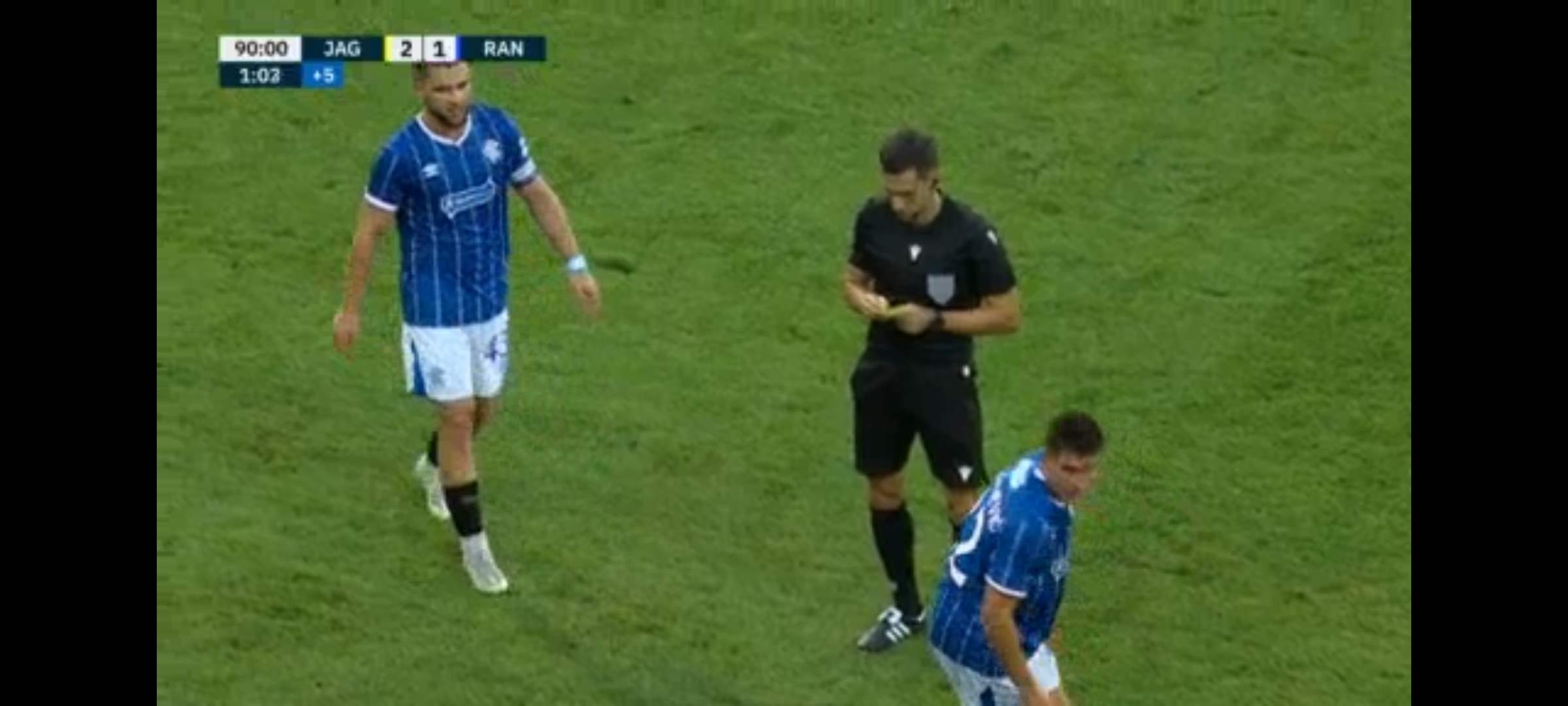
Derek McInnes’s tenure as Rangers manager began with precisely the kind of devastating disappointment that European football frequently inflicts upon ambitious Scottish clubs. What commenced as a dream scenario – an early own goal presenting Rangers with an instantaneous advantage against Polish opposition at the Chorten Arena – ultimately descended into a deflating 2-1 defeat that has left the Glasgow giants facing an uphill battle in next week’s return fixture at Ibrox. The manner of the defeat, characterised by successive defensive lapses and a collective failure to maintain standards when circumstances demanded maximum concentration, provides genuine cause for concern as Rangers contemplate their European trajectory.
Guilherme Montoia’s unfortunate own goal in the fourth minute seemed to present Rangers with the ideal foundation upon which to construct a commanding victory. Tuur Rommens’s low cross had been deflected past his own goalkeeper by the Jagiellonia defender, gifting McInnes’s team an unexpected gift that, in a rational footballing world, should have established the platform for comfortable progression. Instead, Rangers proceeded to squander this advantage through a succession of individual and collective errors that seemed almost deliberately calculated to undermine their position. By the time Kajetan Szmyt had added Jagiellonia’s second goal – itself arriving amid circumstances of defensive negligence – Rangers found themselves requiring a miraculous second-half recovery that, whilst coming close to materialising, ultimately failed to materialise sufficiently.
Ivor Pandur’s performance throughout the Jagiellonia encounter presented a somewhat contradictory narrative, encompassing moments of genuine competence alongside instances of disappointing passivity. The Rangers goalkeeper’s distribution throughout the match demonstrated solid technical quality – his ability to initiate attacks from the back and progress possession through accurate passing revealed a modern goalkeeper comfortable with possession-based football and happy to participate actively in build-up play. These positive attributes represented genuine strengths within Pandur’s overall contribution to proceedings.
However, Pandur’s inability to prevent Jagiellonia’s equalising goal represented a significant blemish on his performance record. When Szmyt converted Jagiellonia’s first goal following Pelec’s initial attempt, Pandur appeared somewhat passive in his goalkeeping actions. The chance to make a decisive intervention – to position himself assertively, to command his box with authority – seemed to pass him by. Whilst defending is ultimately a collective responsibility and cannot be attributed solely to individual goalkeepers, the goalkeeper’s positioning and decisiveness remain crucial factors in preventing goals. Pandur’s lack of commanding presence in these critical moments contributed to the preventable nature of Jagiellonia’s breakthrough.
Conversely, his inability to maintain a clean sheet should not be attributed entirely to goalkeeping error – the defending in front of him created so many preventable situations that Pandur himself became almost secondary to the broader defensive collapse occurring across Rangers’ backline. A goalkeeper can contribute only so much when his defensive colleagues are repeatedly failing to execute fundamental defensive principles.
Ross McCrorie’s inclusion in the Rangers starting formation reflected the injury absence of established right-back Ben Godfrey, creating an opportunity for the defender to demonstrate his capabilities at this level of European competition. McCrorie’s performance proved reasonably competent without reaching the levels of excellence that contemporary football demands from full-back positions. His fundamental task – to mark his opposing winger, to provide defensive cover on the flank, and to contribute to Rangers’ attacking play when opportunities arose – was executed with adequate but unremarkable consistency.
The most significant criticism of McCrorie’s performance involved his lack of reactive speed when confronted with Jagiellonia’s second goal. As the counter-attack developed following Aasgaard’s loss of possession in advanced territory, McCrorie appeared unable to recover position sufficiently quickly to prevent the danger from materialising. His positioning at this crucial moment suggested that he had been dragged out of his normal defensive shape, a common problem when full-backs are required to make attacking contributions and then fail to recover defensively when possession is lost.
Throughout the remainder of the match, McCrorie demonstrated adequate technical ability and maintained reasonable discipline tactically. He was not a primary culprit for the defensive collapse that characterised Rangers’ display. However, his lack of commanding presence and his occasionally ponderous movement suggested that he remains something of a peripheral figure in McInnes’s defensive architecture rather than a player upon whom the manager can rely with complete confidence during demanding European competition.
Dujon Sterling’s performance at Chorten Arena provided genuine ammunition for critics who have questioned the Scottish defender’s suitability for elite-level football. His decision-making throughout the match oscillated between merely questionable and genuinely catastrophic, with a succession of moments that suggested either inadequate footballing intelligence or simply an inability to process information with sufficient rapidity to generate appropriate defensive responses.
Sterling’s opening forty-five minutes were particularly troubling. His attempt to play a long cross-field pass in Yokota’s direction – a ball that was badly misdirected and essentially summed up his entire contribution during the first half – exemplified his tendency to overestimate his technical capabilities. Modern centre-backs are increasingly expected to contribute to possession-based football and participate actively in build-up play, but such responsibilities demand the kind of technical security that Sterling simply does not consistently demonstrate. His willingness to attempt ambitious passes, combined with his frequently unreliable execution, creates genuine danger for his own team.
Perhaps most damagingly, Sterling came perilously close to creating a catastrophic error when attempting a back-pass to Emmanuel Fernandez that seemed destined to create immediate goalscoring opportunity for Jagiellonia. Only Fernandez’s reactive intervention prevented an absolute disaster, but the fact that Sterling placed his partner in such a precarious position speaks volumes about his decision-making processes under pressure. For a player operating in such a critical defensive position, such lapses represent unacceptable vulnerabilities that opposition teams will inevitably exploit.
Emmanuel Fernandez’s performance against Jagiellonia represented genuinely catastrophic defending, a display that must rank among the most disappointing individual contributions offered by any Rangers player throughout McInnes’s managerial tenure. The Colombian defender appeared to embody every defensive weakness that modern football punishes with brutal efficiency – poor positional sense, inadequate concentration, and a worrying tendency to compound minor errors into major disasters through subsequent misjudgement
The opening Jagiellonia goal – their equaliser arriving in the thirteenth minute – encapsulated Fernandez’s fundamental problems. As the ball slid through the box following Pelec’s initial attempt, Fernandez’s lackadaisical attempted clearance proved entirely inadequate. His failure to commit decisively to the situation, to position himself appropriately, or to execute a clean clearance allowed Szmyt the opportunity to finish clinically. The preventable nature of this goal – arriving against opponents who had barely mounted any coherent attacking threat – represented an unacceptable lapse in defensive standards that should have triggered immediate alarm bells regarding team performance
Worse still, Fernandez’s contribution to Jagiellonia’s second goal bordered on farcical. At a critical stage of the match when Rangers genuinely required steadying defensive performances, Fernandez inexplicably slipped in the middle of the penalty area, creating immediate danger that Szmyt ruthlessly punished. This wasn’t a case of an exceptional opponent creating space through superior athleticism or technical quality – this was a defender literally undermining his own team through basic physical execution failure.
Fernandez’s body language and general demeanour throughout the encounter suggested a player lacking in confidence and fundamentally uncomfortable with the demands of elite European football. His early withdrawal from the starting lineup at the interval represented a merciful conclusion to an absolutely dreadful individual performance that, whilst not singlehandedly responsible for Rangers’ defeat, certainly contributed substantially to the collective defensive failure.
Tuur Rommens presented a considerably more favourable narrative than his defensive colleagues, offering a performance that encompassed both positive contribution and moments of genuine attacking menace. The Dutch left-back’s crossing ability – demonstrated most notably in the delivery that led to Montoia’s own goal – revealed technical capability that contemporary football increasingly demands from full-back positions. His ability to deliver quality service into dangerous areas, combined with his willingness to drive forward and create attacking situations, represented a substantial bright spot in an otherwise dismal Rangers attacking display.
However, Rommens’s performance was not entirely without blemish. His receipt of a harsh booking early in the second half – a disciplinary card for what appeared a fairly innocuous challenge mere seconds after the interval commenced – suggested a player perhaps operating on the knife’s edge of concentration and decision-making. Defenders receiving early second-half bookings frequently struggle to maintain their contribution for the remainder of the match, with the psychological burden of being one subsequent offense away from dismissal inevitably affecting their aggression and commitment levels.
Despite this minor criticism, Rommens emerged as one of Rangers’ more reliable defenders throughout the encounter. His technical quality, his attacking contribution, and his generally solid positional sense marked him as a player capable of operating effectively at this level of European competition. The contrast between Rommens’s reasonably assured display and Fernandez’s absolute catastrophe underscored just how variable Rangers’ defensive standards proved throughout the encounter.
The central midfield performances representing Rangers’ attempt to control the match’s tempo and dictate proceedings proved disappointingly ineffective. The unit comprising Dan Neil, Tochi Chukwuani, and Mohamed Diomande failed collectively to establish the kind of controlling midfield presence that modern football demands, particularly when confronting European opposition of Jagiellonia’s standing.
Dan Neil, entrusted with the captain’s armband and the responsibility that accompanies such an honour, fundamentally failed to grasp his opportunity to demonstrate genuine leadership and controlling influence. His decision-making throughout the encounter frequently appeared questionable, particularly during crucial moments when the match was shifting decisively against Rangers. In the build-up to Jagiellonia’s second goal – the moment when Rangers’ European hopes were genuinely slipping away – Neil’s positional sense and tactical awareness seemed entirely absent.
The captain’s role transcends merely executing individual defensive and passing responsibilities; it involves communicating with teammates, maintaining focus and concentration during moments when collective discipline threatens to falter, and projecting an aura of composure that influences squad mentality. Neil’s performance suggested a player unable to maintain adequate standards when circumstances deteriorated, a troubling realisation for a player wearing such a significant responsibility.
His replacement at the interval represented a tacit acknowledgement that Neil was unlikely to exert positive influence during the second half. Whether through fatigue, poor positioning, or simply an inability to adapt to Jagiellonia’s tactical adjustments, Neil appeared increasingly ineffective as the first forty-five minutes progressed. For a captain wearing the armband in a European qualifier, such a performance represents genuine disappointment.
Tochi Chukwuani’s inclusion in the starting formation – having apparently been rested in the previous weekend’s domestic fixture – suggested McInnes’s confidence in his ability to impact proceedings against the Polish opposition. However, Chukwuani’s contribution proved markedly inferior to whatever expectations the manager may have harboured. The midfielder’s decision-making appeared rash, his tactical discipline questionable, and his overall influence on proceedings negligible.
His receiving of a first-half booking for a rash challenge on Wojtuszek served as symbolic representation of Chukwuani’s broader performance issues. At a stage when Rangers were supposedly controlling the match, Chukwuani’s loss of discipline represented an unnecessary indulgence that the match situation did not warrant. His replacement at the interval alongside Neil reflected McInnes’s assessment that alternative midfield options offered superior potential for positively influencing proceedings during the second period.
Within the disappointing midfield collective, Mohamed Diomande emerged as the standout contributor, offering the kind of technical quality and intelligent play that his teammates consistently failed to match. His clever reverse pass – which set Rommens free in the build-up to Rangers’ opening goal – demonstrated precisely the kind of creative thinking that European football demands. Throughout the first half in particular, Diomande contributed considerably of positives, his positioning generally sound and his decision-making frequently intelligent.
Diomande’s performance, whilst hardly transcendent, at least suggested a player capable of operating at the required standard without creating the kind of liabilities that Sterling, Fernandez, and Neil embodied. His survival within the starting formation throughout the entire match – in contrast to his displaced colleagues – reflected McInnes’s assessment that Diomande remained a sufficiently valuable contributor to warrant continued involvement.
The attacking third of Rangers’ formation proved almost entirely ineffectual throughout the encounter against Jagiellonia, with the collective contribution of the forward contingent representing a profound disappointment for a club that had invested significantly in offensive reinforcement.
Thelo Aasgaard’s performance represented one of the most puzzling inversions in football – a player apparently enjoying outstanding form in the preceding weekend’s domestic fixture somehow transformed into a virtually unrecognisable entity within the span of mere days. His night at the Chorten Arena proved absolutely forgettable, characterised by a persistent sense that he was operating miles from the pace of European competition. He lost possession in the edge of the opposition box at precisely the moment when Rangers could least afford defensive negligence, a mistake that directly led to the counter-attack culminating in Jagiellonia’s second goal.
The left-sided forward position demands technical quality, intelligent movement, and direct attacking threat. Aasgaard failed to provide any of these fundamental elements throughout the encounter. His inability to impact proceedings when his team desperately required leadership and decisive play represented a significant disappointment for a player who had apparently been performing well during domestic competition.
Youssef Chermiti, preferred to Lawrence Shankland in the central forward position, offered a reasonably solid if ultimately unspectacular contribution to Rangers’ attacking endeavours. His early pressing high up the pitch – attempting to compress Jagiellonia’s defensive shape and force errors in possession – demonstrated at least some understanding of tactical requirements. He won back possession on occasions through aggressive pressing, suggesting a willingness to contribute defensively when attacking opportunities failed to materialise.
However, Chermiti’s shooting attempts, including one effort from distance, entirely lacked the necessary power or accuracy to genuinely trouble Jagiellonia’s goalkeeper. His handful of half-chances throughout the match were approached without conviction or clinical finishing quality. Whilst Chermiti cannot be held responsible for Rangers’ collective attacking inadequacy, his failure to generate genuine goalscoring threat represented a missed opportunity to shift match momentum through individual qualit
Daisuke Yokota’s introduction to Rangers football in a European qualifier, merely hours after completing his three million four hundred thousand pound transfer, provided the kind of demanding baptism that few newly arrived players could successfully navigate. The Japanese winger, having participated in zero training sessions with his new colleagues, was asked to operate at elite level in one of the most hostile environments European football offers. In such circumstances, his performance – whilst disappointing – perhaps deserves contextual understanding that pure numerical rating alone fails to convey.
Yokota’s fundamental problem involved his inability to impose himself meaningfully upon proceedings, to demonstrate the attacking quality that supposedly warranted his substantial financial investment. He lacked direct threat, instead frequently slowing play and seeking teammates to create opportunities rather than attempting to progress aggressively at opposition defenders. The psychological shock of being thrust into such demanding circumstances, combined with his complete lack of preparation time, likely contributed substantially to his underwhelming display.
His defensive vulnerability – being beaten by Smit for Jagiellonia’s first goal – represented an additional concern, though again the lack of preparation time and match fitness must be considered contextual factors. For a newly arrived player operating without pre-match preparation, Yokota’s performance, whilst disappointing, was perhaps inevitably going to fall short of what Rangers required
Nicolas Raskin’s introduction at the interval brought a degree of composure and technical security to Rangers’ midfield, representing a clear upgrade on Neil and Chukwuani’s earlier inadequacy. The midfielder’s possession-based football and intelligent positioning marked a tactical shift toward controlling possession rather than desperately attempting to recover from defensive catastrophe. However, despite providing some stability, Raskin failed to generate the kind of transformative impact that Rangers desperately required when pursuing the goals necessary to overturn their deficit.
Findlay Curtis provided genuinely encouraging evidence of emerging potential that might yet compensate for Rangers’ disappointing veteran performers. The nineteen-year-old, introduced at the interval in place of Yokota, immediately demonstrated the kind of fearlessness, directness, and attacking intent that Rangers required. His late opportunity – a chance carved out following intelligent link-up play with Raskin – demonstrated his capacity to generate meaningful attacking moments even within such a demanding environment.
Curtis’s shot striking the woodwork in added time represented the closest Rangers came to a genuinely dramatic second-half recovery. His performance suggested a player emotionally and technically capable of operating at this level, a genuine contrast to many of his more established teammates. Whether McInnes affords Curtis subsequent opportunities to demonstrate his capabilities remains to be seen, but his performance against Jagiellonia clearly warranted serious consideration.
Cammy Devlin’s introduction represented an attempt to add intensity and workrate to Rangers’ struggling midfield. Whilst his contribution involved genuine effort and commitment, his impact on match proceedings remained ultimately negligible. He worked hard – a phrase frequently used to describe players whose technical contribution barely registers on match analysis – but appeared unable to generate anything approaching the kind of decisive play that Rangers’ situation demanded.
Vanja Dragojevic’s introduction for the final fifteen minutes represented an attempt to provide defensive stability as Rangers abandoned attacking aspirations and instead focused on preventing further damage. His performance during this brief appearance contributed little of genuine value, suggesting a player struggling to find consistent form within McInnes’s squad structure.
Whilst individual performances undoubtedly contributed to Rangers’ disappointing defeat, the match result reflected broader tactical and systemic failures that extend considerably beyond individual player assessment. McInnes’s team selection appeared unbalanced, his tactical adjustments throughout the match proved frequently ineffective, and the collective defensive approach suggested confusion regarding fundamental footballing principles.
The speed with which Rangers surrendered their early advantage – transforming an unexpected own goal into a two-goal deficit – indicated a team psychologically unprepared for the demands of European competition. Elite clubs typically extend their advantages when fortune smiles upon them; Rangers instead appeared rattled and increasingly disorganised as Jagiellonia mounted their comeback
The return fixture at Ibrox presents Rangers with a genuine opportunity to resurrect their European aspirations. Playing at home, supported by their own supporters, and hopefully having incorporated lessons from their Polish defeat, Rangers retain a mathematical possibility of progressing. However, the scale of their task has substantially increased, requiring not merely a victory but potentially a substantial scoreline to overcome Jagiellonia’s crucial away goal advantage.
Rangers’ defeat in Poland provided Derek McInnes with a sobering introduction to European competition management. Individual performances highlighted genuine vulnerabilities within the squad – particularly in defensive positions – that require urgent attention if the club harbours serious ambitions of sustained European relevance. The return fixture will determine whether Jagiellonia’s victory represents merely a temporary setback or the beginning of another disappointing European campaign for the Glasgow giants.