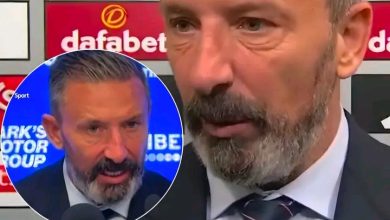
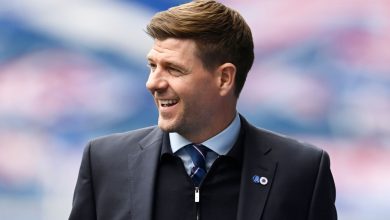
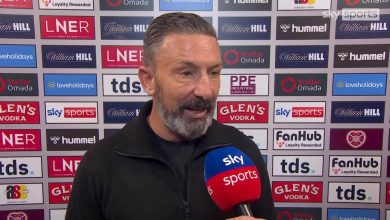
Rangers vs Hibernian: The Match That Could Define—or Destroy—Derek McInnes’ Ibrox Experiment

Derek McInnes arrived at Rangers with considerable fanfare and expectations. The appointment of the Hearts manager represented significant appointment within Scottish football, with supporters and organizational leadership convinced that McInnes possessed the necessary tactical sophistication and managerial acumen to restore Rangers to title-contending status. The 2026-27 campaign was supposed to represent the foundation of McInnes’ transformational project—the beginning of a new successful era at Ibrox.
Instead, after merely two competitive matches, McInnes finds himself navigating circumstances far more precarious than early optimism suggested. Rangers are winless in their opening matches, having drawn against Dundee United and then suffering a genuinely embarrassing defeat to Jagiellonia Białystok in Poland. The manner of these results—particularly the Europa League loss—has raised immediate questions regarding both McInnes’ tactical approach and whether the squad adjustments undertaken during summer recruitment have produced the anticipated improvements.
Now comes Hibernian, arriving at Ibrox on Sunday with genuine psychological advantage and historical precedent on their side. David Gray’s Edinburgh side possess recent victory against Rangers and stand on the verge of matching a remarkable historical record—achieving back-to-back victories over Rangers for the first time since 2005. For McInnes, a loss to Hibernian would represent considerably more than merely two consecutive defeats; it would constitute potential humiliation and immediate validation of supporter concerns that the new manager may represent another false dawn rather than genuine transformational appointment.
Understanding the stakes of Sunday’s Hibernian fixture requires recognition of Derek McInnes’ current positioning within the Rangers hierarchy. The manager arrived with substantial expectations and considerable autonomy regarding squad construction and tactical implementation. Nine summer signings already integrated into the squad represent substantial organizational commitment to McInnes’ vision.
However, early-season results have subjected this vision to immediate scrutiny. Professional football operates according to harsh evaluation frameworks, and managers receive minimal grace periods for implementation timelines regardless of their previous accomplishments or the scope of squad reconstruction undertaken. McInnes understood this reality upon accepting the Rangers position; nevertheless, the speed with which early setbacks have accumulated means that patience within the supporter base and organizational hierarchy is already diminishing.
The comparison to Russell Martin—the manager who preceded McInnes’ predecessor—carries particular sting. Martin arrived at Rangers with considerable expectations, undertook significant squad renovation, and departed within months after failing to establish convincing early-season performance trajectory. Supporters harbored legitimate optimism regarding Martin’s appointment; when results failed to materialize, the narrative rapidly shifted toward criticism and organizational dysfunction.
McInnes entered Rangers with greater credibility than Martin possessed, having demonstrated sustained success at Hearts and Aberdeen. Nevertheless, the early results have created narrative vulnerability. A second consecutive defeat—particularly against Hibernian, a club generally perceived as less prestigious than Rangers—would substantially accelerate concerns that McInnes, despite superior credentials, represents another managerial misstep rather than long-term solution.
The pressure facing McInnes on Sunday represents genuine weight. A victory provides temporary reprieve and opportunity to reestablish narrative momentum. A defeat transforms the nascent McInnes era from promising new chapter into potential organizational crisis requiring immediate managerial reconsideration.
The manner of Rangers’ Europa League defeat to Jagiellonia Białystok provides essential context for understanding the urgency McInnes faces entering Sunday’s fixture. The loss was not merely disappointing; supporters and observers have characterized it as genuinely embarrassing—a performance that suggested organizational dysfunction and tactical confusion rather than merely suboptimal execution.
Rangers demonstrated defensive vulnerabilities, poor decision-making, and ineffective tactical coherence throughout the Poland encounter. McInnes was visibly frustrated on the touchline at the Chorten Arena, his animated reactions suggesting frustration with his squad’s performance levels and their failure to implement his tactical instructions effectively.
For supporters observing this European disappointment, the question inevitably emerged: If Rangers cannot defeat Polish opposition in European qualifying, how can McInnes realistically establish this organization as Scottish Premiership title contender? The European result infected domestic confidence and transformed Sunday’s Hibernian fixture from important match into genuinely consequential encounter upon which early judgments regarding McInnes’ tenure will substantially rest.
McInnes himself has indicatd that the early-season performance issues involve execution failures rather than fundamental tactical deficiency. The manager suggested that improved decision-making and greater concentration should provide “easy fix” for the identified problems. However, supporters have legitimate reason for skepticism when managers suggest that issues should be easily remedied yet continue persisting.
The narrative surrounding Hibernian’s potential victory—establishing first back-to-back victories over Rangers since 2005—carries genuine historical significance. Records of this nature represent rare occurrences within contemporary Scottish football, reflecting the established power differential between Rangers and clubs like Hibernian.
Since 2005, Rangers have retained consistent competitive advantage over Hibernian, winning substantially more encounters and establishing themselves as clearly superior institution. The idea that Hibernian might replicate a feat unaccomplished for two decades—consecutive victories over Rangers—represents remarkable achievement within the context of contemporary Scottish football’s power structures.
For David Gray’s Hibernian side, the possibility of establishing this historical record would represent significant psychological accomplishment and provide concrete evidence of the club’s competitive elevation. Hibernian have worked systematically toward establishing themselves as genuine competitive force rather than permanent challengers to Rangers and Celtic supremacy. A back-to-back victory sequence would provide objective validation of this improved status.
However, this historical opportunity also creates psychological vulnerability for McInnes and Rangers. Losing a match against Hibernian carries greater humiliation potential precisely because the Edinburgh club represents underdog narrative. Supporters can accept defeats to elite opposition within context of competitive progression; defeats to Hibernian suggest organizational failure and inadequate competitive standardRangers’ recent record against Hibernian reveals concerning pattern that McInnes must address urgently. While Rangers maintain advantage across their last five meetings (winning three), the sequence of results demonstrates problematic momentum. Rangers are winless in their last two encounters with Hibernian, including the aforementioned 2-1 defeat in May 2026.
More troubling for McInnes is Rangers’ home record at Ibrox. The Edinburgh club has demonstrated capacity to trouble Rangers at their own stadium, with Rangers having lost two of their last five home encounters against Hibernian. This statistic suggests that Hibernian possess specific tactical or psychological factors enabling them to perform effectively within Ibrox environment—factors that McInnes must understand and counteract.
The May 2026 victory that Hibernian secured at Ibrox specifically represents the most recent reference point for both organizations entering Sunday’s fixture. Hibernian departed Govan with confident knowledge that they could trouble Rangers effectively. Rangers simultaneously departed from their home fixture having failed to overcome opposition generally considered less prestigious, creating psychological vulnerability that McInnes must overcome through tactical adjustment and squad mentality management
While Hibernian have experienced mixed early-season results—losing 2-1 to Motherwell in their Scottish Premiership opener while subsequently defeating Shkendija in European qualifying—the Edinburgh club cannot be dismissed as ineffective opposition. David Gray’s tactical organization and systematic approach have positioned Hibernian as genuinely competitive outfit capable of troubling Rangers effectively.
Hibernian’s European qualifying success against Shkendija demonstrates organizational capability and suggests that Gray has positioned his squad to perform under competitive pressure. The victory, while achieved against Polish opposition of inferior quality to Jagiellonia Białystok, nevertheless confirms that Hibernian enter Ibrox with genuine confidence and operational coherence.
Additionally, Gray has proven himself as one of Scottish football’s most tactically sophisticated managers. The Hibernian boss has engineered systematic improvement within his squad and established organizational principles enabling the club
For McInnes specifically, Sunday’s challenge involves more than merely securing three points. The manner in which Rangers achieve victory—or fail to—will substantially influence early narrative development regarding his managerial tenure. A narrow, unconvincing victory would provide relief but might not dispel developing concerns. A dominant, convincing performance would provide genuine evidence that McInnes’ tactical framework is beginning to coalesce and that early-season problems are indeed remediable through better execution.
McInnes must demonstrate through tactical setup and squad organization that he possesses solutions to the problems evident in recent performances. The manager must show that he can construct midfield control, establish defensive organization, and orchestrate attacking patterns effectively against Hibernian’s systematic approach.
The specific tactical matchup between McInnes and Gray represents genuine competitive clash between two sophisticated tactical minds. Gray has demonstrated capacity to organize Hibernian effectively against elite opposition; McInnes must respond with tactical adjustments that enable Rangers to overcome this organized resistance while simultaneously establishing that his recent recruitment and tactical framework represent improvement over predecessor Danny Rohl’s approach.7
Beyond tactical consideratins, McInnes faces significant challenge regarding squad mentality. Teams that accumulate early-season setbacks frequently develop psychological patterns wherein subsequent defeats feel inevitable rather than surprising. Rangers’ winless start to the campaign risks creating exactly this mental pattern—expectation of continued struggle replacing confidence in eventual success.
McInnes must prevent this psychological deterioration from calcifying. The manager requires demonstration from his squad that early setbacks represent aberrations rather than indicators of underlying organizational dysfunction. Against Hibernian, Rangers must show the kind of resilience and mental toughness necessary for reversing early-season momentum.
The psychological component of football cannot be overestimated. Players who believe in their organization and their manager’s tactical framework perform measurably better than players harboring doubts. After two defeats, McInnes’ squad needs concrete evidence that the manager possesses answers to the identified problems and that improvement remains realistic rather than aspirational.
McInnes’ early-season struggles carry particular significance given the substantial financial investment Rangers have undertaken in summer recruitment. Nine new signings represent considerable organizational commitment and represent implicit declaration that Rangers’ leadership believes McInnes possesses superior tactical framework and recruitment judgment compared to previous regimes.
Early-season setbacks therefore represent not merely performance failures but also implicit commentary on recruitment decision-making and managerial judgment. If McInnes has assembled squad lacking necessary quality or cohesion, then questions regarding the entire recruitment strategy inevitably emerge. Conversely, if McInnes can demonstrate that his squad possesses genuine quality and that early setbacks represent execution failures rather than quality deficiency, then the summer investment narrative shifts toward patient implementation rather than organizational misjudgment.
Sunday’s match against Hibernian provides opportunity for McInnes to validate the summer recruitment through demonstrating that his assembled squad possesses sufficient quality for overcoming Hibernian’s organized opposition. Victory would imply that summer investment was well-spent and that McInnes’ squad construction represents improvement. Defeat would intensify questions regarding recruitment wisdom and whether McInnes’ squad selections represent adequate response to identified organizational needs.
Supporters arriving at Ibrox on Sunday carry legitimate concerns rather than mere speculation. The combination of opening-match draw against Dundee United, embarrassing European defeat to Jagiellonia Białystok, and persistent questions regarding McInnes’ tactical framework have eroded early optimism that commonly accompanies new managerial appointments.
Professional football supporters are notoriously unforgiving of sustained underperformance, regardless of managerial pedigree or organizational investment. McInnes entered with considerable credit; early setbacks have depleted this credit substantially. A defeat to Hibernian would accelerate supporter concerns and potentially transform early skepticism into genuine questioning of whether McInnes represents adequate managerial solution for Rangers’ competitive ambitions.
Additionally, supporters have experience with managerial transitions producing extended transition periods without corresponding competitive success. The Russell Martin comparison, while perhaps unfair given McInnes’ superior credentials, reflects legitimate supporter concern that another promising appointment might fail to translate into competitive reality.
Should Rangers defeat Hibernian convincingly on Sunday, alternative narrative immediately emerges. Victory would provide temporary reprieve from accumulating pressure and create opportunity for McInnes to reestablish managerial authority and squad confidence. A dominant performance would specifically validate McInnes’ assessment that early setbacks represent execution failures remediable through improved concentration and tactical discipline.
Victory would also provide psychological foundation for subsequent matches. Momentum, while not determining competitive outcomes, significantly influences psychological patterns within squads. Winning against Hibernian would reestablish belief that McInnes’ framework produces positive results and that the new managerial era remains capable of delivering competitive success.
Furthermore, victory would effectively neutralize the Hibernian historical narrative. Should Rangers win decisively, questions regarding potential back-to-back defeats become irrelevant. The focus would shift from Hibernian’s opportunity toward Rangers’ positive response to early adversity and their demonstrated capacity for competitive recovery.
While Sunday’s match should not be hyperbolically characterized as season-defining, it carries genuine significance regarding trajectory and early-season momentum. Rangers’ title ambitions require establishing consistent winning patterns; early setbacks risk creating narrative of organizational dysfunction that becomes difficult to overcome regardless of subsequent improvement.
McInnes’ capacity to immediately arrest early-season decline will significantly influence whether supporters maintain confidence in his project or alternatively begin genuine questioning regarding appointment’s wisdom. Early managerial crises frequently prove temporary; delayed managerial crises frequently prove irreversible. McInnes requires rapid demonstration that early problems are manageable rather than systemic.
Additionally, McInnes must establish competitive standard against Scottish opposition. While European failures might be partially excused given squad transition and early-season timing, domestic defeats against peers like Hibernian suggest inadequate competitive quality or tactical framework. McInnes must prove domestically competent regardless of European performance, and Sunday’s fixture provides opportunity for this validation.
Derek McInnes enters Sunday’s Hibernian fixture at a critical junction of his Rangers tenure. While the match should not be hyperbolically characterized as position-determining, victory carries substantial meaning regarding managerial credibility, squad competence, and organizational trajectory. Defeat would represent third consecutive competitive setback and would substantially accelerate questions regarding McInnes’ appointment wisdom.
The pressure facing McInnes on Sunday is genuine and legitimate. The manager understood upon accepting Rangers’ position that early results carry disproportionate significance in establishing organizational direction and supporter confidence. Early success creates momentum and credibility; early failure creates doubt and organizational vulnerability.
For Hibernian, Sunday represents genuine opportunity. The Edinburgh club stands capable of achieving remarkable historical achievement—back-to-back victories over Rangers for the first time in decades. Gray’s tactical organization and Hibernian’s demonstrated capacity to trouble Rangers at Ibrox create legitimate scenario wherein upset represents possibility rather than mere speculation.
For Rangers supporters, Sunday’s result will provide genuine insight regarding whether McInnes represents genuine transformational appointment or alternative managerial misstep requiring organizational reconsideration. The stakes carry weight despite early campaign stage.
The stage is set for Sunday’s encounter. Derek McInnes seeks his first Rangers victory and opportunity to dispel accumulating concerns. Hibernian arrive with psychological advantage and genuine upset opportunity. Rangers supporters await demonstration that summer investment and managerial appointment represent adequate response to competitive challenges.
This is precisely when one match becomes consequential—when early season momentum hangs in balance and when managerial credibility remains sufficiently fragile that single result carries disproportionate significance. Sunday will determine whether McInnes has successfully navigated early-season adversity or whether he begins descent into the kind of organizational crisis that has previously felled promising managerial appointments at Ibrox.