Real Betis Stall on Nico Raskin Move as Rangers Hold Firm on Valuation, With Serie A Sides Also Circling

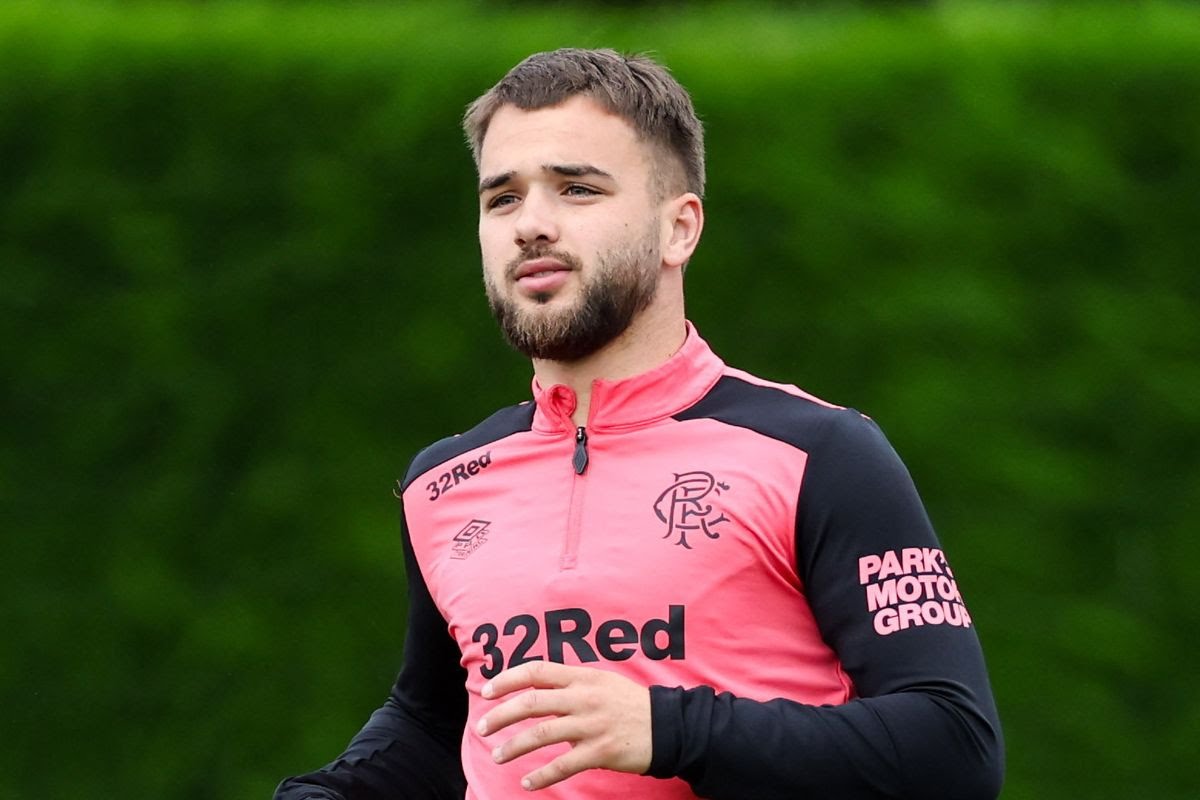
Real Betis appear to be cooling their pursuit of Rangers midfielder Nico Raskin this summer, with reports out of Spain suggesting the La Liga club are wary of the financial demands being placed on them by the Ibrox hierarchy. The 25-year-old Belgian international has become one of the most talked-about names in the current transfer window after a string of eye-catching displays for his country at the World Cup, and it is that tournament form which now has clubs across three or four different leagues weighing up whether to test Rangers’ resolve.
## A summer that changed Raskin’s stock
Before this summer, Raskin was viewed as a talented, combative central midfielder who had established himself as a regular for both club and country, but not necessarily as a marquee name attracting sustained continental interest. That picture has shifted considerably. Belgium’s run to the quarter-final stage of the World Cup put several of their squad members in the shop window, and Raskin was repeatedly singled out for his energy, range of passing and willingness to drive the team forward from deep midfield positions. Performances of that kind, delivered on the biggest stage in football, tend to have an immediate effect on a player’s market value, and Raskin’s situation looks to be no exception.
It is a familiar pattern in the modern transfer market: a player performs well domestically for a season or two, builds a reputation among those who follow the league closely, and then a major international tournament acts as an accelerant, broadcasting that form to a far wider audience of sporting directors, scouts and club executives who might not otherwise have had the player on their radar. For Raskin, a strong World Cup appears to have done exactly that, turning what might have been steady, incremental interest into something more urgent and more widespread.
Among the clubs credited with an interest, Real Betis have been the most consistently linked. Reports from Spanish outlet El Pespunte indicate that head coach Manuel Pellegrini has admired Raskin for some time and that the Andalusian club have been tracking him closely for months, rather than this being a reactive, tournament-driven addition to their list. Pellegrini has a long track record of working with dynamic, technically capable midfielders, and a player of Raskin’s profile would fit comfortably into the kind of possession-based, front-foot football he tends to favour.
The complication, according to the same reporting, is money. Betis are said to be trying to construct what has been described as a “compelling” financial package in an effort to convince Rangers to sell, but the fee and terms the Ibrox club are believed to be demanding are proving to be a deterrent. Rangers, for their part, appear to be in no rush to let their prized midfielder leave on the cheap, particularly given the boost his stock has received over the summer. It is a negotiating position that will be familiar to anyone who has followed Scottish football’s dealings with clubs further south and further afield: a selling club aware that a player’s value has risen sharply tries to capture as much of that increase as possible, while the buying club, however keen, tries to avoid paying what it may see as an inflated, tournament-inflated price.
That tension between admiration for a player and reluctance to meet the asking price is common at this stage of a transfer saga. Interest being reported does not necessarily translate into a bid being lodged, and a bid being lodged does not necessarily mean it reflects what the selling club considers fair value. Betis’ hesitancy, as described in the Spanish reports, suggests they remain some distance from an offer Rangers would find acceptable, even if the underlying interest from Pellegrini’s camp is genuine and has been sustained over a period of months.
From Rangers’ perspective, there is a reasonably clear incentive to hold firm. Selling a player who has just enjoyed a career-defining tournament, without extracting close to what he might now be worth, would represent exactly the kind of business Scottish clubs have historically been keen to avoid, even if financial pressures sometimes force their hand regardless. Ibrox has, over recent years, generated significant revenue through the sale of academy graduates and first-team regulars to clubs in England, Germany, Italy and elsewhere, and the club’s recruitment and sales strategy under its current football operations structure has generally reflected an awareness of market timing.
Raskin represents a particularly interesting case in that regard. He arrived at Rangers with a reputation as a promising young midfielder from the Belgian league, developed into a first-team mainstay, and has now added full senior international pedigree at a major tournament to his profile. Clubs assessing a fee for a player in that position typically factor in not just his output over a single season, but his age, his contract length, his versatility, and the premium that comes with proven tournament performance against high-calibre opposition. All of those factors appear to be working in Rangers’ favour as they assess what a fair valuation for Raskin should look like this summer.
Betis are far from the only club credited with an interest in the Belgian. Reports emerging from Italy suggest that both Atalanta and Bologna have registered their own interest in signing Raskin, adding a Serie A dimension to a story that already had Spanish and, by extension, wider European interest attached to it. Atalanta in particular have built a reputation over recent seasons for identifying underrated or emerging midfield talent from leagues outside Europe’s traditional “big five”, developing those players further and either integrating them into a squad that regularly competes for European qualification or selling them on at a significant profit. A move of that kind would not be out of character for the Bergamo club, who have shown a consistent appetite for technically sound, physically robust central midfielders in Raskin’s mould.
Bologna’s interest, meanwhile, reflects the club’s own recent trajectory. Having established themselves as a fixture in the upper half of Serie A and secured European football, Bologna have needed to strengthen a squad that will be competing on multiple fronts, and a combative, ball-carrying midfielder with top-level tournament experience would represent a sensible addition to that project. Whether either Italian club is prepared to match the valuation Rangers are believed to be holding out for remains to be seen, but their presence in the conversation underlines just how far Raskin’s stock has travelled since the start of the summer.
Villarreal have also been mentioned in connection with a possible move, though reports suggest their interest has not developed with the same intensity as that of Betis. The Yellow Submarine have, in recent seasons, positioned themselves as regular participants in European competition and have shown a willingness to spend selectively on players who can improve a squad built around a possession-heavy style. A midfielder of Raskin’s description would, in theory, suit that approach, though as things stand it appears Villarreal’s interest is being framed more as one option among several rather than an active, advanced pursuit.
Taken together, the picture that emerges is of a player generating interest across two of Europe’s major leagues simultaneously, with Spanish and Italian clubs all weighing up whether Raskin represents value at whatever price Rangers ultimately settle on. That kind of multi-league interest tends to work in the selling club’s favour, since competition between suitors, even at an early, speculative stage, gives Rangers additional leverage in resisting lowball offers and encourages interested parties to move more decisively if they want to avoid being priced out by a rival bidder.
Perhaps the most telling detail in the Spanish reporting is the suggestion that Betis are already looking at contingency options in central midfield, in case a deal for Raskin does not materialise on terms they are comfortable with. Description of the club being on alert for “developments” elsewhere in the market indicates that, while Pellegrini’s admiration for the player is real, Betis’ hierarchy are not prepared to let a single target dictate their entire summer recruitment plan. This is a fairly standard approach for clubs operating with defined budgets: identify a primary target, pursue that deal seriously, but keep parallel conversations open with alternative candidates so that momentum in the transfer window is not lost if the preferred move stalls or collapses.
For Rangers, this kind of behaviour from a suitor can cut both ways. On one hand, it may suggest Betis are not desperate enough to meet the Ibrox club’s asking price, which could ultimately see the Spanish side walk away from the deal entirely in favour of a cheaper alternative. On the other hand, clubs that identify back-up targets while still pursuing a primary one are often simply being prudent, and a move for Raskin could still be revived, potentially at a figure closer to Rangers’ valuation, if those alternative targets prove harder to sign or more expensive than initially thought.
While the transfer speculation has continued to build throughout the closing weeks of the window, Raskin’s on-field situation at Rangers has been relatively low-key by comparison. He was given an extended break following Belgium’s World Cup exertions, a standard arrangement for players who go deep into a major tournament, and as a result he was not included in the matchday squad for the club’s Premiership opener against Dundee United. That absence was put down to a managed return to full training and match fitness rather than any indication that a move was imminent or that he had been frozen out of first-team plans.
Since then, however, Raskin has been included in Rangers’ squad list submitted to UEFA for their Europa League qualifying tie against Jagiellonia Bialystok, a clear signal that head coach Derek McInnes intends to have the midfielder available for selection as the European campaign gets under way. Being named in a UEFA squad list does not guarantee regular starts, but it does confirm that, for now at least, Raskin remains very much part of the group McInnes is working with, rather than a player being deliberately withheld from action while a transfer is finalised.
That detail is significant in the context of the wider transfer saga. Clubs occasionally choose to rest or omit players who look close to a move, both to protect them from injury ahead of a switch and to avoid a scenario where a departing player features prominently in a competitive fixture only to leave a matter of days later. The fact that Raskin has instead been included in a squad for a genuinely important European qualifier suggests Rangers are, for the moment, planning as though he will remain part of the squad, even as background talks or scouting activity involving other clubs continue elsewhere.
## The broader context: Scottish football and player sales
Stories like this one have become a familiar part of the football calendar at Ibrox and at clubs across the Scottish Premiership more broadly. Scotland’s leading clubs have increasingly relied on developing or recruiting talented players, improving them through regular first-team football and continental competition, and then selling them on for significant profit once their value has risen. It is a model that has become almost essential to the financial sustainability of clubs competing domestically against sides with vastly larger television revenues, while also trying to compete in European qualifiers against clubs from leagues with considerably greater spending power.
Raskin’s situation fits that pattern closely. A player recruited for a fee that reflected his standing at the time has, through a combination of consistent club performances and a strong international tournament, significantly increased his market value in a relatively short space of time. For Rangers, the challenge now is less about whether to sell — most clubs in their position would accept an offer that reflected fair value, particularly for a player who is unlikely to sign a lengthy new contract at a discounted valuation once his stock has risen this much — and more about ensuring that any sale, if and when it happens, properly reflects the player’s current worth rather than an outdated valuation based on his level before the World Cup.
This is where the reported gap between Rangers’ asking price and Betis’ comfort level becomes particularly relevant. Selling clubs in Rangers’ position typically try to anchor negotiations to a player’s post-tournament value, using recent performances as justification for a higher fee, while buying clubs often argue that tournament form can be a temporary spike rather than a reliable indicator of sustained level, and price their offers accordingly. Bridging that gap is usually where transfer negotiations either succeed, through incremental movement from both parties, or stall entirely, with the selling club preferring to keep the player for at least another season rather than accept a fee it considers below market value.
With several clubs credited with an interest but no side yet reported to have made a bid that meets Rangers’ valuation, the most likely near-term outcome is a continuation of the current standoff. Betis may yet find a way to construct an offer that satisfies Ibrox, particularly if Pellegrini continues to push for the club to prioritise a midfield reinforcement of Raskin’s profile. Equally, interest from Atalanta, Bologna or another as-yet-unnamed suitor could intensify if talks with Betis do not progress, especially given how frequently Serie A clubs have moved decisively for players who have impressed at international tournaments in recent transfer windows.
For now, though, Raskin’s focus appears to remain on Rangers’ domestic and European fixtures, with his involvement in the squad for the Jagiellonia Bialystok qualifier suggesting Derek McInnes is planning around him rather than excluding him from first-team contention while speculation continues. Whether that changes before the transfer window closes will likely depend on how quickly one of his suitors is prepared to move closer to the valuation Rangers have set, and how much appetite Ibrox’s hierarchy has for holding out until a fee closer to that valuation materialises.
Until then, Raskin’s situation is likely to remain one of the more closely watched sagas of the summer window from a Scottish football perspective: a player whose value has clearly been transformed by a strong World Cup, a selling club with every incentive to capture as much of that increased value as possible, and a growing list of suitors across Spain and Italy each trying to work out whether, and at what price, a deal makes sense for them.