Scotland’s World Cup Dream Dies In Philadelphia As Nine Group Stage Exits Become A Painful Fact Of Life

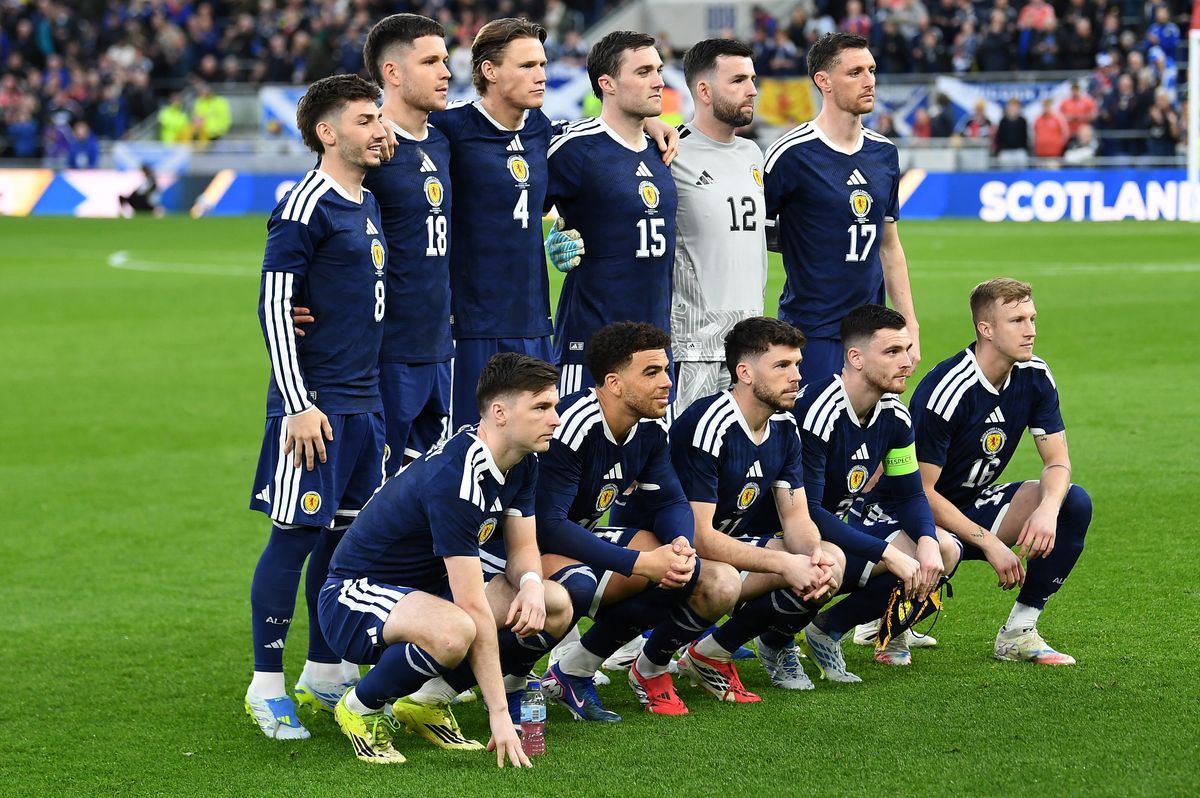
Steve Clarke said it first. Standing in the mixed zone at the Hard Rock Stadium in Miami on Wednesday night, still wearing the weight of a 3-0 defeat by Brazil on his shoulders, the Scotland head coach looked into the cameras and said the words that the Tartan Army had been dreading but already knew to be true.
“For sure I think we’re going home.”
He has been proven correct. Scotland’s elimination from the tournament has now been confirmed. The wait is over. The vigil is done. The results that Scotland needed to go their way did not go their way, and the final confirmation arrived on Saturday night in Philadelphia — the city where brotherly love is supposed to live, but where Scottish football dreams came to die in the summer of 2026.
Ghana needed to beat Croatia by three goals to provide Scotland with an unlikely stay of execution which would have taken matters into the final two unfinished groups in the early hours of Sunday morning. However, Croatia won the game 2-1 to seal second place in Group L behind England, who defeated Panama 2-0 to progress as group winners. Ghana also go through in third place with four points.
Croatia 2-1 Ghana. Final score. End of Scotland’s World Cup. Nine tournaments attended. Nine group stage exits. Not a single knockout stage appearance across the entirety of Scotland’s World Cup history. The record stands, unchanged, and the Tartan Army — who have followed their team to nine different World Cups across five different decades — will make the long journey home from America once again without the experience of a last-32 game to savour.
It is painful. It is familiar. And it demands honest examination.
—
**How The Dream Died: The Full Timeline**
To understand what Saturday night in Philadelphia meant, you need to trace the full arc of Scotland’s 2026 World Cup campaign — from the euphoria of the opening win in Boston to the quiet despair of watching a result in a game they were not even playing confirm their elimination.
Scotland arrived in the United States as the most celebrated travellers at the tournament. Scotland, who were backed in the USA by tens of thousands of Tartan Army, will now return home early from a ninth World Cup where they have exited at the group stages. Those supporters — who had waited 28 years for their country to qualify for a World Cup and who had committed enormous financial and emotional resources to making the trip across the Atlantic — deserved better than this. They always do. And yet here, as at every previous World Cup Scotland have attended, the journey ends before the knockout rounds begin.
After qualifying for a first World Cup since 1998, Scotland were handed a tough draw in a group containing both Brazil and Morocco, the teams ranked fifth and sixth in the world, along with Caribbean minnows Haiti. The draw was not Scotland’s friend, and there was an immediate recognition when Group C was confirmed that the path to the knockout stage would require performances well above what this generation of players had delivered at the previous two European Championships.
The opening game in Boston, however, suggested that maybe this time would be different. A 1-0 win over Haiti in Boston in their Group C opener gave Scotland a platform to build from. The result — Scotland’s first World Cup victory since 1990 — broke a 36-year drought that had weighed heavily on every previous squad that had fallen short in qualifying. For one warm evening on the east coast of America, the Tartan Army dared to dream. They filled the streets of Boston with colour and noise and the kind of infectious joy that only football at its best can produce.
A disappointing 1-0 defeat by Morocco at the same venue proved costly before Brazil outclassed them. The Morocco defeat was where the damage was really done. Conceding in the second minute, failing to equalise despite having what appeared to be a strong penalty claim ignored, and ultimately losing a game that Scotland needed at minimum to draw — it left them in a position where everything depended on the Brazil fixture. And when Brazil came to Miami and played the kind of football that makes them perennial World Cup favourites, the 3-0 defeat and the catastrophic goal difference it produced made everything that followed an exercise in desperate hope rather than realistic expectation.
—
**The Days Of Desperate Waiting**
In the days between the Brazil defeat and Saturday night’s confirmation of elimination, Scotland supporters experienced every emotion that football can produce — hope, brief elation, crushing disappointment, and the quiet resignation of a fanbase that has been through this particular journey too many times before.
Result after result in other groups went against Clarke’s side. South Africa’s victory over South Korea. Ecuador’s stunning win over Germany. Senegal’s dominant 5-1 demolition of Iraq. Each positive result from another group’s third-placed team pushed Scotland further down the standings, eating into the mathematical space that separated them from the eight qualifying spots available to third-placed nations.
By the time Saturday arrived, Scotland’s chances had been reduced to a decimal point. Statistical modelling by Opta put their probability of survival at just 0.07 per cent — not zero, but so close to zero that the difference was academic. They needed Ghana to beat Croatia by three goals, and then they needed specific results from two more groups playing in the early hours of Sunday morning. All three needed to happen. None could be missing.
Croatia beating Ghana 2-1 ended the conversation before it could fully begin. The result confirmed what Clarke had already told the media on Wednesday night — Scotland were going home. The only question after the Brazil game was when the official confirmation would come, not whether it would come. Saturday night in Philadelphia provided the answer.
—
**Nine World Cups. Nine Group Stage Exits.**
There is a number that defines Scotland’s entire World Cup history, and it is nine. Nine tournaments attended. Nine group stage exits. Not a single knockout stage appearance across the full span of Scotland’s participation in the most prestigious football competition on earth.
That record needs to be placed in proper context before it is used as a stick to beat this particular generation of players. Scotland are not a big footballing nation in the way that Brazil, Germany, France, or even England are big footballing nations. The player pool is limited. The resources available to develop elite talent are finite. The domestic league, for all the passion and history that surrounds it, does not produce players at the same volume or at the same technical level as the major European leagues.
Against that backdrop, simply qualifying for nine World Cups is an achievement. Attending the tournament at all — with all the logistical complexity, financial commitment, and emotional investment that involves — is something that many nations with comparable player pools have never managed at all. Scotland’s World Cup history, for all its painful group stage exits, is richer than the history of most football nations on earth.
But context, however valid, does not make the losses sting less. And when you look specifically at the 2026 campaign — at the performances in Miami and Boston, at the goal difference, at the failure to score more than one goal in three games — it is difficult to argue that Scotland performed anywhere near the level their pre-tournament preparation and squad quality suggested they should have.
One goal scored in three games at a World Cup. Against Haiti, Brazil, and Morocco — admittedly not an easy group — Scotland managed a solitary strike. That is the statistic that sits most uncomfortably, because it goes to the heart of the team’s most persistent limitation. Scotland can be organised. Scotland can be hard to beat. Scotland can compete. But when the moments arrive — when the clear chances present themselves and the pressure is highest — they too often fail to convert them into goals.
Without goals, there is no winning. Without winning, there is no progression. The pattern has repeated itself at Euro 2020, Euro 2024, and now the 2026 World Cup — and the question it raises, uncomfortable as it is, is whether this is a coaching and tactical problem or a fundamental issue with the quality and confidence of Scotland’s attacking players in the highest-pressure environments.
—
**The Clarke Legacy: Achievement And Limitation**
Steve Clarke resigned as Scotland head coach within an hour of Saturday night’s confirmation of elimination — a shock development that added a layer of finality to an already difficult evening for Scottish football supporters.
Clarke was in the role for seven years and led Scotland to record three major finals, including two consecutive European Championships and this World Cup. That achievement — qualifying for three consecutive major tournaments after a 22-year absence from the international football stage — represents the most sustained period of success that any Scotland manager has achieved in the modern era. Clarke delivered on the fundamental remit he was given when he took the job, and he delivered on it repeatedly and convincingly.
The qualifying campaigns under Clarke were often brilliant. The famous win over Serbia in the Euro 2020 play-off. The 2-0 win over Spain at Hampden. Scott McTominay’s overhead kick. Kenny McLean’s strike from the halfway line. Those moments of individual and collective brilliance in qualification matches will live long in the memory of everyone who witnessed them, and they are testimony to the quality that Clarke was able to extract from his players when the stakes were at their highest in a qualifying context.
But qualifying and performing at tournaments are different challenges, and Clarke’s record at the tournaments themselves — one win, multiple group stage exits, minimal goals scored — is the aspect of his tenure that his critics have focused on with increasing urgency after three consecutive disappointments.
The question that Scottish football must now grapple with honestly is whether a different manager, with the same players, would have produced better tournament results. Or whether the limitations at tournament level reflect something structural about Scottish football’s player development and technical standards that no individual manager, however talented, can fully overcome.
There is no easy answer to that question. The truth probably lies somewhere in the middle — better tactical preparation and more adventurous attacking play might have squeezed a few more goals out of Scotland’s campaigns, but the fundamental reality remains that Scotland do not produce attacking talent at the same level or volume as the nations they compete against at major tournaments.
—
**The Tartan Army: Always The Best Part**
In any honest assessment of Scotland’s 2026 World Cup, one element stands entirely beyond criticism — the supporters who made the journey to the United States and created an atmosphere and an image of Scotland that the world will not quickly forget.
The Tartan Army in America were everything that football supporters should be — passionate, colourful, generous, and utterly devoted to a team that did not always reward their devotion with the results it deserved. They marched through Boston with bagpipes. They filled stadiums with noise. They embraced American cities and American football fans with a warmth and good humour that earned them admirers everywhere they went.
Those supporters invested financially, emotionally, and in terms of time and commitment to follow Scotland across the Atlantic and back. They deserved a knockout stage game. They deserved the experience of watching their team make history for the first time. They did not get it, and the disappointment they carry home with them is real and legitimate.
But they will be back. They always come back. The Tartan Army has survived nine World Cup group stage exits across five decades and has never stopped believing that the tenth will be different. That faith — irrational, stubborn, magnificent — is one of the most extraordinary things in world football, and it deserves to be celebrated even in this moment of collective disappointment.
—
**What Happens Next: The Road Back To Relevance**
Scotland are next in action in the Nations League in September with a trip to Slovenia on September 26 followed by the visit of Switzerland to Hampden three days later.
That return to competitive action — just three months away — arrives in a completely different context now that Clarke has resigned and the Scottish FA must identify and appoint a new head coach capable of taking the team forward into the next cycle of major tournaments. Euro 2028, which Scotland will co-host alongside England, Wales, Northern Ireland, and the Republic of Ireland, is the immediate target on the horizon — and the guaranteed home games that come with co-hosting status mean that qualification, in the traditional sense, is largely assured.
But qualifying by virtue of being a host nation is very different from qualifying on merit through a campaign. The Scottish FA and whoever they appoint as Clarke’s successor will need to use the Nations League campaign and the intervening period to develop a team that can perform at a major tournament — not just attend one, but genuinely compete, score goals, and advance beyond the group stage for the first time in Scotland’s history.
That challenge is enormous. It requires not just a new manager but potentially a new philosophy — a more proactive, more attacking approach that accepts some defensive risk in exchange for greater creative output. The question of whether Scottish football has the players to support such a philosophy is one that the new manager will need to answer quickly and honestly.
The names that will inevitably be linked with the vacancy over the coming weeks and months will generate their own debate and their own excitement. Scottish football supporters, despite everything, will approach the new appointment with the hope and anticipation that a fresh start always brings. They will believe, as they always believe, that the next chapter will be the one where everything finally comes together.
—
**Nine Exits. One Question.**
Scotland have been to nine World Cups. They have won three games across all nine of those tournaments. They have never reached the knockout stage. They have scored just four goals in their last nine tournament games across three major finals under Steve Clarke.
Those facts are uncomfortable. But they are also, in some important sense, a measure of how far Scotland have come — from a nation that could not qualify for a major tournament at all, to a nation that qualifies regularly and competes with honour even if the results do not always follow.
The next manager’s job is to change that final part of the equation. To take a nation that competes and turn it into a nation that progresses. To find the formula — tactically, psychologically, in terms of player development — that unlocks the knockout stage appearance that Scotland have been chasing for decades.
Whether they find that formula in time for Euro 2028 on home soil will define the next chapter of Scottish football history. The opportunity, with a home tournament on the horizon, has never been greater.
The 2026 World Cup is over for Scotland. The next adventure begins now. 💙😢⚽