Who Takes The Scotland Job? The Four Men Who Could Write The Next Chapter Of The Tartan Army’s Story

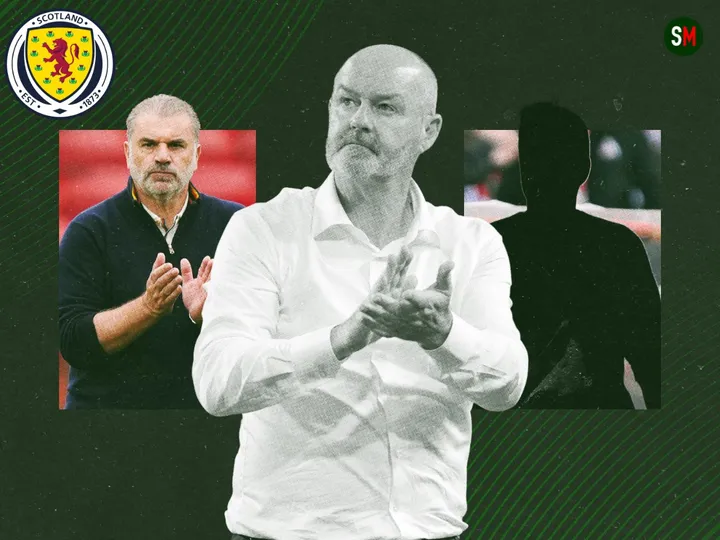
The vacancy is open. The statement has been issued. The most successful manager in Scotland’s football history has walked away, and the Scottish Football Association now faces one of the most consequential decisions it has made in a generation — who takes the Scotland job and leads the national team into the next phase of its development, culminating in a home European Championship in 2028 that represents the greatest opportunity Scottish football has had in decades to make its mark on the international stage.
Steve Clarke leaves his post with a record of 38 wins, 14 draws and 29 losses from 81 matches as Scotland manager, and a handful of notable major tournament qualifications. Under Clarke’s wing, Scotland ended a 25-year wait for another Euros appearance in 2021, a 28-year wait for a first World Cup appearance since 1998, and they also rose from League C to League A of the UEFA Nations League.
That is an extraordinary legacy. But sport moves quickly, and Scottish football cannot afford to spend too long looking backwards when the road ahead is so demanding and so full of opportunity. The Scottish FA are in no rush to appoint Clarke’s successor, as the national team have three months until they begin their new Nations League campaign against Slovenia in League B on September 26.
Three months is not a long time. The new manager will need to be identified, approached, negotiated with, appointed, and given enough time to assess his squad and prepare his approach before competitive football resumes in late September. The clock is already ticking, and the candidates are already being discussed.
A handful of potential successors have already been name-checked, including wily Everton manager David Moyes, ex-Celtic boss Ange Postecoglou, current assistant manager Steven Naismith, recently-fired Bayer Leverkusen head coach Kasper Hjulmand, and Barry Ferguson, who spent the second half of the 2024-25 season as Rangers’ caretaker manager.
Each of these candidates brings a different profile, a different philosophy, and a different set of strengths and weaknesses to the role. Let us examine them properly.
If you could design the ideal Scotland manager from scratch — someone who understands the game deeply, has proven himself at the highest levels of club football, has a connection to the Scottish game, and brings a genuinely exciting brand of attacking football that could transform the way the national team plays — you would end up with something very close to Ange Postecoglou.
The 60-year-old Australian-Greek manager — Australian by upbringing and Greek by heritage — spent two transformative years at Celtic between 2021 and 2023, winning back-to-back Scottish Premiership titles and playing a brand of high-energy, high-pressing, high-intensity football that reinvigorated Scottish football and reminded the rest of Europe that the game north of the border could still produce genuine excitement and genuine quality.
His subsequent move to Tottenham Hotspur in the Premier League ended in mixed fashion — a promising first season that delivered a trophy was followed by a more difficult second year, and Postecoglou is now available and understood to be considering his options carefully. The Scotland job, which has never been a traditional destination for a manager of his profile, has nonetheless been mentioned in connection with his name — and not without reason.
The argument for Postecoglou is compelling. He knows Scotland. He knows the players, many of whom he would have encountered during his Celtic tenure. He knows the Scottish public and the Scottish media — how they think, what they want, what they will and will not accept. He has a clear tactical identity — a high-pressing, possession-based approach that demands the ball and takes the game to opponents — that represents a genuine departure from the more cautious, structured approach that characterised Clarke’s best work.
That attacking philosophy, applied to a Scotland team that has been criticised for its lack of creative ambition at major tournaments, could produce something genuinely different and genuinely exciting. Scotland’s squad contains real quality in attacking areas — quality that, many critics have argued, was never fully unleashed under Clarke’s management. Postecoglou would unleash it. His teams always do.
The question is whether Postecoglou sees the Scotland job as an appropriate next step in a career that has reached Premier League and Champions League level, or whether the relative prestige gap between international management at Scotland’s level and club management at Europe’s elite clubs gives him reason to wait for another high-profile club appointment instead.
That calculation may ultimately determine whether this is a genuine possibility or simply an exciting fantasy. But if the Scottish FA can convince Postecoglou that leading Scotland at Euro 2028 on home soil represents a unique and historic opportunity, the argument for him to take the job is stronger than it might initially appear.
David Moyes is not a glamorous choice. He is not the kind of appointment that sends social media into raptures or generates the kind of immediate excitement that Postecoglou’s name would produce. But if you are looking for a manager who understands what it means to lead a football team with limited resources, who has spent decades competing against clubs with far greater financial power and still finding ways to win, and who carries a genuine emotional connection to the Scotland cause as a proud Scot — Moyes is a very serious candidate.
Wily Everton manager David Moyes is about to enter the final 12 months of his contract with the Toffees, which means the timing of any approach could be straightforward if the Scottish FA choose to move in that direction. A manager entering the final year of his contract at a club outside the very top tier of the Premier League is a manager whose future is inherently uncertain — and the Scotland job, with its specific timeline toward Euro 2028 at home, could represent an attractive and historically significant final chapter for a career that has already produced so much.
Moyes managed Scotland at youth level earlier in his career, and his affection for the national team has never been in question. He is a Glaswegian who has spent his entire career in English football but has never lost his connection to the country that produced him. Managing Scotland would mean something personal to Moyes in a way that it might not mean to a foreign appointment — and that personal motivation, in a job where the financial rewards are modest by Premier League standards, matters enormously.
His tactical flexibility is also relevant. Moyes has managed across multiple tactical systems throughout his career — from the defensive solidity that defined his best Everton teams to the more expansive approaches he has developed in subsequent roles. He is not a rigid ideologue married to a single way of playing. He adapts, adjusts, and finds solutions based on the players available to him rather than forcing his players into a predetermined shape.
The criticism that Moyes will face from sections of the Scotland support is the familiar one that follows him everywhere — that his best years are behind him, that he is a manager of a certain era whose time has passed, and that Scotland in 2026 needs someone with fresh ideas and a modern football philosophy rather than a safe pair of hands from a previous generation.
That criticism is not entirely unfair, but it is also not entirely fair. Moyes has demonstrated genuine evolution as a manager throughout his career, and his work in the most recent phase of his time at Everton has shown a tactical awareness and an ability to get the best from limited resources that remains genuinely impressive. Scotland’s player pool is a limited resource. Getting the best from it is the Scotland manager’s most fundamental challenge. Moyes is very good at exactly that.
Of the four main candidates being discussed, Kasper Hjulmand is the one who brings the most relevant and most impressive major tournament credentials to the role — and that, in a context where Scotland’s most persistent failure has been at tournaments rather than in qualifying, makes him a fascinating option.
Ex-Denmark boss Kasper Hjulmand was recently fired from Bayer Leverkusen following a difficult spell in the Bundesliga that ended before it had properly begun. His club management career has not, to this point, reached the heights that his international work suggested it might. But it is his international work that is most relevant to the Scotland job, and that work was genuinely impressive.
Hjulmand managed Denmark through one of the most emotionally extraordinary moments in sporting history — the cardiac arrest suffered by Christian Eriksen during Euro 2020, and the extraordinary courage and unity with which the Danish squad responded to that crisis. Under his guidance, Denmark reached the semi-finals of Euro 2020 and performed consistently well at subsequent major tournaments — exactly the kind of tournament progression that Scotland have been unable to achieve under any manager.
His tactical approach is modern, flexible, and demanding — a high-pressing game that requires intelligent, mobile players willing to work constantly without the ball, combined with a clear attacking philosophy that produces goals and excitement. The contrast with Scotland’s tournament performances under Clarke — cautious, structured, minimal goals scored — could not be more stark.
The challenge with appointing Hjulmand is the unfamiliarity factor. He does not know Scottish football, Scottish players, or the specific pressures and expectations that come with managing the national team. There would be a learning curve, and with three months before competitive football returns, that learning curve is steep. The Nations League campaign in September would essentially serve as his introduction to the job while simultaneously being judged as competitive fixtures.
But foreign managers have taken the Scotland job before and succeeded. And Hjulmand’s tournament credentials — his ability to prepare teams for the specific demands of knockout football at a major championship — are precisely the qualities that Scotland have lacked in recent years. If the Scottish FA believe that tactical preparation for tournaments is the key gap in Scotland’s recent history, Hjulmand is the candidate who most directly addresses it.
The fourth candidate is perhaps the most intriguing in terms of the story it would tell — and the most genuinely uncertain in terms of whether the Scottish FA would see him as ready for a role of this magnitude.
Current assistant manager Steven Naismith was formerly in charge of Hearts before rejoining the national team in 2025. He knows the squad inside out. He knows the individual players, their strengths, their weaknesses, their personalities, and the specific combinations that work best within the group. He has been part of Clarke’s coaching staff throughout the World Cup campaign, which means the transition from assistant to head coach would involve almost no learning period in terms of player knowledge.
Naismith also carries significant emotional weight within the Scotland dressing room. As a former Scotland international himself — a player who gave his country enormous service and represented them with distinction over many years — he commands respect from players who know his history and understand what it means to him to be part of this setup.
His time as Hearts manager showed genuine tactical intelligence and a willingness to develop and trust young players — qualities that would serve the Scotland job well in a cycle that is likely to involve blooding the next generation of Scottish talent alongside the experienced core that Clarke developed.
The argument against Naismith is straightforward — he is relatively inexperienced at head coach level and the Scotland job, with Euro 2028 on home soil as the major target, is not one where the Scottish FA can afford an expensive learning process. The pressure that comes with managing the national team in a home tournament is unique and specific, and there is a genuine question about whether Naismith is ready for that pressure at this stage of his managerial career.
The counter-argument is equally straightforward — Clarke himself was a relatively unproven international manager when he took the job in 2019, and he delivered three major tournament qualifications. The Scotland job has a history of producing the best from managers who believe in the cause and work tirelessly for it. Naismith believes in the cause as deeply as anyone in Scottish football.
—
**Barry Ferguson: The Wildcard Who Knows What Rangers Expect**
Barry Ferguson, who spent the second half of the 2024-25 season as Rangers’ caretaker manager, is the most unexpected name on this list and the one most likely to divide Scottish football opinion sharply and immediately.
Ferguson is a Rangers legend — a former captain who spent two spells at Ibrox and remains one of the most celebrated players in the club’s recent history. His caretaker spell at Rangers last season provided his most high-profile managerial experience to date, and his work in that temporary role showed genuine tactical awareness and an ability to motivate players in a high-pressure environment.
But the Scotland manager’s job requires more than caretaker-level credentials, and Ferguson would be a genuinely bold and divisive appointment. His Rangers association, in a country where football allegiances run as deep as anywhere on earth, would immediately generate controversy among supporters of other clubs — particularly Celtic fans, whose relationship with the national team has historically been complicated by the Old Firm dynamic.
Whether that controversy matters in practical terms is debatable. The Scotland manager’s job is about the national team, not about club politics, and Ferguson’s credentials should be assessed entirely on their footballing merits. On those merits — a legendary playing career, a growing managerial record, and an obvious passion for Scottish football — he is not without appeal.
The question is whether this is the right moment for Ferguson and the right step in his development, or whether he needs more sustained club management experience before taking on a job of this scale and significance.
Beyond the individual candidates, the Scottish FA needs to be clear about what it actually requires from the next Scotland manager — because the answer to that question should drive the appointment rather than the other way around.
Scotland need a manager who can unlock their attacking potential at major tournaments. The statistics from Clarke’s tenure — four goals scored in nine tournament games — are damning evidence of a team that has been too cautious, too structured, and too reluctant to take creative risks when the pressure is highest. The next manager needs to give Scotland licence to be bolder, to be braver, and to trust the attacking talent within the squad in a way that Clarke, for all his qualities, did not always manage.
Scotland also need a manager who can develop the next generation of talent — the players who will be 23, 24, 25 at Euro 2028 and who need competitive international experience between now and then. Nations League games against Slovenia and Switzerland in September are opportunities as much as they are obligations. The new manager’s approach to those games will tell you a great deal about his philosophy and his vision for the team.
And Scotland need a manager who can handle the unique emotional and psychological pressure of a home tournament — of managing a nation’s hopes in front of its own fans, in its own stadiums, with the weight of history bearing down on every team selection and every tactical decision.
Whoever the Scottish FA appoint in the coming weeks, those are the qualities they need to find. The candidates are interesting, the debate is real, and the stakes — with a home European Championship just two years away — could not be higher.
The next chapter of Scotland’s football story is about to begin.