SEVENTH SIGNING SEALED: DRAGOJEVIC ARRIVES AS McINNES REBUILDS IBROX ENGINE ROOM

Rangers have made their seventh signing of a summer that already carries the unmistakable fingerprints of Derek McInnes, with Serbian midfielder Vanja Dragojevic putting pen to paper on a four-year deal that could stretch to five, and the early word from the 20-year-old is that Ibrox already feels like exactly the kind of place he wants to be. The move brings the curtain down on five years of service at Partizan Belgrade for a player who, remarkably, was trusted with the captaincy there at just 19, and it slots him into a rebuilt Rangers midfield that now reads like a manager’s shopping list ticked off box by box: legs, leadership, and a squad number finally being filled by someone who has already proven he can wear the armband under pressure.
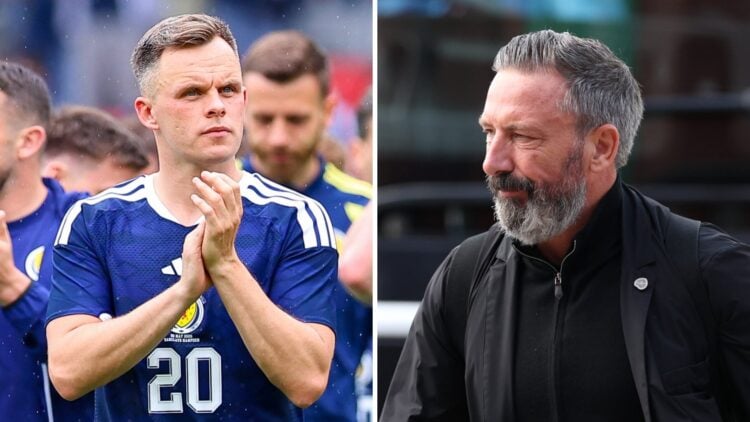
The deal, subject to the routine formalities of international clearance and a Rangers-standard visa application given the player is arriving from outside the UK, was confirmed on Friday and represents the seventh permanent addition of a frantic close season at Ibrox. Dragojevic joins a list that already contains Lawrence Shankland, Ross McCrorie, Ben Godfrey, Ivor Pandur, Dan Neil and Cammy Devlin, a spread of signings that touches almost every area of the pitch and tells its own story about the scale of the rebuild McInnes was handed when he walked back through the Ibrox front doors last month. Rangers have not been shy about their business this summer, and the arrival of a player who has already led a first-team dressing room in one of Europe’s more combustible footballing environments suggests the club is not just topping up numbers but actively hunting character.
There is a neat symmetry to how Dragojevic’s move has been described by those inside Ibrox. This is a player who, at an age when plenty of his contemporaries are still finding their feet in senior football, was already directing traffic from central midfield for a club with the pedigree, history and expectation of Partizan. He progressed through the Belgrade club’s youth system before making his senior debut in 2024, a rapid rise that included a brief detour on loan at Serbian second-tier side FK Teleoptik, from which he was recalled early by Partizan once it became clear his path lay back at the parent club rather than out on loan gaining minutes elsewhere. That recall alone tells you something about how highly he was rated internally, and last season he went on to make 41 appearances in the black and white of Partizan, doing so while wearing the captain’s armband for a significant chunk of that campaign. Partizan themselves finished third in the Serbian SuperLiga last season, twenty-one seasons deep into a competition dominated in recent years by Red Star Belgrade, and Dragojevic’s midfield performances were a central part of a campaign that also yielded European qualification for the Belgrade club.
His form did not go unnoticed on the international stage either. Serbia head coach Veljko Paunovic handed the midfielder his first senior cap in March, in a friendly against Cape Verde, and a second cap has since followed, the kind of recognition that tends to accelerate transfer interest rather than dampen it. For a defensive-minded midfielder still working out the finer details of his game at senior level, full international recognition inside his first couple of years as a first-team regular is a marker of real promise, and it is easy to see why a Rangers recruitment team under new leadership would want to move quickly to secure his signature before other suitors circled.
Speaking after the move was completed, Dragojevic did not hide his excitement at what comes next. He described the switch as a proud moment and made clear that Rangers had been on his radar for some time before the deal came together, revealing he had first been alerted to Ibrox’s interest as far back as three months ago and had felt an immediate connection to the idea. Central to his thinking, by his own account, was a sense that the competitive DNA of Rangers matched his own outlook as a footballer, a “winning mentality” he felt was compatible with how he sees the game and how he wants his career to progress. For a player leaving a boyhood-adjacent home at Partizan, where he came through the ranks and captained the side, that is a significant statement of intent, and it will be music to the ears of a support base that has watched Celtic dominate domestic silverware in recent seasons and is desperate for signs that the balance of power in Scottish football might be shifting back in Rangers’ favour.
It is that same appetite for winners that appears to be driving Derek McInnes’ recruitment strategy since he arrived at Ibrox. The Paisley-born manager, who made over 800 appearances as a manager across a career that has taken in St Johnstone, Bristol City, Aberdeen, Kilmarnock and, most recently, Hearts, was appointed as Rangers boss on a three-year contract last month, replacing Danny Röhl after the German departed to take charge of RB Salzburg following a brief eight-month spell in Govan. McInnes arrived at Ibrox with his managerial reputation freshly enhanced after taking Hearts to within two late goals of a first Scottish top-flight title in 66 years, eventually finishing second in the Premiership, eight points clear of the third-placed Rangers side he now finds himself in charge of. It was, by any measure, an eye-catching final act at Tynecastle, and it was enough to convince the Ibrox hierarchy that the 54-year-old, who played for Rangers across five largely successful seasons between 1995 and 2000, was the man to take the club forward.
McInnes’s own words on completing the Dragojevic deal underline exactly why the club moved for the Serbian. The Rangers boss expressed genuine excitement about bringing the midfielder to Ibrox, pointing to his potential, his attributes on the pitch, and above all the character required to captain a club the size of Partizan at such a young age. For McInnes, that is not a small detail. Leadership has been a recurring theme of his recruitment since taking the job, with the manager repeatedly stressing his desire to build a squad stacked with players capable of taking responsibility across every area of the pitch, not simply relying on one or two senior professionals to drag standards up. Handing a teenager the captaincy of a club with Partizan’s history and pressure is not something that happens by accident, and McInnes clearly sees it as evidence that Dragojevic already possesses the mentality that dressing rooms need when things get difficult during a long Scottish season.
There is also a human element to the move that should not be glossed over. Leaving the club that developed you as a footballer, particularly one you have represented since your earliest days in the game, is rarely straightforward, and Dragojevic was visibly reflective when discussing his departure from Partizan. He was warm in his parting words to the Belgrade club, acknowledging that virtually everything he has become as a player he owes to the environment Partizan gave him, tracing his own story from a boy taking his first steps in football there to the captain who eventually led the team out. It is the kind of departure that speaks well of both parties: a player grateful for his upbringing in the game, and a boyhood club that nurtured him to the point where a move to Scottish football’s biggest institution became not just possible but natural.
For Rangers supporters, the more pressing question is how quickly Dragojevic can be integrated into a Rangers midfield that is still very much a work in progress under McInnes. The club’s business this summer has been notably heavy in central areas and further back, with Ben Godfrey and Ross McCrorie bolstering defensive options, Dan Neil and Cammy Devlin adding to a midfield engine room that increasingly looks built for control and legs rather than pure flair, and Lawrence Shankland brought in to spearhead the attack. Dragojevic’s arrival fits that pattern closely. A defensive-minded midfielder by trade, he is unlikely to be signed purely to make the team more expansive going forward; instead, his job will be to sit, screen, and allow more attacking players like Shankland the platform to do damage further up the pitch. Whether he walks straight into McInnes’s best XI for the Premiership opener remains to be seen, but the early signs, at least in terms of profile, suggest Rangers have identified a gap and gone out and filled it with precision rather than panic-buying reinforcements at the eleventh hour.
Timing, of course, is everything in a summer transfer window, and this deal arrives with barely a week to go before Rangers’ Premiership campaign gets under way. The Light Blues are due to open their league season away at Dundee United, at Tannadice, on 31 July, giving McInnes and his backroom team of Alan Archibald, Paul Sheerin and Craig Clark precious little time to bed in a raft of new faces before competitive football resumes in earnest. Before that opener, there is still the matter of a final pre-season friendly against West Ham United at Ibrox this Sunday, a fixture that will offer supporters their last glimpse of the squad before McInnes has to start making serious selection calls with points on the line. It would be a surprise if Dragojevic, given the outstanding paperwork around international clearance and his visa application, were involved against West Ham, but there is every chance he could be registered and available for selection reasonably close to the Dundee United trip, subject to how quickly the administrative side of the move is processed.
What is striking, looking at the summer as a whole, is the sheer volume of turnover McInnes has driven through in such a short space of time. Six permanent signings arrived even before Dragojevic put pen to paper, a rate of recruitment that speaks to a manager who arrived at Ibrox with an unusually clear idea of exactly what he wanted to change. Where some new managers spend their opening weeks assessing a squad before committing to major transfer activity, McInnes appears to have hit the ground running, moving decisively across multiple positions rather than picking off one or two marquee additions and hoping the rest of the group could carry the weight of expectation. That approach carries risk, of course. Integrating seven new faces into a dressing room in the space of a single close season is no small managerial challenge, and it will take time, patience and no shortage of man-management skill to knit together players arriving from Serbian, English and Scottish football into a coherent, functioning unit capable of matching Celtic’s recent dominance domestically while also making an impression in Europe.
That European dimension matters too. Rangers’ Europa League qualifying exploits will run in parallel with the start of the domestic campaign, adding another layer of physical and mental demand on a squad that is still bedding in new arrivals, and it is precisely in that kind of high-pressure, congested fixture list that a player with Dragojevic’s leadership pedigree could prove valuable sooner rather than later. A midfielder who has already captained a club through Belgrade’s notoriously intense football culture, dealt with the scrutiny that comes from representing one of the two great institutions of Serbian football, and won senior international recognition while still only 20, is unlikely to be overawed by whatever Scottish football throws at him, whether that is a raucous away following at Tannadice or a testing European away leg on a Thursday night.
There is also a broader context worth considering here, related to how Rangers have approached recruitment specifically from markets outside the traditional English and Scottish pipelines. Bringing a player through from the Serbian SuperLiga, a competition that continues to produce technically gifted, tactically disciplined footballers who then move on to bigger leagues across Europe, suggests a recruitment department willing to cast its net wide in search of value and upside rather than restricting itself to the usual well-trodden markets. Partizan themselves have long had a reputation for developing talent that eventually moves on to more prominent leagues, and if Dragojevic can replicate anything close to the influence he had in Belgrade, McInnes will rightly be able to point to this piece of business as evidence that his recruitment strategy extends well beyond simply picking up experienced heads from the Scottish Premiership.
None of that guarantees instant success, naturally. Scottish football has seen plenty of promising signings from continental leagues struggle to adapt to the physicality and tempo of matches north of the border, and a 20-year-old arriving without British football experience, however talented, will need time to find his feet, both literally and in terms of the demands McInnes places on his midfielders. But the early messaging from all parties, the player’s own enthusiasm about the move, McInnes’s clear excitement at what he believes Dragojevic can bring, and the calm, mature way in which the Serbian spoke about leaving his boyhood club, all point towards a signing made with genuine conviction rather than one added simply to make up the numbers before a deadline.
For now, attention turns back to the here and now: West Ham at Ibrox this weekend, then the serious business of a Premiership opener at Tannadice just seven days later. McInnes will hope to have at least a couple more bodies through the door before that fixture, continuing the frenetic summer rebuild that has already reshaped large parts of his Rangers squad. But amid all that incoming business, the arrival of a 20-year-old who has already worn the captain’s armband for one of Serbia’s biggest clubs stands out as a particularly interesting piece of the puzzle, both for what it says about Rangers’ recruitment ambitions this summer and for what it might mean for the balance of a midfield that McInnes is clearly determined to build in his own image: competitive, disciplined, and stacked with leaders rather than passengers.