‘Silence That Crowd!’ — Martin O’Neill and Scott Brown Reveal Plan to Conquer Hostile Ibrox Atmosphere

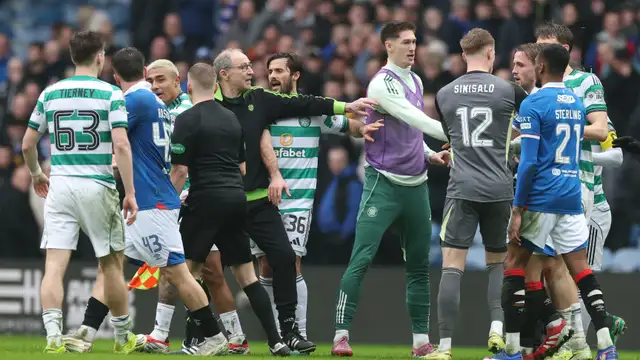
Martin O’Neill has been around Scottish football long enough to know that an Old Firm derby is rarely won or lost on paper. Ahead of Sunday’s Premier Sports Cup quarter-final against Rangers, the Celtic manager was candid about the scale of the challenge his side faced — not from the opposition’s form or personnel, but from the sheer weight of noise that would be waiting for them inside a sold-out, entirely partisan Ibrox. With Celtic’s own supporters barred from attending, O’Neill and former captain Scott Brown both identified the same solution: silence the crowd early, and the rest of the afternoon becomes considerably more manageable.
A Perfect Domestic Record Built on Shaky European Ground
Celtic arrived at Ibrox with about as strong a domestic platform as any side could hope to carry into the season’s first Old Firm derby. O’Neill’s team had won all six of their opening Scottish Premiership fixtures, scoring 14 goals and conceding just three — numbers that placed them comfortably clear at the top of the table and reinforced the sense that, in league terms at least, the champions had picked up exactly where they left off the previous season. That record gave Celtic a genuine claim to being the form side in Scottish football heading into the weekend, regardless of how Rangers had fared in their own recent Premiership fixtures.
The picture in Europe, however, could scarcely have looked more different. Celtic’s Champions League qualifying campaign ended in one of the most infamous collapses in the club’s modern European history, as a four-goal aggregate lead over Austrian side LASK was completely surrendered in a stunning 5-1 second-leg defeat in Linz. Callum McGregor’s early goal on the night had appeared to put the tie beyond doubt, extending Celtic’s aggregate advantage to 4-0 and seemingly guaranteeing a place in Thursday’s group-stage draw. What followed instead was a capitulation few inside Celtic’s dressing room could have anticipated: Moses Usor pulled one back before the half-hour mark, Robert Ljubicic levelled the night’s scoreline shortly after the interval, and further strikes from Samuel Adeniran either side of a stoppage-time equaliser from Florian Flecker completed one of the most remarkable turnarounds LASK’s own supporters have ever witnessed, sending the tie to extra time and ultimately to a 5-4 aggregate defeat once Adeniran struck again in the additional period.
O’Neill did not attempt to hide his devastation in the immediate aftermath. Speaking to Amazon Prime after the game, he admitted his side “should’ve been out of sight by half-time,” lamenting two missed first-half opportunities before conceding what he described as a costly “lifeline” to LASK right before the break and another shortly after it. “They came roaring back,” he said. “That’s my team, that’s my responsibility.” Pressed on whether it ranked among the most painful nights of his long managerial career, O’Neill did not equivocate, calling it “a massive disappointment” and stressing that broader conversations about the composition of his squad would have to wait for another day. The defeat means Celtic drop into the Europa League for the season ahead, a considerable step down in prestige, broadcast exposure and prize money from the competition they had appeared destined for only a week earlier.
Steadying the Ship Before the Storm
To their credit, Celtic responded to that European disappointment in the only way that mattered in the short term — by continuing to win domestically. A narrow victory away at St Johnstone in midweek, achieved despite O’Neill making heavy rotations to his starting lineup, extended the club’s perfect start to the league season and offered some reassurance that the LASK collapse had not derailed the wider campaign. It was not, by the club’s own admission, the most convincing of performances, but grinding out a result under difficult circumstances — tired legs, a rotated side, and the psychological hangover of a genuinely traumatic European exit — spoke to a level of squad depth and resilience that will have been noted approvingly inside Celtic Park, even if it did little to fully erase the sting of the midweek before.
That victory set up Sunday’s trip to Ibrox as the definitive test of whether Celtic’s perfect domestic record reflected genuine quality and depth, or merely favourable fixtures against a Scottish Premiership largely still finding its feet. A daunting away day against a fierce rival, played out in a stadium that would be at a raucous, sold-out, entirely hostile capacity, represented exactly the kind of examination that could reveal whether the wounds of the LASK collapse had been fully healed or merely papered over.
The Silence Strategy
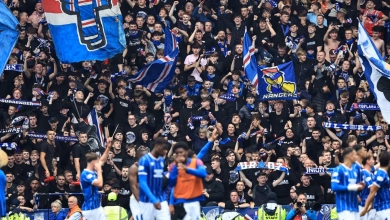
Central to Celtic’s approach heading into the fixture was a shared conviction, voiced separately by both O’Neill and former club captain Scott Brown, that an early goal would be the single most valuable weapon available to the visiting side. With no away fans permitted inside Ibrox following an SPFL ruling connected to the disorder that marred the corresponding Scottish Cup fixture back in March, Celtic’s players would be facing a wall of roughly 50,000 hostile home supporters with no vocal backing of their own to lean on. Brown, drawing on his own extensive experience of Old Firm combat as a player, was unambiguous in his assessment of what needed to happen: scoring first was essential to turning that same crowd anxious and, ideally, silent.
O’Neill echoed those sentiments in his own pre-match comments, framing an early Celtic goal as something capable of altering the entire psychological dynamic of the contest. “I suppose if you get in front in the game, that makes them anxious,” he said. “The crowd will be right behind their team, which you would expect. We just do our best. We’re up against a crowd that can make a difference.” It was a rare and refreshingly candid public acknowledgement from a manager of just how significant a factor a passionate home support can be in fixtures of this magnitude — and an implicit admission that Celtic’s own gameplan would need to account for that reality from the very first whistle, given they would be denied any equivalent backing of their own.
The strategic thinking behind that approach extended beyond simply silencing noise for its own sake. O’Neill’s side were understood to be planning to control possession in the game’s opening exchanges specifically to frustrate the home crowd and deny Rangers any of the early attacking momentum that could otherwise feed off Ibrox’s energy. A disciplined, patient approach designed to nullify the atmosphere before looking to press home any advantage gained — that was the blueprint Celtic hoped would allow them to remain unaffected by circumstances that would test any visiting side, let alone one still carrying the psychological scars of a chastening European exit just weeks earlier.
A Fixture Celtic Have Utterly Dominated
Feeding into Celtic’s confidence heading into Sunday was a recent record in this specific fixture that bordered on total supremacy. The Hoops arrived at Ibrox having won each of their previous six League Cup meetings with Rangers stretching back to 2011, an extraordinary run of dominance in a competition that has often proven a happy hunting ground for Celtic against their fiercest rivals. Perhaps even more strikingly, Celtic had not lost at the quarter-final stage of this specific competition since 2009, a statistic that spoke to a side with genuine pedigree in exactly this type of fixture, regardless of who happened to be occupying the away dugout or which iteration of Rangers they were facing.
O’Neill’s own personal record at Ibrox added a further layer of confidence to Celtic’s preparations. Across 11 previous visits to Rangers’ home ground as Celtic manager throughout his various spells in Scottish football, O’Neill had emerged victorious on six occasions — a winning percentage that, while far from flawless, nonetheless painted the picture of a manager who had generally found a way to get results in this most demanding of away fixtures more often than not. Given the psychological importance often attached to a manager’s personal history in derby fixtures, that record will have offered O’Neill’s players a further source of reassurance heading into a genuinely daunting afternoon.
What a Win Would Mean
The stakes attached to Sunday’s fixture extended well beyond the immediate prize of a place in the Premier Sports Cup semi-finals, significant though that would be in its own right. A Celtic victory would have represented a seventh consecutive League Cup win over Rangers, extending what was already an eye-catching run of derby dominance in this competition and delivering a psychological blow to their fiercest rivals’ momentum at a point in the season when Rangers were still searching for consistency and credibility under new management. For a Celtic side eager to move on from the disappointment of the LASK collapse and reassert their status as the dominant force in Scottish football, few results could have offered a more emphatic response than victory at Ibrox, in front of a hostile crowd, in the season’s first Old Firm meeting.
There was also a broader narrative dimension to the fixture worth considering. Progression to the last four would keep alive Celtic’s hopes of adding another domestic trophy to the club’s collection, while simultaneously denying Rangers and new manager Derek McInnes the kind of statement result that could have provided much-needed momentum and credibility following a difficult opening period in charge at Ibrox. Given the scrutiny McInnes had already faced following early European exits and an inconsistent start to his own domestic campaign, a Celtic victory would have compounded the pressure on his position considerably, adding an Old Firm cup exit to an already mounting list of concerns surrounding his young Ibrox tenure.
The Weight of History and Expectation
Old Firm fixtures carry a unique burden of expectation regardless of the broader context surrounding either club at any given moment, and Sunday’s meeting was no exception. For O’Neill personally, there was an added layer of significance given his long and storied history with this fixture across multiple decades and multiple different eras of Scottish football. Few managers in the modern game can claim the depth of experience O’Neill possesses when it comes to navigating the unique pressures of Old Firm combat, and his pre-match comments reflected a manager who, while respectful of the challenge posed by a hostile Ibrox atmosphere, remained fundamentally unfazed by circumstances that might unsettle a less experienced counterpart.
Brown’s involvement in the pre-match build-up, meanwhile, offered a reminder of just how significant this fixture remains to those who have represented Celtic at the highest level, even years removed from their own playing careers. As a former captain who experienced the full intensity of Old Firm combat from the inside across numerous encounters at Ibrox, his insistence on the importance of an early goal carried the authority of lived experience rather than mere punditry speculation — a data point Celtic’s current squad would have done well to heed as they prepared to walk out into what promised to be one of the most hostile atmospheres many of them would ever experience in their careers.
The Broader Context: A Season Already Full of Storylines
Sunday’s derby did not exist in isolation but rather as the latest chapter in what was already shaping up to be an eventful and closely scrutinised season for both Glasgow giants. Celtic’s perfect domestic start, achieved alongside considerable summer investment in new attacking talent, had generated genuine optimism among the club’s support that this campaign could yield success on multiple fronts — optimism that the LASK collapse had done plenty to dent, even if it had not entirely extinguished it. Rangers, for their part, were navigating a considerably more turbulent period under new manager Derek McInnes, whose own European exits and stuttering domestic form had raised early questions about the direction of the club’s ambitious rebuild.
Against that backdrop, Sunday’s fixture carried the potential to significantly reshape the narrative arc of either club’s season, regardless of which side ultimately prevailed. A Celtic win would have represented emphatic confirmation that their European misfortunes were an aberration rather than a symptom of deeper issues, while a Rangers victory would have offered McInnes precisely the kind of statement result his embattled tenure had been crying out for since a difficult opening period in the job. Whatever the outcome, both sets of supporters understood they were about to witness a fixture capable of setting the tone for the months ahead — a fitting reminder of why Old Firm derbies retain such an outsized grip on the attention of Scottish football, however either club happens to be performing in the weeks surrounding any single meeting between them.
The Ticketing Dispute Behind the Empty Away End
The unusual circumstances of Celtic supporters being entirely absent from Ibrox deserve fuller explanation, given how directly they shaped both managers’ pre-match thinking. The SPFL’s decision to bar away fans from Sunday’s fixture stemmed from an independent review into the disorder that marred the corresponding Scottish Cup quarter-final between the two clubs back in March, when pitch invasions and clashes between rival supporters led to significant sanctions being imposed on both clubs. That review ultimately resulted in Rangers moving to drastically reduce Celtic’s ticket allocation for this fixture, a decision Celtic refused to accept, prompting the governing body to intervene and remove the issue altogether by banning away fans from all remaining Old Firm fixtures in domestic competition for the remainder of the season.
For O’Neill’s players, that meant walking into arguably the most hostile single-club atmosphere Scottish football can produce with absolutely no counterbalancing noise of their own to draw upon in difficult moments. It is a scenario few current Celtic players would have experienced previously in quite such stark terms, and it explains why both O’Neill and Brown were so explicit in their pre-match messaging about the importance of nullifying that atmosphere through performance and game management rather than simply hoping the occasion would not affect their players. Managing an away support’s absence is one thing when a small allocation is present to offer at least token vocal backing; managing its complete absence, in a stadium housing 50,000 opposition supporters, is a considerably more unusual and demanding proposition.
Celtic’s Summer Investment Under the Microscope
Sunday’s fixture also arrived as an important early test of Celtic’s summer transfer business, which had been extensive even by the standards of a club accustomed to conducting significant business each window. O’Neill’s side had strengthened across several areas of the pitch during the close season, with the club’s perfect start to the domestic campaign offering initial validation of that recruitment strategy. Yet the LASK collapse had introduced a more complicated narrative around the depth and mental resilience of the squad O’Neill had assembled, with questions inevitably arising about whether a group capable of surrendering a four-goal aggregate lead in such spectacular fashion could be fully trusted in the biggest and most pressurised fixtures still to come.
A performance of substance at Ibrox — regardless of the eventual scoreline — would have gone some distance toward answering those questions, demonstrating that the concentration lapses and defensive fragility exposed against LASK were an isolated European aberration rather than a more fundamental flaw running through the squad. Conversely, any repeat of that fragility against a fierce domestic rival, in front of a raucous Ibrox crowd desperate to capitalise on any sign of weakness, would have done considerably more lasting damage to confidence both within the Celtic dressing room and among a support still processing the events in Linz.
A Test of Nerve as Much as Quality
Ultimately, both managers’ pre-match comments pointed toward a shared understanding that Sunday’s derby would be decided as much by composure and nerve as by pure footballing quality. Celtic possessed the superior recent domestic form and a commanding historical record in this specific fixture; Rangers possessed home advantage and an atmosphere capable of unsettling even the most experienced visiting players. O’Neill and Brown’s shared emphasis on scoring first reflected a clear-eyed assessment of where the balance of psychological power in the fixture truly lay — not in reputation or recent history, but in whichever side could seize the initiative in those crucial opening exchanges and dictate the emotional temperature of the afternoon that followed.
Looking Ahead
Beyond Sunday’s immediate cup tie, both clubs already had their sights fixed on a demanding run of fixtures across multiple competitions. Celtic’s schedule offered no time to dwell on the outcome either way, with the club’s Europa League league-phase campaign due to begin just days later away to Ferencvaros of Hungary — a fixture that would take on considerably greater significance depending on the mood emerging from Ibrox. A rearranged domestic meeting between the two Glasgow rivals in the Scottish Premiership was also already pencilled in for the following weekend, ensuring that, regardless of Sunday’s cup result, this would be a September defined by repeated measuring points between Scotland’s two most successful clubs rather than a single, isolated Old Firm collision.
For O’Neill and his players, the message heading into Ibrox was clear and consistent: silence the crowd, control the tempo, and trust in a recent record of League Cup dominance over Rangers that few current players inside the away dressing room would have wanted to be the ones to end. Whether that plan would survive contact with 50,000 desperate, deafening home supporters remained to be seen — but as both O’Neill and Brown made clear in their pre-match comments, Celtic’s players were under no illusions about just how significant a factor that atmosphere was likely to be in determining the outcome of the season’s first, and most eagerly anticipated, Old Firm derby.