The Norwegian has managed only two goals from open play in his last 18 matches

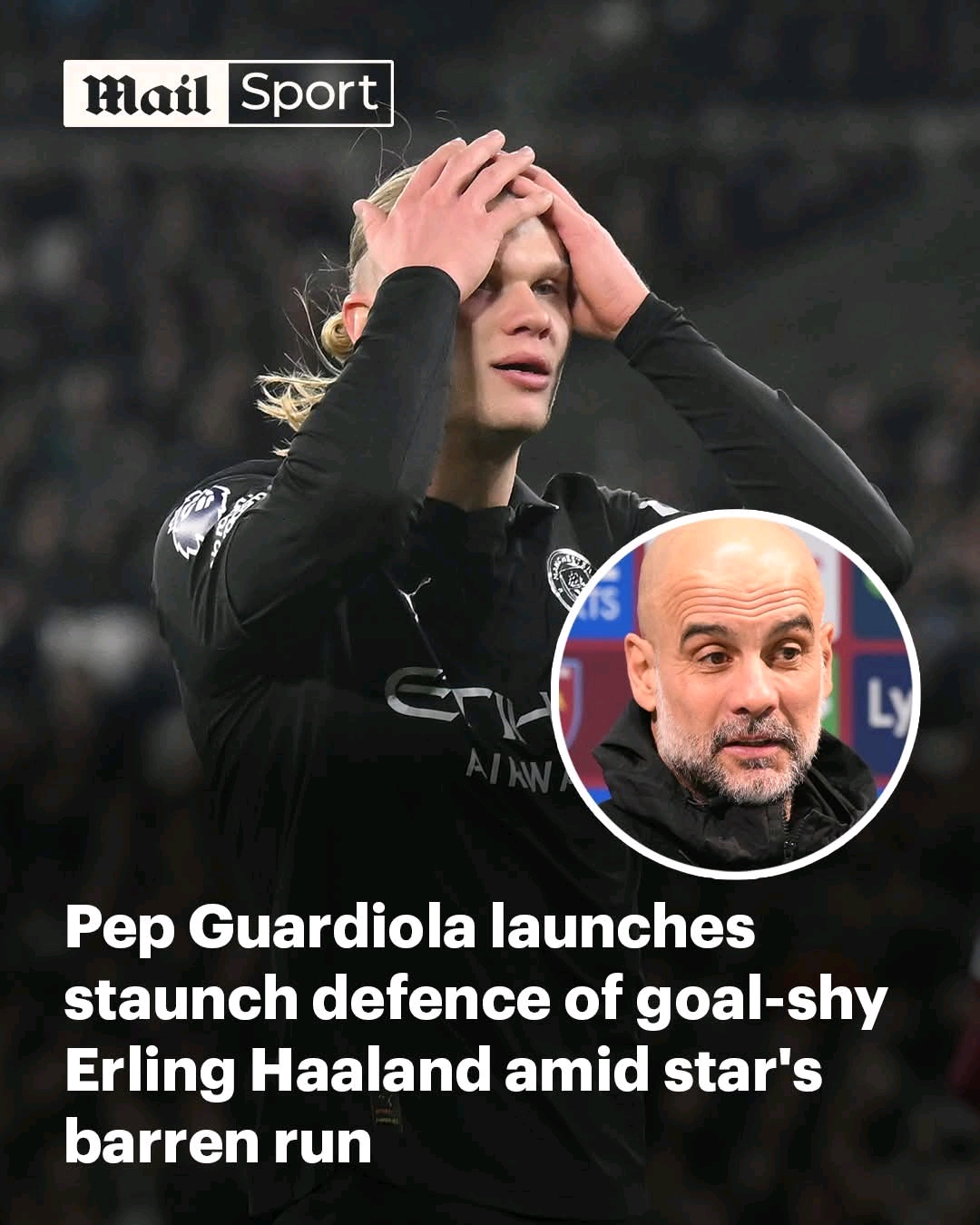
The tension around Erling Haaland is growing, and it is no longer something fans can ignore. The goals that once came so easily have suddenly slowed down, and for a striker who built his reputation on relentless scoring, the silence in front of goal feels louder than ever. In recent weeks, the numbers have become impossible to defend. Just two goals from open play in his last eighteen matches is not what anyone expected from one of the most feared forwards in world football. For many, it is shocking. For some, it is worrying. But for Pep Guardiola, it is something completely different.
Instead of panic, the Manchester City manager has chosen defiance. Instead of criticism, he has offered protection. Guardiola has stepped forward at a moment when questions are being asked everywhere, and he has made it clear that he is standing firmly behind his striker. While fans and pundits continue to debate what is going wrong, Guardiola sees something deeper. He sees the difficulty of the role Haaland plays, a role he believes is the hardest in football.
The latest chapter in this difficult period came during Manchester City’s frustrating 1-1 draw against West Ham United. It was a game that City needed to win, especially with the title race becoming tighter and Arsenal pushing strongly at the top. Instead, the dropped points felt like a setback, and once again, attention turned to Haaland. He looked isolated, disconnected, and at times, completely out of the game. For a player known for his sharp movements and deadly finishing, it was a performance that raised more questions than answers.
Fans watching the match could not help but notice his body language. There were moments when he seemed frustrated, moments when he appeared lost among defenders, and moments when the ball simply never reached him. It painted a picture of a striker struggling, not just with form, but with influence. And yet, Guardiola refused to accept the idea that Haaland is the problem.
Speaking after the game, Guardiola made a strong and passionate defense. He explained that playing as a central striker, especially in a team like Manchester City, is far more difficult than people think. According to him, Haaland is constantly surrounded, constantly marked, and constantly under pressure. Every defender knows his danger, and every team builds their plan around stopping him.
Guardiola even used a dramatic way to describe it. He spoke about the number of defenders Haaland faces, almost exaggerating to make a point, saying it feels like “two hundred million defenders” are always around him. It was not meant to be taken literally, but the message was clear. Haaland is not being given space, not being given freedom, and not being given easy chances.
This is where Guardiola believes the real issue lies. It is not about Haaland missing chances. It is about chances not coming at all. The manager pointed out that the team must do more to support him. The wingers, the midfielders, the creators all have a role to play in delivering the ball into dangerous areas. Without that service, even the best striker in the world will struggle.
Guardiola also addressed concerns about fatigue or injury. Some people had started to wonder if Haaland was carrying a physical problem, especially after he was left out of a recent FA Cup match against Newcastle United. But the manager quickly shut down those suggestions. He made it clear that Haaland is not injured and that his absence from that game was simply to allow him to train and recover properly.
In fact, Guardiola insisted that he did not see any signs of tiredness in Haaland’s performance against West Ham. Even in the final minutes of the game, the striker was still moving, still trying, still searching for opportunities. According to the manager, the issue is not physical at all. It is about rhythm, timing, and the overall flow of the team’s attacking play.
That idea is important because it shifts the conversation away from Haaland as an individual and toward Manchester City as a collective. This is not just about one player losing form. It is about a team that is not functioning at its usual high level. Guardiola himself admitted that City are not playing like they used to. They are doing many things well, but something is missing in the final third.
This lack of cutting edge has been visible in several matches, not just against West Ham. There have been games where City dominated possession, created situations, and controlled the tempo, but failed to score enough goals. Matches that should have ended comfortably instead became tight and stressful. Victories have been narrow, and in some cases, points have been dropped.
Guardiola pointed to specific examples. A 1-0 win against Leeds United could easily have been 3-0 or 4-0 if chances were taken. The same pattern has appeared in other matches, including games against Nottingham Forest and Tottenham Hotspur. Even in Europe, during the difficult night at the Santiago Bernabéu against Real Madrid, the problem was clear.
In that match, City found themselves in good positions early on. They had players inside the box, they had moments to score, but they failed to take advantage. Guardiola highlighted this as a key issue. He explained that football at the highest level is often decided by simple moments. You do not always need something spectacular. Sometimes, it is about finishing the easy chances, making the right decisions, and staying focused in key situations.
For Guardiola, this is where City are falling short. It is not about dribbling past multiple players or scoring incredible goals. It is about doing the simple things well. And right now, those simple things are not happening consistently enough.
Despite all these challenges, Guardiola remains calm. He understands that football comes in cycles, and even the best teams go through difficult periods. He has seen it before, and he believes his team will recover. There are still games left in the season, and there is still time to improve.
However, the pressure is increasing. The upcoming Champions League match against Real Madrid is a perfect example. City are facing a huge task, needing to overturn a three-goal deficit. It is the kind of challenge that requires belief, courage, and a near-perfect performance.
Guardiola did not hide from this reality. In fact, he embraced it. He made a bold statement, saying that if the players do not believe they can come back, then they might as well stay at home. It was a strong message, one that reflects his mindset. For him, football is not just about tactics and ability. It is about mentality.
He knows that many people have already written City off. He even admitted that nobody in the room believes they can turn things around. But that does not change his approach. He wants his players to try, to fight, and to give everything, regardless of what others think.
This attitude also connects back to Haaland. The striker may be struggling for goals, but Guardiola believes in his quality. He believes that the goals will return, that the difficult period will pass, and that Haaland will once again become the unstoppable force he has been in the past.
For now, though, patience is required. Fans may feel frustrated, and critics may continue to question, but Guardiola is asking for understanding. He is reminding everyone that football is not always smooth, that even the best players face challenges, and that form can change quickly.
There is also a bigger picture to consider. Manchester City are still competing on multiple fronts. They are still fighting for trophies, still playing at the highest level, and still capable of producing moments of brilliance. One difficult period does not define an entire season.
Guardiola acknowledged that this season has not been perfect. He admitted that the team is not at the same level as before. But instead of dwelling on the negatives, he is focusing on finishing the season strongly. There are eight games left, and each one is an opportunity to improve, to regain confidence, and to build momentum.
Looking ahead, Guardiola is also thinking about the future. He is confident that next season will be different, that the team will return stronger, and that the problems they are facing now will be solved. It is a long-term vision, one that goes beyond the immediate struggles.
As for Haaland, the story is far from over. Football has seen many great strikers go through similar phases. Periods where the goals dry up, where confidence drops, and where everything feels more difficult than usual. But the best players always find a way back.
Haaland has already shown what he can do. His record speaks for itself, and his ability is not in doubt. What he needs now is support, patience, and the right conditions to succeed. With Guardiola backing him and the team working to improve, there is every reason to believe that he will return to his best.
In the end, this is not just a story about a striker missing chances. It is a story about pressure, expectations, and the reality of playing at the highest level. It is about how quickly things can change in football, and how important it is to stay calm during difficult moments.
For Manchester City, the challenge is clear. They must rediscover their sharpness, improve their finishing, and support their main striker more effectively. For Haaland, the mission is simple. Keep working, keep believing, and wait for the moment when everything clicks again.
And for Guardiola, the role remains the same. Lead the team, protect his players, and guide them through this challenging period. Because in football, as he knows better than anyone, tough moments are temporary. What matters is how you respond to them.