THE SUCCESSION PLAN: RANGERS CAN FINALLY SANCTION RASKIN EXIT BY LANDING £4.8M l


Rangers Football Club may soon find themselves facing a genuine dilemma regarding the long-term future of Belgian midfielder Nicolas Raskin, with considerable interest from clubs across multiple European leagues suggesting his time at Ibrox could be drawing towards a close, despite still having two years remaining on his current contract. However, reports now suggest that the Light Blues have already identified a compelling succession plan, one that could allow the club to sanction Raskin’s departure with genuine confidence, having reportedly stepped up their pursuit of Partizan Belgrade’s highly rated young midfielder Vanja Dragojevic.
Despite still having a substantial period remaining on his current Ibrox contract, Nicolas Raskin finds himself attracting considerable interest from clubs operating in some of Europe’s most prominent leagues this summer. Newly promoted Premier League side Hull City are understood to be among the frontrunners in the race to secure his signature, with the Tigers evidently eager to bolster their squad with proven quality following their recent return to English football’s top flight.
Beyond that particular Premier League interest, Spanish La Liga outfit Real Betis have also emerged as genuine suitors for Raskin’s services, further underlining the breadth and calibre of interest currently developing around his situation. Having multiple clubs from different countries and competing at different levels all showing genuine interest simultaneously represents a clear marker of just how highly regarded Raskin has become since his original arrival at Ibrox, and it places Rangers in a position where they may need to seriously consider their own stance regarding a potential sale, rather than simply assuming his continued presence within the squad for the remainder of his contract.
Should either Hull City or Real Betis wish to press ahead with a formal approach for Raskin, they will need to be prepared to meet Rangers’ own valuation of the player, with the Scottish Premiership giants understood to be seeking a fee in the region of £20 million to sanction any departure. That considerable asking price further underlines just how highly Rangers themselves value their Belgian midfielder, and it represents a figure that would require a genuinely substantial financial commitment from any interested party looking to complete a deal this summer.
The scale of interest currently surrounding Raskin becomes considerably easier to understand when examining his output from last season in proper detail. The Belgian international contributed six goals and seven assists across 33 Scottish Premiership appearances for Rangers, a genuinely impressive return for a central midfielder that speaks to his considerable influence and effectiveness in both defensive and attacking phases of play throughout the campaign.
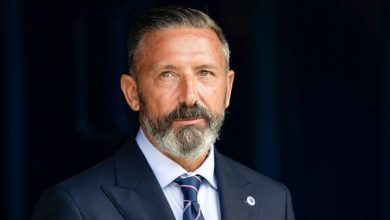
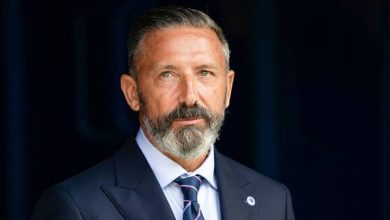
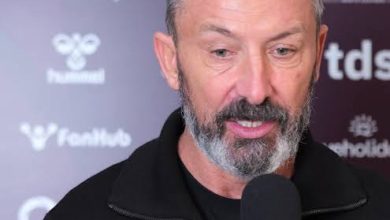
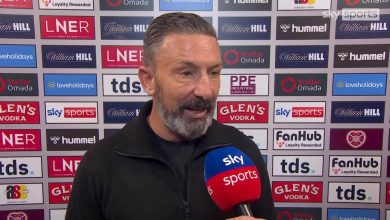
Given that kind of consistent and productive output, it’s entirely understandable that losing Raskin would represent a significant blow for new Rangers manager Derek McInnes, who would understandably prefer to retain a player of such evident quality and consistency as he continues building his squad ahead of what promises to be a hugely important campaign. However, rather than simply hoping the various suitors circling Raskin lose interest, Rangers appear to be taking a considerably more proactive approach, working behind the scenes to identify and potentially secure a suitable long-term replacement, one capable of stepping into the void that Raskin’s departure would inevitably create.
According to reporting from the Daily Record, Rangers have identified Partizan Belgrade’s promising young central midfielder Vanja Dragojevic as their preferred option to potentially replace Raskin, should the Belgian ultimately depart Ibrox this summer. It’s understood that the Light Blues are now actively pushing to reach a formal agreement with the Serbian club regarding a potential transfer, having already opened direct negotiations over a deal for the highly rated 20-year-old.
The same report indicates that Rangers have already seen an initial offer of £3.8 million rejected by Partizan, suggesting the Serbian club value their prized young asset considerably more highly than that particular opening proposal. Discussions between the two clubs are understood to remain ongoing, however, with the Daily Record suggesting that an additional £1 million, taking the overall package up to £4.8 million, could ultimately prove sufficient to convince Partizan to sanction Dragojevic’s departure this summer.
There’s a compelling and rather elegant symmetry to Rangers potentially replacing Raskin with a player possessing such a strikingly similar profile and career trajectory. When the Light Blues originally moved to sign Raskin from Standard Liege back in January 2023, they did so for a similarly modest fee of £1.5 million, taking what was, at the time, viewed as a calculated gamble on a player without any prior experience of Scottish football or the specific demands of the Scottish Premiership.
That particular gamble has since paid off handsomely, with Raskin going on to establish himself as one of the standout performers within the Rangers squad over the subsequent seasons, his value rising dramatically in the process. Given the clear success of that original approach, gambling on a relatively unproven but clearly talented young midfielder from continental European football, it’s easy to understand why Rangers might feel confident in pursuing a broadly similar strategy with Dragojevic, hoping to replicate that same pattern of success with their latest reported target.
A detailed statistical comparison between Raskin’s performances in the Scottish Premiership last season and Dragojevic’s own output in the Serbian Superliga reveals a genuinely fascinating picture of two players with broadly similar profiles and levels of output, despite competing in different leagues and facing considerably different levels of opposition.
Across the 2025/26 campaign, Raskin made 33 appearances in the Scottish Premiership, registering six goals and seven assists, while averaging 3.1 tackles plus interceptions per game. His underlying defensive numbers were similarly impressive, with a 55% success rate in ground duels and 53% in aerial duels, though he did average a relatively high 12.2 instances of losing possession per game, reflecting his willingness to take risks and drive forward with the ball at his feet.
Dragojevic, meanwhile, made 35 appearances for Partizan in the Superliga during the same campaign, contributing four goals and three assists, while averaging 2.3 tackles plus interceptions per game. His ground duel success rate of 54% closely mirrors Raskin’s own figure, though his aerial duel success rate of 43% sits somewhat below the Belgian’s corresponding number. Interestingly, Dragojevic averaged considerably fewer instances of losing possession, at just 8.3 per game, suggesting a somewhat more conservative and risk-averse approach to his overall distribution compared to his prospective Ibrox predecessor.
While Dragojevic’s most recent campaign offers a broadly comparable statistical picture to Raskin’s own output, it’s actually his performances from the previous 2024/25 season that offer perhaps the most compelling evidence of his combative and defensively astute qualities. During that campaign, in what was effectively his first full season within Partizan’s senior setup, Dragojevic averaged an eye-catching 3.8 tackles and interceptions per game across the Superliga, a figure that actually exceeds Raskin’s own corresponding number from last season.
Furthermore, across nine appearances specifically analysed from that particular campaign, Dragojevic won 53% of his ground duels and an impressive 69% of his aerial duels, while also averaging 6.6 ball recoveries per game for his Serbian club. Taken together, these figures suggest a player who, at an even earlier stage of his senior career, was already demonstrating genuinely combative and defensively effective qualities in the middle of the park, offering considerable encouragement regarding his underlying potential to develop into a similarly complete and influential midfielder as Raskin has become during his own time in Scottish football.
Beyond the pure statistical comparison, there’s also a clear stylistic similarity between the two players that makes Dragojevic such a logical and sensible target for Rangers to pursue as a potential Raskin replacement. Like his Belgian counterpart, Dragojevic operates as a dynamic and genuinely complete central midfielder, capable of contributing effectively across all three key phases of play: defensively, in transition moments, and offensively as an advanced number eight.
This kind of well-rounded, box-to-box profile represents exactly the type of midfielder that has proven so valuable and effective within Rangers’ broader tactical setup during Raskin’s time at the club, making Dragojevic a genuinely sensible like-for-like option, rather than simply representing a different type of player being considered purely on the basis of reputation or valuation.
Perhaps even more significant than the pure statistical and stylistic comparisons between the two players is the leadership dimension that Dragojevic could potentially bring to Rangers, should a move ultimately be completed. Should Raskin depart Ibrox this summer, Rangers would be losing not just a hugely productive and effective central midfielder, but also one of the club’s genuine on-pitch leaders, with the Belgian having worn the captain’s armband on several occasions during James Tavernier’s various absences throughout recent seasons.
Remarkably, Dragojevic already possesses genuinely comparable leadership credentials of his own, despite his relatively tender age. The Serbian is currently serving as club captain at Partizan Belgrade, an extraordinary level of responsibility to be entrusted with at just 20 years of age and only in his second full season of senior football. That kind of early leadership recognition speaks volumes about the maturity, respect, and natural authority Dragojevic has already established among his current teammates, qualities that would likely translate effectively to a new environment at Ibrox, once he has had sufficient time to properly settle in and become comfortable with the language and broader cultural adjustment that any international move inevitably requires.
Taken together, the compelling statistical parallels, similar stylistic profile, and comparable leadership potential all combine to paint a picture of Dragojevic as a genuinely well-considered and carefully identified succession target, one that would allow Rangers to sanction Raskin’s departure, should a suitable offer eventually be tabled by Hull City, Real Betis, or another interested party, with considerably greater confidence than might otherwise be the case.
Rather than simply reacting to external interest in Raskin and scrambling to identify a replacement only once his departure becomes an imminent reality, Rangers appear to be taking a proactive and carefully considered approach, working to have a viable and closely comparable alternative already lined up and potentially close to being secured, before any final decision regarding Raskin’s own Ibrox future needs to be made.
From a purely financial perspective, this particular strategy also makes considerable sense for Rangers. Should the club ultimately sanction Raskin’s departure for a fee in the region of £20 million, that substantial financial windfall would comfortably cover the reported £4.8 million required to secure Dragojevic’s signature from Partizan, leaving Rangers with significant additional funds to reinvest elsewhere across the squad, while simultaneously having already identified and potentially secured a like-for-like replacement in the same specific midfield role.
This kind of value-conscious approach to squad management, effectively using the proceeds from selling an established and highly valued asset to fund the acquisition of a younger, potentially even more promising alternative at a fraction of the departing player’s own valuation, represents exactly the kind of shrewd financial planning that clubs operating with more limited resources than Europe’s very biggest institutions need to employ in order to maintain squad quality and competitiveness over a sustained period.
As this fascinating situation continues to develop, attention will now turn towards whether Rangers can successfully conclude their reported pursuit of Dragojevic, with the Daily Record suggesting an increased offer of £4.8 million could prove sufficient to finally convince Partizan to sanction his departure. Simultaneously, developments regarding Raskin’s own situation will need to be closely monitored, with genuine interest from both Hull City and Real Betis suggesting a departure could well materialise before the transfer window eventually closes.
Should Rangers successfully secure Dragojevic’s signature in the coming weeks, it would offer Derek McInnes considerably greater confidence and flexibility when it comes to eventually deciding whether to sanction Raskin’s own departure, safe in the knowledge that a genuinely comparable, and potentially even more exciting long-term replacement, has already been identified and secured to fill that specific role within the Rangers midfield.
Rangers’ reported pursuit of Vanja Dragojevic represents a genuinely well-considered and carefully calculated piece of succession planning, one that could ultimately allow the club to sanction Nicolas Raskin’s departure this summer with considerably greater confidence than might otherwise be the case. Given the compelling statistical parallels between the two players, their similar stylistic profiles as complete, box-to-box central midfielders, and their comparable leadership credentials despite their contrasting levels of experience, Dragojevic appears to represent an almost perfect like-for-like replacement, one capable of eventually filling the considerable void that Raskin’s departure would inevitably create. As negotiations with Partizan continue to progress, and interest in Raskin from both Hull City and Real Betis continues to develop, this fascinating dual transfer situation promises to remain one of the more significant subplots of Rangers’ broader summer rebuilding efforts under new manager Derek McInnes