Why Danny Rohl looks more than happy to take credit for any Rangers success this season

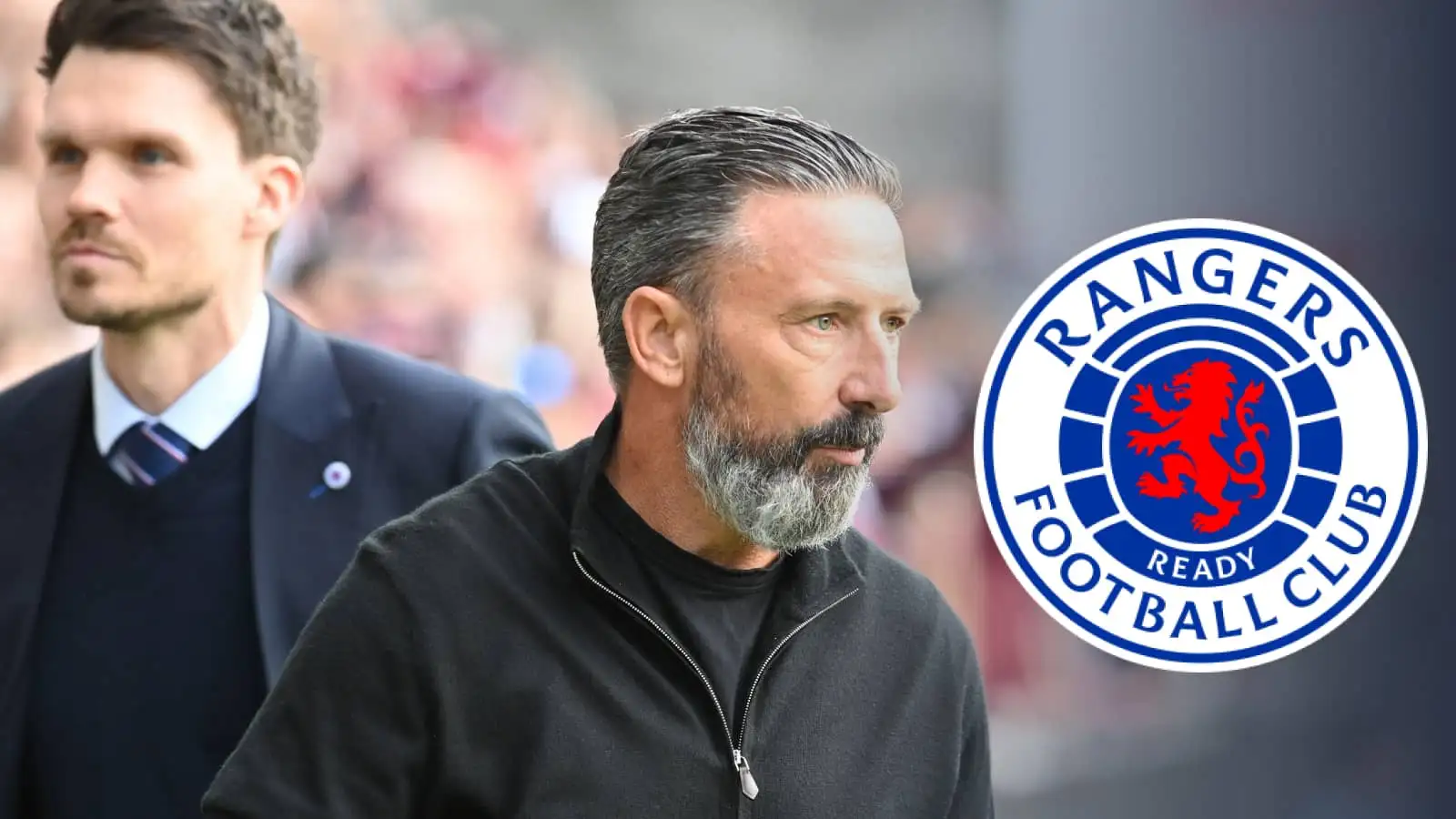
Danny Rohl’s Ibrox exit this summer was one of the most eyebrow-raising managerial departures Scottish football has seen in years, and the German has now broken his silence in a manner that suggests he is far from finished shaping the Rangers narrative from a distance. Having walked away from Ibrox to take the RB Salzburg job, Rohl might have been expected to draw a line under his time in Govan and focus purely on his new project in Austria. Instead, in a wide-ranging interview, he has chosen to revisit his final weeks at the club in detail, and in doing so has left many Rangers supporters wondering whether he is quietly setting himself up to claim a slice of the credit for whatever success follows him out the door.
The chain of events that led to Rohl’s exit was dramatic even by Ibrox standards. Wolfsburg had been strongly linked with the 37-year-old earlier in the year, and for a spell it looked as though he might be tempted away to Germany. When that speculation cooled, most inside and outside the club assumed Rohl was settled and ready to build towards the new campaign at Rangers. That assumption was blown apart when Salzburg moved decisively and confirmed his appointment, a development that stunned large sections of the Ibrox support given how recently the Wolfsburg links had gone quiet. What made the timing even more remarkable was that Salzburg’s announcement landed on the very same day Rangers confirmed Derek McInnes as their new manager, creating one of those strange footballing coincidences where an exit and an arrival are settled within hours of one another.
Rohl’s departure was not simply a case of a manager walking straight out of the building either. Reports at the time made clear he had already been embedded in planning for the upcoming season, including conversations with potential transfer targets who Rangers were tracking. That detail matters a great deal when assessing his latest comments, because it means Rohl was not just a passive figure who left behind a blank slate for his successor. He was actively involved in identifying and courting names who may yet play significant roles under McInnes this season, and he now appears keen to make sure everyone remembers that.
The clearest illustration of this comes through his comments on Lawrence Shankland, one of the more eye-catching arrivals of the summer rebuild at Ibrox. Rangers have already been the subject of previous reporting detailing Rohl’s account of his final discussions with the club’s hierarchy before his switch to Salzburg was finalised, offering supporters a rare glimpse into the private conversations that shaped his exit. But it is his remarks specifically about Shankland that carry the most weight given how the Scotland international’s move to Ibrox unfolded and the timing relative to Rohl’s own departure.
Shankland’s arrival reunited him with McInnes, the manager who now leads Rangers, and it was widely assumed by supporters and pundits alike that the two developments, McInnes’s appointment and Shankland’s signing, were closely linked, perhaps even part of the same broader plan set in motion once the new management team was confirmed. Rohl’s version of events complicates that tidy narrative considerably, because according to him, the groundwork for a Shankland move was being laid well before McInnes ever walked back through the Ibrox doors.
By his own account, Rohl held a lengthy conversation with Shankland shortly after the previous season had concluded, catching the striker while he was away on holiday and speaking with him for the best part of half an hour. During that call, Rohl says he was direct with Shankland about what he expected from him and what a move to Rangers would involve, and he describes the forward as responding with real enthusiasm and commitment to the idea. For Rohl, this exchange is significant because it demonstrates that even at that stage, with speculation swirling and his own future the subject of constant conjecture, he remained fully focused on his responsibilities at Rangers and was actively working to strengthen the squad rather than mentally checking out.
He has also made clear that he communicated his views on Shankland directly to those in charge at Ibrox, telling the club’s decision makers that the striker represented a strong option worth pursuing. At the same time, Rohl says he was careful to manage expectations with Shankland himself, pointing out that with Youssef Chermiti in excellent form and Ryan Naderi also part of the squad, game time would not necessarily be guaranteed and some level of rotation up front was likely regardless of who ended up in the building come August.
Taken in isolation, none of this would necessarily raise eyebrows. Managers talk to potential transfer targets all the time, and it is entirely plausible that Rohl genuinely did play a meaningful role in bringing Shankland closer to a move to Ibrox before his own Rangers tenure came to an abrupt end. The issue is less about whether these conversations happened, and more about the pattern of how Rohl has chosen to present them publicly. Across the wider interview, not just in this one section on Shankland, there is a recurring theme of Rohl positioning himself as diligent, forward-thinking and instrumental in laying foundations that Rangers are only now beginning to build upon under new management. It is the kind of framing that conveniently allows him to claim influence over positive outcomes at a club he no longer works for, while being safely detached from any responsibility should things go wrong.
That is not to say Rohl’s time at Rangers should be remembered as an outright disaster. It would be an unfair and lazy characterisation to suggest his reign in Glasgow was some sort of catastrophic failure from start to finish. There were periods of encouraging football, spells where the team looked organised and purposeful, and moments that suggested Rangers were moving in a sensible direction under his guidance. But context matters enormously in football, and at a club of Rangers’ size and history, there is only one measure that ultimately counts when judging a manager’s tenure, and that is silverware, specifically the league title. Judged by that standard, and only that standard, Rohl’s spell in charge has to be viewed as a missed opportunity, because he did not deliver the title that remains the club’s overriding priority every single season.
Given that reality, there is something faintly uncomfortable about the timing and tone of his latest comments. Here is a manager who left before the job was finished, who did not achieve the one thing supporters actually care about, now speaking in a way that subtly stakes a claim to any success that follows his exit. If Shankland goes on to have an outstanding season in a Rangers shirt, banging in goals regularly and playing a central role in a title challenge, it is not difficult to imagine Rohl being asked about it in future interviews and gently reminding everyone that he was the one who first sat down with the striker, who first sold him on the vision, who first convinced Rangers hierarchy that Shankland was worth pursuing. It is a low-risk, high-reward strategy for a manager in his position, allowing him to bask in reflected glory without having actually seen the project through to its conclusion himself.
Supporters will naturally have mixed feelings about this. On one hand, there is an argument that Rohl deserves some genuine credit if he truly did identify and help secure a player who ends up being important for Rangers this season. Recruitment is a collaborative process, and if his input into the Shankland deal was as significant as he describes, then acknowledging that is simply being fair to the facts. On the other hand, there is something that sits uneasily about a manager who left under circumstances that stunned the club now appearing eager to attach his name to potential success stories while conveniently distancing himself from the failure to win the title that defined his actual time in the dugout.
It is also worth noting that Rohl did not stop at discussing Shankland alone. He revealed that several other players brought in by Rangers over the course of this busy summer transfer window were also names that had been on his radar before his exit, suggesting a broader pattern of recruitment planning that predates McInnes’s arrival entirely. Whether that is entirely accurate or a case of a departed manager retrospectively claiming credit for a wider net of incoming players is something only those inside the building at the time can truly verify, but it does reinforce the sense that Rohl is keen to be seen as instrumental in shaping this rebuilt squad, regardless of who ultimately gets to manage them onto the pitch.
Rohl also touched on how the various new arrivals, seven and counting at the time of his comments, might settle into life at Ibrox, describing it as something that will be genuinely interesting to watch unfold. That word, interesting, feels almost understated given the scale of turnover Rangers have gone through this summer. Wholesale squad rebuilds have become something of a recurring feature at Ibrox in recent years, with the club regularly bringing in large numbers of new faces during the close season in an attempt to freshen things up and close the gap on their rivals. History, unfortunately for Rangers supporters, has not been kind to these overhauls. Time and again, a summer of heavy investment and multiple new signings has failed to translate into the on-field cohesion and title success that fans were hoping for, with integration issues, inconsistent form and a lack of settled understanding between new arrivals often cited as contributing factors.
The hope among supporters this time around is that things will play out differently, and there are some reasons for cautious optimism. Shankland himself looks like exactly the type of experienced, proven goal-scorer who can hit the ground running rather than needing a lengthy period of adaptation. His track record in Scottish football speaks for itself, and reuniting with McInnes, a manager he clearly has an existing relationship and understanding with, could help smooth what might otherwise be a difficult transition into a new dressing room. If Shankland can settle quickly and start contributing goals early in the season, it would go some way towards proving that this summer’s rebuild has been handled with more care and strategic thought than some of the club’s previous overhauls.
Still, the broader question raised by Rohl’s comments lingers over the whole situation. Managers moving on from clubs and later commenting on their former sides is nothing new in football, and there is no shortage of examples of departed bosses reflecting on decisions they made or influence they had before leaving. What makes this situation slightly different is the timing and the specific framing Rohl has chosen. Rather than a brief, throwaway remark acknowledging some involvement in a transfer, he has gone into considerable detail about a specific conversation, its length, its content, and the response he received, all of which paints a picture of a manager who was fully committed and instrumental right up until the moment he wasn’t there anymore.
For Rangers supporters, the sensible approach is probably to take Rohl’s comments with a healthy dose of perspective. It is entirely possible that multiple things are true at once, that Rohl did play some genuine role in early conversations with Shankland and other targets, that McInnes and his staff have since built upon and finalised those deals in their own way, and that ultimately the credit for any success this season will be shared and debated for years to come regardless of what any individual involved says publicly now. Football supporters have long memories when it comes to results and trophies, but they also tend to have fairly short patience for managers who left without delivering what was asked of them attempting to claim ownership of successes that happen after their departure.
What cannot be disputed is that Rangers now find themselves heading into a new season with a rebuilt squad, a new manager in Derek McInnes, and a returning striker in Lawrence Shankland who arrives with genuine pedigree and the potential to make an immediate impact. Whether that success, if it comes, gets attributed to the groundwork Rohl claims to have laid, the work McInnes has since put in to finalise and build upon those foundations, or simply to the players performing well on the pitch, is likely to remain a point of debate among fans, pundits and perhaps even those directly involved for a long time to come. For now, though, it is hard to shake the sense that Rohl, having left Ibrox under circumstances that took plenty by surprise, is already positioning himself rather comfortably to take a bow for anything positive that follows in his wake, while conveniently sidestepping the fact that his own reign ultimately fell short of the one target that mattered most.