Why Martin Zubimendi was particularly culpable BUT Mikel Arteta’s team should be better at dealing with it in the Etihad title clash

The game had already been billed as a battle of intelligence, a clash not just of players but of ideas, of philosophies, of two managers who understand each other deeply. When Manchester City faced Arsenal in that high-stakes final, many expected a familiar pattern. High pressing, quick passing, positional dominance, and the usual tactical chess match between two of the most detailed systems in modern football.
But what unfolded on that night was something very different, something unexpected, something that left Arsenal confused, stretched, and ultimately defeated.
At the center of it all, once again, was Pep Guardiola.
For years, Guardiola has built his reputation on control. His teams press high, suffocate opponents, win the ball close to goal, and dominate possession with relentless intensity. It is a style that has brought him success across different leagues, different teams, and different generations of players.
So when Manchester City stepped onto the pitch, many expected more of the same.
But Guardiola had other ideas.
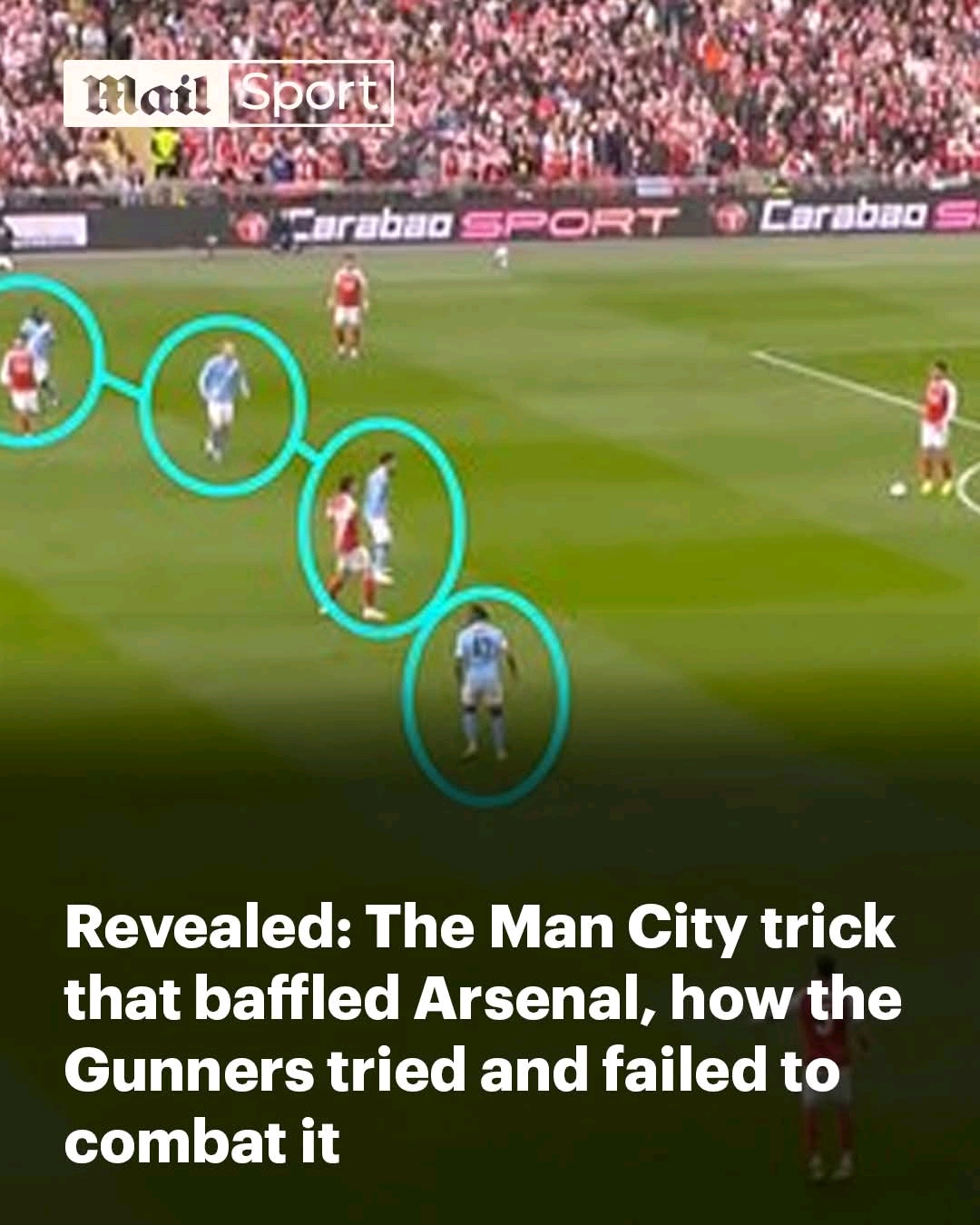
Instead of pushing high, instead of pressing aggressively from the front, City did something unusual. They dropped deeper. They invited pressure. They allowed Arsenal to have the ball in areas where they would normally fight to win it back immediately.
At first, it looked strange. Almost uncomfortable. Fans watching the game could sense that something was different, but it was not immediately clear what the plan was.
Arsenal, under Mikel Arteta, are used to facing teams that try to disrupt them early, teams that press, teams that force mistakes high up the pitch. Their system is built to handle that kind of pressure, to play through it, to exploit spaces left behind.
But on this night, there was no pressure.
Instead, there was space. Time. Freedom.
And that, surprisingly, became the problem.
Because when a team is so used to one type of challenge, facing something completely different can be just as difficult, sometimes even more difficult. Arsenal found themselves in possession, but without clear direction. They moved the ball, but without the usual urgency. They advanced, but without the same clarity of purpose.
Manchester City, meanwhile, stayed patient.
They held their shape. They waited. They watched.
And then, when the moment came, they struck.
This was the trick.
Not a flashy move, not a single moment of brilliance, but a collective strategy. A decision to step away from привычный patterns and create something new, something unexpected, something that Arsenal were not ready for.
By dropping deeper, City created space behind Arsenal’s midfield. They encouraged the Gunners to push forward, to commit numbers, to believe they were in control. And in doing so, Arsenal began to stretch themselves.
That is when the danger appeared.
Because once City won the ball, they had space to attack. Not small spaces, not tight areas, but open grass, the kind of space where pace, movement, and precision become deadly.
Transitions became the key.
Suddenly, players were breaking forward with speed. Passes were played into open channels. Arsenal’s defensive structure, which is usually so solid, began to look vulnerable.
And one player, in particular, found himself under the spotlight.
Martin Zubimendi had a difficult night.
Positioned in midfield, his role was to control the tempo, to protect the defense, to ensure balance between attack and defense. But against City’s unusual approach, he struggled to adapt.
When Arsenal had the ball, he was involved, trying to move play forward, trying to support attacks. But when possession was lost, the space around him became a problem.
Because City were not pressing high, the distances between Arsenal’s lines became larger. The midfield became stretched. And in those moments of transition, Zubimendi often found himself caught between two decisions.
Should he step forward to press? Or should he drop back to protect?
Hesitation in football is dangerous. And City took advantage.
Time and time again, they moved the ball quickly through the middle, bypassing pressure, exploiting gaps, and turning defense into attack within seconds.
It was not just about one player, of course.
Arsenal as a team struggled to adjust.
Their full-backs pushed forward, as they usually do, but that left space behind. Their midfield tried to control the game, but without the usual pressure from City, the rhythm felt off. Their attackers waited for moments that never fully developed.
And all the while, Manchester City stayed disciplined.
This is what made Guardiola’s approach so effective.
It was not just different. It was calculated.
He understood Arsenal’s strengths. He understood their habits. And instead of confronting them directly, he chose to disrupt them in a different way.
Sometimes, the best way to win is not to fight your opponent at their strongest point, but to move the battle somewhere else entirely.
That is exactly what happened.
For Mikel Arteta, it was a frustrating experience.
On the touchline, you could see him reacting, adjusting, giving instructions, trying to find a solution. But solutions are not always easy when the problem is unfamiliar.
Because how do you prepare for something you did not expect?
How do you adapt in real time when the game is not following the patterns you trained for?
These are the challenges that define top-level football.
And on this night, Guardiola found the answers before Arteta could.
But that does not mean Arsenal cannot learn from it.
In fact, that is one of the key points from this match.
Because situations like this are not just about losing or winning. They are about understanding, about growth, about identifying weaknesses and finding ways to improve.
Arsenal are a strong team. A well-coached team. A team with clear identity and structure.
But this match exposed something.
It showed that when the expected pattern changes, when the opponent refuses to play the usual game, adjustments must be quicker, reactions sharper, decisions more flexible.
And with another big clash expected at the Etihad, these lessons become even more important.
Because next time, Arsenal will be prepared.
Next time, they will know that City can change their approach.
Next time, they will be ready to face not just the familiar, but the unexpected.
For Manchester City, this victory was more than just a trophy.
It was a statement of intelligence.
A reminder that they are not just a team of great players, but a team capable of adapting, evolving, and surprising even the best opponents.
And for Pep Guardiola, it was another example of why he is considered one of the greatest minds in football.
Because in a game where everyone expected one thing, he delivered something completely different.
And that made all the difference.
As the final whistle blew and celebrations began, the story of the match was already being written.
Not just about goals, not just about moments, but about ideas.
About a tactical trick that confused, disrupted, and ultimately defeated one of the strongest teams in the league.
A trick that Arsenal could not solve on the night.
But one they will surely remember when they meet again.