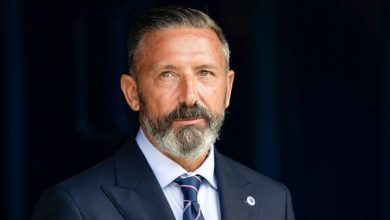
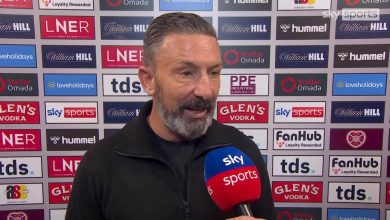
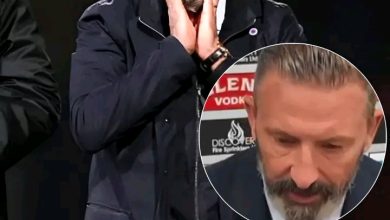
‘Worse than Russell Martin’ – what’s gone wrong for Rangers and Derek McInnes amid escalating crisis” — with the subheading noting McInnes is still searching for a first win amid a rocky start.

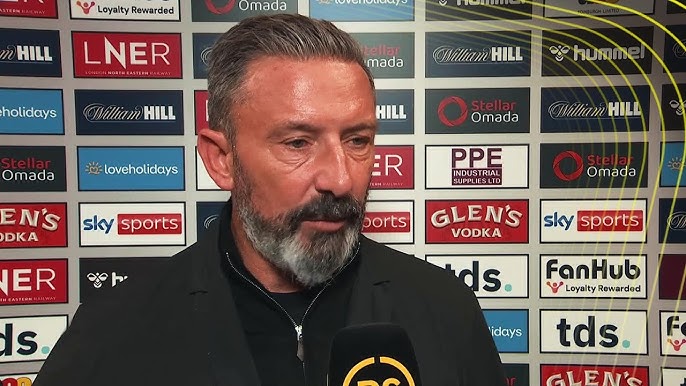
Frustration boiled over inside Ibrox as Rangers’ miserable start to the season deepened, with one supporter’s shout ringing out across the stadium as the players trudged off following another chastening result. “This is worse than Russell Martin,” one furious fan yelled at full-time, as the players made their way off the pitch with their heads bowed. It’s a comparison that will sting anyone connected with the club, given how badly Martin’s own Ibrox tenure ended — and the fact that it’s already being invoked this early into Derek McInnes’ reign speaks to just how quickly things have unravelled
The scale of the crisis facing McInnes is stark. After four matches in charge, there’s little sign that several of the club’s new signings have justified their inclusion in the squad, and the misery was compounded further by a Europa League exit at the hands of Jagiellonia Bialystok, with Rangers going out 3-2 on aggregate. That result was more than just a disappointing European night — remarkably, it means McInnes has now overseen the worst start of any manager in Rangers’ history. For a club with the history and stature of Rangers, that’s an extraordinary statistic, and one that will have alarmed the boardroom as much as it has the supporters.
It was little surprise, then, that the fans who remained inside Ibrox until the final whistle made their anger known. The frustration wasn’t confined to polite grumbling — the sense of despair around the ground echoed uncomfortably with what supporters experienced last season under Russell Martin, whose own start to life in charge was similarly turbulent.
The comparison to Martin isn’t an idle one, and it’s worth revisiting exactly how badly that spell ended to understand why Rangers supporters are so quick to invoke it now. Martin’s reign lasted just five months and 17 matches before the club decided to cut ties. His Ibrox tenure was defined by alarmingly poor results from the outset: he became the first Rangers manager since 1978 to fail to win any of his opening five league matches in charge, a statistic that set the tone for what followed. Things deteriorated further from there. Rangers suffered a chastening 9-1 aggregate defeat to Club Brugge in Champions League qualifying — one of the club’s worst-ever European results — and also lost their opening two matches in that season’s Europa League campaign.
Domestically, results were barely any better. By the time the axe fell, Martin had won just one of his seven league matches, drawn five, and picked up only five victories across all competitions since taking charge in August. The final straw came after a lifeless 1-1 draw away at newly promoted Falkirk, a result that led to genuinely ugly scenes outside the stadium, with police needing to escort Martin away after fans attempted to block the team bus from leaving. He was seen being escorted out through a different part of the stadium entirely, before departing in a separate car. Rangers confirmed his sacking that same evening, ending his time in charge after just seventeen games — and leaving the club eighth in the table, some eleven points behind leaders Hearts and nine behind rivals Celtic. Martin himself accepted responsibility for the result at Falkirk in the aftermath, but by then the damage to his position was already irreversible.
That grim history is precisely why the shout of “worse than Russell Martin” carries so much weight. It isn’t simply an insult thrown out in a moment of frustration — it’s a direct callback to one of the most chaotic and embarrassing periods in the club’s recent history, and the fact supporters are reaching for that comparison after only four games under McInnes shows just how quickly confidence has drained away
What makes the current situation especially striking is how recently McInnes was being talked about in glowing terms. Just months ago, he was being praised for guiding Hearts to within touching distance of a surprise Scottish Premiership title. That achievement was central to why Rangers moved to appoint him in the first place — a manager who had proven he could get a team competing right at the top of the table, brought in to try to restore some stability and success to Ibrox. Instead, only weeks into the job, McInnes finds himself facing exactly the kind of mounting pressure that Rangers had hoped he’d be able to help the club avoid.
The numbers make for grim reading: four games played, zero wins recorded, and now an early Europa League exit to add to the tally. It’s hard to imagine a worse possible opening stretch for a new Rangers manager, and the club’s season could scarcely have started in more troubled fashion.
Results and performances aren’t the only issues McInnes has had to grapple with in his opening weeks. Injuries to a number of key players have added further complications, leaving the new manager with an increasingly difficult job as he tries to steady the ship during what was already going to be a challenging opening period in the role. Losing important players to injury at the same time as trying to integrate a squad reshaped by a heavy volume of summer transfer activity is a difficult combination for any manager to navigate, let alone one still trying to establish his own way of working with a new group of players. Among the injury concerns is the long-term loss of a key striker, an absence which has only added to the sense that circumstances have conspired against McInnes just as he’s trying to find his footing.
To fully appreciate the pressure now building around McInnes, it’s worth considering how much managerial turnover Rangers have already been through recently. Martin’s sacking didn’t come out of nowhere — he was, at the time, already the club’s fourth managerial appointment within the space of little over a year, following Philippe Clement’s departure earlier that year and a brief 83-day interim spell in charge for club legend Barry Ferguson. That kind of instability at managerial level rarely creates the conditions for sustained success, and it means McInnes has walked into a dressing room and fanbase that has already been through several changes of direction in a short space of time.
There’s also a strange twist of fate in the fact that McInnes previously managed Hearts, and during that time was on the receiving end of criticism aimed at Martin. In one exchange during that period, McInnes was asked whether he had any sympathy for his then-under-pressure Rangers counterpart, and responded that he had a great deal, saying it was “so unfair” on a manager to be facing that level of scrutiny. That comment, made from the opposite technical area at a time when McInnes’ own Hearts side were flying, reads very differently now that he finds himself the one facing very similar circumstances at the same club.
Reaction to Rangers’ start to the season has been severe, both from within the fanbase and from voices connected to the club’s recent past. Among former players, criticism has focused not just on results but on the scale of squad turnover under the current regime — comments made separately by ex-Rangers midfielder Andy Halliday described the volume of transfer activity over the past year as reflecting a “gross level of mismanagement,” pointing to imbalances in specific positions as evidence that recruitment has lacked coherent planning.
Supporters, for their part, have been vocal in comparing the current situation directly to the collapse of the Martin era. Message board and forum discussion in the aftermath of results have featured fans explicitly stating that McInnes has “started worse than Russell Martin,” while others have pushed back, arguing that the issues run deeper than any single manager and instead reflect longstanding problems with the club’s recruitment strategy built up over several years. That tension — between blaming the man in the dugout and questioning the structures around him — is a familiar one at clubs going through turbulent spells, and it’s already playing out amongst the Rangers support just weeks into McInnes’ tenure
For now, McInnes’ focus will need to turn quickly toward finding some respite on the pitch. His next opportunity to try to turn the tide comes at home against St Mirren in the last 16 of the Premier Sports Cup this weekend — a fixture that, on paper, ought to offer a more winnable route back to some early-season momentum than the Europa League tie against Jagiellonia did. Given the scale of scrutiny already building around him, a positive result and performance in that game may go some way to easing the mounting pressure, even if it won’t resolve the deeper structural questions being asked about the club’s recruitment and squad balance.
What happens next will likely determine whether this period comes to be viewed as normal teething problems for a new manager adjusting to a demanding new role, or whether the “worse than Russell Martin” comparison ends up looking prophetic rather than simply an angry shout from a frustrated fan on a difficult night at Ibrox. Given how quickly patience wore thin during Martin’s spell in charge, and how deeply that experience is still etched into the club’s supporters, McInnes will be acutely aware that the margin for further poor results and performances may be smaller than he’d like as he tries to steady a rocky start to his time in charge.