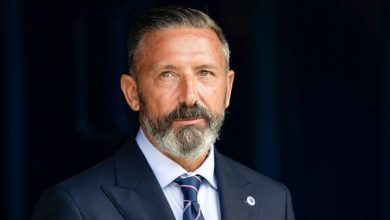
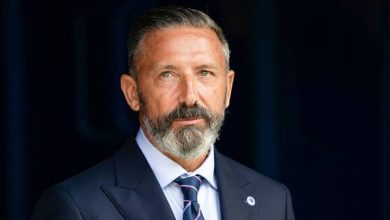
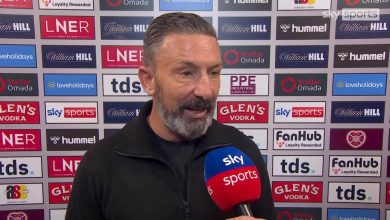
THE INSIDER VERDICT: WHY McINNES-FERGUSON BOND COULD MAKE LEWIS “STATEMENT SIGNING” A REALITY AT IBROX!

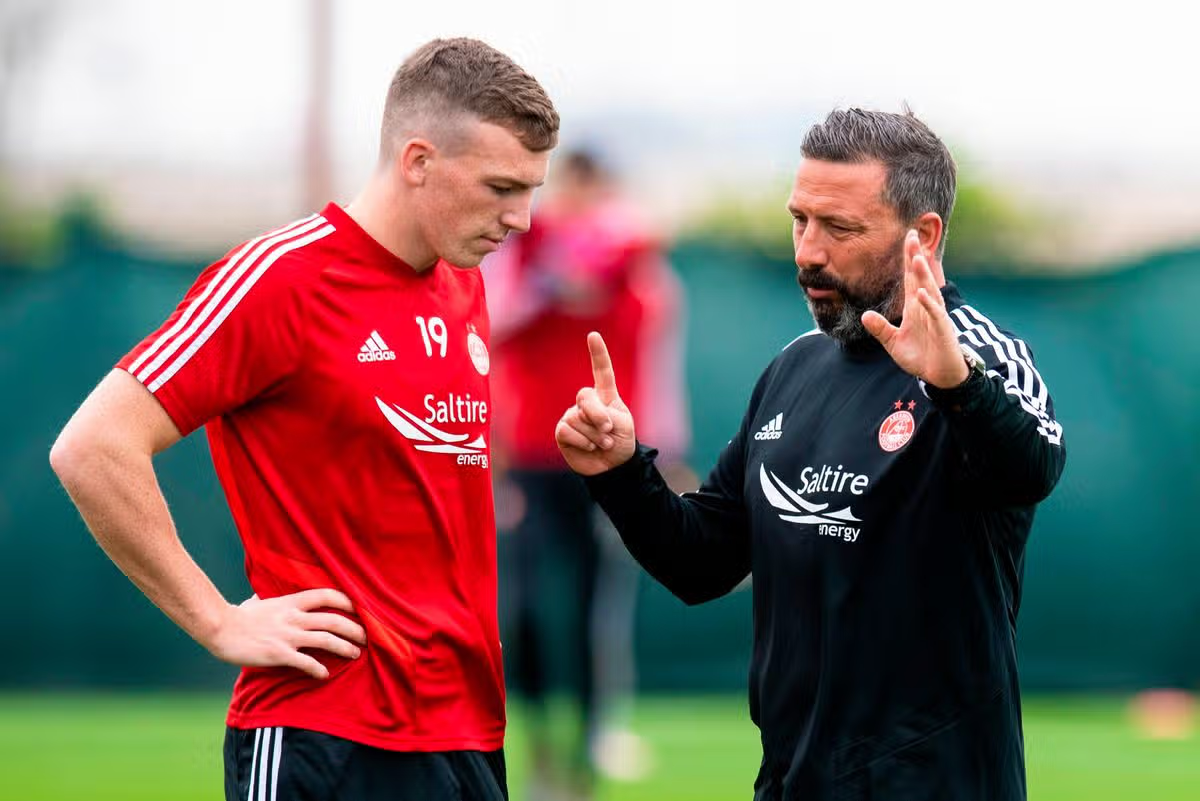
Former Aberdeen midfielder Dominic Ball has offered a genuinely fascinating and deeply personal insight into the relationship between Derek McInnes and Lewis Ferguson, one built during their shared time together at Pittodrie, and one that Ball believes could prove absolutely pivotal should Rangers ultimately succeed in bringing the Bologna midfielder back to Scottish football this summer. Having worked closely alongside both men during a formative period at Aberdeen, Ball’s unique perspective offers Rangers supporters genuine reason for optimism regarding a potential deal that, while financially complex, could represent one of the most significant pieces of business the club completes this summer.
Central to Ball’s compelling assessment of this potential transfer situation is his own first-hand experience of witnessing the relationship between McInnes and Ferguson develop and strengthen during their shared time at Aberdeen. Ball, who played alongside Ferguson and under McInnes’s management at Pittodrie, was ideally positioned to observe exactly how that particular dynamic evolved, and it’s this unique vantage point that lends such genuine weight and credibility to his current assessment of the situation.
According to Ball, the trust and understanding built between the two men during that period at Aberdeen represents something considerably more substantial than a simple professional working relationship. Speaking about the potential significance of Rangers successfully completing a deal for Ferguson, Ball didn’t hold back in his assessment, describing such a move as something that would represent a genuine “statement signing” for the Ibrox club, one built upon what he considers to be a solid and proven foundation between manager and player.
Speaking candidly about the prospect of Ferguson potentially returning to Scottish football with Rangers, Ball was unequivocal in outlining just how significant such a move would be. He explained that landing a player of Ferguson’s calibre would represent a genuine statement signing, should Rangers manage to actually get the deal over the line. Ball pointed specifically to Ferguson’s recent involvement at the World Cup with Scotland, along with his continued strong performances in one of Europe’s most competitive top-flight leagues, as clear evidence of the level the midfielder now operates at.
Ball went on to express his own long-standing belief that a move to Rangers made obvious sense for Ferguson, revealing that he had personally anticipated such a transfer materialising for a considerable period of time. He described the prospect as something that would be “incredible” should it come to fruition, suggesting the specific circumstances surrounding Ferguson’s career trajectory, combined with Rangers’ current situation under McInnes, made this feel like a genuinely natural fit for all parties involved.
However, Ball was also careful to offer a balanced and realistic assessment of the situation, acknowledging that Ferguson has performed admirably during his time in Italian football and may ultimately feel entirely content remaining at Bologna, at least for the time being. He suggested that a move to Rangers might simply represent more of a long-term prospect rather than an immediate certainty, while still maintaining that the specific presence of Derek McInnes as Rangers manager represents a considerable and understandable factor in fuelling this particular speculation.
It’s understood that Rangers have already made formal enquiries regarding the possibility of signing Ferguson from Bologna, though any such deal is likely to prove financially challenging for the Ibrox club to complete. Given Ferguson’s current standing as an established Serie A performer and recent World Cup participant with Scotland, Bologna would understandably be entitled to demand a substantial fee for his services, one that could potentially stretch Rangers’ available summer transfer budget considerably.
Despite these obvious financial complexities, Ball remains convinced that the specific presence of McInnes as Rangers manager could prove to be a decisive and potentially even more significant factor than pure financial considerations when it comes to determining Ferguson’s ultimate willingness to consider a return to Scottish football. Given the strength of the existing relationship between the two men, Ball believes this particular managerial appointment could represent exactly the kind of persuasive factor capable of convincing Ferguson to prioritise a specific project and working relationship over potentially more lucrative alternatives elsewhere.
Offering further insight into the specific nature of the relationship between the two men, Ball explained that McInnes had originally signed a considerably younger Ferguson from Hamilton during his time at Aberdeen, subsequently overseeing the midfielder’s transformation into one of the country’s most promising and highly regarded talents. This particular detail carries genuine significance, given that it establishes McInnes not simply as a manager who briefly worked alongside Ferguson, but rather as the specific individual responsible for identifying his potential at a formative stage and subsequently nurturing his development into the accomplished performer he has since become.
Ball described the strength of the relationship between the two men as genuinely significant, explaining that Ferguson had arrived at Aberdeen as a notably young player before McInnes took over his development, with the midfielder subsequently improving and progressing consistently under his guidance. This particular history, of a manager playing such a direct and instrumental role in a young player’s early development and eventual breakthrough, represents exactly the kind of foundational relationship that could prove considerably more persuasive than a more transactional, purely financial approach to potentially bringing Ferguson to Ibrox.
Building on this theme, Ball suggested that this pre-existing relationship and understanding would specifically benefit Rangers’ cause, given that McInnes already possesses an intimate and detailed understanding of exactly what he would be getting from Ferguson, should a deal ultimately be completed. Ball was specific in identifying the particular qualities that make Ferguson such a valuable potential acquisition, highlighting both quality and mental toughness as essential characteristics required of any player representing Rangers Football Club.
According to Ball, Ferguson possesses these particular qualities in genuine abundance, making him precisely the type of player capable of handling the unique demands, pressures, and expectations that come with representing a club of Rangers’ size and stature within Scottish football. Given McInnes’s own direct, first-hand experience of developing Ferguson from such an early stage of his career, the Rangers manager arrives at any potential negotiation with a level of insight and confidence regarding the player’s character and capabilities that few other prospective suitors could realistically claim to possess.
Beyond his specific insights regarding the Ferguson situation, Ball also offered a fascinating behind-the-scenes account of the circumstances surrounding McInnes’s eventual move to Rangers, revealing that this particular appointment actually came at the second time of asking, following an earlier occasion when McInnes had turned down interest from the Ibrox club while still managing Aberdeen.
Ball, who was on Aberdeen’s playing staff at the time, recalled the genuine uncertainty that surrounded McInnes’s future during that particular earlier approach from Rangers, admitting that he had fully expected his then-manager to depart Pittodrie at that specific point. Reflecting on how that situation eventually unfolded, Ball suggested the timing simply hadn’t been right on that occasion, and expressed genuine satisfaction that McInnes ultimately opted to remain at Aberdeen, given the strong finish to that particular season, one that saw the Dons successfully qualify for European competition.
Following that earlier spell, McInnes went on to enjoy considerable additional managerial success, most recently guiding Hearts to what Ball himself described as an excellent campaign last season. Given the calibre of that particular achievement at Tynecastle, Ball suggested the timing finally felt right for McInnes to make his eventual move to Ibrox, completing what represents a natural and well-earned progression to one of Scottish football’s very biggest managerial positions.
Reflecting further on his own personal experience playing under McInnes’s management, Ball was particularly effusive in describing the specific winning mentality and competitive determination that the new Rangers boss instils within any squad he manages. He explained that, above almost any other consideration, McInnes places overwhelming emphasis on the importance of winning matches and accumulating points, rather than simply focusing on individual performance levels in isolation.
Ball reflected candidly on his own personal journey under McInnes’s guidance, admitting that he had previously struggled with a certain lack of focus and direction while attempting to settle into various different clubs earlier in his career. However, he credited his specific time working under McInnes at Aberdeen as being instrumental in helping him rediscover and properly understand what genuinely mattered most in professional football, describing how his manager had made unmistakably clear that securing victories represented the single most important objective, above and beyond any other consideration.
According to Ball, this particular winning mentality and competitive drive has been a consistent hallmark of McInnes’s managerial career, evident across his various different spells in charge of Aberdeen, Kilmarnock, and more recently Hearts. Given the clear and sustained pattern of instilling this specific competitive mindset across multiple different clubs and squads, Ball suggested Rangers can expect exactly the same underlying approach and philosophy to be implemented at Ibrox moving forward.
Ball also touched on a particularly significant additional dimension regarding McInnes’s suitability for this specific managerial role, namely his own direct, personal understanding of exactly what it means to represent Rangers Football Club, both as a player and now as manager. Having previously played for Rangers himself and won league titles during that time, McInnes arrives at Ibrox with an intimate, first-hand understanding of the specific demands, expectations, and unique pressures associated with the role, something that simply cannot be fully appreciated or understood without having experienced it directly.
Reflecting on his own experience of eventually playing for Rangers himself, Ball offered a particularly candid and revealing admission, explaining that he genuinely hadn’t fully understood or appreciated the true scale and significance of the club until he actually experienced it directly through playing there himself. He went on to describe how this personal experience has since transformed his own relationship with watching Rangers from afar, explaining that he now takes genuine pleasure in following the club’s fortunes, given his own direct understanding of exactly what the institution means to every single supporter.
Beyond the specific speculation surrounding Ferguson, Ball also offered valuable additional insight regarding another recent Rangers signing with direct connections to McInnes’s time at Aberdeen: defender Ross McCrorie. Having previously played alongside McCrorie during his own time coming through the ranks at Rangers as a younger player, Ball possesses a particularly informed perspective regarding this specific transfer as well.
Reflecting on his own experience facing McCrorie on numerous occasions throughout their respective careers, Ball described the defender in terms remarkably similar to how he characterised McInnes himself, highlighting a similar underlying determination, work ethic, and winning mentality as being central to McCrorie’s own game. He explained that McCrorie represents exactly the type of player capable of consistently delivering full effort and commitment, along with a genuine willingness to work hard and compete relentlessly for victory.
Ball also touched on the broader significance of this particular transfer for McCrorie personally, explaining that the defender fully understands and appreciates exactly what it means to represent Rangers Football Club, given his own previous experience at the club earlier in his career. Describing the move as representing something of a dream transfer for McCrorie personally, Ball revealed his own genuine delight and excitement upon learning the news, given his own personal connection and history alongside the defender from their time together coming through at Ibrox.
Beyond simply the emotional and personal significance of McCrorie’s return to Rangers, Ball also highlighted the specific footballing logic and timing behind this particular piece of business. He explained that McCrorie arrives back at Ibrox having accumulated considerable additional experience since his earlier Rangers departure, and crucially, at a stage of his career widely considered to represent his genuine peak years in terms of physical and footballing development.
Ball also touched on McCrorie’s specific versatility as a player, capable of performing effectively across multiple defensive positions or within a central midfield role, further underlining exactly why the defender represents such a valuable and well-rounded addition to McInnes’s evolving squad at Ibrox. Given this particular combination of proven quality, ideal career timing, and genuine tactical versatility, Ball was unequivocal in describing McCrorie’s return as representing a thoroughly excellent piece of transfer business for Rangers.
L
Reflecting on the broader pattern emerging from Rangers’ recruitment strategy under McInnes so far this summer, Ball suggested that the new manager will naturally be drawn towards continuing to recruit players he already knows intimately and trusts implicitly, precisely the type of proven quantities that both McCrorie and potentially Ferguson represent. According to Ball, once a manager has developed genuine trust and understanding regarding exactly what a specific player can offer, that particular foundation becomes an enormously valuable and significant asset when it comes to broader squad building and tactical planning.
Perhaps the most personally revealing aspect of Ball’s broader assessment relates to his own candid reflections regarding how difficult it initially proved to earn McInnes’s trust during his own time at Aberdeen, admitting that his manager likely didn’t trust him immediately upon his own arrival at the club, and that it subsequently took a considerable period of time before that trust was properly established between the two men.
However, Ball was equally clear in emphasising that, once such trust had eventually been earned and firmly established, it then remained permanently in place going forward, suggesting a manager who values consistency and demonstrated reliability above simply reacting to short-term form fluctuations or isolated performances. This particular insight offers further context regarding why McInnes appears so keen to continue recruiting players he already knows intimately from his previous managerial spells, given the clear value he places on having already established that fundamental trust and understanding, rather than needing to build such relationships entirely from scratch with unfamiliar new signings.
Taken together, Ball’s various insights paint a compelling picture of a Rangers recruitment strategy under Derek McInnes that places genuine and considerable value on pre-existing relationships, proven trust, and direct first-hand knowledge of a player’s character and capabilities, rather than relying purely on statistical analysis or external reputation alone. Given that both McCrorie’s completed transfer and Ferguson’s continued speculation both fit neatly within this particular pattern, it seems reasonable to expect further additions of a similar nature as the summer transfer window continues to progress.
For Rangers supporters specifically, Ball’s assessment offers genuine encouragement regarding the underlying philosophy and approach being implemented by their new manager, suggesting a carefully considered and relationship-driven recruitment strategy, rather than simply chasing reputation or market value in isolation. Whether this particular approach ultimately proves successful in bringing Ferguson back to Ibrox specifically remains to be seen, given the genuine financial complexities involved in any such deal, but Ball’s insider perspective certainly offers compelling reasons for optimism regarding the broader direction Rangers appear to be heading under McInnes’s stewardship.
Dominic Ball’s genuinely insightful and deeply personal account of the relationship between Derek McInnes and Lewis Ferguson offers Rangers supporters a fascinating behind-the-scenes perspective on why this particular potential transfer target represents such compelling business, well beyond simply the player’s obvious footballing quality and recent World Cup involvement. Combined with his equally revealing insights regarding Ross McCrorie’s return and the broader winning mentality McInnes consistently instils within his squads, Ball’s assessment paints a picture of a Rangers rebuilding project being carefully constructed around trust, proven relationships, and a manager who genuinely understands what representing this particular club demands. Whether Ferguson ultimately completes what Ball describes as a natural and long-anticipated move to Ibrox remains to be seen, but the foundation of trust between player and manager, built during those formative years at Pittodrie, certainly offers Rangers a genuine and distinctive advantage in pursuing what would undoubtedly represent one of the standout signings of this summer’s transfer window