Derek McInnes Set To End Rangers Captaincy Guessing Game This Week As Manager Reveals He’s Already Made Up His Mind

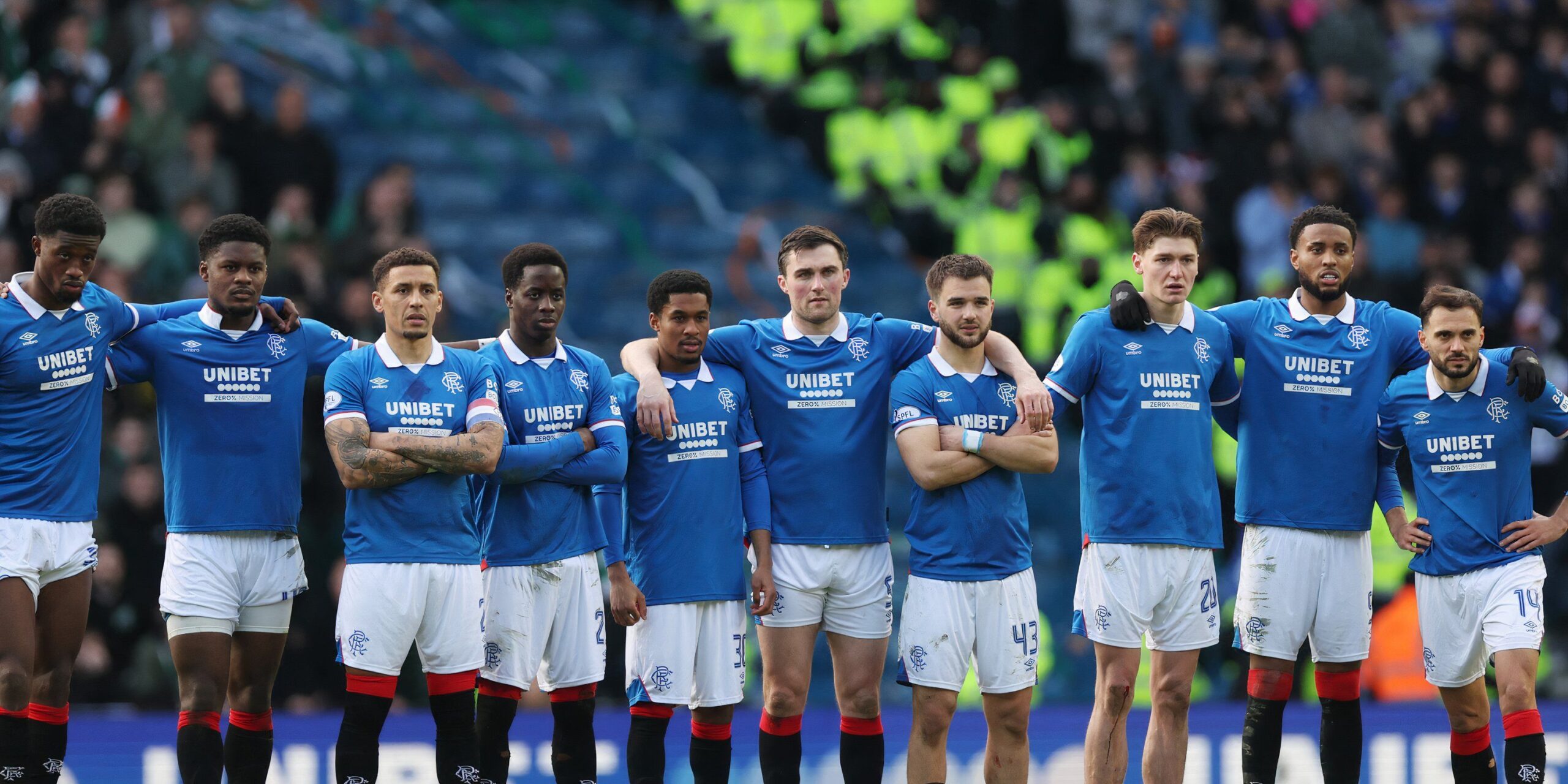
Derek McInnes has confirmed he already knows who will succeed James Tavernier as Rangers captain, though he has stopped short of revealing the decision publicly and has yet to inform the players themselves, leaving supporters and the wider Ibrox dressing room still guessing as the countdown continues towards Friday’s Scottish Premiership opener at Dundee United. It represents one of the more intriguing subplots of Rangers’ pre-season, with McInnes having used the various warm-up fixtures to essentially audition a handful of candidates for the armband before settling, in his own mind at least, on his preferred choice.
The search for Tavernier’s replacement has taken on real significance given the sheer weight of history attached to the Rangers captaincy, a role that carries considerable symbolic importance at a club of this size and stature. Tavernier’s departure leaves a genuine void, not just in terms of leadership on the pitch but also in the sense of continuity that comes from having a long-serving figure wearing the armband. McInnes, however, appears relatively relaxed about the situation, framing it as more of a fortunate selection headache than a genuine cause for concern, and his comments this week offered a revealing insight into just how many credible options he currently believes he has at his disposal.
Throughout the pre-season schedule, McInnes has rotated the captaincy among several members of his rebuilt squad, using the various friendly fixtures as an opportunity to see how different individuals responded to the added responsibility that comes with leading the team out and wearing the armband. Lawrence Shankland, who previously captained McInnes’s side during his time in charge at Hearts, was among those given the chance to wear the armband during pre-season, a decision that will not have surprised many given the trust and understanding that already exists between the manager and the striker following their previous work together. Alongside Shankland, a trio of Rangers’ other summer signings, Ross McCrorie, Dan Neil and Ben Godfrey, were also handed opportunities to captain the side at various points, reflecting the scale of turnover McInnes has overseen since taking charge and the fact that so many of his most trusted options are, in fact, entirely new to the club this summer.
The most recent name to be added into that mix arrived during Rangers’ final pre-season outing, a goalless draw against West Ham United on Sunday, when Dujon Sterling was given his own opportunity to wear the armband, becoming the latest candidate to be assessed by McInnes as he continued weighing up his eventual decision. That West Ham fixture, coming as it did right at the tail end of the pre-season calendar, effectively marked the final audition for anyone still hoping to be handed the captaincy on a permanent basis, with McInnes now needing to finalise his choice in time for Friday’s trip to Tannadice to face Dundee United in the season opener.
Addressing the matter directly, McInnes was candid about both the significance of the decision and his own approach to reaching it. He acknowledged that supporters and observers alike tend to place considerable weight on who ultimately wears the captain’s armband, describing it as something that a lot of people get genuinely fixated on, a sentiment he said he understood given the traditions attached to leadership roles at clubs of Rangers’ stature. Yet he was equally clear that he considers himself fortunate to be facing this particular decision, given the strength and depth of leadership qualities he currently sees present within his squad.
McInnes went on to explain his thinking in more detail, offering a contrast between the situation he currently finds himself in and scenarios he has encountered elsewhere in his managerial career where identifying a genuine leader within the dressing room proved to be a far more difficult and uncertain task. He described moments where a manager might look around a changing room and feel a sense of real uncertainty over who could be trusted to lead the team out, a scenario he was quick to stress does not apply to his current group at Ibrox. Instead, he suggested that he currently has a number of players who could all credibly handle the responsibility, a reflection of the leadership qualities he believes run throughout the squad he has assembled this summer.
Despite that abundance of options, McInnes was clear that ultimately only one individual can be handed the responsibility of leading the players down the tunnel and carrying the captaincy on a full-time basis. Somebody, he explained, has to take on that role formally, even if several members of the squad possess the attributes required to do the job effectively. It is a distinction that speaks to the broader challenge facing any manager assembling a heavily rebuilt squad, namely narrowing down a group of genuinely credible candidates into a single, definitive choice that the rest of the dressing room can rally behind.
When pressed further on where his thinking currently stands, McInnes confirmed that he has, in his own mind, already reached a conclusion regarding who his captain will be. He explained that his overall approach throughout pre-season had been to observe how each candidate carried themselves with the armband, treating the various rotations almost as an extended trial period during which he could assess each player’s suitability from something of a distance, watching closely without necessarily making his intentions known to those involved. That process, he indicated, has only reinforced his belief in the particular qualities he has been looking for, with the individual he has now settled on continuing to demonstrate the kind of leadership traits McInnes values on a consistent, day-to-day basis rather than merely in isolated flashes during matches themselves.
Interestingly, when directly asked whether his mind was fully made up, McInnes offered a slightly more nuanced response, indicating that conversations with his coaching staff regarding the captaincy are still ongoing, largely because the decision has not been sitting at the absolute forefront of his thinking amid everything else involved in preparing his squad for the start of the season. That admission offers a useful reminder of just how much else a manager in McInnes’s position has to juggle during a hectic pre-season period, with matters such as finalising transfer business, settling on a starting system and managing player fitness levels naturally competing for attention alongside a decision as symbolically significant as who wears the captain’s armband.
Nonetheless, McInnes was keen to stress that he fully understands the scale and importance of this particular decision, particularly given the club he now finds himself working at. He acknowledged directly that this is a big call, and one that carries extra significance specifically because of the institution involved, a clear nod to the unique history and weight of expectation that comes with representing Rangers as captain. That awareness suggests McInnes is not approaching this decision lightly, even if he has stressed that it has not necessarily dominated his day-to-day thinking throughout the closing stages of pre-season preparation.
Bringing his comments to a close, McInnes confirmed that despite the captaincy question not having been at the forefront of discussions with his staff up to this point, a firm decision will indeed be made and communicated this week, ensuring there is clarity over who will lead Rangers out for what represents a hugely significant fixture in Friday’s trip to face Dundee United at Tannadice to open the new Premiership campaign.
The identity of Rangers’ next captain carries importance that stretches well beyond the purely symbolic. Whoever is eventually handed the armband will be expected to act as a central figure both on the pitch and within the dressing room throughout what promises to be a demanding season, offering a rallying point for a heavily rebuilt squad that includes a striking number of players who have only recently arrived at the club. Given how many of the candidates McInnes has trialled during pre-season, Shankland, McCrorie, Neil, Godfrey and now Sterling, are either summer signings or relatively recent additions to the Ibrox ranks, there is a strong argument that whoever is ultimately chosen will need to quickly establish their own authority and credibility among teammates, many of whom are themselves still adjusting to life at a new club.
That dynamic adds an extra layer of complexity to McInnes’s decision. Traditionally, Rangers captains have often been figures with lengthy service at the club, players who have earned the armband through years of consistent performance and an established relationship with both teammates and supporters. Tavernier himself fits that mould perfectly, having worn the captaincy for a considerable period before his departure this summer. The current situation, by contrast, appears to present McInnes with a rather different scenario, one where several of the most credible candidates are individuals still relatively new to the club, having arrived only in the past few months as part of this summer’s extensive squad overhaul.
That reality raises interesting questions about what exactly McInnes is prioritising in making his final decision. Rather than simply defaulting to seniority or length of service at the club, which might traditionally have been considered the more conventional approach, his comments suggest he is instead focused on identifying whichever individual demonstrates the strongest and most consistent leadership qualities on a daily basis, regardless of how long that person has actually been at Ibrox. That approach, while perhaps less conventional by historical Rangers standards, could arguably prove better suited to the specific circumstances McInnes finds himself managing this summer, given the unusually high proportion of new faces throughout his matchday squad.
There is also a broader psychological dimension worth considering as Rangers approach their season opener. Announcing a new captain in the days immediately preceding a significant fixture such as the trip to Dundee United carries its own set of considerations. Getting the timing right allows the chosen individual sufficient opportunity to prepare mentally for the added responsibility before the action gets under way, while also giving the wider squad clarity over the leadership structure heading into a campaign that will inevitably bring its share of challenges, both on and off the pitch. Leaving the announcement until this week, rather than confirming a decision earlier in pre-season, may also reflect a deliberate choice on McInnes’s part to ensure he had gathered as much evidence as possible from watching each candidate operate under the specific pressures and demands that come with wearing the armband, even in the relatively lower-stakes environment of pre-season friendlies.
Supporters, meanwhile, are likely to continue speculating over the coming days regarding which of the trialled candidates is most likely to emerge as the eventual choice. Shankland’s prior captaincy experience under McInnes at Hearts would appear to make him one of the more obvious contenders, given the existing trust and familiarity between player and manager built up over their time working together previously. Equally, however, McCrorie’s status as something of a homegrown figure returning to the club, alongside the more recently arrived Godfrey and Neil, and now Sterling’s late introduction into the conversation following his armband stint against West Ham, all ensure genuine uncertainty remains over exactly which direction McInnes will ultimately choose to go.
Whatever the final outcome, McInnes’s comments this week have at least provided clarity that a resolution is imminent, with the manager confirming unambiguously that the decision will be finalised and communicated before Rangers’ players report for their final preparations ahead of Friday’s trip to Tannadice. For a club where the captaincy carries such deep-rooted historical significance, getting this call right represents an important early test of McInnes’s judgement as he continues settling into life at Ibrox following a summer defined by wholesale change across almost every department of the squad.
Ultimately, the identity of Rangers’ next captain will only become clear once McInnes formally confirms his decision later this week, but his comments have at least offered valuable insight into both his thought process and his broader assessment of the leadership qualities present throughout his newly assembled squad. Describing himself as fortunate to have several credible options available to him stands in notable contrast to the kind of captaincy uncertainty that can afflict clubs undergoing major squad rebuilds, and it suggests McInnes feels genuinely confident in the character and leadership potential running throughout his group, even before a ball has been kicked in a competitive fixture this season. With Friday’s trip to Dundee United now fast approaching, all eyes at Ibrox will be on exactly who McInnes selects to lead his side out for the beginning of what promises to be a hugely significant campaign under his stewardship.