Raskin confirmed rangers exit because of what recently happened between him and derek mcinnes

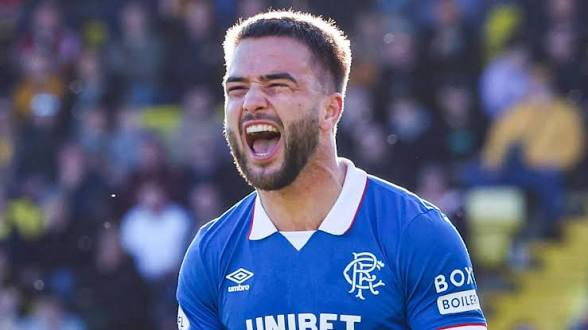
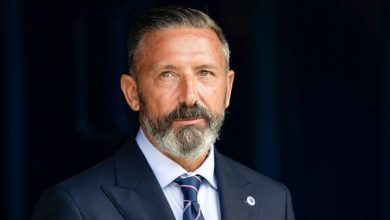
Nicolas Raskin remains a Rangers player, despite widespread expectation that this summer would finally be the window in which he left Ibrox. The Belgian midfielder’s continued presence at the club, even as speculation over his future refuses to die down, is proving to be a source of genuine complication for manager Derek McInnes rather than a straightforward stroke of good fortune.
Few would have predicted, at the start of the summer, that Raskin would still be turning out for Rangers in mid-August. His performances for Belgium at the 2026 World Cup elevated his profile considerably, and it felt like only a matter of time before one of the clubs monitoring him would move to turn interest into a concrete transfer. Instead, that widely anticipated exit simply hasn’t materialised, and Raskin remains very much part of Derek McInnes’ matchday plans — a fact underlined by his inclusion in the starting eleven for Rangers’ 2-1 defeat to Hibernian.
That selection is itself telling. A player genuinely on his way out of a club within days or weeks might reasonably expect to be managed carefully in terms of playing time, both to protect him from injury ahead of a move and to avoid the awkwardness of fielding a player whose long-term commitment to the cause is in question. The fact that Raskin started against Hibernian suggests Rangers currently have little choice but to treat him as a fully active first-team player, regardless of the noise surrounding his future
What makes Raskin’s situation particularly unusual is the gap between speculation and action. Reports have consistently linked several clubs with interest in the former Standard Liège midfielder, yet Rangers have not come close to agreeing a sale with any of them. The Belgian international still has two full years remaining on his contract at Ibrox, which in theory gives Rangers some degree of control over the situation — they aren’t under the kind of pressure a club faces when a valuable asset is edging toward the final year of his deal. Even so, the ongoing uncertainty around his future is something the club will need to monitor closely as the transfer window edges toward its conclusion
Rangers Review journalist Chris Jack has offered some of the clearest insight yet into how the situation is being read from within the corridors of Ibrox. According to Jack, club owner Andrew Cavenagh is holding out for a fee in excess of £20 million for Raskin, though it remains genuinely unclear at this stage which, if any, of the interested clubs will be willing to meet that valuation.
Jack has been candid about how surprising the lack of progress has been. Speaking on the Rangers Review on 13 August, he admitted that he had expected Raskin to no longer be a Rangers player by this point in the season, and confirmed there is currently nothing concrete pointing toward a departure being close. That assessment, from a journalist closely connected to coverage of the club, carries real weight — it suggests this isn’t simply a case of a deal being quietly finalised behind the scenes, but a genuine stalemate in which no party has yet moved decisively.
Jack also addressed a specific question raised by a fan about whether Rangers might be prepared to let Raskin’s contract run down entirely, effectively keeping hold of him rather than selling before his deal expires. He was quick to dismiss that idea. In his view, allowing a player of Raskin’s value to run down his contract without extracting a fee would be a plainly poor piece of business — the kind of decision that would represent letting one of the club’s most valuable assets leave for nothing, rather than capitalising on interest while it still exists. Jack’s clear implication is that now represents the optimal moment for Rangers to cash in and secure the best possible value for the midfielder, precisely because his stock has never been higher following his World Cup exploits with Belgium
Perhaps the most significant complication in all of this is how Rangers have gone about their summer transfer business elsewhere. Everything about the club’s recruitment in central midfield points to a squad that was being actively rebuilt in anticipation of losing Raskin. Rangers have brought in Dan Neil, Cammy Devlin and Vanja Dragojevic during the window — three separate additions to the same area of the pitch Raskin currently occupies.
That volume of incoming business in one position only makes sense if the club expected to be replacing, rather than simply supplementing, its existing central midfield options. With those three names now added to the ranks alongside Raskin, McInnes finds himself with a central midfield unit that looks considerably overstocked relative to the number of starting positions realistically available in most systems. Rather than solving a problem, Rangers’ recruitment strategy in this area appears to have created a new one: too many players competing for too few places, with the biggest name among them — Raskin — still very much part of the equation despite the assumption he’d have moved on by now.
This imbalance places McInnes in a genuinely awkward position. Should Raskin’s future ultimately be resolved by him staying at Ibrox beyond the current window, McInnes would be forced into making a difficult decision regarding the other midfield options now on his books. With four recognised central midfielders — Raskin, Neil, Devlin and Dragojevic — all vying for a limited number of starting berths, at least one of the summer’s new arrivals would need to be left out, rotated heavily, or reconsidered in terms of their long-term role at the club.
That’s a difficult message to deliver to any player, let alone one brought in during the same window specifically to help address a gap in the squad that may, in the end, turn out not to exist if Raskin remains. It also raises broader questions about squad planning and whether recruitment decisions were made with sufficient certainty over Raskin’s situation, rather than banking on an exit that, as things stand, simply hasn’t come to pass.
Compounding matters further is the fact that, while his future remains unresolved, McInnes can’t fully commit to a settled starting lineup or a clear midfield hierarchy. Raskin is capable of playing a genuinely significant role in driving Rangers forward on the pitch — his quality isn’t in question, and his World Cup form for Belgium only reinforced that. But as long as uncertainty continues to hang over whether he’ll be at the club in the coming weeks or months, McInnes is left unable to fully plan around him, nor can he fully commit to establishing his newer midfield signings as first-choice options, given the possibility that Raskin’s continued presence could still disrupt those plans at any point before the transfer window closes.
All of this leaves Rangers in a genuinely unusual position as the transfer deadline approaches. They have a highly valuable, World Cup-proven midfielder who was widely expected to leave, a valuation from ownership that hasn’t yet been matched by any interested party, a journalist with close connections to the club expressing genuine surprise that no exit has materialised, and a squad that’s already been reshaped in central midfield as though his departure were a foregone conclusion.
For McInnes, already facing considerable pressure following a difficult start to the season, the lack of resolution over Raskin’s future represents an added layer of complexity he could likely do without. Whether the situation resolves itself before the window shuts — with Raskin either departing for the £20 million-plus fee Cavenagh is said to be holding out for, or definitively staying and forcing a rethink of the midfield pecking order — remains to be seen. What does seem clear, based on Chris Jack’s assessment, is that Rangers have little appetite for simply letting the situation drift into next year with Raskin’s contract ticking down and his value diminishing as a result. Until that resolution comes, though, McInnes will continue to face the awkward task of managing a midfield unit that currently has one player too many — and no clarity on when, or if, that will change.