Clattenburg Delivers Double Verdict on Old Firm Flashpoints as Duran Escapes Punishment and Handball Storm Rumbles On

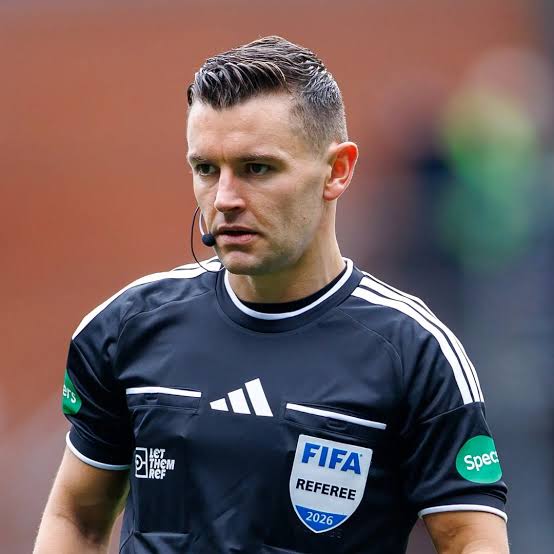
Rangers’ 1-0 win at Celtic Park on Sunday should have been remembered simply as a statement result — Derek McInnes’s side moving to within two points of the summit with back-to-back victories over their oldest rivals inside eight days. Instead, in the 48 hours since Ryan Naderi’s winner settled the first Old Firm Premiership meeting of the season, the conversation has been dragged, again, toward the men in the middle.
Two flashpoints have refused to die down. The first: a kick-off-fresh coming together between Celtic striker Camilo Duran and Rangers midfielder Nicolas Raskin that referee John Beaton never so much as booked. The second: Olwethu Makhanya’s disallowed second-half strike, ruled out for a handball so marginal that even those defending the decision admit the law itself is the real problem. Into that vacuum has stepped Mark Clattenburg, the former Premier League and FIFA referee turned pundit, who has now offered his verdict on both — and, in doing so, has reignited rather than settled the row.
A Kick Nobody Punished
The Duran-Raskin incident happened before most fans had settled into their seats. Rangers kicked off the match, Raskin knocked the ball forward, and Duran — sprinting across to close the space down — left the ground to challenge for it. As he descended, his leg stayed extended, catching Raskin on the follow-through in what onlookers quickly labelled a “let him know you’re there” statement of intent, delivered in the earliest possible moment of an Old Firm derby.
Sky Sports’ cameras did not pick up the moment live, and referee John Beaton awarded Rangers only a free kick, with no card shown. VAR, stationed to review exactly this kind of incident, let it pass too. It was only once clips began circulating on social media in the hours after full time that the scale of the reaction became clear, with Rangers supporters describing the challenge in terms usually reserved for genuine red-card offences and demanding the Scottish FA’s compliance officer, Willie Collum, take retrospective action.
Clattenburg, whose column and broadcast appearances have become a fixture of the post-derby debate in Scottish football, was handed the footage and asked to rule. His conclusion split the difference between the two extremes of the argument. Speaking to Rangers News, he did not dismiss the incident as nothing, nor did he entertain the idea that Duran should have seen red. Instead, he landed on recklessness that fell just short of punishment: a challenge that, in his words, “could easily have resulted in a yellow card.”
The distinction Clattenburg drew is a technical one, but it is the crux of the entire row. Under the game’s laws, escaping a yellow card is one thing; avoiding a red is another matter entirely, governed by a much narrower set of criteria. Clattenburg’s explanation leaned on exactly that separation, pointing to VAR’s likely reasoning that Duran’s studs made contact low on Raskin’s body rather than with the kind of direct, forceful contact that would tip the incident into serious foul play. It was, in his assessment, a booking missed rather than a sending-off ignored.
Why Clattenburg’s Word Still Carries Weight
Part of the reason Clattenburg’s assessments land with the impact they do is the résumé behind them. A Premier League referee for well over a decade, he took charge of two Champions League finals, a European Championship final, and dozens of the biggest fixtures English and international football had to offer before moving into media work and consultancy roles across the game. Since retiring from active officiating, he has built a second career explaining exactly the kind of marginal calls that dominate post-match debate — not as a defender of officials by default, but as someone willing to say plainly when a decision was wrong. That track record is precisely why his conclusions on Sunday’s flashpoints have carried further than the usual round of ex-pro punditry: supporters on both sides know he has been just as willing to criticise Beaton and his colleagues in the past as he has been to back them.
It’s also why the specific framing of his Duran verdict matters so much. Had he simply dismissed the incident as a non-event, Rangers supporters would have had every reason to discount the assessment as reflexive establishment cover. Had he instead branded it a clear red card, Celtic’s camp would likely have pushed back just as hard. By landing in between — real recklessness, but not enough for a sending-off — he has managed to frustrate absolutists on both sides while giving neutral observers a framework that actually engages with what the footage shows, rather than what either set of fans wanted it to show.
What the Law Actually Says
To understand why that distinction matters so much, it helps to look at the wording referees are working from. IFAB’s Law 12 sets out serious foul play in stark terms: any player who lunges at an opponent with excessive force, or who endangers an opponent’s safety, using one or both legs, from any angle, is guilty of an offence that must be punished with a red card. It is a broad definition, deliberately so, designed to capture exactly the kind of “leave a marker” challenge that fans believed they were watching in real time.
But broad wording still requires interpretation, and that is where Clattenburg’s assessment becomes more persuasive than it might first appear. The fact that Duran’s tackle wasn’t pulled up for a closer VAR review is itself informative. Under current protocol, video officials are instructed to intervene only for clear and obvious errors — and the working assumption, in the absence of an on-field review, is that whoever was monitoring the incident from Clydesdale House judged the excessive-force threshold hadn’t been met. Whether that judgement call was correct is precisely what has fuelled two days of argument, but it at least explains why Beaton was never sent to the pitchside monitor.
None of that has done much to cool the temperature among Rangers supporters, many of whom regard the moment as symptomatic of a wider pattern — a sense, rightly or wrongly, that Old Firm officiating in the opening exchanges of a derby tends to favour a lenient hand, an idea Clattenburg himself has previously acknowledged as a historical tendency in these fixtures, even while insisting this particular incident didn’t cross the line into a sending-off.
The Makhanya Goal That Never Was
If the Duran incident was a case of nothing being given at all, the second controversy of the afternoon was the opposite problem: a goal given, celebrated, and then stripped away by the very technology fans had hoped would settle debates rather than create them.
Rangers thought they had doubled their lead in the 74th minute when Olwethu Makhanya met a chance with a venomous strike that flew in off the underside of the crossbar and in off the post — the kind of goal that, on another day, headlines the match report rather than a refereeing column. Replays told a different story. Before Makhanya struck the ball, it brushed his arm, and under the current handball law, any goal preceded by an attacker’s arm making contact with the ball — deliberate or not, however incidental — must be chalked off. Beaton’s assistants flagged it up, VAR confirmed the contact, and the goal was ruled out.
Where the Duran verdict split fans down partisan lines, the Makhanya decision has produced something closer to consensus that the outcome, while technically correct, reflects a law that has outgrown its own purpose. Clattenburg’s view, delivered separately to GRV Media, backed the officials on the letter of the law while making clear he believes lawmakers need to revisit how the rule is applied. His reasoning was blunt: if the ball touches an attacker’s hand or arm before the ball ends up in the net, the goal cannot stand — full stop, regardless of intent or degree of contact — and that, in his assessment, is precisely the part of the law that needs urgent attention from IFAB.
It’s a position that will resonate with plenty of supporters, of both persuasions, who have watched handball decisions swing games across Scottish football this season with what feels like arbitrary inconsistency. A marginal deflection off an outstretched arm, in the current framework, carries the same weight as a blatant, deliberate handball — and that flattening of nuance is exactly what critics argue needs fixing.
A Wider Pattern Across Scottish Football
The Makhanya call did not happen in isolation, and Clattenburg’s broader complaint about the handball law draws directly on incidents playing out elsewhere in the Premiership in recent weeks. At Tynecastle, Hearts midfielder Laurent Mendy had what looked to some like a legitimate goal wiped out by VAR after the ball was deemed to have caught his hand moments before he found the net against Kilmarnock. Unlike the Makhanya situation, though, that one carries a genuine mitigating wrinkle: Mendy’s effort may well have drifted wide of goal regardless, before it took a deflection off Kilmarnock defender Cathal McCarthy and looped back on target. Pundits who have studied that passage of play argue the deflection — not the handball — is what ultimately sent the ball goalward, and that the goal should arguably have stood.
Put the two incidents side by side and the pattern Clattenburg is pointing toward becomes obvious. Handball has become the most litigated area of the current law book, not because officials are getting the mechanical application of the rule wrong, but because the rule itself draws no distinction between decisive contact and the kind of split-second, unavoidable brush that occurs dozens of times in every match without consequence. When Duran’s studs came in low on Raskin, the law offered referees room for judgement, and Clattenburg concluded they used it reasonably. When Makhanya’s arm brushed the ball before his shot, the law offered no such room at all — and that rigidity is exactly what he wants addressed the next time IFAB’s lawmaking panel sits down.
Beaton Under the Microscope Again
None of this has made life easier for John Beaton, whose appointment to Sunday’s fixture was greeted with the now-familiar unease that follows him into every Old Firm assignment. His record in these matches has long been a lightning rod — a history stretching back to a non-red-card decision against Alfredo Morelos in 2018 that has followed him through the years since, alongside off-field controversies that have periodically forced added security measures around him.
To his credit, Beaton’s overall handling of a fixture played out in an unusually hostile atmosphere — despite the absence of away fans under the SPFL’s derby ticketing ban — has drawn more measured assessments than some of his previous Old Firm outings. He showed Derek McInnes an early yellow card to calm the touchline, correctly sent off nobody despite pressure from both benches over the Duran incident and a separate second-yellow shout involving Emmanuel Fernandez, and generally kept a fixture that threatened to boil over from doing so. But the two flashpoints that have generated the most noise both, in different ways, sit on his ledger: one an incident missed entirely, the other a correct application of a law that even its defenders admit is due an overhaul.
That combination — a decision he never made and a decision the law effectively made for him — is a useful illustration of just how much scrutiny referees in this fixture face regardless of what actually happens on the pitch. Beaton could have shown Duran a yellow card and few outside Parkhead would have argued; he could equally have let Makhanya’s goal stand were the handball law framed differently, and nobody would have blinked either. Instead, both decisions have become symbols of a wider debate about consistency that Scottish football has been circling for the best part of a season.
Where This Leaves Rangers
For Derek McInnes, none of the officiating noise changes the substance of what his side achieved. A second win over Celtic inside eight days — following the 3-0 Premier Sports Cup quarter-final rout at Ibrox — has stretched Rangers’ unbeaten run and cut the gap at the top of the table to two points, a remarkable turnaround for a manager who began the season fending off questions about his own job security after early European exits to Jagiellonia and Jablonec. Nico Raskin, the player at the centre of the Duran incident, played through it and finished the match without any lasting fallout beyond the bruises, continuing his prominent role in McInnes’s midfield despite the uncertainty that has hung over his long-term Ibrox future amid Besiktas’s interest.
Olwethu Makhanya, meanwhile, will have mixed emotions. A player who has become a first-choice fixture in McInnes’s revamped back three walks away from Parkhead with a wonder-strike that will not appear on his goal tally, denied not by a poor decision but by a law that offered the officials no alternative once the contact was confirmed. It’s a cruel outcome for an individual moment of quality, even if collectively Rangers had little to complain about in the result itself.
Where This Leaves Celtic
Martin O’Neill, by contrast, faces a second defeat to Rangers inside a fortnight and a mounting sense of crisis that officiating debates can only partially soften. Camilo Duran’s afternoon will be remembered as much for the incident inside the first minute as for anything he did with the ball at his feet across the remaining eighty-nine, and Clattenburg’s verdict — recklessness short of a red card — will do little to quiet supporters who feel their forward line’s early aggression set an unwelcome tone rather than an intimidating one. The Colombian, signed for around £6million from Qarabag over the summer and already the club’s leading source of goal involvement in his first season in Scotland, remains an undoubted asset going forward, but incidents like Sunday’s opener risk becoming a recurring subplot if he continues to play with the same combative edge in the biggest fixtures.
For O’Neill, the accumulation of back-to-back Old Firm defeats, an early Champions League qualifying exit, and a squad still finding its identity leaves the pressure building regardless of what any retrospective review of Sunday’s flashpoints eventually concludes. Willie Collum’s compliance process may yet look at the Duran incident more formally in the days ahead, but even a sanction handed down now would arrive too late to change Sunday’s result or ease the growing scrutiny on the Celtic manager.
The Bigger Picture: A Law in Need of Reform
Strip away the partisan noise, and what Clattenburg’s dual verdict actually represents is a rare moment of clarity from someone with genuine standing inside the game. On the Duran incident, he backed the officials’ restraint while acknowledging the challenge deserved more than it received — a nuanced position that satisfies almost nobody looking for a clean verdict but is, by most technical readings of the serious-foul-play law, the correct one. On Makhanya, he backed the letter of the law while explicitly calling for IFAB to revisit it — again, a position that will frustrate anyone hoping to hear the decision itself was wrong, but one that identifies the actual source of the frustration accurately.
That second point is the one likely to have the longest afterlife. Handball has generated more contested moments across the top five European leagues and beyond over the past two seasons than perhaps any other area of the laws of the game, and Scottish football’s recent run of incidents — Makhanya at Parkhead, Mendy at Tynecastle, and others besides — suggests the Premiership is not immune to the same pattern playing out at the elite level. IFAB’s next scheduled meeting of its lawmaking panel would be the natural venue for exactly the kind of clarification Clattenburg is pushing for: some mechanism, however defined, for distinguishing between contact that meaningfully creates or continues an attacking phase and contact that is functionally unavoidable in the split-second chaos of a shooting or heading motion.
Until that happens, though, referees like John Beaton will keep applying the law exactly as it’s currently written, and pundits like Clattenburg will keep explaining, correctly, why the officials had no real choice. It is an unsatisfying state of affairs for supporters on both sides of the divide, who would generally prefer their arguments to be about whether a goal should have stood rather than whether the rule that disallowed it makes sense in the first place. But it is, for now, where Scottish football’s handball debate sits — one Old Firm derby further into a conversation that shows no sign of being resolved any time soon.
What Happens Next
Sunday’s flashpoints will likely fade from the immediate news cycle within days, overtaken by the next round of fixtures and, for Rangers, preparations for their League Cup semi-final meeting with Aberdeen — a reunion with McInnes’s old club that already carries its own significant storyline. But the underlying issues both incidents raised are unlikely to disappear so easily. Any formal review of the Duran challenge by the SFA’s compliance process would set a marker for how “reckless but not red-card” challenges are treated going forward, particularly in a fixture where emotions run hotter than almost anywhere else in the domestic game. And the handball law, regardless of what happens with Makhanya’s disallowed effort specifically, will keep generating exactly this kind of controversy until either its wording changes or referees are given clearer guidance on applying it with something closer to common sense.
For now, Rangers have the two points, the bragging rights, and a manager whose stock has risen sharply in the space of a month. Celtic have the questions, the pressure, and a growing list of officiating grievances that, fair or not, are starting to follow their team through every Old Firm fixture this season. And Scottish football has, once again, a referee’s verdict that clarifies plenty about the letter of the law while doing almost nothing to settle the argument about whether that law is fit for purpose.