Celtic man among duo to withdraw from Scotland squad as uncapped player receives shock call up

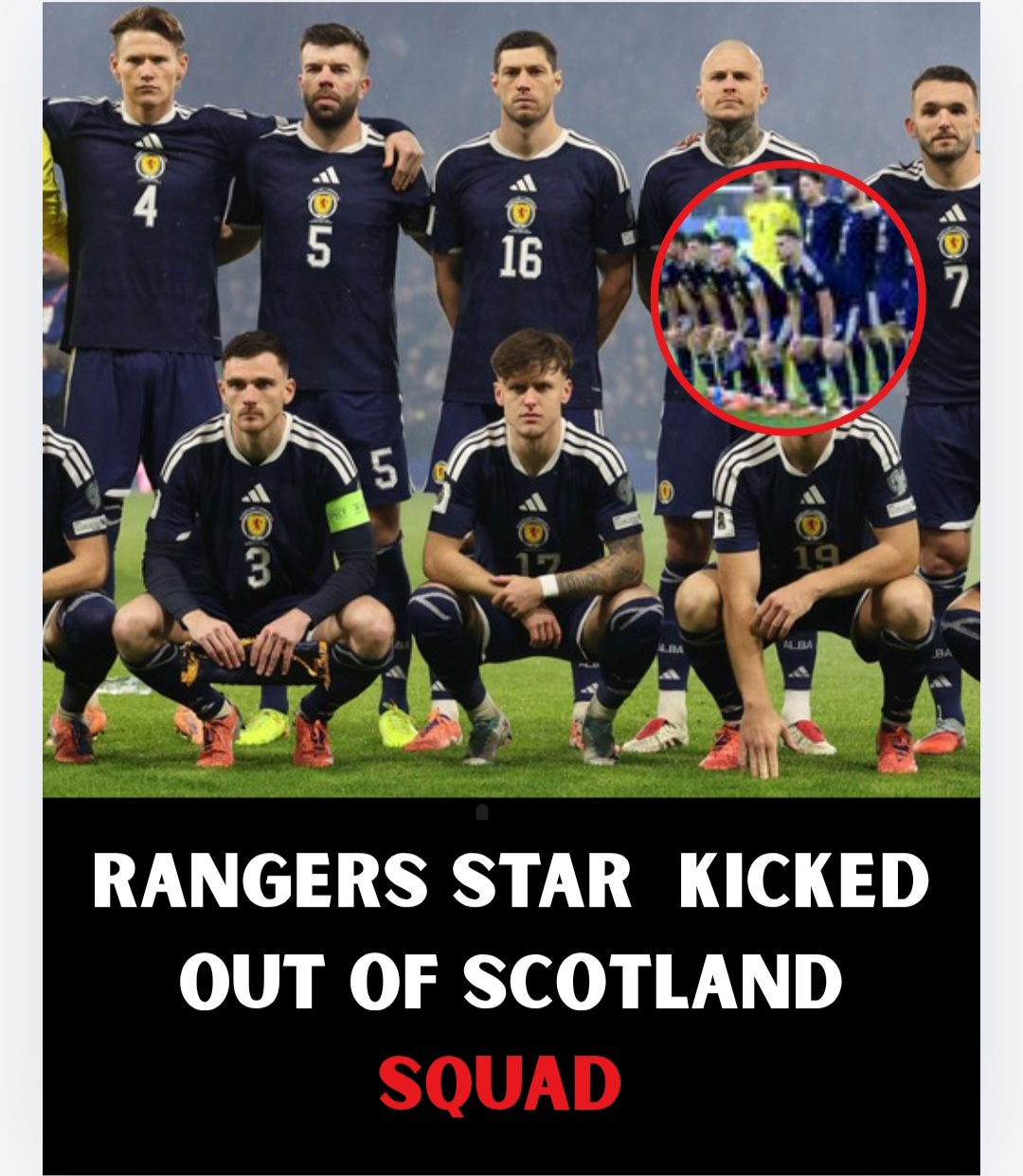
New management jobs are supposed to come with a grace period. Sébastien Pocognoli has not really had one. He named a bold, heavily changed 28-man squad for his first Nations League window as Scotland head coach, and before the group has kicked a competitive ball together, that plan has already had to bend. Two players have pulled out, one of them a Celtic defender who limped off in Sunday’s Old Firm defeat, and a name nobody was expecting has been added in their place.
Kieran Tierney and Kenny McLean are out. Kristi Montgomery, a 22-year-old Blackburn Rovers midfielder with no senior caps to his name, is in. On paper it is a small adjustment. In context, it says a good deal about where Scotland’s squad stands at the start of a new era, and about how quickly an international manager’s careful planning can be disrupted by a weekend of club football.
The change came through Scotland’s official channels on Monday 21 September. Blackburn’s Kristi Montgomery has been brought into the squad ahead of Saturday’s Nations League opener against Slovenia, added as cover following the withdrawals of both McLean and Tierney. The squad is currently based in La Manga, in southern Spain, as Pocognoli puts the finishing touches on preparations for his first game in charge.
The Scottish Football Association’s own post on the matter was short and functional: “IN: Kristi Montgomery. OUT: Kenny McLean & Kieran Tierney.” No frills, no explanation beyond the names, which is standard practice for these mid-camp updates. The detail is filled in by the reporting around it, and it points to two very different stories behind the two withdrawals.
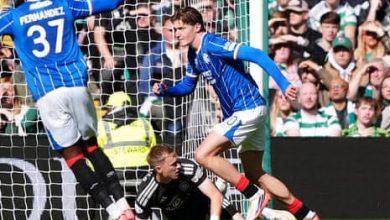
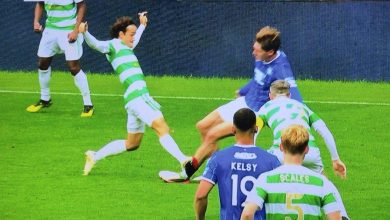
Tierney’s absence is the one with the clearest and most recent explanation. He was substituted during Celtic’s Scottish Premiership defeat to Rangers at Parkhead on Sunday, coming off after 71 minutes having picked up a knock in the game. Celtic Way’s report notes that Tierney has been plagued by injury problems for much of his career, and that supporters will be keen to find out how serious this latest setback is.
At the time of writing, no further diagnosis has been made public. What has been noted is a silver lining of sorts: the international break is expected to run for around three weeks, which gives Tierney a decent window to recover fully before Celtic’s next fixture in mid-October. If the issue proves to be minor, Scotland’s loss may end up costing Celtic nothing at all — the club effectively gets an extended, supervised recovery period rather than losing their player to Hampden duty on a knock that might otherwise have been aggravated on international turf.
There is a pattern worth noting here, too. This is not the first time Tierney has had to withdraw from a Scotland squad at short notice. Back in November 2018, under Alex McLeish, he pulled out of a Nations League double-header against Albania and Israel with a tight hamstring, becoming the ninth player to drop out of that particular squad — a run of absences so unusual that McLeish felt compelled to publicly insist there was “nothing sinister” behind it, and that the call-offs were simply bad luck arriving all at once. Tierney was also withdrawn, alongside Anthony Ralston, ahead of the opening 2026 World Cup qualifiers after playing in a goalless draw against Rangers, with Josh Doig drafted in as cover on that occasion. And in a Nations League fixture against Ukraine, he was withdrawn after a head knock sustained against the Republic of Ireland, with Greg Taylor stepping into his place. The throughline across all of these episodes is not that Tierney is unusually fragile by design, but that a player who logs heavy minutes for a competitive Celtic side and then travels straight into international camp is always vulnerable to picking something up along the way. It is the occupational hazard of being a first-choice player for both club and
Kenny McLean’s withdrawal is a quieter story. The Norwich City midfielder played in his club’s chaotic 4-3 defeat to Bolton Wanderers at Carrow Road, a result that clearly took something out of the Canaries’ afternoon even if the precise nature of McLean’s issue has not been detailed in the coverage available.
McLean is not a headline name in the way Tierney is, but his value to the group should not be understated. The wider squad analysis around Pocognoli’s original selection described midfield as the most settled part of the team, a rare pocket of continuity in a squad otherwise being substantially rebuilt. Losing a experienced, versatile midfielder from that settled area, even temporarily, matters more than it might first appear. McLean has represented Scotland since first breaking into the senior fold years ago — a player who started out getting his maiden call-up as a delighted 24-year-old Aberdeen midfielder ahead of a friendly against the Czech Republic, and who has been a fixture in and around the squad in the years since. His absence removes a layer of know-how just as a new head coach is trying to establish his methods.
The genuinely surprising part of Monday’s update is the player coming in. Montgomery, 22, plays his club football for Blackburn Rovers and has not previously earned a senior Scotland cap. He has been called into the group specifically as cover for the two withdrawals and will join the squad in La Manga to prepare for the Slovenia match.
Beyond those basic facts, the public reporting says little else about him, and it would be unwise to speculate about form, position specifics, or club form that hasn’t been reported. What can be reasonably inferred is the significance of the timing. This is a manager who, just a week earlier, had already built a squad around seven uncapped players — a squad explicitly designed to widen the pool of talent under consideration. An eighth uncapped name arriving as injury cover, rather than as part of the original plan, suggests the coaching staff are comfortable reaching beyond the initial list the moment circumstances demand it, and that they’ve clearly had their eye on players outside the headline group from the start.
For Montgomery personally, this is a notable moment regardless of whether he sees the pitch in Ljubljana. Being called into a senior national squad, even as late cover, is the kind of milestone that changes a player’s career trajectory. He will train alongside senior professionals, be exposed to a new head coach’s tactical framework, and get a first taste of what senior international football demands. If he impresses in that environment, even in training, the door for a longer-term involvement opens further.
Montgomery’s arrival makes more sense set against the shape of the group Pocognoli has already assembled. The Belgian named a 28-man squad for his first Nations League campaign, introducing seven uncapped players while also welcoming back a number of familiar faces following this summer’s World Cup. Fourteen of the 28 were not part of Scotland’s World Cup squad at all, giving the new head coach an immediate, wide-ranging look at his available talent.
Among the uncapped contingent already in the group were former Celtic defender Stephen Welsh, now playing his club football at Swansea City; Celtic’s own teenage right-back Colby Donovan, handed a first senior call after establishing himself in the Parkhead first team; Brøndby defender and captain Luis Binks, who has previously represented Scotland at Under-18 level; Stoke City’s Luke Graham, who had already trained with the senior squad earlier in the year; Hearts winger Josh McPake, in strong early-season form with two goals and four assists since his move from St Johnstone; Sevilla striker Robbie Ure, who arrived at the Spanish club on the back of 20 goals in 20 appearances for Swedish side Sirius; and Bradford City goalkeeper Jon McCracken, recalled after good form in England’s lower divisions.
There were recalls too. Hull City striker Oli McBurnie returned to the fold for the first time in five years, following Hull’s promotion back to the Premier League. Sassuolo’s Josh Doig, Udinese’s Lennon Miller and Sassuolo forward Kieron Bowie were all brought back in, and Hearts teenager James Wilson, who already has two senior caps, was included as well.
The scale of the turnover reflects the scale of the task Pocognoli has taken on. Scotland went out of the 2026 World Cup at the group stage, and the new head coach has left out 11 players who were part of that squad. None of the strikers who travelled to North America under Steve Clarke made this squad. Lawrence Shankland is recovering from hamstring surgery and is expected to be out until December. Torino’s Che Adams has an adductor problem. Lyndon Dykes, George Hirst and Ross Stewart were all overlooked, as were centre-halves Grant Hanley and John Souttar and right-back Anthony Ralston. Napoli’s Scott McTominay is unavailable after undergoing a minor heart procedure earlier in the month.
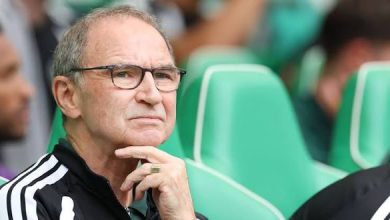
Pocognoli has framed all of this as a deliberate reset rather than a series of snubs. He has said publicly that the door is never permanently closed on any player, and that the absences reflect a mixture of playing-style preferences, injuries and a lack of game time rather than any lasting judgement. Montgomery’s arrival, on that reading, is simply the newest data point in a squad-building process that the head coach has made clear is ongoing and reactive, not fixed the moment the original list is published
Part of what makes these late changes significant is the density of the schedule ahead. This is not a gentle single-fixture introduction for the new head coach. Scotland open Group B1 away to Slovenia on 26 September, then host Switzerland at Hampden Park three days later. The window continues with a trip to North Macedonia on 3 October before a return meeting with Slovenia at home on 6 October.
Four matches inside roughly ten days is a heavy workload for any group, let alone one being rebuilt from close to scratch under a brand-new head coach. Rotation across that stretch is close to unavoidable, which is exactly why squad depth in every position matters so much right now. Losing two players — one from defence, one from midfield — before a ball has been kicked forces immediate decisions about how the group’s resources are spread across four games rather than one.
That is the practical context in which Montgomery’s call-up should be read. Even if he does not start, or does not feature at all, in Ljubljana, having an extra body available becomes genuinely useful once the squad reaches its second and third matches of the window, when knocks and fatigue inevitably start to bite.
For Celtic, the update is a mixed bag. On one hand, another fitness scare involving Tierney is unwelcome news for a club that has just seen its lead at the top of the Premiership cut to two points following the derby defeat. On the other, the break gives Celtic’s own medical staff a clear run at managing the issue without the added strain of international travel and matches, and the three-week gap before the club’s next fixture should work in everyone’s favour if the injury is not serious.
Celtic still have representation in the camp regardless. Colby Donovan’s call-up into the senior squad for the first time stands as a positive story for the club amid the weekend’s disappointment, and he now gets the experience of training inside a new international set-up at a formative stage of his career.
For Norwich, McLean’s withdrawal is a smaller story in the broader football landscape, but it is a reminder that Championship and lower-Premier League form and fixture congestion feed directly into international selection just as much as results at the very top of the game.
Zoom out, and this episode is best understood as an early test of adaptability rather than a crisis. Scotland are in a genuine period of transition. A poor World Cup, the end of the Clarke era, and the appointment of a new head coach with clear ideas about broadening the pool of players under consideration were always going to produce some turbulence in the opening weeks. A large group of new faces, an unfamiliar tactical framework, and a punishing four-game window create exactly the conditions in which injuries and late withdrawals land harder than they might in a settled, established squad.
None of that means the project is off to a bad start. It means the first ten days of the Pocognoli era will double as a genuine stress test of how the head coach reacts when his careful planning is disrupted before it even gets going. Does he lean on the uncapped players he has already brought in? Does he trust a newcomer like Montgomery with minutes if the situation demands it? How does midfield reshape itself without one of its more experienced options?
A number of threads will resolve themselves over the coming days. The clearest will be whether Tierney’s knock turns out to be minor enough that he is available for Celtic by mid-October, which would represent the best possible outcome from an otherwise unwelcome situation. Attention will also turn to how Pocognoli sets up his side away to Slovenia on Saturday without two players he might otherwise have called upon, and to whether Montgomery, or any of the other uncapped names already in the group, gets a chance to make his senior debut across the four fixtures that follow.
For now, the concrete facts ae these: two players are out, a fresh face is in, and Scotland’s rebuild under its new head coach has already had to show its first signs of flexibility before a competitive minute has been played. It is a reminder, as much as anything, that the squad announced on paper is rarely the exact squad that takes the field — and that for a player like Montgomery, an unplanned phone call can still turn into the biggest moment of a career so far.