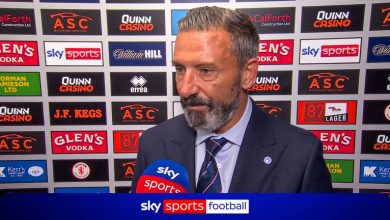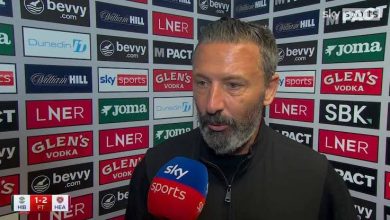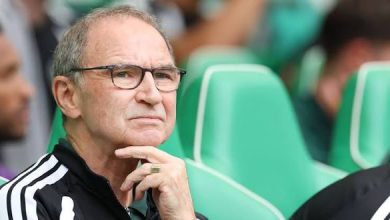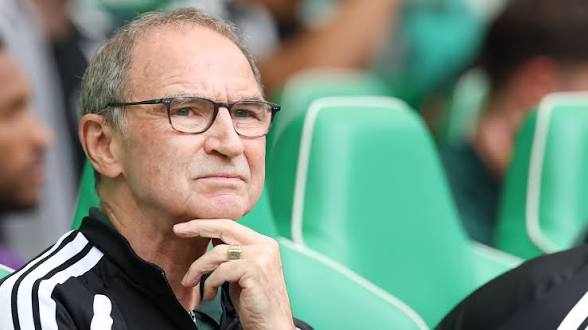
The Old Firm match was Martin O’Neill has been in football long enough to know that a manager’s standing can turn on a single afternoon, but few afternoons in his second spell at Celtic have carried the weight of the one he endured at Parkhead on Sunday. Rangers won the Premiership meeting 1-0, with Ryan Naderi’s first-half strike deciding it and trimming Celtic’s lead at the top of the table to two points as the league broke for the international window. On paper, Celtic still lead. In reality, the mood around the east end of Glasgow has seldom felt further removed from that of a team sitting top of the league. It was Celtic’s third defeat in the space of a week, and it left their 74-year-old manager doing something managers almost never do in public: openly wondering whether he is still the right man for the job.
The damage did not begin on Sunday. Seven days earlier, Derek McInnes’ Rangers had cruised to a 3-0 League Cup win over Celtic at Ibrox, ending the Hoops’ interest in that competition and handing the Light Blues a psychological head start in this season’s Old Firm series. Then came Thursday night and the Europa League opener at Celtic Park, where Ferencvaros left with a 3-1 victory. O’Neill’s response was to tinker. According to Neil Lennon’s analysis on Sky Sports, he changed formation and made four changes for that midweek fixture in a search for fluidity, a sensible idea in principle for a side that had looked stodgy and disconnected. It did not produce the desired reaction. Celtic arrived at the weekend’s derby with their manager already under growing scrutiny, needing a performance to steady the ship, and instead delivered one that left former players and pundits reaching for the harshest available language.
What made the post-match reaction so striking was not the criticism, which was inevitable after three defeats, but the tone of O’Neill himself. Rather than defending his position with the defiance supporters often expect from a Celtic manager in trouble, he spoke about entering a period of self-reflection. He told reporters that he would genuinely reflect and see whether he can still help the team, adding that helping the team is exactly what a manager is supposed to do. He said he would consider that question over the coming week, speak to the board, and that the board might well want to speak to him as well. He also said he hoped to get a couple of days away to clear his head. For a man who has never been short of conviction, it was a remarkably open acknowledgement that the decision about his future might not be a foregone conclusion, either for the club or for him.
Then came the comments about age, which will be quoted in Celtic-related debates for weeks. O’Neill acknowledged that every time results turn sour, his age becomes part of the conversation, and he conceded that the people making the point might be right. Delivering the line with typical dry humour, he joked that he would be 110 in two years, and said it “might be time to wrap it up.” Those seven words, half a joke and half not, are what turned a routine Old Firm defeat into a genuine story about the future of the club’s management. Asked what would happen if his reflection led him to conclude that he could not improve the team, he did not deliver a grand statement of intent. He said that if it reached that point he would let the press know, but that he did not yet know the answer and would simply have a look at it.
It would be a mistake to read all of that as a man preparing to walk away. O’Neill also insisted that the supporters are entitled to be negative after what they have watched, saying he accepts that he is not immune from criticism, far from it, and that there is every reason for people to ask whether he can turn things around. But he pointed to the bigger picture as well: Celtic remain two points clear, he said, and he had already expected a long, hard fight involving Celtic, Rangers and Hearts, the latter still very much in the conversation. He reminded reporters that it is a long season and that this is not the first time his managerial record has been questioned. That is the voice of a manager who still believes the title race is winnable, even while accepting that the past week has damaged his credibility with the fanbase.
The outside verdicts were considerably less forgiving. Lennon, who managed Celtic himself and knows exactly what this kind of week feels like from the dugout, did not soften his assessment on Sky Sports. He said Rangers were far superior, not merely in physical terms and running power but in the football they played, and that they effectively dominated possession and patterns of play. He acknowledged that Celtic were better in the first half than they had been earlier in the week, without being brilliant, but described the second half as totally disjointed, with the home side outplayed and outworked, which he called the worst label you can hang on a team. In his words, all the best players on the pitch wore blue. He suggested that the international break arrives at a good time for Celtic, but that a total reset is needed because the last three performances have all been very poor.
Chris Sutton, another former Celtic favourite, went further and directly contradicted his old manager’s suggestion that the game had been close. Sutton said he did not like to disagree with O’Neill, but that there was a massive gulf between the two teams, and that he could not remember Celtic taking that kind of beating from Rangers at Celtic Park. He described a team that looked as if it was making things up as it went along, and said Rangers were better in every department. His conclusion was blunt: Celtic have big problems, and being smashed by Rangers is a real concern. When two of the club’s most recognisable former players, both usually sympathetic to O’Neill, describe the situation in those terms, it becomes very hard for the board to treat the week as a mere blip. It is worth noting how sharply that clashes with O’Neill’s own view of a tight contest, and that gap in perception is itself part of the story.
From the Rangers perspective, the picture could hardly look more encouraging. McInnes has now overseen a 3-0 win at Ibrox and a 1-0 victory at Parkhead in the space of a week against the club that has dominated the Old Firm fixture over the past few seasons. In league terms, Naderi’s goal has taken Rangers within two points of the leaders going into the break, and the psychological effect of two derby wins in seven days should not be underestimated. Confidence matters enormously in this rivalry, and a team that has just beaten its oldest rival twice in a week goes into the next block of fixtures believing it can catch anyone. For Celtic, the opposite applies. The longer the questions about O’Neill’s position linger, the more they risk becoming a distraction inside the squad, and the harder it becomes for a group of players to perform with the certainty that big Old Firm and European games demand.
Part of what makes the situation so fascinating is O’Neill’s history with the club. When he arrived in the summer of 2000, Celtic were a team still recovering from a difficult decade, and he made his mark almost immediately. His first Old Firm match in charge, a 6-2 win over Rangers at Celtic Park, has long been regarded as the moment the balance of power shifted between the two clubs. Over the following five years he won three league titles, took Celtic to the 2003 UEFA Cup final in Seville, and built a side that Celtic supporters still talk about with genuine reverence. He is, by any reasonable measure, one of the great managers in the club’s history, and that legacy is precisely why the current conversation feels so uncomfortable. Nobody at Celtic wants to see that reputation bruised by a difficult final chapter, yet nobody at the club can pretend that sentiment alone is enough to justify a manager’s position when results and performances are heading in the wrong direction.
His return has also been anything but straightforward. O’Neill has now begun his second spell as permanent manager after two stints as interim boss last season. The first of those interim runs was, on the evidence of the time, a genuine success in the derby arena. Early in his second stint he guided the Hoops to a League Cup final with a 3-1 extra-time win over Rangers, who played much of the match with ten men after Thelo Aasgaard’s red card, and the intensity in Celtic’s play was widely noted alongside the influence of his assistants, Shaun Maloney and Mark Fotheringham. Later that season came a Scottish Cup quarter-final shootout win over Rangers at Ibrox, overshadowed by a pitch invasion that led to nine arrests and left O’Neill fearing for the atmosphere of the fixture. It was a period when the Old Firm rivalry seemed to bring out the best in him. That makes the past week, with two derby defeats and a European stumble in between, feel like an abrupt reversal of the pattern.
It is also worth remembering the wider instability that has surrounded the managerial job at Celtic Park. Gordon Strachan pointed out earlier this year that Wilfried Nancy lasted just 33 days in charge this season, and used the example to question how much influence angry sections of the support should have over the length of a manager’s tenure. That context matters, because it underlines how little margin for error a Celtic manager now has, and how quickly the mood around the club can turn. The board, whoever ultimately makes the call on O’Neill, will be aware that another rapid change would add to the sense of turbulence. It will also be aware that persisting with a manager whose team is being outplayed by Rangers carries a very real cost of its own, and that the second option may prove more damaging than the first if the slide continues.
Then there is the age question, which O’Neill raised himself and which deserves a fair hearing rather than a knee-jerk reaction in either direction. At 74, he is managing at a level of intensity that would test someone half his age. Old Firm week after week, European football on Thursday nights, the relentless demands of a title race, and the daily scrutiny that comes with running one of the biggest clubs in British football are all draining. Experience is a real asset, particularly in a dressing room that needs calming, but no manager can rely on reputation alone once the evidence on the pitch starts to contradict it. What would matter most to the board is not a number on a birth certificate but whether O’Neill and his staff can identify what has gone wrong and put it right. His willingness to say publicly that he will reflect, rather than simply insist that everything is fine, suggests a man who understands that distinction better than most.
The case for keeping faith with him is stronger than the week’s headlines suggest. Celtic are still top of the Premiership, still two points clear, and a long season lies ahead in which a single derby defeat rarely decides the destination of the title. The Europa League campaign is only one game old. O’Neill has managed in far more turbulent circumstances than these and has a record of restoring belief in dressing rooms that had lost it. His coaching staff, who earned praise during his interim spells for the intensity they brought to training, remain in place. The international break also gives the club a chance to reset, welcome back players who were away, and reassess the tactical approach without the pressure of a game every few days. If the board believes the problem is about shape and fluency rather than desire and quality, there is a reasonable argument for giving him the time to fix it.
The case for change, however, is equally difficult to dismiss. Three consecutive defeats against strong opposition, two of them against the biggest rival in the country, is a run that would test any manager’s job security at Celtic. The performances, not just the results, are what have alarmed people, with Lennon and Sutton both describing a team that looked disjointed and outplayed. If Celtic cannot beat Rangers, and cannot hold their own in Europe, the questions will only get louder in the weeks ahead. Reports earlier this year linked the club with Robbie Keane as a possible successor, according to GOAL, and while nothing suggests the board is acting on that today, the existence of such names shows that the succession question is never far from the surface at a club like this. Waiting too long to make a change can be as costly as moving too early, and directors at Celtic Park will be well aware of that.
The next few days will therefore matter enormously. O’Neill has said he will reflect, speak to the board and take a moment away from the noise. Those are not the words of a man about to resign, but nor are they the words of someone confident that his position is secure. What the board says in response, and how it says it, will set the tone for the rest of the season. A firm public show of support would give O’Neill the space to rebuild, but it would also raise the stakes for the games that follow. A more hesitant reaction would fuel the sense of uncertainty at exactly the wrong moment. Either way, the players will return from international duty knowing that the manager’s future is a live topic, and how they respond on the pitch will do more than any statement to shape what happens next.
For now, Celtic remain top of the league by two points, which is a fact that O’Neill himself has been keen to stress, and one that should not be lost amid the noise. But the margin has never looked more fragile, and the belief that surrounded the club a few weeks ago has been replaced by a growing sense of concern. The manager who made his name by beating Rangers 6-2 on his Old Firm debut now finds his future being debated after defeats to the same opponents. Whether he stays or goes, the coming weeks will define how this chapter of Martin O’Neill’s Celtic story is remembered. Only one thing is certain: after what happened at Parkhead on Sunday, the questions are not going away until the team, or the manager, provide the answers.