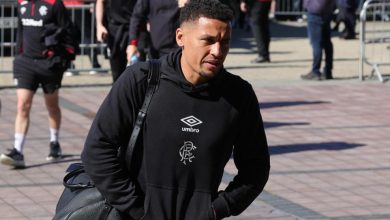
Amario Cozier-Duberry has something Djeidi Gassama and Oliver Antman haven’t shown at Rangers

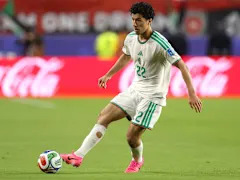
Derek McInnes finds himself searching for genuine difference-makers this summer, and the data emerging around Brighton winger Amario Cozier-Duberry suggests he may have identified exactly the kind of ruthless attacking edge that’s been conspicuously absent from Rangers’ right-hand side over the past season. With the club having finished a painful eight points behind both former Hearts boss McInnes’s old side and fierce rivals Celtic following a disappointing conclusion to the campaign, the search for fresh attacking impetus has become one of the defining priorities of Rangers’ summer rebuild, and few areas of the pitch illustrate that need more starkly than right-wing.
The numbers now emerging from a statistical comparison between Cozier-Duberry and Rangers’ current options in that position, Djeidi Gassama and Oliver Antman, paint a picture that should give McInnes and his recruitment team plenty of encouragement about pursuing the Brighton prospect, while simultaneously raising some uncomfortable questions about whether either of Rangers’ existing wide options currently possess the cutting edge required at this level.
## 🎯 A Miserable End to the Season Demands a Response
Context matters enormously when assessing why Rangers are so determined to strengthen their attacking options this summer, and the eight-point gap that opened up between Ibrox and both Hearts and Celtic by season’s end speaks to genuine underlying issues that go beyond simple bad luck or refereeing decisions. Finishing that far adrift of both a direct rival and, more painfully still, the club McInnes himself previously managed, represents exactly the kind of underwhelming campaign that demands serious recruitment action rather than incremental tinkering at the margins.
Attack, in particular, has been identified as an area requiring urgent reinforcement, and it’s within that context that Rangers’ reported interest in Cozier-Duberry needs to be understood. This isn’t simply a case of adding depth for the sake of squad numbers. It’s a specific attempt to address a demonstrable deficiency in end product from wide areas that the underlying statistics suggest has genuinely hampered Rangers’ attacking output over the course of last season.
The statistical case for Cozier-Duberry representing a significant upgrade on Rangers’ current right-wing options is considerable once the underlying data is examined closely. Across 34 appearances during his loan spell in England’s League One last season, the 21-year-old delivered eight goals and 10 assists, a combined attacking output of 18 goal contributions that immediately dwarfs what either of Rangers’ current options managed in a full Ibrox season.
Gassama, by comparison, contributed just three goals and five assists across 38 appearances for Rangers, a return of eight combined goal contributions despite playing in more matches than Cozier-Duberry did during his loan spell. Antman’s numbers, meanwhile, make for even starker reading, with just a single goal and three assists across 16 appearances representing a genuinely underwhelming return for a player occupying such an advanced attacking position.
Beyond simple goals and assists, the more granular underlying metrics, sourced from Fotmob data, reinforce the sense that Cozier-Duberry possesses a genuinely different level of attacking threat compared to his potential Ibrox teammates. In terms of shot volume, the Brighton loanee averaged 3.29 shots per 90 minutes during his time at Bolton, comfortably outstripping Gassama’s 2.52 and Antman’s considerably more modest 1.68. That gap in shooting frequency alone suggests a player far more inclined to take on shooting opportunities when they present themselves, rather than consistently opting for the safer, more conservative choice of laying the ball off to a teammate.
Perhaps the most revealing statistic in the entire comparison relates to touches taken inside the opposition penalty box, and it’s here that the numbers tell a genuinely fascinating story about the different ways these three players operate in the final third. Cozier-Duberry averaged 6.12 touches in the opposition box per game, a figure that sits above Gassama’s 5.69 and Antman’s 5.53, though not by an especially dramatic margin given the significant gulf in end product between the three players.
What that relatively modest gap in box touches reveals, when set alongside the far more pronounced differences in goals, assists, and shot volume, is that Cozier-Duberry appears to make considerably more of the limited opportunities he does get inside dangerous areas compared to either of Rangers’ current options. In other words, this isn’t simply a case of a player who gets significantly more chances to influence games in threatening positions and therefore naturally accumulates better statistics as a result. It’s a case of a player who, when he does find himself in those advanced areas, converts that positioning into end product far more ruthlessly and efficiently than either Gassama or Antman currently manage.
That distinction matters enormously for a recruitment team assessing potential signings. A player who simply racks up impressive underlying numbers by virtue of playing in a system that gets him significantly more touches in dangerous areas represents a very different proposition to one who demonstrates a clear ability to make the most of relatively similar opportunities to his positional rivals. The data here points firmly toward the latter interpretation when it comes to Cozier-Duberry, suggesting a genuine ruthless streak in the final third that neither of Rangers’ current right-wing options have managed to consistently demonstrate.
## 🧠 What Explains the Gap
It’s worth considering what might account for such a significant disparity in output between players operating in broadly similar positions and roles. Age and experience likely play some role, though it’s worth noting that Cozier-Duberry, at 21, isn’t dramatically younger than either Gassama or Antman, meaning this isn’t simply a case of an emerging talent naturally outperforming more seasoned professionals by virtue of superior underlying potential alone.
League context matters too, of course, and there’s always a need for some caution when comparing statistical output across different competitions, given variations in defensive quality, tactical approaches, and overall game states between English League One and the Scottish Premiership. Nevertheless, the scale of the gap in goal contributions specifically, 18 combined goals and assists for Cozier-Duberry compared to just eight for Gassama and four for Antman, suggests a difference too substantial to be explained away purely by competitive context.
There’s also the simple matter of confidence and role clarity to consider. Both Gassama and Antman have experienced what’s been described as mixed spells at Ibrox, with Gassama in particular seeing his form dip notably as last season progressed, having shown promise earlier in his time at the club. Whether that decline reflects tactical uncertainty, confidence issues, or simply the Scottish Premiership proving a more challenging environment than initially expected is difficult to say definitively from the outside, but it does suggest neither player has yet found the settled, confident platform from which their underlying attacking instincts might flourish more fully.
## 🇲🇷 Adaptation Already Proven
One further point in Cozier-Duberry’s favour relates to his demonstrated capacity to adapt successfully to a new footballing environment, having already proven he can produce eye-catching numbers away from his parent club’s first-team environment during his loan spell at Bolton. That kind of proven adaptability offers some reassurance that a subsequent step up to Scottish Premiership football, a different but broadly comparable level of competition to English League One in terms of overall quality, needn’t necessarily represent an insurmountable challenge for the young winger.
Brighton’s own continued faith in the player, evidenced by their determination to fold him into first-team plans and their active efforts to extend his contract terms, only reinforces the sense that this is a talent considered genuinely capable of performing at a higher level than League One, rather than simply a player who enjoyed a productive loan spell against what might be considered more modest defensive opposition.
None of this statistical case, however compelling, changes the fundamental challenge facing Rangers in actually turning their interest into a completed transfer. Brighton’s clear stance on retaining Cozier-Duberry, having already rejected a substantial offer from elsewhere in Europe and being actively engaged in contract extension talks, means Rangers face an uphill battle regardless of how favourably the numbers stack up in the player’s favour.
That said, the scale of the statistical gap between Cozier-Duberry and Rangers’ current right-wing options arguably strengthens the case for Rangers persisting with their interest rather than abandoning the pursuit simply because Brighton’s initial stance appears unwelcoming. When the underlying data points this clearly toward a genuine and substantial upgrade on existing options, particularly in an area of the pitch McInnes has already publicly identified as a priority following a season where Rangers finished well behind both Hearts and Celtic, the potential reward would seem to justify continued effort and patience in pursuing a deal, even if success is far from guaranteed.
## 🔑 The Verdict
Taken together, the statistical comparison between Amario Cozier-Duberry and Rangers’ current right-wing pairing of Djeidi Gassama and Oliver Antman makes for compelling reading if you’re a Rangers supporter hoping for genuine attacking reinforcement this summer. Superior goals, superior assists, a significantly higher shot volume, and, most tellingly of all, considerably greater efficiency when it comes to converting box touches into meaningful attacking output, all point toward a player who possesses exactly the kind of ruthless edge that’s been missing from Ibrox’s right flank over the course of a genuinely disappointing campaign.
Whether Rangers can actually convert that clear statistical case into a completed transfer remains an entirely separate question, and one that will likely hinge on factors well beyond simple footballing logic, including Brighton’s financial demands, the player’s own contractual situation, and the presence of other interested clubs circling the same target. But on the evidence of the numbers alone, McInnes and his recruitment team have identified precisely the profile of player capable of addressing one of the most glaring deficiencies in last season’s underwhelming attacking output, and pursuing that deal with real conviction looks like exactly the right call given what’s currently on offer from Rangers’ existing options in that position.