BREAKING NEWS has exploded across the football world as Manchester City officially unveils what many are already calling the most ambitious stadium transformation in football history, a jaw-dropping $3.4

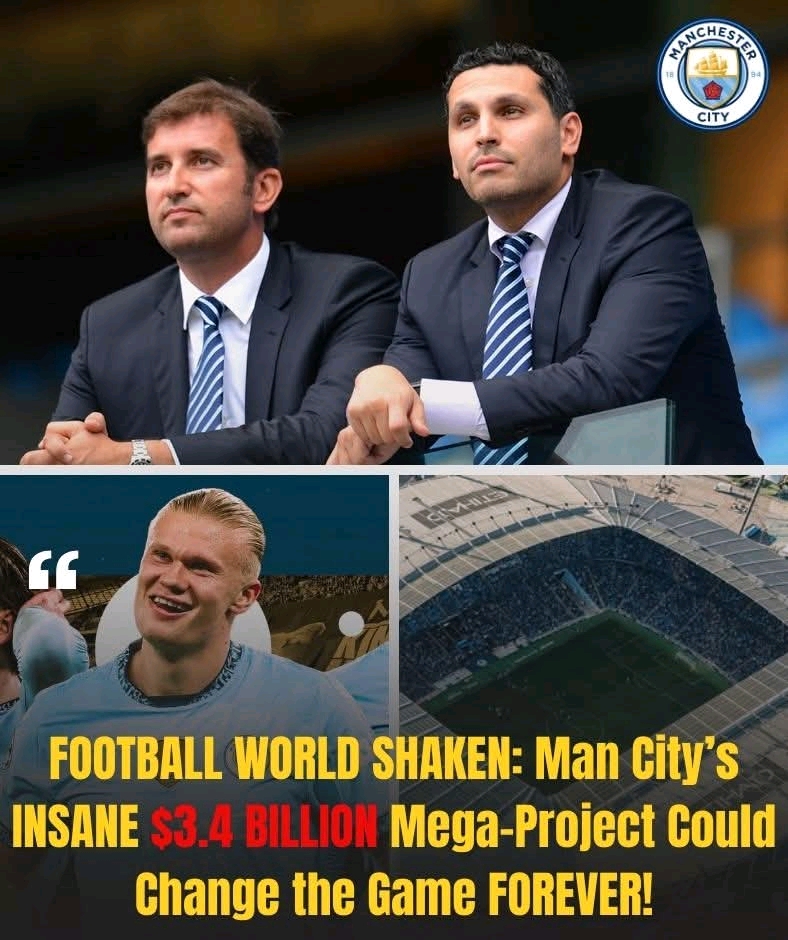
BREAKING NEWS has exploded across the football world as Manchester City officially unveils what many are already calling the most ambitious stadium transformation in football history, a jaw-dropping $3.4 BILLION masterplan that could permanently change the face of the sport and completely redefine what it means to be a modern football powerhouse. This is not just a renovation. This is not just a stadium expansion. This is a full-scale revolution designed to reshape the entire Etihad area and elevate the club into a global entertainment empire unlike anything the game has ever seen.
At the center of this breathtaking vision stands the iconic Etihad Stadium, a ground that has already witnessed some of the greatest moments in recent football history. From dramatic title-winning goals to unforgettable European nights, the Etihad has been home to glory, dominance, and transformation. But now, City’s leadership believes the stadium and its surrounding campus must evolve again. They are not thinking about the next season. They are thinking about the next 50 years.
Sources close to the club describe the project as a complete rebirth of the Etihad Campus. The plan is built around a futuristic expansion of the stadium itself, pushing capacity higher while dramatically upgrading fan experience. The design includes sweeping architectural upgrades, ultra-modern hospitality suites, expanded concourses, immersive digital screens, and technology that blends sport with entertainment in ways rarely seen before. This is not simply about adding seats. It is about creating an arena that feels alive, interactive, and globally iconic.
The ownership group behind the club, City Football Group, has reportedly secured backing from powerful international investors who see this as more than a stadium project. They see it as an opportunity to build a destination. The Etihad area will not just host football matches. It will become a year-round entertainment district designed to attract visitors from across the globe.
Plans reveal the addition of a luxury hotel integrated directly into the stadium complex. Imagine fans flying into Manchester from Asia, America, Africa, or the Middle East and staying inside the stadium grounds, waking up on matchday with panoramic views of the pitch. This kind of integration blurs the line between sport and lifestyle. It transforms a football match from a 90-minute event into a multi-day immersive experience.
Beyond the hotel, the proposal includes massive retail expansions, restaurants, interactive fan zones, cultural exhibition spaces, and a fully curated Manchester City legacy experience. Club insiders describe this legacy project as a next-generation museum blended with virtual reality storytelling. Fans would walk through decades of history, relive legendary goals, stand inside holographic recreations of historic matches, and experience behind-the-scenes moments through cutting-edge technology. It is designed to celebrate the past while showcasing the future.
For years, Manchester City has been recognized for its dominance on the pitch. Under visionary leadership and elite management, the club rose from domestic challengers to global giants. But this $3.4 billion transformation signals something even bigger. It signals ambition beyond trophies. It signals a desire to build a self-sustaining sports and entertainment empire.
Financial experts believe the long-term revenue potential is enormous. Expanded capacity means increased matchday income. The hotel and entertainment district create non-matchday revenue streams. Retail partnerships could attract global brands eager to be associated with one of the world’s most successful football institutions. In modern football, infrastructure equals power. And City’s leadership clearly understands this equation.
The reaction across Europe has been immediate. Rival clubs are watching closely. Some admire the boldness. Others feel concern. Because if this project succeeds, it raises the bar to a new level. It sends a message that Manchester City is not satisfied with being among the best. They want to define the future blueprint for elite clubs.
Urban development analysts point out that this is also about regeneration. The Etihad area has already undergone transformation over the past decade. Training facilities, youth academies, and community projects have reshaped the local landscape. This new phase could create thousands of jobs during construction and long-term employment once operational. Hotels, restaurants, event management, technology services, and retail staffing will bring economic momentum to the region.
The architecture itself is rumored to be futuristic and bold. Early design concepts reportedly feature a partially covered fan plaza capable of hosting concerts, esports tournaments, and global events. The idea is to turn the campus into a year-round cultural hub. Football remains the heartbeat, but entertainment expands the pulse.
Inside the upgraded stadium, technology will dominate. Enhanced connectivity, immersive LED lighting systems, real-time data integration for fans, and premium hospitality lounges designed to rival five-star venues. Supporters will no longer just watch matches. They will experience them in high-definition, multi-sensory environments.
For loyal fans, the announcement brings excitement but also emotion. The Etihad has been home for years. It has seen dramatic Premier League races, unforgettable European nights, and iconic celebrations. Any transformation carries nostalgia. But the club insists that history will not be erased. Instead, it will be honored and amplified through the new legacy experience.
There is also strategic thinking behind the timing. Global football continues to expand its commercial reach. Broadcasting deals grow larger. International tours attract massive audiences. Owning a state-of-the-art stadium complex strengthens negotiation power. Sponsors prefer association with innovation. Investors prefer scalable growth. This project ticks both boxes.
The entertainment district component might be the boldest move of all. By integrating lifestyle attractions into the football campus, City positions itself as a destination brand. Families could visit even on non-matchdays. Tourists could attend concerts or dine in themed restaurants. Corporate partners could host conferences inside a football cathedral. The stadium becomes a living ecosystem.
Critics may question the scale. $3.4 billion is a staggering investment. But supporters argue that ambition has always defined Manchester City’s rise. From strategic recruitment to infrastructure development, calculated boldness has delivered results before.
The long-term vision reportedly stretches decades ahead. Sustainability will be central. Eco-friendly materials, renewable energy integration, smart water systems, and advanced waste management solutions are expected to form part of the blueprint. The modern fan increasingly values environmental responsibility. City’s plan aims to align performance with purpose.
Community engagement remains a pillar. Local schools, grassroots programs, and employment pathways are expected to be integrated into the development model. The club’s leadership understands that global growth must coexist with local roots.
Internationally, the announcement strengthens the City Football Group network. Sister clubs around the world could benefit from shared commercial strategies and global branding synergy. The Etihad Campus becomes the flagship symbol of that global ecosystem.
On social media, reactions have ranged from disbelief to awe. Fans share digital mock-ups, speculate on design details, and debate how it will compare to other elite stadiums across Europe. Analysts already describe it as a potential benchmark for future projects.
The legacy experience deserves special attention. Imagine walking into a digital tunnel where historic title wins are projected around you in 360 degrees. Imagine stepping into a VR simulation of a Champions League final moment. Imagine hearing commentary echo as you relive dramatic goals. The club wants fans to feel history, not just read about it.
Economists highlight the multiplier effect. Construction partnerships, tourism growth, hospitality expansion, and brand licensing all generate secondary economic waves. Manchester itself stands to gain from increased international attention.
For players, the upgraded complex signals ambition. Elite athletes are drawn to world-class facilities. Recruitment conversations become easier when infrastructure matches sporting success.
The project timeline has not been fully disclosed, but insiders suggest phased development to minimize disruption. Matches will continue, but gradual transformation will unfold around them.
Rival supporters may mock or criticize, yet privately many acknowledge the scale of the vision. Football has evolved into global entertainment. Infrastructure now defines hierarchy almost as much as trophies.
As news spreads, financial markets and commercial partners observe closely. Major brands align with innovation. Investors favor stability and growth. A $3.4 billion commitment sends a clear signal of confidence.
This is more than bricks and steel. It is storytelling through architecture. It is branding through urban design. It is sport merging with lifestyle, culture, and technology.
Manchester City’s journey from local contender to global powerhouse has been remarkable. This stadium transformation could become the next defining chapter.
If executed successfully, the Etihad area will no longer just host football matches. It will represent a blueprint for the future of sports empires.
The football world watches. Rivals calculate. Fans dream. Investors evaluate. And Manchester City moves forward with a bold declaration: the future of football is not just played on the pitch. It is built around it.
The $3.4 billion vision stands as a statement of intent. Ambition has no ceiling. Innovation has no limit. And the Etihad’s transformation may soon become the symbol of a new era where football clubs evolve into global entertainment kingdoms.
Shockwaves have already begun. And if this project unfolds as planned, the game may never look the same again.