Dan Neil Sends Clear Message On Rangers Captaincy As Midfielder Insists Leadership Can’t Rest On One Man’s Shoulders

Since the “Dan Neil confirmed as captain” premise isn’t accurate, I’ll write the piece around what’s actually happened — Dan Neil’s leadership comments ahead of the season opener, set against the still-open captaincy picture at Ibrox.
Dan Neil has offered a genuinely insightful glimpse into how he views leadership at Rangers, delivering a message that cuts against the grain of the usual obsession with who specifically wears the captain’s armband. Speaking ahead of Friday’s Scottish Premiership opener away to Dundee United, the summer signing was direct in stating that Rangers, as a club, cannot afford to rely on just a single figurehead for leadership, insisting instead that responsibility needs to be spread far more widely throughout the dressing room if this newly rebuilt squad is to succeed over the course of a long and demanding campaign.
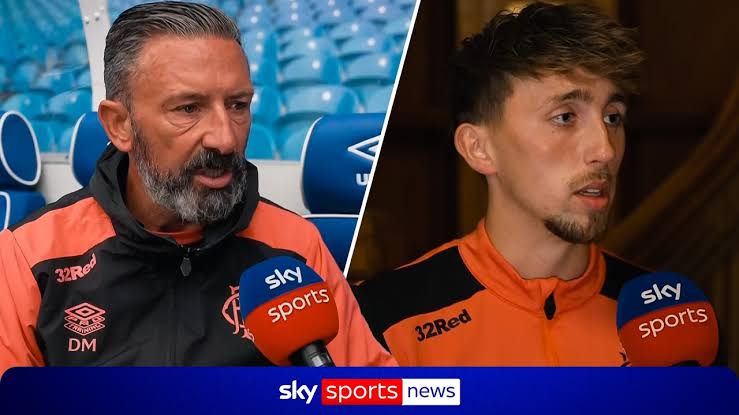
Neil’s comments arrive at a particularly relevant moment, given that the identity of Rangers’ next permanent captain remains one of the more prominent ongoing subplots of the club’s pre-season preparations. Derek McInnes has already confirmed that he has, in his own mind, settled on who will take over the armband following James Tavernier’s departure, though the manager has stopped short of revealing that decision publicly, choosing instead to keep both supporters and his own players guessing right up until the days before the competitive season finally gets under way. Against that backdrop of continued uncertainty, Neil’s own remarks carry added significance, offering a window into how at least one of the genuine candidates for the role views the broader question of leadership within this transformed Ibrox squad.
The scale of competition for the captaincy has been laid bare throughout the pre-season schedule, with McInnes having rotated the armband among a striking number of candidates as he weighed up his eventual decision. Neil himself, along with Dujon Sterling, Lawrence Shankland, Ross McCrorie and Ben Godfrey, have all been given the opportunity to captain the side at various points across Rangers’ warm-up fixtures, a reflection both of the sheer volume of new arrivals who have joined the club this summer and of McInnes’s evident desire to properly assess how each individual responds to the added responsibility that comes with the role before committing to a final choice.
Neil’s own background makes him a particularly interesting figure within that conversation. The 24-year-old midfielder arrived at Ibrox this summer following the expiry of his contract at Sunderland, where he had previously captained the Black Cats before the armband was subsequently handed to Granit Xhaka following his move to the club from Bayer Leverkusen. That prior captaincy experience at Championship and Premier League level gives Neil a genuine track record of leadership to draw upon, and it is little surprise that his name has been mentioned prominently among those under consideration for the role at Rangers.
Rather than actively campaigning for the armband himself, however, Neil used his recent comments to articulate a broader philosophy regarding how leadership should function within a football club, one that places considerably less emphasis on the specific individual chosen to wear the armband on matchdays. Speaking about his move to Ibrox and his thoughts on the captaincy question, Neil was unambiguous in his view that Rangers need multiple leaders rather than relying on a single figure to carry that burden alone. He stressed that the most important consideration for the club is ensuring there isn’t just one captain, but rather a genuine number of leaders spread throughout the squad, an approach he clearly believes offers a more resilient foundation than concentrating that responsibility in one person.
Expanding on that sentiment, Neil made clear that he views the captaincy debate itself as being somewhat secondary to the broader culture a club needs to cultivate. According to the midfielder, it isn’t really about which individual happens to be wearing the armband on a given matchday, arguing instead that the ideal setup is one where the entire squad essentially operates as a team full of captains, each player taking on genuine responsibility for standards, application and accountability regardless of who formally holds the armband. That, he suggested, is precisely the kind of environment Rangers are striving to build this season under McInnes.
Neil went further in drawing comparisons between his new surroundings at Ibrox and the environment he previously experienced during his time at Sunderland, a club that shares certain similarities with Rangers in terms of the weight of expectation and passionate supporter base attached to it. He described the feeling as very similar, acknowledging that supporters at both clubs share the same basic demand, wanting their team to win every single match regardless of the circumstances or level of opposition. That relentless expectation, he suggested, requires a particular kind of collective mentality and resilience from everyone involved with the club, players and staff alike.
Reflecting further on the psychological demands of playing for a club operating under that level of scrutiny, Neil acknowledged that any season inevitably brings both positive and negative spells, and he emphasised the importance of the group staying together through those fluctuations rather than allowing outside pressure to destabilise the dressing room. He was clear in stating that Rangers, as a squad, cannot afford to get carried away during good moments, nor can they allow themselves to sink too low when results go against them. Maintaining that emotional consistency, in his view, represents one of the most important qualities any squad operating under intense pressure needs to possess if it hopes to sustain a genuine challenge over the course of a full season.
Encouragingly for Rangers supporters, Neil suggested that this quality of measured consistency already appears to be present within the current Ibrox dressing room, based on what he has observed since arriving at the club. He indicated that, from his own early impressions, Rangers currently possess a squad capable of maintaining that steady, level-headed approach, avoiding the extremes of overconfidence during strong periods or excessive despair during difficult ones. That assessment offers a reassuring signal to supporters concerned about how a heavily rebuilt squad, containing so many players still adjusting to life at a new club, might cope with the inevitable pressures that come with representing Rangers on a weekly basis.
Neil’s comments should also be viewed within the broader context of McInnes’s own remarks on the captaincy situation, delivered following Rangers’ final pre-season fixture, a goalless draw against West Ham United at Ibrox. Speaking after that match, McInnes offered his own perspective on the leadership qualities present throughout his squad, describing a genuine leadership group that exists within the training ground on a daily basis, entirely separate from the specific question of who ultimately wears the armband on matchdays. He acknowledged that supporters and observers tend to place significant weight on identifying a single captain, a preoccupation he said he understood given the traditions associated with the role at a club of Rangers’ stature, but he was equally clear that he considers himself fortunate to have such a wide array of credible candidates to choose from.
McInnes drew a specific contrast between his current situation and scenarios he has encountered previously in his managerial career, describing moments where he might have looked around a changing room and felt genuine uncertainty over who could be trusted to lead the team out onto the pitch. That, he stressed, is not a feeling he currently experiences at Ibrox, given the number of players within his squad he believes are capable of handling that responsibility competently. Nonetheless, he acknowledged that ultimately somebody has to be given the formal duty of leading the players down the tunnel each week, confirming that he has, in his own mind, already reached a decision on who that individual will be, even if he has yet to communicate that choice publicly or to the squad itself.
Taken together, the comments from both Neil and McInnes paint a fairly consistent picture of how leadership is currently being approached within this rebuilt Rangers squad. Rather than treating the captaincy as a single, all-important appointment upon which the fortunes of the entire team might hinge, both player and manager appear to be emphasising a more distributed model of leadership, one where numerous individuals throughout the dressing room are expected to take on genuine responsibility for maintaining standards, regardless of who formally wears the armband on any given matchday. It is an approach that, in theory at least, could prove particularly well-suited to a squad containing such a high volume of new arrivals, many of whom are still in the relatively early stages of building relationships and establishing their own standing among teammates following a genuinely transformative summer of recruitment at Ibrox.
There is also a pragmatic dimension to this kind of thinking worth considering. With so many established leaders having departed the club in recent times, and with the current squad containing such a significant number of players who have only recently arrived at Ibrox, placing excessive weight on a single captain to instantly command authority and respect throughout the dressing room might represent an unrealistic expectation in the short term. By instead cultivating a broader culture of shared accountability, where multiple players are actively encouraged to take on leadership responsibilities regardless of their formal title, Rangers may be better positioned to weather the inevitable teething problems that come with integrating such a large volume of new signings into a cohesive, functioning unit capable of competing at the top of Scottish football.
None of this, of course, diminishes the practical necessity of eventually settling on a formal captain, a point both Neil and McInnes have implicitly acknowledged even while stressing the importance of wider leadership throughout the squad. Somebody does, ultimately, need to be handed the specific responsibility of leading the team out for kickoff and carrying out the various ceremonial and practical duties that come with the role on a weekly basis. McInnes has confirmed that a decision will be communicated in good time before Friday’s trip to Tannadice, ensuring there is clarity over exactly who will hold that position as Rangers begin their pursuit of ending Celtic’s recent dominance at the top of the Scottish Premiership table.
As for whether Neil himself will ultimately be the man handed that responsibility, his own comments offer little in the way of direct campaigning for the role, focusing instead on the collective culture he believes needs to be established regardless of the final decision. That approach, whether by design or simply reflecting his genuine outlook on leadership, could actually work in his favour when it comes to how he is perceived by both teammates and supporters, given that a captain who genuinely prioritises collective responsibility over personal recognition often tends to earn greater respect within a dressing room than one who is seen to be actively seeking the honour for its own sake.
Regardless of who is eventually confirmed as Rangers’ next permanent captain, Neil’s comments this week offer a genuinely encouraging insight into the character and mentality currently present within McInnes’s rebuilt squad. His emphasis on collective responsibility, emotional consistency and the need for multiple leaders throughout the dressing room suggests a level of maturity and self-awareness that supporters will hope translates into tangible results once the serious business of the Scottish Premiership campaign gets under way this Friday at Tannadice.
For a club that has experienced such significant upheaval both on and off the pitch in recent times, from managerial changes to a wholesale overhaul of the playing squad, establishing this kind of resilient, shared leadership culture could prove to be an important building block as Rangers look to mount a genuine challenge for major honours this season. Whether that ultimately manifests in the form of Neil himself being handed the armband, or one of his fellow candidates instead being chosen to formally lead the side out each week, his comments suggest that whoever does eventually take on that responsibility will do so within a dressing room culture that already appears to understand the value of leadership being a shared, collective responsibility rather than resting solely on the shoulders of a single individual.
With McInnes having confirmed that his decision will be revealed in the coming days, all eyes at Ibrox will now turn towards Friday’s season opener at Dundee United, where Rangers’ new captain will formally lead the side out for the first time in what promises to be a hugely significant campaign under McInnes’s stewardship. Whatever name is ultimately announced, Neil’s comments this week suggest that the broader culture of shared leadership he clearly values may already be firmly established throughout this newly rebuilt Rangers squad, offering a genuinely promising sign for supporters as the club embarks on a new era both on and off the pitch.