DANNY ROHL BREAKS SILENCE ON RANGERS FUTURE AS HE OPENS UP ON DRAMATIC EXIT TO RB SALZBURG

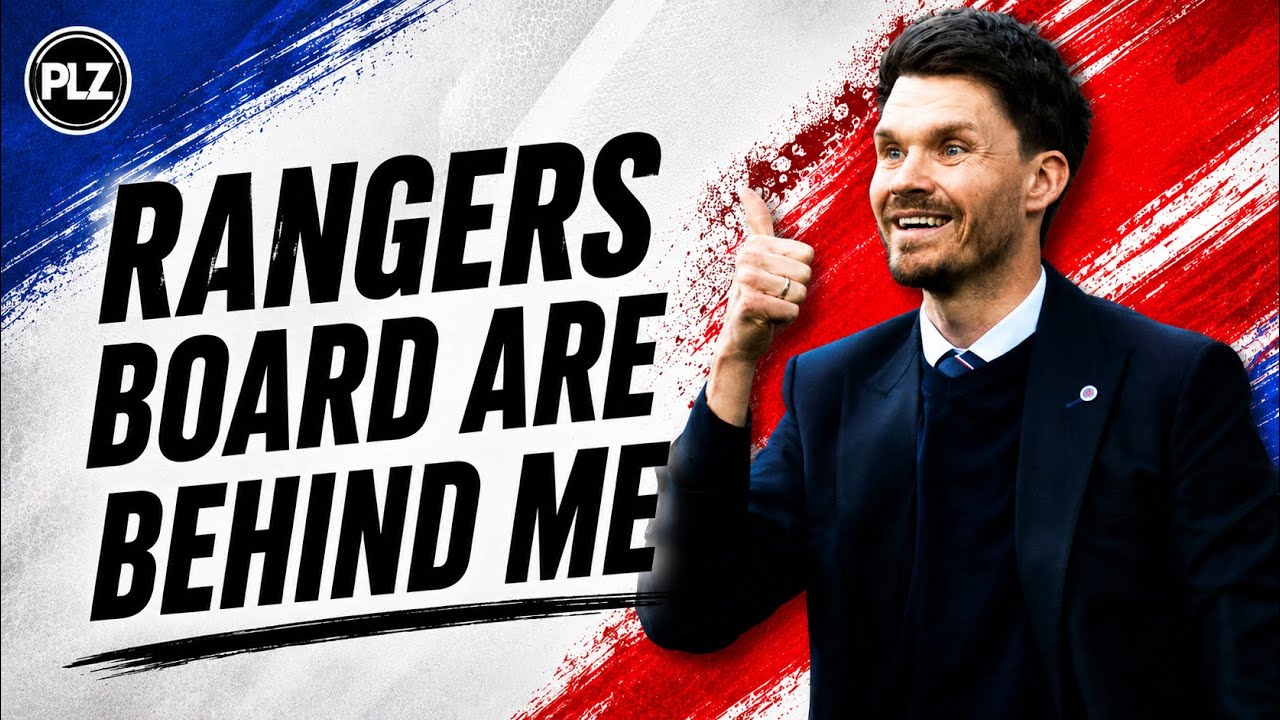
Danny Rohl has finally opened up in real depth about the decision that took him away from Ibrox in the summer, offering his most candid reflection yet on why he chose to walk away from Rangers at a moment when many assumed he was building towards something genuinely special, and what it now means for both his own future and the club he left behind. Speaking from his new office at Red Bull Salzburg’s Taxham training base, with the Berchtesgaden Alps forming a dramatic backdrop to the conversation, Rohl was unequivocal in stating that, with the benefit of hindsight, he has no doubts whatsoever that leaving Glasgow for Austria was the correct call. He was clear and direct on the matter, insisting there’s no lingering uncertainty in his mind and that he can confirm without hesitation that it was, in his own words, a good move, even acknowledging that plenty of people questioned his reasoning at the time given how his Ibrox story had been unfolding.
To properly understand te significance of that admission, it’s worth rewinding through the remarkable twelve months Rohl has just experienced, a stretch that took him from genuine crisis at Sheffield Wednesday, through eight turbulent but often thrilling months in charge of Rangers, and finally to what he now describes as the relative calm of life in Salzburg. His Ibrox tenure began in the most unpromising circumstances imaginable, parachuted in to replace the sacked Russell Martin with Rangers sitting sixth in the Scottish Premiership having won just a single one of their opening eight league matches, a genuinely dismal platform from which to try and rescue a season. What followed instead was one of the more remarkable managerial rescue jobs Scottish football has seen in recent years, with Rohl dragging Rangers back into genuine title contention against all reasonable expectation, a run of form so strong that with five matches remaining in the campaign, Ibrox genuinely believed a first Premiership title since the return to the top flight was within touching distance. It ultimately slipped away amid four defeats in Rangers’ final five fixtures, a collapse that left the club finishing third rather than lifting the trophy that had, for a period, looked like a realistic possibility.
Reflecting on that period now, Rohl didn’t shy away from acknowledging just how demanding and, at times, overwhelming he found the specific pressures that come with managing a club of Rangers’ size and history. Speaking candidly in a separate interview conducted around the same period, he admitted that the role proved a considerably bigger challenge than he had originally anticipated, not from a tactical perspective, where he felt able to make an impact relatively quickly, citing an early away victory at Hibernian as evidence, but rather in terms of the sheer intensity and emotional volatility that comes with the job on a week-to-week basis. He described his time in Glasgow as a genuine emotional rollercoaster, recalling one particularly vivid example from a home match against Kilmarnock where Rangers found themselves leading 1-0 at the interval, only for sections of the Ibrox crowd to still be audibly booing as the players trudged down the tunnel at half-time, a reaction Rohl found almost impossible to fully rationalise in the moment even as he came to understand and even sympathise with the underlying frustration driving it. It’s a small but telling anecdote that speaks volumes about the unique scrutiny that comes with the Rangers job, a level of pressure that Rohl suggested even his prior experience working under Hansi Flick at Bayern Munich and the German national team hadn’t fully prepared him for.
Despite that intensity, and despite the eventual disappointment of missing out on the title, Rohl received clear and public backing from chairman Andrew Cavenagh in the aftermath of the post-split collapse, with the American businessman going out of his way to reassure supporters, and Rohl himself, that there was no question mark whatsoever hanging over his position heading into pre-season. Rohl echoed that sentiment directly, confirming he had received exactly the assurances he needed from the Ibrox boardroom and expressing genuine gratitude for a support structure he described as involving far more than just one individual standing behind him during a difficult moment. For a time, it genuinely appeared as though the German would be returning to Glasgow with a full off-season to properly reshape a squad that had already shown, under his guidance, that it possessed genuine title-winning quality when things clicked into place.
It was, by Rohl’s own account, an unexpected phone call while he was away on holiday in June that changed the entire trajectory of his career once again. Interest from Red Bull Salzburg, a club he already had deep and longstanding ties to given his background working under the Red Bull footballing philosophy at RB Leipzig earlier in his coaching career, presented him with a genuinely difficult decision at a moment when he wasn’t actively looking to leave Rangers at all. Rohl has been clear that he approached the situation with total transparency towards Ibrox throughout, stating plainly that his message from the very first conversation was that if no agreement could be reached between the two clubs, he was more than happy to simply continue on at Rangers, a club for which he retains what he describes as significant respect. There was, in his telling, no acrimony or desire to force an exit; rather, an opportunity presented itself that, upon reflection, offered him something he found difficult to turn down.
What ultimately tipped the balance, according to Rohl’s own explanation, was a combination of factors extending well beyond simple ambition or reputation. He acknowledged seeing plenty of exciting possibilities still available to him at Rangers, genuine belief in what could still be built during a summer rebuild, but weighed against that was the appeal of an entirely fresh start at Salzburg, working with a group of high-quality players and effectively beginning again from a clean slate rather than carrying forward the accumulated baggage, expectation and emotional weight of an unfinished title race in Glasgow. He’s also since elaborated on some of the structural differences between the two clubs that factored into his eventual decision, highlighting in particular his enthusiasm for now working alongside a dedicated sporting director in Marcus Mann, a collaborative dynamic he described in notably positive terms and drew an implicit contrast with his experience at Rangers, where he found himself frequently required to lead recruitment conversations largely on his own. He also spoke of the pull of returning closer to family and familiar surroundings in Austria, along with the influence of Jurgen Klopp, now working as Red Bull’s Head of Global Soccer, who Rohl confirmed played a genuinely significant role in encouraging him to make the switch, following what he described as a very positive conversation with the Liverpool legend shortly after his initial call with Mann.
Rangers, for their part, moved with notable speed once it became clear Rohl’s head had been turned, with chairman Cavenagh publicly thanking the German for his service and commitment during a tenure that, whatever its ultimate ending, had reignited genuine belief and momentum around Ibrox during a season that began in genuine crisis. The club swiftly appointed Derek McInnes as his successor, luring the Aberdeen legend away from Hearts on the back of his own near-miss title campaign there the previous season, a hire many observers felt represented smart business given McInnes’s deep connections to Rangers as both a boyhood supporter and a proven Scottish football operator. It’s fair to say, though, that the early evidence from McInnes’s tenure has been considerably less encouraging than Rangers would have hoped, with the club suffering an underwhelming start to the new campaign that includes a Europa League qualifying exit at the hands of Jagiellonia Bialystok, a result that has already generated real scrutiny and pressure just weeks into the new manager’s reign.
That contrast hasn’t gone entirely unnoticed, and it inevitably colours how Rohl’s comments will land with the Rangers support given the timing of his interview arriving in the immediate aftermath of that Jagiellonia setback. There’s an understandable sense of what might have been among some sections of the Ibrox fanbase, a feeling that Rohl was building something genuinely promising before circumstances, both his own decision and the club’s swift pivot towards McInnes, interrupted that momentum at exactly the wrong moment. It would, however, be unfair to characterise Rohl’s comments as any kind of pointed dig at his former employers; if anything, his reflections have been measured, appreciative of what Rangers gave him, and consistent in stressing that the parting was amicable and mutually understood rather than the product of any breakdown in relations. He’s been careful throughout his various interviews since leaving to praise the passion of the Ibrox support and the scale of the challenge and opportunity the club represents, even while being honest about just how different, and in some ways more comfortable, life has proven at Salzburg.
For Rohl himself, the early signs at his new club appear broadly positive, with the German settling into a working environment he’s described in glowing terms, praising Salzburg’s clear footballing identity, their track record of developing young players into genuinely valuable assets, and the more measured, structurally supportive environment surrounding the head coach role compared to what he experienced at Ibrox. He’s spoken about wanting to restore Salzburg’s stadium to full capacity by playing attractive, front-footed football, referencing the club’s remarkable run of ten consecutive league titles between 2014 and 2023 as both a source of enormous expectation and genuine inspiration for what he hopes to rebuild. Whether that project ultimately proves more successful than his brief but eventful spell in Scotland remains to be seen, but there’s little doubt Rohl left Ibrox with his reputation considerably enhanced compared to when he arrived, having dragged a struggling Rangers side back into genuine title contention in barely eight months, even if the ending wasn’t the one either party would have scripted. For now, at least, the German seems entirely at peace with how it all unfolded, viewing his Rangers chapter not as a story cut short, but as one that, in his own words, simply wasn’t finished yet when circumstances led him elsewhere, with whatever comes next for both parties still very much left to be written