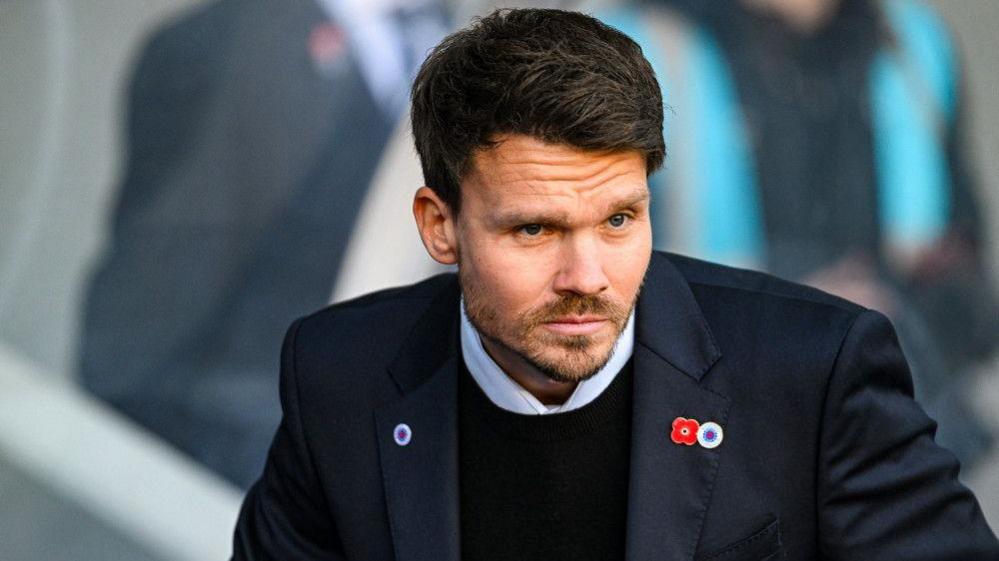
Danny Röhl has left the door ajar on a sensational return to Rangers one day, and depending on how you look at it, that revelation is either a touching show of unfinished business or a genuine red flag for a support that has already been burned by his exit once this summer. The German head coach, who walked away from Ibrox after just eight months in the job to take the Red Bull Salzburg post, has now admitted that he would not rule out a second spell in Govan further down the line, and given how his first stint played out, that is a prospect that should be met with a healthy dose of scepticism rather than open arms.
Röhl’s Rangers story was always going to be a complicated one to tell. He arrived in October, plucked from the RB coaching pipeline after cutting his teeth as an assistant at RB Leipzig, Southampton and Bayern Munich under Ralph Hasenhüttl and later Hansi Flick, and after a solitary season in senior management at Sheffield Wednesday. That backdrop made him an unconventional appointment by Ibrox standards, a coach with elite pedigree on paper but next to no track record of steering a club of Rangers’ size and expectation through a genuine title race. He inherited an absolute mess. Russell Martin had lasted just 123 days and a single Premiership win before he was shown the door, with a chastening 9-1 aggregate Champions League qualifying defeat to Club Brugge still hanging over the club when Röhl walked through the doors at Ibrox. Rangers sat sixth in the table, thirteen points off Hearts at the top, and the mood around the club was about as bleak as it had been in years.
To his credit, Röhl steadied the ship quickly. He hauled Rangers back into contention, closing the gap on both Celtic and Hearts and giving supporters genuine belief that the club could end its wait for silverware. For a while, it looked like the gamble on an unproven head coach might just pay off. But football has a habit of punishing sides who show promise without delivering end product, and that is precisely what happened to Rangers under Röhl. As the season reached its business end, the wheels came off in dramatic fashion. Rangers lost four matches in a row after the split, a collapse that turned genuine title hope into a distant third-placed finish and, ultimately, cost the club another crack at silverware. It was the kind of implosion that fans do not forget in a hurry, and it left Röhl’s reputation at Ibrox in a far more complicated place than it had been just weeks earlier.
Then came the Salzburg approach, and Rangers did not stand in his way. Chairman Andrew Cavenagh had publicly backed Röhl to lead the club into the new campaign only a month earlier, but when Red Bull Salzburg came calling with a seven-figure compensation package on the table, the Ibrox hierarchy agreed to let him go “by mutual agreement.” Performance manager Sascha Lense and first-team analyst Tristan Steiner departed alongside him, following him into the Austrian Bundesliga to link up with a Salzburg side that had finished third domestically last season, their worst finish in two decades, after sacking Daniel Beichler just 14 games into the campaign. For Röhl personally, it represented a return to the Red Bull family that gave him his start in coaching, and Salzburg’s football chiefs made little secret of their excitement, with sporting director Marcus Mann stating that the club’s stated aim had been to have a new head coach in place by the start of pre-season and that Röhl was their preferred candidate throughout the process.
It is against that backdrop that Röhl’s latest comments, given to the Daily Record, take on a different complexion. Asked directly about the possibility of a Rangers return one day, the German did not shut the door. Instead, he offered a “why not?” response that will have raised eyebrows among supporters still coming to terms with how quickly he cut ties with the club. “My goal is to win titles here at Red Bull Salzburg. But in football, you can never say never,” he said. He went further still, framing his Ibrox tenure as a job left unresolved rather than a chapter he was happy to close. “A lot of what I feel about Rangers is that it’s a mission that was not completed. So why not?” he continued, before adding that he now understands the demands of the role in a way he did not when he first walked into Ibrox.
That admission alone is a fascinating one. Röhl has previously conceded that he did not fully grasp the scale of the Rangers job when he first took it on, a remarkable thing for any manager to say about one of Scottish football’s two great institutions, let alone one who arrived with the backing of a European giant like Bayern Munich on his CV. It suggests that for all his coaching pedigree, the step up from the calmer surroundings of Championship management at Sheffield Wednesday, or the backroom role he held under Flick in Munich, to the white-hot scrutiny of matching Celtic and challenging for the Premiership title in Glasgow, was a genuine culture shock. Whether that is a mark of honesty or a worrying sign about his readiness for the role in the first place is very much a matter of perspective, but it is not the kind of thing supporters want to hear from a man who is now talking about a possible second go at the job.
There is little argument to be had over Röhl’s underlying coaching quality. You simply do not work your way through Leipzig, Southampton, Bayern Munich and the German national team set-up, as he did before taking the Sheffield Wednesday job in October 2023, without having genuine ability. At Hillsborough he did solid, unspectacular work, guiding the Owls away from relegation trouble and to a respectable 12th-place finish in his only full season before departing amid the club’s well-documented ownership and financial turmoil in the summer. That represented a decent platform from which to make the leap into a job like Rangers, even if, in hindsight, nothing could truly have prepared him for the demands of Ibrox. It also explains why, when Rangers first went looking for a successor to Martin, Röhl was among the earlier names floated, only to withdraw from consideration before eventually being talked back into the role once alternatives like Steven Gerrard and Kevin Muscat fell through.
That circuitous route to the Ibrox dugout in the first place is itself worth remembering when assessing Röhl’s suitability for a second spell. Rangers’ search for Martin’s successor was famously chaotic, with Gerrard turning down a sentimental second crack at the job, Muscat viewed as unavailable given his commitments in China with Shanghai Port, and Röhl himself reportedly withdrawing from the process at one stage before being coaxed back in. It took until Rangers were ready to move on from Muscat’s timeline demands that Röhl’s appointment was finally confirmed, and even then it arrived as much through a process of elimination as genuine conviction. None of that is necessarily Röhl’s fault, but it does add useful context to a managerial reign that always felt more like an experiment than a statement of intent from the Ibrox hierarchy, and it makes his newfound openness to a repeat all the more curious.
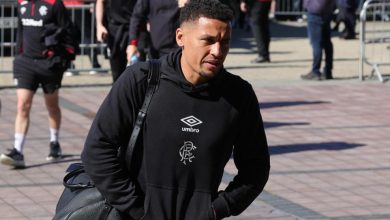
What should really give fans pause, though, is the pattern of behaviour Röhl has now shown twice over in a short managerial career. He left Sheffield Wednesday amid off-field turmoil rather than seeing out a difficult situation, and he left Rangers the moment a bigger and more secure opportunity presented itself, despite public backing from his chairman just weeks earlier and despite Rangers’ season having only just petered out in disappointing fashion. There is a strong case to be made that Röhl, for all his undoubted talent, has developed an instinct for self-preservation over commitment when circumstances turn difficult. Add to that his well-documented falling out with club captain James Tavernier during his time in the Ibrox hotseat, a rift that many felt could and should have been avoided given the calibre of leader Tavernier has been for the best part of a decade, and you have a manager whose Rangers legacy is defined as much by unresolved relationships as by results on the pitch.
That is precisely why the idea of Röhl walking back into Ibrox one day, whether next year or in five years’ time, should not be entertained lightly by supporters or by the club’s hierarchy. He had his opportunity to build something lasting at Rangers. He inherited a difficult situation from Martin, stabilised it, gave fans genuine hope of ending the club’s barren run without a title, and then let it all unravel in the space of a few chaotic weeks before walking away the moment Salzburg made their move. That is a choice he made, and it is one he will have to live with, regardless of how he now chooses to frame his Ibrox chapter as a mission left incomplete. Football clubs, and Rangers in particular given the demands and history attached to the job, are not in the business of offering second chances to managers who have already shown they will jump ship when the going gets tough.
All of this comes at a fascinating moment for Rangers, given the reshaping currently under way at Ibrox under Derek McInnes. The former Hearts boss was swiftly identified as Röhl’s successor once the Salzburg move was confirmed, arriving on a three-year contract with Hearts believed to have received a compensation package in the region of £700,000 for his services. McInnes inherits a club that has now gone through three permanent head coaches inside little more than a year, a dizzying rate of managerial turnover that speaks to just how unforgiving the Ibrox job has become. There is a genuine sense of calm and stability being restored under McInnes so far in pre-season, with the early signs from the Rangers dressing room suggesting a coach who understands the unique pressures of Scottish football far better than his predecessor ever did, having cut his teeth for years in the Premiership with Aberdeen and more recently at Hearts. The changes McInnes has already made behind the scenes, coupled with the incoming transfer business Rangers have conducted over the summer, point to a club trying to draw a line under the chaos of the past year and build something more sustainable this time around.
Rangers’ recruitment drive this summer has been extensive as McInnes looks to reshape the squad in his own image following the turbulence of the Martin and Röhl eras. There has been fresh transfer interest in a host of names as the Ibrox club looks to strengthen across the pitch ahead of the new campaign, while question marks remain over the futures of several senior players who came through the Röhl era relatively unscathed but whose long-term futures at the club remain uncertain amid the ongoing squad overhaul. The captaincy situation, in particular, has been a talking point given the well-documented friction between Röhl and Tavernier last season, with McInnes now tasked with restoring clarity and leadership structures that were left in some disarray by the previous regime. Rangers’ Europa League qualifying campaign has also added extra intrigue to the summer, offering an early opportunity for McInnes to stamp his authority on proceedings and give supporters a first proper look at how his Rangers side intends to set up under genuine competitive pressure.
Against that backdrop, Röhl’s comments about a potential Ibrox return feel almost mistimed, landing just as Rangers are trying to move past the very managerial merry-go-round he was so central to. It is one thing for a departing manager to speak fondly of unfinished business at a previous club; plenty of coaches do so as a matter of diplomacy without any serious intention of ever walking back through the door. But given how fresh Röhl’s Ibrox exit still is, and given the raw feelings that still linger among supporters over how quickly he left once a bigger contract materialised elsewhere, his willingness to entertain the idea publicly, however hypothetically, was always going to generate debate rather than nostalgia. For now, his focus is rightly on delivering silverware for Salzburg, a club he has already spoken of in terms of unfinished ambition of his own, but the door he has left ajar towards a Rangers return is one that Ibrox should be in no rush to open, regardless of how his managerial career unfolds from here. Rangers have had enough chaos at the top table over the past twelve months without revisiting a chapter that already ended in disappointment once.