Inside Arsenal’s Four-Club Scramble for Rangers Sensation Emmanuel Fernandez

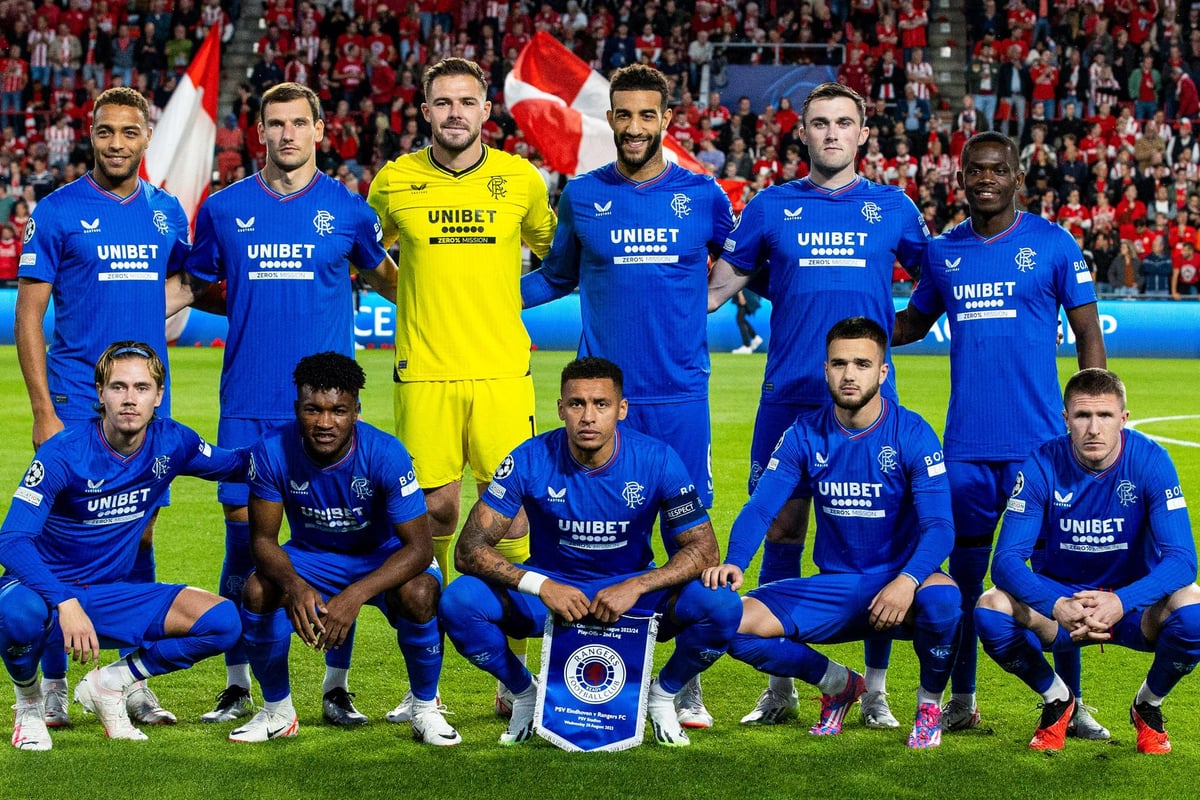
There’s a particular kind of transfer story that reveals more about a player’s trajectory than any single quote or statistic ever could, and Emmanuel Fernandez’s situation at Rangers fits that mould perfectly. When four major European clubs, spanning three different countries, all quietly begin tracking the same 24-year-old centre-back within the space of a single summer, it stops being a coincidence and starts looking like genuine consensus among Europe’s top recruitment departments that they’ve identified something special.
Arsenal’s reported interest in the Ibrox defender sits alongside monitoring from Bayer Leverkusen, Borussia Dortmund, Stade Rennes and Feyenoord, a spread of suitors that tells its own story about just how far Fernandez’s stock has risen since his move to Scottish football just twelve months ago. This isn’t a case of one scout falling in love with a player and convincing his club to take a punt. This is multiple, independently operating recruitment networks, across different leagues and different footballing cultures, arriving at broadly the same conclusion at broadly the same time.
To understand why this level of interest feels significant, it helps to rewind to where Fernandez actually started his rise. His move to Rangers arrived from Peterborough United for a fee in the region of £3.5million, a transfer that, at the time, would have raised few eyebrows outside of Ibrox and English League One circles. Peterborough have built something of a reputation in recent years as a club capable of unearthing and developing talent that goes on to have careers well beyond what their level in the football pyramid might suggest, but even by those standards, a defender moving from their ranks straight into a genuine four-club European scramble within a single season represents an unusually rapid trajectory.
What makes it more remarkable still is the path Fernandez took to even reach Peterborough in the first place. His career included time in non-league football, a level of the English game that operates almost entirely outside the spotlight of national media coverage, scouted matches, or televised fixtures. Players who emerge from non-league football and go on to genuinely challenge for moves to clubs like Arsenal are exceptionally rare, and the ones who do tend to carry a particular hunger and self-made quality that can’t easily be replicated by academy graduates who’ve had every advantage afforded to them from a young age.
Former Arsenal striker Alan Smith’s public comments on the situation offer a useful window into how a club like Arsenal actually goes about identifying targets in the modern game. Smith specifically highlighted the analytics behind Fernandez’s season and the tangible year-on-year progress shown, rather than simply pointing to his physical attributes or reputation within Scottish football as the deciding factor behind Arsenal’s interest.
That distinction matters. Recruitment at the level Arsenal operate has become an increasingly data-driven discipline, with clubs building detailed statistical models covering everything from a defender’s positioning and interception rates through to more nuanced metrics around pressing resistance, aerial duels won under pressure, and progressive passing from deep areas. For a player to catch the eye through that kind of rigorous statistical screening, rather than simply through eye-catching individual moments or reputation built through word of mouth, suggests a genuinely well-rounded defensive profile rather than a one-dimensional physical specimen who happens to look good in occasional highlight clips.
Smith’s framing of Fernandez’s career as “topsy-turvy” also carries an implicit vote of confidence in the player’s resilience and adaptability. Defenders who have had to prove themselves at multiple levels of the game, rather than being fast-tracked through a single academy pathway, often develop a more rounded understanding of different tactical demands and playing styles, having been forced to adjust their game repeatedly as they’ve climbed the football pyramid. That kind of adaptability is precisely what a club like Arsenal would want to see evidence of before committing significant resources to what would represent a considerable step up in level for the player.
The specific composition of Fernandez’s suitor list is worth examining closely, because it spans some genuinely distinct footballing cultures and tactical demands. Bayer Leverkusen and Borussia Dortmund represent the Bundesliga’s continued reputation as perhaps Europe’s most effective development league for young defensive talent, with both clubs having built strong recent track records of identifying, signing, and improving centre-backs before either keeping them as first-team mainstays or selling them on for substantial profits further down the line.
Stade Rennes, meanwhile, have carved out their own niche in French football as a club willing to take calculated risks on emerging talent from less conventional pathways, often turning modest investments into significant transfer profits within a season or two. Their interest in Fernandez fits a recruitment pattern the Ligue 1 side has followed with some success in recent years.
Feyenoord’s involvement adds yet another dimension, with the Dutch giants historically renowned for developing technically proficient defenders capable of playing out from the back under pressure, a stylistic demand that would test any centre-back’s comfort on the ball in genuinely challenging ways. If Feyenoord’s scouts have been sufficiently impressed by Fernandez’s distribution and composure under pressure to add him to their monitoring list, it suggests his game extends well beyond simple physical dominance and into the kind of technical sophistication increasingly demanded of modern centre-backs across Europe’s better leagues.
Arsenal’s own interest, of course, needs no real introduction given the club’s stature, but it’s worth noting that Mikel Arteta’s side have shown a clear recent preference for defenders who combine physical robustness with genuine comfort in possession, capable of stepping into midfield areas when required and contributing to build-up play rather than simply defending in isolation. Fernandez’s profile, if the reported analytical interest is anything to go by, appears to tick precisely those boxes.
One of the more intriguing elements of this entire situation is Fernandez’s own stated lack of urgency about leaving Rangers this summer. In an era where plenty of emerging talents and their representatives actively push for moves the moment serious interest materialises, often to the detriment of squad harmony at their current club, Fernandez’s apparent contentment to continue his development at Ibrox represents a notably mature approach to managing his own career.
There’s sound footballing logic behind that patience too. A player who forces through a move to a significantly higher level before he’s fully ready risks a difficult transitional period that can damage both confidence and reputation, sometimes setting a career back rather than advancing it. By contrast, another full season of regular first-team football at Rangers, including whatever European experience comes with the club’s Europa League qualifying campaign, would only strengthen Fernandez’s case and likely increase his valuation further, giving him considerably more leverage in any eventual negotiation with an interested European club.
For the four clubs currently monitoring him, that patience also removes any immediate pressure to escalate their interest into a formal bid this particular window. Each of Arsenal, Dortmund, Leverkusen, Rennes and Feyenoord can continue to track his progress through another season without fear of losing him to a rival suitor moving more aggressively, safe in the knowledge that the player himself isn’t agitating for an immediate departure.
## 💷 The Valuation Question Rangers Must Navigate
All of this leaves Rangers in a genuinely enviable position, even if it’s one that comes with its own complexities. Having developed a player from a modest £3.5million investment into a defender attracting genuine interest from four significant European clubs within a single season represents outstanding value already, regardless of whether a sale actually materialises this summer or further down the line.
The challenge for Rangers’ hierarchy will be resisting any temptation to cash in prematurely on a player still clearly developing, while also being realistic about the financial benefits a substantial sale could bring to a squad rebuild that has already seen considerable investment and turnover this summer. With midfielders Connor Barron and Nico Raskin both tipped for departures of their own as part of a broader squad reshaping, Rangers’ recruitment and financial planning teams will need to carefully weigh up how Fernandez’s situation fits into that wider picture of incomings, outgoings, and overall squad balance.
Holding firm on a high valuation, banking on continued interest and potentially an escalating price as more clubs formally declare their hand, carries obvious appeal. But there’s always a balance to strike between maximising a sale price and running the risk of a player’s value plateauing or even declining, should form dip or interest from suitors cool for reasons entirely outside Rangers’ control.
## 🔮 What This Means Long-Term
Regardless of how the specific transfer situation resolves itself, whether this summer, next, or further down the line, Fernandez’s emergence as a genuine four-club European target represents a significant marker for Rangers’ broader recruitment and development strategy. Identifying an undervalued defender from the lower reaches of English football, developing him rapidly within a single season to the point where some of Europe’s most sophisticated recruitment departments are independently tracking his progress, speaks to a scouting and coaching infrastructure at Ibrox capable of consistently unearthing value in the transfer market.
For Fernandez himself, the coming months look set to be defined by continued strong performances for Rangers, likely including a taste of European competition through the club’s Europa League qualifying campaign, all while the interest from Arsenal and his other suitors continues to develop in the background. Whether any of those four clubs eventually choose to escalate their interest into a concrete offer will likely depend on how his form holds up under the added weight of expectation that comes with being publicly identified as a target for some of the continent’s biggest clubs, a pressure that not every young player handles equally well.
What’s clear, though, is that Emmanuel Fernandez has gone from a relatively unheralded lower-league signing to one of the most closely watched defensive prospects in Scottish football within the space of a single campaign, and the coming season promises to be a pivotal one in determining whether that interest translates into the kind of career-defining move his rapid rise has started to suggest could be on the horizon.