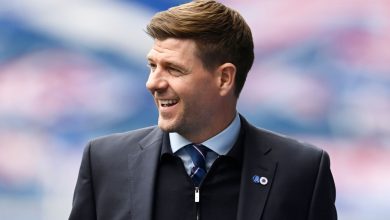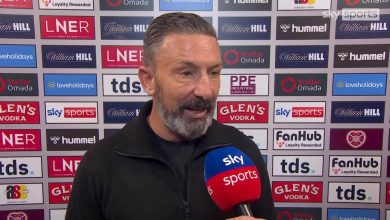
As Rangers prepare to welcome Hibernian to Ibrox on Sunday afternoon, the Govan club faces a pivotal moment in their early-season campaign under new manager Derek McInnes. The 2026-27 campaign represents a fresh chapter for the Glasgow giants, with the appointment of McInnes marking a significant shift in direction following Danny Rohl’s departure to Red Bull Salzburg at the end of last season. However, the early returns have been frustratingly inconsistent, and this matchday two encounter presents an opportunity for McInnes to stake his claim as the architect of a new, more winning Rangers side.
For Hibernian, this fixture represents an opportunity to make a statement against one of the country’s traditional powerhouses. David Gray’s Edinburgh contingent have proved themselves to be increasingly competitive opponents in recent seasons, and this contest at Ibrox will test whether the visitors can continue their upward trajectory. With both sides seeking their first victory of the campaign, this promises to be a compelling clash filled with intrigue and tactical nuance.
Derek McInnes arrived at Ibrox with considerable fanfare and expectation. The Hearts manager, who came within touching distance of winning the Scottish Premiership title on the final day of last season before faltering against Celtic, brought with him a desire to implement a more structured, possession-based style of football. To strengthen his squad, McInnes secured the services of two Hearts stalwarts: striker Lawrence Shankland and midfielder Cameron Devlin, both of whom should add quality and experience to the Rangers setup.
The pre-season preparations offered grounds for optimism. Rangers displayed encouraging form during their warm-up matches, recording a 2-1 victory over Saint-Etienne and a respectable 0-0 draw against West Ham United. These results suggested that McInnes was beginning to implement his tactical philosophy and that the squad was developing the necessary cohesion for a successful campaign.
However, the start to the 2026-27 season has proven disappointing and has already raised questions about the transition period. In their opening Scottish Premiership fixture, Rangers were forced to come from behind to secure a point against Dundee United, drawing 1-1 in a performance that lacked the convincing superiority expected of a club of Rangers’ stature. The requirement to mount a comeback at home, particularly against opposition generally considered to be at the lower end of the league table, suggested defensive vulnerabilities and a lack of offensive sharpness that McInnes will be keen to rectify.
The situation deteriorated further in European competition. In the first leg of their Europa League third qualifying round tie, Rangers suffered a miserable 2-1 defeat to Polish side Jagiellonia Bialystok. Early defensive errors proved costly, and the inability to respond adequately to going behind was particularly concerning. These early mistakes have exposed what may become a recurring pattern under McInnes—the need for tactical adjustments and greater defensive stability.
Despite these setbacks, Rangers boast several advantages heading into this contest. The home advantage of Ibrox is significant, and the club’s supporters will be eager to provide vociferous backing for their side. Additionally, Rangers retain a generally positive recent record against Hibernian, though this must be tempered by the knowledge that the Edinburgh side secured an impressive 2-1 victory at Ibrox as recently as May 2026.
Hibernian’s start to the 2026-27 season has been considerably more inconsistent than that of their hosts, but the visitors arrive at Ibrox with a degree of momentum following a significant victory. After a disappointing run of results that saw them accumulate losses and draws, Hibernian enjoyed a resounding 3-0 victory against Falkirk—a result that may prove to be a turning point in their season and a boost to both confidence and morale heading into this contest.
Manager David Gray has long been regarded as a meticulous tactician, and his work at Hibernian has gradually transformed the Edinburgh club into a more competitive force. After finishing fifth last season with 54 points, Hibernian secured qualification for the Conference League qualifiers courtesy of Celtic’s success in the Scottish FA Cup. This European involvement, while welcome, has added additional fixture congestion to an already demanding campaign.
The victory over Falkirk represents only the second win of their campaign and comes after a damaging three-game losing streak. Prior to this recent success, Hibernian had suffered narrow 1-2 defeats to both Celtic and Hearts, alongside a more emphatic 2-0 reverse against Aberdeen. These results illustrated the thin margins between success and failure at this level of Scottish football and the need for greater consistency in performance and execution.
Importantly, Hibernian have demonstrated that they can compete with the elite clubs in Scotland. Their ability to trouble both Celtic and Hearts, despite ultimately losing both encounters, suggests a squad with quality and ambition. The narrow defeats, rather than heavy losses, indicate that Hibernian possess the necessary tactical discipline and organizational structure to remain competitive throughout the season.
The Rangers medical room presents a mixed picture ahead of this fixture. Bailey Rice remains sidelined through injury and will not be available for selection. The defender’s absence leaves McInnes with decisions to make regarding defensive options, particularly if his preferred three-centre-back formation requires adjustment.
Of greater concern is the fitness status of John Souttar, the experienced centre-back who sat out Rangers’ recent Old Firm derby against Celtic. Souttar faces a late fitness test to determine his availability, and his potential inclusion or exclusion could significantly impact Rangers’ defensive solidity. Souttar’s experience and leadership are valuable commodities in a side undergoing a managerial transition, and his availability would be a considerable boost for McInnes’ team.
On a more positive note, Ryan Naderi has recovered from a muscle problem that sidelined him previously and returns to contention. Similarly, left-back Tuur Rommens has regained fitness and is available for selection after featuring in the previous fixture. These positive developments provide McInnes with additional options and suggest that the injury situation, while not ideal, is manageable.
The availability of recent signings Shankland and Devlin will be crucial to Rangers’ approach. Both players bring Premier Division experience and winning mentality, and their integration into the side will be key to establishing the foundations McInnes wishes to construct
Hibernian face their own injury concerns ahead of this trip to Ibrox. The Edinburgh side will continue their campaign without several key personnel. Nicky Cadden (calf), Jamie McGrath (calf), and Rocky Bushiri (Achilles tendon) are all unavailable through injury. The absence of these midfielders and defenders restricts David Gray’s selection options and may necessitate tactical adjustments.
Additionally, Hibernian may be without Kieron Bowie, who faces uncertainty regarding his immediate future. The forward has been the subject of interest from Serie A side Hellas Verona and remains on the verge of a potential transfer. Should Bowie depart, this would represent a significant loss of attacking talent, and Gray would need to reorganize his forward line accordingly.
Despite these absences, Hibernian can call upon the experience of Grant Hanley, the experienced centre-back who provides defensive solidity and leadership. The availability of Josh Mulligan offers another option in midfield, though the need to manage injuries across the squad demonstrates the squad depth challenges facing the Edinburgh club.
Derek McInnes has historically favored a structured approach that emphasizes defensive organization and controlled possession. Early indications suggest he intends to implement a similar philosophy at Rangers, though the transitional nature of the managerial change means that full implementation of his tactical vision remains a work in progress.
Based on pre-match analysis and recent formations employed, Rangers appear to be operating in a 4-2-3-1 shape in possession, transitioning to a more defensive 4-4-2 when required. This approach allows for width through full-backs while maintaining a clear shape in midfield. The inclusion of Cameron Devlin in central midfield should provide the kind of stable, ball-winning midfielder that McInnes has traditionally relied upon.
The forward line will likely feature recent signing Lawrence Shankland, whose pace and work-rate align with McInnes’ preferred forward profile. The strike partnership will be crucial to Rangers’ ability to break down a well-organized Hibernian defense, and early-season coordination issues may prove significant in this regard.
Hibernian, under David Gray, have developed a reputation for defensive solidity and organizational discipline. The Edinburgh side will likely set up in a 5-3-2 formation, prioritizing defensive compactness and transition play. This approach has proven effective against larger clubs and emphasizes the need for discipline and structural integrity.
The three-centre-back system provides added defensive security and allows for flexibility in defense, with the ability to shift to a back four if circumstances demand. Grant Hanley will anchor the central defense, providing both experience and leadership qualities that are essential in away fixtures of this magnitude. Hibernian’s approach will likely emphasize quick, direct transitions in attack, with the front two looking to pressure Rangers’ backline and capitalize on any defensive lapses. The midfield will be tasked with providing adequate cover and disrupting Rangers’ rhythm through energetic off-the-ball pressing
Jack Butland represents Rangers’ last line of defense and will be crucial to their chances. The experienced goalkeeper must demonstrate the kind of commanding presence needed to organize a backline undergoing adjustment to a new managerial approach. Butland’s decision-making and distribution will be tested against a side known for intelligent forward play.
Lawrence Shankland offers Rangers genuine attacking quality and represents one of the standout signings of the summer. The striker’s ability to find space in the box and convert chances will be vital if Rangers are to break down a Hibernian side defended with notable discipline. Mohamed Diomandé has emerged as a key player in Rangers’ central defense and will be responsible for providing solidity against Hibernian’s forward play. The centre-back’s positioning and reading of the game will be tested by the Edinburgh side’s intelligent movement and transitional approach
Raphael Sallinger, Hibernian’s goalkeeper, has impressed since his arrival and provides a confident presence between the sticks. Sallinger’s distribution and ability to start attacks from the back will be important to Hibernian’s tactical approach.
Grant Hanley provides Hibernian with experienced leadership in defense. The centre-back’s positioning and communication will be essential to maintaining the defensive organization that Hibernian have cultivated under David Gray.
Martin Boyle offers Hibernian genuine pace and directness in attack. The forward’s ability to stretch Rangers’ defensive line and create opportunities through individual quality makes him a key threat to be managed carefully by the Rangers backline.
The recent history between these two clubs provides fascinating context for Sunday’s encounter. Hibernian’s 2-1 victory at Ibrox in May 2026 represents a significant result and demonstrates that Rangers cannot afford to approach this fixture with complacency. That victory broke a pattern of Rangers dominance, though the Glasgow club had recorded narrow 1-0 victories in both league meetings earlier in the 2025-26 campaign.
Analyzing the last five meetings between Rangers and Hibernian reveals that four have produced fewer than 2.5 goals. This statistic emphasizes how difficult Hibernian have become to break down against Glasgow’s giants and suggests that Sunday’s encounter may be a cagey affair decided by a single moment of quality or defensive lapse.
Rangers’ historical dominance in this fixture is evident, with the club retaining an impressive away record against Hibernian. However, recent encounters have become notably more competitive, and the margin for error has reduced significantly. McInnes must ensure that Rangers do not underestimate an opponent that has proven capable of competing at the highest level.
Given the factors at play, this represents a genuinely competitive fixture with multiple potential outcomes. Rangers, despite their opening inconsistency, must be considered favorites given their home advantage and superior squad depth. However, Hibernian’s improving form and demonstrated ability to compete against elite opposition suggest that a repeat of their May victory at Ibrox remains within the realm of possibility.
The statistical evidence from recent encounters—with four of the last five producing under 2.5 goals—suggests that the most likely outcome may involve a tightly contested affair with limited goalmouth action. Both sides appear capable of implementing sufficiently organized defensive structures to frustrate their opponents.
A Rangers victory remains the most probable outcome, with the home advantage and superior squad resources tilting the balance in their favor. However, the margin of victory is likely to be narrow, and a 1-0 or 2-1 result seems more probable than a convincing scoreline. Hibernian’s capacity to trouble Rangers through intelligent forward play and tactical discipline suggests that McInnes’ side will need to be functionally competent rather than devastating in their performance levels.
For Derek McInnes, this fixture represents a defining test of his early weeks as Rangers manager. Victory would provide genuine momentum and evidence that the team is beginning to implement his tactical vision effectively. Failure to secure all three points against a Hibernian side that, while improving, remains considered less favored would intensify early-season scrutiny and prompt questions about the transition period’s length.
Hibernian, meanwhile, view this trip to Ibrox as an opportunity to demonstrate their credentials as a competitive force in Scottish football. A positive result would represent a remarkable turnaround from their inconsistent start and would provide genuine evidence of their capacity to compete with the established elite.
The match promises to be a fascinating tactical battle between two sides with contrasting philosophies and recent trajectories. The winner will gain significant psychological advantage, confidence, and points on the board as the campaign gathers pace. For Rangers supporters, there is hope that McInnes can translate the promise of his signings and pre-season form into competitive performances. For Hibernian, this represents the kind of opportunity that defines seasons.
Sunday’s encounter at Ibrox promises drama, competition, and genuine quality football. Both sides enter with motivation, and the winner will have earned their success through commitment, tactical discipline, and clinical execution. This is Scottish Premiership football at its most compelling.