Rangers Face Defensive Crisis Ahead of Critical Jagiellonia Białystok Clash: McInnes Forced Into Emergency Squad Reshuffle

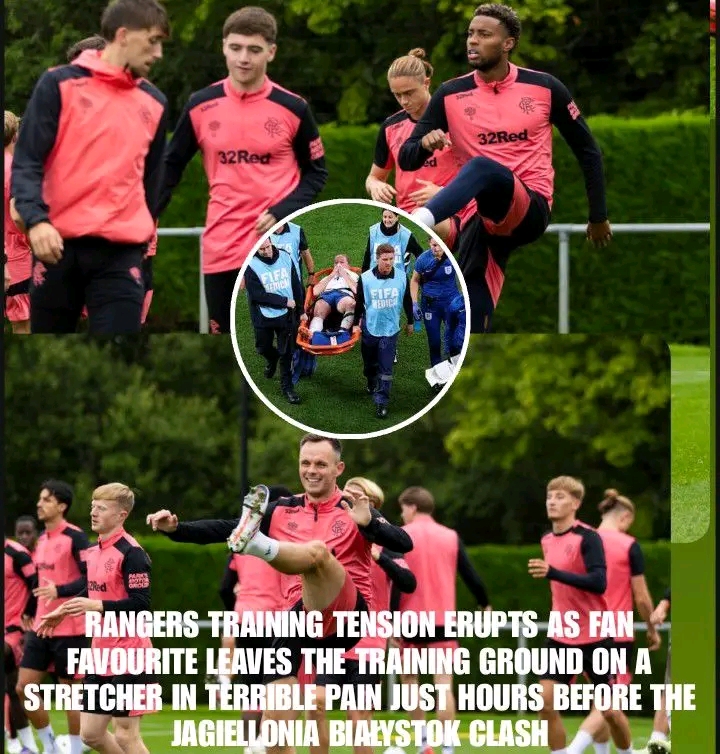
Rangers’ preparations for one of the most significant matches of their early season have been dramatically disrupted by mounting injury concerns that threaten to undermine Derek McInnes’ tactical blueprint at precisely the moment when the club needs maximum stability. The Scottish giants face Jagiellonia Białystok in Poland knowing that progression through this UEFA Europa League third qualifying round would represent a vital step toward the lucrative league phase and provide genuine momentum for what has been a stuttering start to the 2026-27 campaign.
However, instead of focusing purely on tactical preparation and opposition analysis, McInnes and his coaching staff have been forced to manage an escalating injury crisis that has severely depleted Rangers’ defensive resources. The timing could scarcely be worse, and the impact on squad selection and tactical options appears substantial. For supporters following the club’s progress, recent developments have transformed cautious optimism into genuine concern about Rangers’ ability to navigate what was already considered a challenging European encounter.
The most significant injury blow has arrived in the form of Ben Godfrey’s absence through injury. The £3 million summer signing, who represented a key component of McInnes’ defensive recruitment strategy, suffered an injury that immediately raised concerns about his availability for the Białystok fixture. Godfrey was scheduled to undergo a scan on Monday, August 3rd to determine the severity of the damage</cite>, with initial assessments suggesting a layoff that could extend to two or three weeks in the best-case scenario. <cite index=”13-1″>Even under that optimistic timeline, the defender is ruled out for Thursday’s trip to Białystok.
The absence of Godfrey represents a particularly damaging loss given his prominence during Rangers’ pre-season preparations. The English defender had been a regular fixture alongside Emmanuel Fernandez in central defense throughout the warm-up matches, and McInnes had clearly identified him as a cornerstone of his defensive organization.
Godfrey’s injury forces Rangers into a defensive reshuffle that was neither anticipated nor welcome. Emmanuel Fernandez stands as Rangers’ only full fit and cleared senior central defender, meaning McInnes faces difficult decisions regarding partner pairing for the decisive European encounter
Godfrey’s injury alone would present manageable challenges for a club of Rangers’ resources and experience. However, compounding factors have transformed what might have been a straightforward selection issue into a genuine crisis requiring emergency contingency planning.
Rangers will miss out on injured defender Ben Godfrey, and John Souttar and Nedim Bajrami were not included in the club’s UEFA squad. This triple blow to defensive options leaves McInnes with severely limited choices in central defense—a position that demands reliability, experience, and understanding of European football’s specific demands.
John Souttar’s continued absence from first-team considerations reflects ongoing issues regarding the experienced defender’s future at the club. Reports suggest that Souttar’s omission from the UEFA squad was facilitated to accommodate a potential summer transfer exit. While this may represent the club’s strategic planning regarding long-term squad composition, the timing creates tactical difficulties that could not have been anticipated weeks ago when squad registration deadlines passed.
The absence of both Souttar and the injured Godfrey forces McInnes into territory that experienced managers should always avoid: implementing significant defensive changes in circumstances of genuine necessity rather than tactical choic
Adding another layer of complexity to Rangers’ predicament, summer signing Olwethu Makhanya faces uncertainty regarding his participation because of visa clearance complications. Olwethu Makhanya, who watched from the bench at Tannadice, is locked in visa clearance negotiations ahead of the flight to Poland, leaving his availability in doubt
The situation with Makhanya exemplifies the administrative challenges that can disrupt even the most carefully planned transfer strategies. While £3 million arrival Makhanya would normally represent a useful squad depth option, bureaucratic delays regarding visa processing have prevented him from being a reliable selection option heading into this crucial fixture.
For supporters, the Makhanya situation serves as a reminder that European football requires not only athletic excellence but also meticulous attention to administrative detail. Missing crucial deadlines or miscalculating visa processing timelines can result in valuable squad members being unavailable at precisely the moments when they are most needed.
With Emmanuel Fernandez standing as the only fully available and registered senior central defender, Dujon Sterling is likely to slide into central defence alongside Fernandez, paving the way for Ross McCrorie to slot in at right-back for his official Rangers debut</cite>.
This defensive reshuffling represents an innovative but potentially risky solution to an acute problem. Sterling, primarily utilized as a right-back during his Rangers career, would be transitioning to central defense—a position demanding different spatial awareness, positioning, and defensive partnerships compared to his established role.
Ross McCrorie, meanwhile, would be making his official Rangers debut in a position of considerable responsibility. While debuts should always be approached as opportunities for emerging talent to establish themselves, making a competitive debut in European football, particularly at right-back, represents a baptism of fire that many young players would struggle to navigate successfully.
The combination of Sterling’s positional shift and McCrorie’s debut adds significant unpredictability to Rangers’ defensive setup. While both players possess technical ability and professional commitment, the unfamiliarity of the combinations and Sterling’s adjustment to a new position creates scope for defensive disorganization that a well-coached Polish side can exploit
Beyond defensive concerns, Rangers face additional disruptions in midfield. Connor Barron and Jose Cifuentes remain unavailable for Rangers due to ongoing injury issues. These absences further restrict McInnes’ ability to field his preferred starting combination and force compromises in midfield structure that could undermine Rangers’ tactical approach.
Connor Barron has developed into a key player for Rangers, and his unavailability forces the coaching staff to consider alternatives that may lack either his experience or his specific qualities in possession recovery and midfield control. Cifuentes’ absence similarly removes an option that McInnes may have planned to utilize as the campaign develops.
The accumulation of injuries across both defense and midfield suggests that Rangers’ squad depth, despite significant summer recruitment investment, remains insufficient to absorb this level of simultaneous unavailability without significant performance impact.
Understanding Rangers’ problems requires recognition of the quality of opposition they face. The Polish side has made an excellent start to the new Ekstraklasa season, winning its opening two league matches, suggesting that Jagiellonia enter this tie with momentum, confidence, and evidence of cohesion.
Nik Prelec, who arrived from Oxford United earlier in the summer window, has already scored two goals in two games for Jagiellonia, and the striker should lead the line on Thursday. The presence of an in-form striker, combined with Jagiellonia’s positive domestic form, creates a formidable attacking threat that Rangers’ makeshift defensive organization will struggle to contain.
The contrast between Jagiellonia’s coherent, established setup and Rangers’ emergency squad construction represents a significant tactical disadvantage. Head coach Adrian Siemieniec has few injury concerns and is expected to name a strong lineup suggesting that the Polish side will enter the fixture at near-full strength while Rangers operate substantially below optimal capability
The statistical imbalance in that opening fixture should concern Rangers supporters. Creating more shots but registering inferior expected goals suggests either poor positioning by attacking players or inadequate creativity in chance creation—both factors that could prove costly against European opposition.
McInnes entered the Rangers role with clear expectations of implementing an improved approach to the club’s tactical profile. However, the opening match against Dundee United provided disappointing evidence that the transition may require greater time than anticipated. The necessary quick response in European football cannot be delayed by transitional adjustment periods.
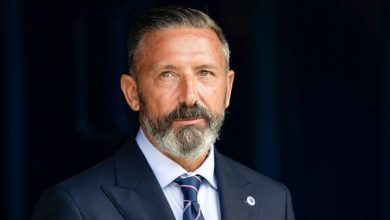
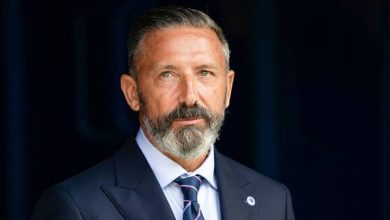
Derek McInnes now faces one of the most significant challenges of his managerial career: implementing a coherent tactical approach without key defensive personnel while managing expectations and protecting squad morale. The Polish trip represents a test not only of Rangers’ quality but of McInnes’ capacity to adapt intelligently when circumstances demand adjustment.
Experienced managers have developed specific strategies for managing injury crises. These typically include:
– Maintaining organizational principles regardless of personnel changes
– Emphasizing positional discipline to compensate for unfamiliarity
– Reducing attacking ambition to provide defensive cover
– Utilizing organizational structure to minimize the impact of individual absences
– Communicating clearly with emerging players regarding specific responsibilities
McInnes, with his previous experience at Hearts and Aberdeen, understands these principles well. However, applying them in European competition at such an early stage of his Rangers tenure demands both tactical flexibility and mental resilience from both the manager and his squad
In two-legged European ties, securing a positive result in the away leg provides enormous psychological and tactical advantage for the return fixture. A first-leg draw or victory at Białystok would allow Rangers to manage the second leg at Ibrox with greater control and composure. Conversely, a defeat in Poland would place enormous pressure on Rangers to overturn the deficit at home, with the return match becoming a must-win rather than an opportunity for progression management.
Given Rangers’ injury concerns and defensive instability, securing at minimum a draw in the opening fixture becomes tactically crucial. The alternative—returning to Glasgow trailing and facing the pressure of needing to overcome a deficit—would represent an inadequate foundation for progression, particularly with defensive resources already stretched beyond reasonable limits.
Rangers possess a proud history of European football and have consistently demonstrated capacity to navigate qualifying rounds successfully despite various obstacles. The club’s organizational structures, experienced medical staff, and professional culture should theoretically enable them to manage this injury crisis more effectively than lower-level competitors.
However, historical examples also demonstrate that European football punishes complacency and defensive disorganization with ruthless efficiency. First-leg absences or suboptimal performances frequently prove decisive, particularly when opposition sides are established and organized—characteristics that Jagiellonia Białystok clearly possess following their positive domestic start.
Rangers supporters, anticipating a strong European campaign and domestic title challenge, have been confronted with the reality of injury disruption and squad vulnerabilities far earlier than desired. The combination of opening domestic disappointment and escalating injury concerns has shifted the narrative from optimistic anticipation to cautious concern.
Supporters have invested emotionally and financially in expectations of a title-challenging campaign. Injuries and disappointing results represent unwelcome disruptions to that narrative. The club’s communication regarding injury status and expected recovery timelines becomes increasingly important in managing supporter sentiment and maintaining confidence in McInnes’ long-term vision.
Rangers’ medical department faces an immediate challenge in managing multiple concurrent injuries while providing realistic recovery timelines. The decision to scan Godfrey on August 3rd would provide clarity regarding severity, but even best-case scenarios suggest participation in the Białystok fixture is not possible.
Modern football clubs maintain sophisticated recovery protocols and specialized personnel dedicated to rehabilitation. However, even the most advanced medical departments cannot accelerate healing timelines beyond physiological reality. The quality and speed of recovery for both Godfrey and others will significantly impact squad availability over the coming weeks.
For Derek McInnes, this injury crisis represents an early test of his managerial credentials at Rangers. Adapting intelligently to circumstances, maintaining organizational principles despite personnel changes, and extracting maximum effort from remaining squad members become paramount requirements.
The Europa League tie against Jagiellonia Białystok will reveal much about McInnes’ capacity to manage adversity and about the squad’s mental resilience when facing unexpected challenges. Rangers supporters, watching developments anxiously, will hope that emergency team preparations can translate into a credible European performance despite significant personnel absences.
Rangers now face the kind of challenge that separates successful managers from those who struggle with unexpected adversity. The accumulation of injury concerns—Godfrey, Souttar’s omission, Makhanya’s visa complications, Barron and Cifuentes’ unavailability—represents a significant disruption to McInnes’ squad planning.
The visit to Poland in the first leg of a crucial Europa League tie, normally representing an opportunity to establish early advantage, has transformed into a defensive battle where Rangers must manage tactical compromise while maintaining sufficient performance levels to achieve a positive result.
As Rangers prepare for the flight to Białystok, attention will focus on McInnes’ team selection decisions, the responses of players adapting to new roles, and whether Rangers’ experience and organizational quality can overcome the absence of several key personnel. The stakes are considerable: progression advances Rangers toward the league phase and maintains momentum toward their domestic objectives, while elimination would significantly damage confidence and European ambitions at this crucial stage of the campaign.
European football provides no sympathy for injuries or misfortune. Rangers must respond with professionalism, organization, and intelligence to navigate this immediate crisis successfully.