SHANKLAND HANDED RANGERS ARMBAND IN STUNNING EARLY PROMOTION AS IBROX FAITHFUL PREPARE FOR NEW ERA UNDER TAVERNIER’S SUCCESSOR

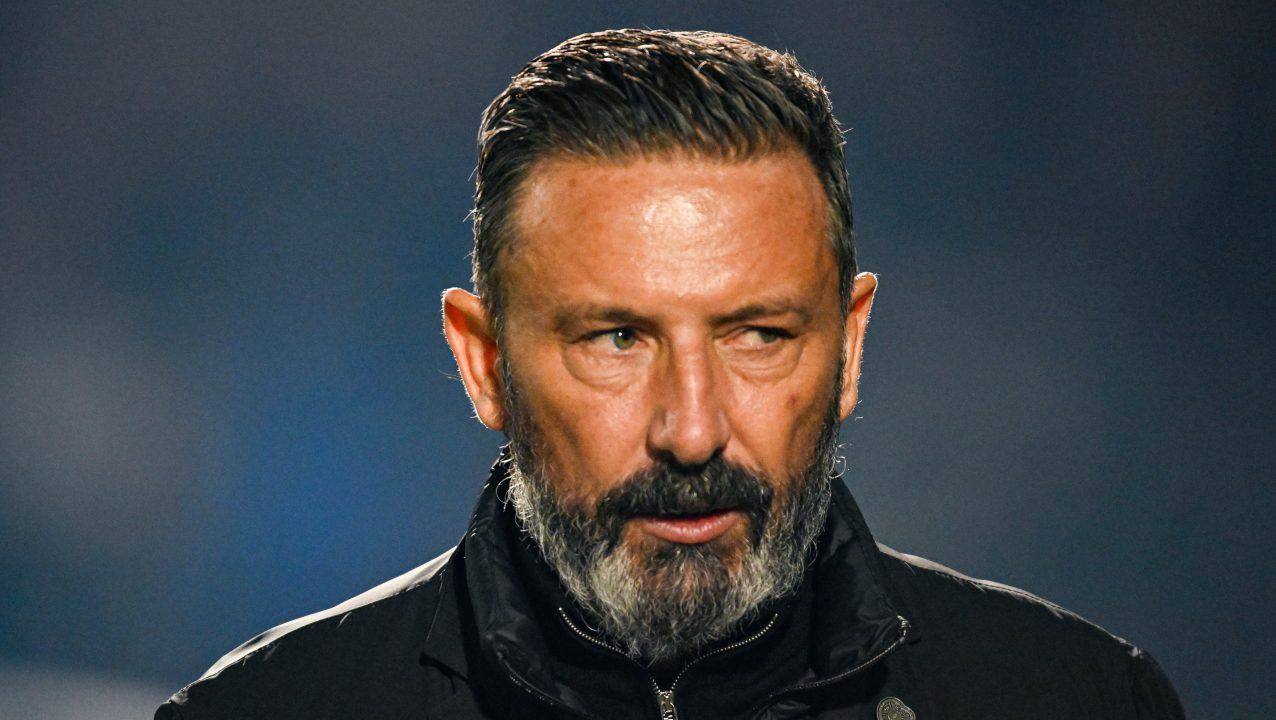
Rangers have moved to settle one of the more intriguing questions hanging over their pre-season by confirming that Lawrence Shankland has been appointed the club’s new captain, an announcement that arrives barely two months after the Scotland international completed his move from Hearts and just 48 hours before Derek McInnes takes his side into their opening Scottish Premiership fixture of the season away at Dundee United. For a player who has spent less time in Govan than most supporters have spent debating who should replace James Tavernier, the speed of Shankland’s elevation to the captaincy says a great deal about how quickly he has embedded himself into the fabric of the dressing room, and about the clarity of thought McInnes has shown in wanting his talisman leading from the front rather than easing gradually into the fold. It is a decision that will be scrutinised from every angle in the days ahead, not because there is any great mystery over Shankland’s quality as a footballer, but because captaincy at Rangers carries a weight and symbolism that stretches well beyond the armband itself, and handing it to a player who has barely unpacked his boots is the kind of move that either looks inspired or reckless depending entirely on how the season unfolds.
Shankland’s appointment brings the curtain down on the Tavernier era, one of the longest and most decorated captaincy reigns in the modern history of the club. Across eleven years at Ibrox, Tavernier grew from an attacking full-back signed with relatively little fanfare into the identity of the team itself, a leader who guided Rangers to a Europa League final and lifted the Scottish Premiership, the Scottish Cup and the League Cup along the way. Replacing a figure who became so thoroughly woven into the club’s recent history was always going to be one of the more delicate pieces of man-management McInnes would face this summer, and the fact that he has opted for a striker who joined from a direct Scottish rival rather than one of the club’s longer-serving defenders or midfielders will not have gone unnoticed inside or outside the dressing room. It is a statement of intent as much as anything else, a signal that McInnes wants leadership concentrated in his most dangerous attacking outlet, the player he expects to be doing the most damage in the boxes that matter most.
That Shankland should be trusted with such responsibility so soon is, in one sense, entirely in keeping with the pattern of his career. He wore the armband at Tynecastle too, leading Hearts through a period in which he established himself as one of the most reliable goalscorers in the country, netting 88 times in 171 appearances before he made the move across to Ibrox in May. Those numbers alone would justify serious interest from any club in Scotland, but the manner in which he built that record, often as the focal point of a team that leaned heavily on his movement and finishing, speaks to a player who is used to carrying responsibility rather than shying away from it. Captaincy, in that sense, is less a new burden being placed on his shoulders than a continuation of a role he has occupied for years, just transplanted into a different stadium with a different set of expectations attached.
There is also a deeply personal dimension to this story that will resonate with supporters regardless of how they feel about the broader tactical logic of the appointment. Shankland is a boyhood Rangers fan, someone who grew up dreaming of representing the club long before he ever envisaged doing so as its captain. Making that journey from supporter to squad player is rare enough in modern football, where academy pathways and boyhood connections to boyhood clubs increasingly get lost amid transfer fees and global scouting networks. Making the leap from supporter to captain inside the space of a single close season borders on the fantastical, the kind of story that could easily be dismissed as far-fetched were it presented as fiction rather than fact. For Rangers supporters who have watched Shankland torment their side from the opposite dugout in years gone by, there will be a strange but not unwelcome adjustment period in learning to see him not just as one of their own, but as the player tasked with leading them out of the tunnel every week.
The timing of the announcement is significant in itself. McInnes has chosen to make this call just two days before the visit to Tannadice, ensuring that whatever conversations needed to happen inside the camp have already taken place well before Shankland leads the team out for a ball that actually matters. There is a clear logic to settling the captaincy question before a ball is kicked in anger rather than allowing speculation to fester through the opening weeks of the season, particularly given how much scrutiny every Rangers team news bulletin receives from a fanbase that dissects team selection with the intensity of a general staff planning a campaign. By naming his captain now, McInnes removes one obvious talking point before Friday night and allows the focus, at least in theory, to shift toward performance rather than process. Whether that plan survives contact with an opening-day trip to Tannadice, traditionally one of the more awkward assignments in Scottish football regardless of the gulf in resources between the two clubs, remains to be seen.
Dundee United have developed a reputation in recent seasons for making life uncomfortable for the Glasgow sides on their travels, and a 20:00 kick-off under the Tannadice floodlights, live on BBC Sounds with highlights following on iPlayer, will offer an early examination of how Shankland’s new status affects his performance levels rather than simply his standing in the dressing room. There is always a question mark hanging over any player asked to combine goalscoring with leadership duties, since the mental and physical demands of organising a backline, marshalling a midfield press or calming a nervous younger teammate can, in theory, dilute the focus needed to find half a yard of space in the penalty area. Plenty of strikers throughout football history have found the armband either galvanising or burdensome, and there is no guarantee which category Shankland will fall into until he has had a genuine run of matches to settle into the role. What can be said with more confidence is that McInnes clearly does not see any conflict between the two responsibilities, or he would not have made the appointment this early and this decisively.
McInnes’s broader project at Rangers has been the subject of intense debate throughout the summer, with the club having undergone one of its busiest and most transformative transfer windows in recent memory. The captaincy decision cannot be viewed in isolation from that wider context; it sits alongside a series of significant squad changes that have reshaped the dressing room Shankland now finds himself leading. The club has been especially active in the midfield department, a position that has arguably seen more turnover and scrutiny than any other across the close season, with question marks persisting over exactly how many central midfielders McInnes actually needs given the depth already assembled there. Names such as Cammy Devlin, Nicolas Raskin, Dan Neil and Connor Barron have all been part of that conversation in one form or another, whether through incoming additions, ongoing squad members finding their role redefined, or players whose long-term futures at the club remain the subject of transfer speculation. Raskin in particular has been strongly linked with an exit, a saga that has run in parallel with the captaincy discussion and added another layer of transition to a squad already absorbing an unusually high volume of change in a short space of time.
Attacking reinforcements have also been a theme of the window, with the futures of fringe forwards such as Oliver Antman generating their own strand of speculation, reportedly with Rangers well placed to recoup a healthy fee should a sale materialise. That kind of trading activity, buying low on proven Scottish Premiership goal threats like Shankland while potentially cashing in on players who have not quite delivered at the level required, reflects a club trying to sharpen its attacking options while keeping half an eye on the finances. It is the sort of housekeeping that rarely grabs headlines in the same way a captaincy announcement does, but which shapes the resources McInnes has at his disposal just as significantly. Add in Europa League qualifying commitments against continental opposition, a competition Rangers have treated with real seriousness given their pedigree in reaching a final under Tavernier’s captaincy only a few seasons ago, and it becomes clear just how much McInnes has had on his plate before a ball has even been kicked domestically.
Against that backdrop, the decision to hand Shankland the armband looks less like an isolated managerial whim and more like the final piece of a carefully sequenced summer rebuild. McInnes has used the transfer window to reshape the spine of his squad, address a midfield he evidently felt needed remodelling, and manage the natural uncertainty that comes with any squad in transition, all while working out who among his group commands the respect and consistency required to be the face of the team both on and off the pitch. That he has landed on a player who arrived only in the last two months, rather than someone with a longer track record inside the building, suggests McInnes places enormous stock in Shankland’s temperament as much as his footballing output. Leadership at a club of Rangers’ size is about far more than shouting instructions or winning individual duels; it involves handling media commitments, setting standards in training, and being the figure supporters instinctively look toward when results take a difficult turn, as they inevitably will at some stage of a long season.
It is worth remembering, too, that Tavernier’s reign as captain did not begin under similarly dramatic circumstances, but it grew into something that defined an era largely because of consistency sustained across more than a decade rather than any single moment of anointment. Shankland does not have the luxury of eleven years to build that same legacy gradually; he inherits a captaincy that is judged, fairly or not, against the standard Tavernier set, and he does so having played only a handful of matches for the club he now represents as its on-field leader. That is an enormous amount to ask of any player, let alone one still adjusting to a new dressing room, a new city in some cases, and a new set of expectations from a support that demands trophies as a matter of course rather than an occasional bonus. The Scottish Premiership title race under McInnes will be the ultimate barometer of whether this appointment pays off, but there will be countless smaller moments along the way, difficult away days, contentious refereeing decisions, dressing-room disagreements that never become public, where Shankland’s suitability for the armband will be tested in ways that cannot be predicted from the outside.
There is also the matter of how Shankland’s Hearts history plays into this transition. Moving between direct rivals in Scottish football is never entirely straightforward, and doing so while stepping immediately into a leadership position adds an extra dimension to how he will be received both by Rangers supporters and by observers of the wider Scottish game. Some will point to his goalscoring record as more than sufficient justification for any reservations to be set aside quickly, arguing that a player capable of scoring at the rate he did for Hearts deserves the trust being shown in him regardless of how recently he arrived. Others will take a more cautious view, suggesting that captaincy ought to be earned over a longer period of integration, with trust built match by match rather than assigned on potential and reputation alone. Both perspectives have merit, and neither will be conclusively proven right or wrong until Rangers have played a meaningful number of fixtures with Shankland wearing the armband in matches that actually carry something at stake.
What is beyond dispute is that McInnes has made his decision with clear eyes on what lies immediately ahead. The visit to Tannadice on Friday night marks the true start of the substance of this appointment, moving the conversation away from press releases and reaction pieces and into the far less forgiving arena of ninety minutes against a Dundee United side who will fancy making life difficult for a Rangers team still settling into its new-look shape. Kick-off at 20:00 BST, broadcast live on BBC Sounds with highlights to follow on the BBC iPlayer, gives supporters the chance to see for themselves how their new captain responds to the responsibility that comes with the armband in a live, competitive environment rather than through the lens of a summer announcement. Every touch, every gesture toward teammates, every moment of frustration or composure will be read through the prism of his new status, whether that scrutiny is entirely fair or not.
The wider footballing landscape in Scotland only adds extra weight to what might otherwise have been a relatively contained domestic story. Rangers are not operating in a vacuum this summer; their rivals across the city and across the league table have been making their own moves, and every captaincy decision, every marquee signing, every hint of instability gets amplified by a media environment that thrives on the Glasgow rivalry and treats even the smallest managerial choice as a referendum on the wider direction of the club. Shankland stepping into the armband will inevitably be framed by some as evidence of ambition and ruthlessness on McInnes’s part, and by others as a needless gamble taken purely for the sake of a headline. Both framings say more about the commentator’s existing view of McInnes than they do about the actual merits of the decision, but that is simply the reality of operating inside one of Scottish football’s two dominant institutions, where every choice is filtered through decades of accumulated narrative and rivalry.
It is also worth placing this appointment within the context of how captaincy has evolved at Rangers more generally over recent decades. The armband at Ibrox has, at various points, been worn by commanding centre-backs, box-to-box midfielders and, in Tavernier’s case, an attacking full-back who redefined what the role could look like from a defensive position. Handing it to a central striker is not unprecedented in the club’s history, but it is a less common pattern than supporters might initially assume, and it changes the physical geography of leadership on the pitch. A striker captain is, by definition, further removed from large stretches of open play than a defender or holding midfielder, spending long periods in advanced areas away from goal-kicks, defensive set-pieces and the organisational responsibilities that often fall to those playing deeper. That does not make Shankland any less capable of leading, but it does mean his captaincy will look and feel different on matchdays compared to the version supporters grew used to under Tavernier, with vocal leadership and pre-match presence perhaps mattering as much as visible organisation during phases of defensive play.
There is a broader football lesson buried in this story too, one that speaks to how modern clubs increasingly view captaincy less as a reward for long service and more as a functional appointment built around who is best placed to embody the manager’s principles at any given moment. The days of captaincy being handed almost automatically to the longest-serving professional in the dressing room have been fading across the sport for years, replaced by a more pragmatic approach in which managers select whichever player they believe carries the right mix of authority, consistency and personal standards, regardless of tenure. McInnes clearly falls into this more modern school of thought, and his willingness to move so decisively on the issue, rather than allowing an interim or caretaker arrangement to bed in over the opening months of the season, reflects a manager confident enough in his own judgement to make a bold call and live with the consequences. Whether that confidence is ultimately vindicated will be written across the next nine months of Scottish Premiership football, European nights, and cup competitions, but for now, the story belongs to Lawrence Shankland, a boyhood supporter turned captain, and to a Rangers side about to discover exactly what kind of leader they have just appointed.
For a fanbase that has become accustomed over more than a decade to seeing the same face lead the team out, adjusting to Shankland in that role will take time regardless of how well he performs individually. Captaincy is as much about symbolism and continuity as it is about tactical function, and the psychological shift required from supporters watching a boyhood fan turned new signing take on that mantle so quickly will be its own quiet subplot running throughout the early months of the season. If Shankland scores freely and Rangers pick up points, none of this debate will matter in the slightest, and McInnes will be lauded for a decisive piece of early-season man-management that set the tone for the campaign. If results prove sticky in the opening weeks, however, questions over the timing and reasoning behind the decision will resurface quickly, with pundits and supporters alike revisiting whether a longer bedding-in period might have served both player and club better. Football has a habit of rendering these debates moot rather quickly once the actual results start rolling in one direction or the other, and Friday night at Tannadice offers the first, admittedly small, data point in what promises to be a fascinating season-long study of whether Lawrence Shankland was the right man to succeed a Rangers legend as captain.