The Collapse Rangers Fans Still Can’t Forget: Revisiting the 2-2 Old Firm Capitulation That Haunted Ibrox

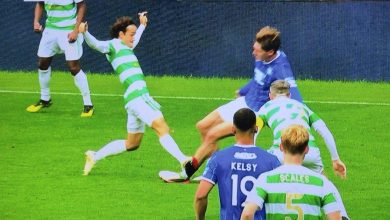
Football has a habit of filing certain results away in a different part of the collective memory than ordinary draws. A 2-2 scoreline, taken in isolation, rarely tells a dramatic story. But the manner in which Rangers surrendered a two-goal lead against Celtic at Ibrox on 1 March 2026 turned what should have been a routine home victory into one of the most painful afternoons Rangers supporters had endured in years, and it is a result that continued to cast a shadow over the club for months afterwards. With this season’s Rangers side having now beaten Celtic twice in the space of eight days under new manager Derek McInnes, it feels like the right moment to look back at exactly what happened that afternoon, and why it took on such outsized significance in the story of the club’s recent history.
Flying Out of the Blocks
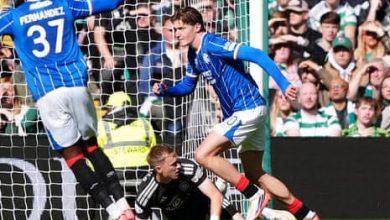
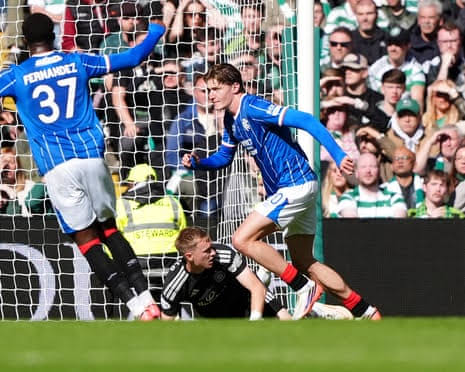
There was nothing in the opening exchanges to suggest Rangers were heading for anything other than a comfortable victory. Youssef Chermiti, the club’s marquee attacking signing at the time, produced the kind of eye-catching individual display that had been expected of him since his arrival, scoring twice inside the opening half-hour to put Rangers firmly in control. His first arrived after just eight minutes, settling any early nerves inside Ibrox almost before the crowd had properly found their voice, and he doubled the advantage in the 26th minute, sending the home support into raptures and appearing to put the game beyond any realistic Celtic response.
At 2-0 up against their fiercest rivals, with over an hour still to play, Rangers looked to be cruising towards exactly the kind of statement victory that could have shifted momentum firmly in their favour heading into the business end of the season. The lineup that afternoon told its own story of a different era at Ibrox: Jack Butland in goal, John Souttar — still a regular starter at that point, long before his eventual exit saga to Aris Thessaloniki this season — anchoring the defence alongside Emmanuel Fernandez, and a midfield built around Nicolas Raskin and Tochi Chukwuani. It was, in short, a Rangers side that looked capable and well-organised, cruising to what should have been a routine three points.
The Unravelling
What followed has become the stuff of painful Ibrox folklore. Kieran Tierney, back in Scotland with Celtic after his lengthy spell in England, pulled a goal back in the 56th minute, giving the visitors a foothold in the match and injecting a wave of belief through the away end that had, until that point, been almost entirely silent. From there, the momentum of the match shifted decisively, with Celtic gradually asserting themselves as the half wore on, sensing that a result which had looked utterly out of reach forty-five minutes earlier was suddenly very much back in play.
The killer blow, when it arrived, was about as dramatic as Scottish football gets. Deep into stoppage time, in the first minute of ten added on at the end of the match, Celtic were awarded a penalty. Reo Hatate stepped up to take it — and saw his initial effort saved. In front of a stunned Ibrox crowd who might reasonably have believed they had just witnessed the decisive moment of the contest, the ball fell back invitingly for the Celtic midfielder, and Hatate reacted quickest to fire home the rebound, completing an astonishing late leveller and snatching a 2-2 draw from a position that had, for the vast majority of the ninety minutes, looked entirely secure for the home side. Nicolas Raskin was shown a yellow card in the chaotic aftermath as Rangers players and staff reacted to the manner in which victory had been allowed to slip away in the cruellest possible fashion.
For a stadium that had been celebrating a seemingly comfortable victory only a matter of minutes earlier, the psychological impact of conceding not once but twice in the closing stages — including via a saved penalty that really ought to have ended the danger entirely — was considerable. It represented the kind of result that lingers in a support’s collective memory far longer than a straightforward defeat might have done, precisely because of how avoidable it appeared and how completely the initiative had been surrendered.
The Context That Made It Sting Even More
Results like this rarely exist in a vacuum, and the context surrounding the match only added to the sense of anguish among Rangers supporters in the aftermath. At the time, Rangers sat in second place in the Premiership table, locked in a genuine three-way title race alongside Celtic and a resurgent Hearts side that would go on to push both Glasgow clubs extremely close before the season’s conclusion. Every dropped point in matches of this magnitude carried substantial weight, and surrendering two points from a winning position against your fiercest rivals, in such spectacular fashion, represented exactly the kind of moment capable of shifting the psychological balance of an entire title race.
As it turned out, the eventual destination of that season’s title was decided by fine margins. Celtic ultimately clinched a fifth consecutive Premiership crown and a record-breaking 56th Scottish league title overall, sealing the championship with a win over Hearts on the final day of the season, denying Hearts what would have been their first title in decades. Rangers, for their part, finished the campaign in the Europa League qualification places, while Hearts claimed the runners-up spot in the Champions League qualification positions — a reminder of just how unusually competitive that particular title race had been, and how costly any dropped points against direct rivals could prove across the course of a long campaign. Given how tightly that race was ultimately contested, it is not difficult to see why a result like the Ibrox 2-2 took on such significance in the eyes of supporters looking back on the season as a whole.
A Different Rangers Side, A Different Era
It is worth pausing to appreciate just how different the Rangers side that surrendered that lead looks compared to the one that has swept Celtic aside twice already this season under Derek McInnes. Jack Butland, Rangers’ goalkeeper that afternoon, has since departed the club, with Ivor Pandur now established as the club’s first-choice option between the posts. John Souttar, one of the defensive lynchpins of that Ibrox back line, spent much of this season frozen out of the first-team picture entirely before his eventual, drawn-out exit to Aris Thessaloniki, a saga that dragged on and very nearly saw Rangers void the remainder of his contract just to get the move over the line before a Greek transfer deadline.
Perhaps most strikingly of all, the manager overseeing that capitulation was not Derek McInnes at all, but his predecessor, whose tenure would itself end before the following season had even properly begun, paving the way for McInnes’s own arrival at Ibrox this past summer. That change in the dugout, and the accompanying wholesale turnover in playing personnel — Chermiti has since departed, Fernandez remains but under a different tactical system, and an entirely new spine has been constructed around the likes of Dan Neil, Kevin Kelsy, and James Penrice — makes the comparison between that painful afternoon and this season’s derby dominance all the more striking. It is, in almost every meaningful sense, a completely different Rangers team playing under a completely different management structure, and the psychological weight of that infamous 2-2 draw belongs to an era of the club’s recent history that has since been substantially dismantled and rebuilt.
Why This Result Still Matters Now
There is a temptation, with any team enjoying a purple patch of form, to treat the past as entirely irrelevant — water under the bridge, rendered meaningless by subsequent results. But context matters in football, and understanding just how painfully Rangers had capitulated against Celtic as recently as March adds real weight to what McInnes’s side have achieved with their two victories over the same opponents this season. A club whose supporters had spent months carrying the psychological scar tissue of throwing away a two-goal lead in the most agonising circumstances imaginable — a missed penalty rebound goal, deep into stoppage time, snatching what would have been a routine home win — has now beaten those same opponents twice within the space of eight days, comprehensively at Ibrox in the League Cup and narrowly but efficiently away at Celtic Park in the league.
That kind of turnaround does not happen by accident, and it goes some way to explaining the sense of genuine transformation that has accompanied McInnes’s start to life in the Ibrox dugout, despite his own early-season struggles in Europe. Rangers supporters who lived through the anguish of watching Hatate convert that stoppage-time rebound, having already seen his initial penalty saved, will understand better than most exactly how significant it is to see their side now holding a psychological edge over Celtic in Old Firm fixtures, rather than being on the wrong end of the kind of late collapse that defined so much of the narrative around the closing months of last season.
A Painful Lesson in Game Management
Beyond the immediate emotional fallout, results like the March 2026 draw tend to prompt broader questions about game management — specifically, how a team allows a two-goal cushion, built inside the opening half-hour of an Old Firm derby, to evaporate so completely over the course of the remaining hour of football. Celtic’s fightback was built on patience and an evident belief that chances would eventually present themselves if they continued to apply pressure, and Tierney’s introduction into the contest — pulling a goal back with just over half an hour remaining — proved to be the platform from which the visitors’ comeback was launched.
From a Rangers perspective, that capacity to see out a two-goal lead against direct rivals, particularly in the closing stages of a match, is precisely the kind of quality that separates title-challenging sides from those that ultimately fall short. It is a lesson that appears to have been at least partially absorbed by the current iteration of the club: this season’s Rangers side, for all the different personnel involved, showed a far greater capacity to manage the closing stages of both derby fixtures against Celtic, seeing out narrow leads rather than surrendering advantages built earlier in the game. Whether that improvement reflects a specific tactical emphasis under McInnes, added squad depth allowing for better game management from the substitutes’ bench, or simply a change in mentality following the trauma of results like the March 2026 draw, the practical outcome has been markedly different this time around.
The Old Firm Rivalry’s Capacity for Drama
If nothing else, the events of that afternoon at Ibrox serve as a reminder of just how capable Old Firm fixtures are of producing moments of pure, unscripted drama, regardless of the broader context of the season or the relative form of either side heading into the match. A comfortable two-goal cushion evaporating inside the space of thirty-five minutes, culminating in a missed penalty being converted on the rebound in the first minute of stoppage time, is precisely the kind of sequence of events that elevates a fixture from merely important to genuinely unforgettable, for entirely different reasons depending on which end of the ground you happened to be standing in.
It is worth remembering, too, that this was far from an isolated example of late Old Firm drama during that particular period of Scottish football. Just a week later, on 8 March 2026, the two sides met again in a Scottish Cup fixture that finished goalless after extra time before being decided on penalties, following a directive that both clubs play their next home fixture behind closed doors — a stark illustration of just how fraught and closely fought this particular rivalry had become during that stretch of the season, quite apart from the football being played on the pitch itself.
Moving On, But Not Forgetting
For all the psychological weight that result carried at the time, football moves quickly, and the current Rangers squad — built almost entirely anew under McInnes over the course of a single summer transfer window — bears little resemblance to the side that let a two-goal lead slip in such agonising fashion back in March. New signings, a new manager, and a fundamentally different tactical approach have combined to produce a version of Rangers that has, so far this season, shown precisely the game management and mental resilience that was so conspicuously absent on that painful afternoon at Ibrox.
That does not mean the memory of the collapse has been erased entirely from the club’s collective consciousness, however. Results of that magnitude, delivered in circumstances so dramatic and so late into the match, tend to linger regardless of how many subsequent victories a club goes on to record against the same opponents. What this season’s double over Celtic does represent, though, is a meaningful marker of progress — tangible evidence that whatever went wrong in the closing stages of that infamous March afternoon has, at the very least for now, been addressed under new management. Rangers supporters heading into the club’s upcoming fixtures will hope that the days of throwing away commanding leads against their fiercest rivals are now firmly a thing of the past, consigned to an era of the club’s recent history that already feels, in footballing terms, like a considerable distance away.