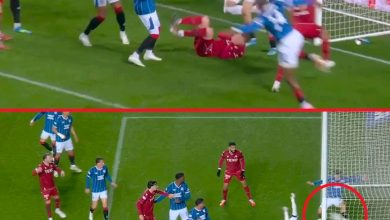
Because of Naderi: £4m flop must never start for Rangers again, he’s finished at Ibrox – opinion


Rangers supporters have every reason to demand more from their players, especially when the club has invested significant money in building a squad capable of competing for trophies. However, when a player continues to struggle to convince, questions about his position in the team become unavoidable. Following the latest disappointment involving Naderi, the debate surrounding one £4m Rangers signing has become even louder, with growing calls for him to be dropped from the starting lineup. There is now a strong argument that Rangers cannot continue giving him opportunities at the expense of players who may be more deserving of a place in the team. For many supporters, the situation has reached a point where patience is running out, and the manager must finally make a decision that puts the team’s interests above everything else.
Football is a game where patience is important, but patience cannot last forever. Every player arriving at Ibrox knows the expectations attached to wearing the Rangers shirt. Supporters demand commitment, consistency, quality and performances capable of making a difference when the team needs it most. When a player receives an opportunity to prove himself but fails to convince, frustration naturally begins to grow. The £4m price tag makes the situation even more uncomfortable because Rangers supporters expect their expensive signings to deliver something special rather than become another source of disappointment. A transfer fee of that size creates expectations, and the player must understand that supporters will not simply ignore poor performances because the club spent money bringing him to Glasgow.
The situation involving Naderi has only added to the frustration. His involvement has become a talking point among supporters, and it has raised questions about whether Rangers should continue trusting certain players who have struggled to meet expectations. The argument is becoming increasingly difficult to ignore: if Rangers want to move forward, the manager must be willing to make tough decisions, even when those decisions involve players who cost significant money. Rangers cannot afford to allow individual performances to become a problem that affects the entire squad, particularly when the club is trying to establish consistency and build momentum during a demanding campaign.
There is no shortage of opinions among Rangers supporters, and some believe the £4m flop has reached the point where he should no longer be considered a regular starter. The criticism is harsh, but that is the reality of playing for a club where expectations are so high. Players are judged by what they produce on the pitch, and when performances fall below the required standard, supporters will make their feelings known. Nobody arrives at Ibrox expecting an easy ride, and every player must be prepared to face the pressure that comes with representing a club whose supporters expect to compete for trophies every season.
The biggest issue is not simply the transfer fee. It is the feeling that Rangers should be getting more from the player. Spending £4m on a signing is a serious investment, and the club would naturally expect that player to contribute meaningfully. When the performances fail to match the expectations, frustration becomes inevitable. Supporters want to see progress, and they want to believe that the money spent on strengthening the squad has been used wisely. They do not want to watch another expensive signing struggle to make the impact expected of him while the team continues to suffer from inconsistent performances.
Naderi’s involvement has now placed even more attention on the player, and the pressure is growing. Rangers cannot afford to keep making decisions based on reputation, transfer fees or the hope that someone will eventually find form. Football is about performances, and the players who are delivering should be given the opportunity to continue doing so. Those who are struggling need to understand that their positions are not guaranteed. The manager must look at the squad objectively and make selections based on what he believes will give Rangers the best chance of winning matches, regardless of how much a player cost or how much attention his arrival received.
The argument that the £4m signing must never start again may sound extreme, but it reflects the frustration that has been building among supporters. Rangers fans have seen enough disappointing performances over the years, and they do not want to see the same problems repeated. They want a team that plays with confidence, intensity and determination. They want players who understand what the club represents and are prepared to fight for every result. There is a growing belief that the manager must stop overlooking the problems and start making the changes that supporters feel are necessary.
At Ibrox, the pressure is different from almost anywhere else. Every match carries expectations, and every player knows that supporters are watching closely. A poor performance can quickly become a major talking point, while an impressive display can change the mood around a player almost overnight. That is why Rangers signings must be prepared for the pressure that comes with playing for such a demanding club. There is no hiding when things go wrong, and there is no guarantee that patience will continue indefinitely. Every player must understand that the Rangers shirt comes with responsibility, and that responsibility includes delivering when the team needs it most.
The £4m signing now finds himself in a difficult position. Instead of focusing only on improving his performances, he is dealing with growing criticism and questions about whether he deserves to remain in the starting lineup. The manager must also decide how to handle the situation. Continuing to select a struggling player could create frustration among supporters, while dropping him could send a message that nobody is guaranteed a place. That message could be important for the rest of the squad because it would demonstrate that Rangers are serious about maintaining standards and that performances will always matter more than reputation.
That message may be exactly what Rangers need. Competition for places should be one of the most important parts of building a strong squad. Players should understand that they must earn their positions through performances, not simply because they were expensive signings or arrived with impressive reputations. If another player is performing better in training or making a stronger impact when given opportunities, the manager should not hesitate to make changes. Keeping the same starting lineup regardless of performances can create a dangerous situation where players become comfortable and begin to believe their positions are protected.
Rangers need to create an environment where every player understands that standards matter. Nobody should be comfortable simply because they have a contract or because the club invested money in bringing them to Ibrox. The shirt should be earned every week, and the starting lineup should reflect the players who are most capable of helping the team win. That is the mentality Rangers must develop if they want to compete consistently and avoid the mistakes that have previously cost them important matches and opportunities to challenge for trophies.
The £4m transfer fee is also becoming a major part of the discussion. When a club spends that amount on a player, supporters naturally expect a certain level of quality. They want to see someone capable of influencing matches, producing important moments and helping Rangers achieve their ambitions. When that does not happen, the transfer fee becomes a reminder of the expectations that have not been met. It is not necessarily fair to judge a player entirely by the amount paid for him, but supporters will always look at the investment and ask whether the club is receiving enough in return.
However, Rangers must be careful not to allow the transfer fee to dictate future decisions. The money has already been spent, and it cannot be recovered simply by continuing to start the player. If he is not performing well enough, the manager must make the decision that benefits the team. Starting someone because of the amount paid for him is not a sensible way to manage a football club. The manager must be prepared to accept that recruitment decisions do not always work as expected and that the best way to protect the team is sometimes to move on from a player who is struggling.
The club must focus on the present and the future rather than constantly thinking about the original investment. If the player can improve and prove himself worthy of another opportunity, then he should be allowed to do so. But that opportunity should not come at the expense of the team’s performance. Rangers are too ambitious to continue accepting performances that fail to meet the required standard. The supporters want to see a team that is moving forward, and they want to believe that the manager is willing to make the necessary changes when something is clearly not working.
Naderi’s involvement in the situation has also made supporters question what Rangers need to do differently. The team cannot afford to allow individual struggles to become a bigger problem than necessary. The manager must assess the squad carefully, identify players who are performing well and make decisions based on what he sees. If the £4m signing is no longer the best option, then another player should be given the chance to step in. There is no reason to keep selecting someone who is struggling simply because the manager hopes he will eventually rediscover his best form.
This is where the importance of squad depth becomes clear. Rangers need alternatives capable of competing for starting positions. If a player is struggling, the manager should have options available that allow him to make changes without weakening the team. Competition can improve performances because players know that they must work hard to maintain their places. It can also create a healthier environment within the squad, where everyone understands that opportunities are available to those who perform well and that nobody is guaranteed a starting position.
The supporters are not asking for perfection. They understand that footballers can make mistakes, experience difficult periods and struggle to find form. What they want is a response. They want to see players who are willing to learn from criticism, improve their performances and show that they understand the responsibility of playing for Rangers. When a player repeatedly fails to convince, patience becomes increasingly difficult. Supporters can accept mistakes when they see effort, improvement and determination, but they become frustrated when they believe a player is not doing enough to justify his place in the team.
The £4m signing must now face the challenge of proving his critics wrong. If he believes he deserves to start, the best way to demonstrate that is through his performances. He must show the manager that he can contribute more effectively, make better decisions and give Rangers something they have been missing. Simply waiting for another opportunity will not be enough. He needs to make a convincing case for himself. The pressure is now on him to demonstrate that the criticism is premature and that he still has the ability to become an important player at Ibrox.
But should Rangers continue to start him while supporters are losing patience? That is the question at the centre of this debate. The argument against selecting him is straightforward: the team should not be weakened by continuing to give chances to players who are struggling when other options may be available. The manager must prioritise results and performances, not sentiment. If Rangers are serious about competing for trophies, every decision must be made with the team’s success in mind, and there should be no hesitation about making changes when players are failing to deliver.
There is also the issue of confidence. Dropping a player can sometimes help him recover mentally, particularly when the pressure becomes overwhelming. A period away from the starting lineup could allow him to work on his game, regain confidence and return with a stronger mentality. Not every player responds positively to constant criticism, and sometimes stepping away from the spotlight is the best way to rebuild. A spell on the bench does not necessarily have to be viewed as punishment. It can be an opportunity to reset, reflect and return with a clearer understanding of what is expected.
Rangers have experienced situations where players struggled under pressure before eventually improving. Football is unpredictable, and it would be unfair to assume that the £4m signing can never recover. However, the club cannot afford to wait indefinitely for improvement. There must be a clear expectation that performances will get better, and the player must show that he is willing to meet those expectations. Rangers supporters want to see a genuine response rather than repeated promises that things will eventually improve.
The manager’s decision will be closely watched. If he continues selecting the player, supporters will want to see a clear improvement. If he drops him, the decision could be viewed as a necessary step to protect the team’s performance and create stronger competition. Either way, the player is now under enormous pressure to respond. The manager also needs to understand that his own decisions will be judged by the results, and if he continues selecting players who are struggling, he may find himself facing the same criticism directed at the footballers.
Rangers supporters have seen how quickly the mood around a player can change. Someone who is criticised one week can become a hero after a decisive performance the following week. That is why the £4m signing still has an opportunity to change the narrative. But the opportunity will not last forever, and he must take responsibility for his performances. The supporters are not necessarily against him personally, but they want to see evidence that he can improve and make a meaningful contribution to the team’s ambitions.
The situation also raises questions about Rangers’ recruitment. Spending £4m on a player should come with a clear understanding of what the club expects him to deliver. The scouting process must identify players who are capable of adapting to the demands of Scottish football, the pressure of playing at Ibrox and the expectations of competing for major trophies. Recruitment decisions should be based on a combination of ability, mentality, suitability and long-term potential. The club must ensure that signings are made because they fit the team’s needs rather than simply because they are available or carry an attractive reputation.
When a signing struggles, it does not automatically mean the recruitment team made a mistake. Players can take time to adapt, injuries can affect performances and tactical changes can make it difficult to settle. However, Rangers must learn from every transfer and ensure that future signings are capable of meeting the standards required. Every recruitment decision should be examined carefully, and the club should be prepared to acknowledge when a transfer has not delivered the expected results. The objective should always be to build a stronger squad rather than protect the reputation of individual decisions.
Supporters will naturally compare the £4m signing with other players in the squad. If someone else is delivering better performances for less money, questions about the investment become even louder. Football fans are interested in value, and they want their club to spend wisely. They want to see recruitment decisions that strengthen the team rather than create additional problems. When a cheaper player is making a bigger impact, it naturally creates a conversation about whether Rangers could have used the money differently or whether the club needs to reconsider its approach to identifying talent.
The manager must also consider the balance of the squad. Selecting players who are not performing well can affect the confidence of others who are waiting for their chance. If a player works hard in training and performs well when introduced from the bench but continues to be overlooked, frustration could develop. Rangers need to make sure that competition for places remains fair and that players understand what is required to earn opportunities. The manager must show that he is willing to reward performances rather than rely on the same names regardless of what happens on the pitch.
The strongest teams are built on accountability. Every player must be prepared to accept that poor performances can lead to changes. The manager must be willing to make those changes, and the players must respond by improving. This is how standards are maintained, and this is how teams develop the mentality needed to compete at the highest level. Rangers cannot build a winning culture if players believe they can underperform without consequences. The starting lineup must be a reflection of performance, fitness, tactical suitability and the ability to contribute to the team’s objectives.
The criticism of the £4m signing may be harsh, but it is part of the pressure that comes with playing for Rangers. The club’s supporters want to see success, and they are not prepared to accept mediocrity for long. They want players who are capable of delivering when it matters, and they want the manager to make decisions that reflect those expectations. The demands of the supporters are not unreasonable when the club is competing for major honours and has invested heavily in building a squad that should be capable of challenging its rivals.
Naderi’s involvement has become another reason for the debate to grow. Supporters are questioning whether the player has done enough to justify his place, and there is now a feeling that Rangers need to make changes. The argument is that the club should stop giving opportunities to players who are not convincing and focus on those who can make a difference. It is not about creating unnecessary drama or attacking individuals for the sake of it. It is about demanding that the team performs at a level capable of meeting the expectations of the supporters
That does not mean the player should be written off completely. He still has an opportunity to prove that he can improve, but he must understand the situation he is in. The pressure is growing, and the expectations remain high. If he wants to silence his critics, he must deliver performances that leave little room for doubt. He needs to demonstrate that he can be trusted in important matches, that he understands the tactical requirements and that he is capable of making the kind of contribution Rangers need from a player in his position.
Rangers cannot afford to be sentimental. The club must focus on winning matches and building a team capable of competing consistently. If a player is struggling, the manager must consider alternatives. If another player is performing better, he should be given the opportunity to start. The selection process must be based on what is best for the team. There should be no special treatment, and every player must understand that his position can be challenged if his performances are not good enough.
The £4m signing has reached a point where his future in the starting lineup is being questioned. That is not an easy position to be in, but it is also an opportunity to respond. Every footballer faces criticism at some point, and the best players are those who can use it as motivation rather than allowing it to destroy their confidence. If the player has the mentality and ability to succeed at Rangers, this is the moment to demonstrate it. He must show that the criticism has made him more determined to improve.
The supporters will be watching the next match closely. They will want to see whether the manager makes changes and whether the player is given another opportunity. If he starts, he will need to produce a much stronger performance. If he is dropped, he will have to work hard to earn his way back into the team. Either outcome will create discussion, but the most important thing is that Rangers move forward and begin producing performances that give supporters confidence in the squad.
The manager must also be prepared to explain his decisions through the performances on the pitch. Fans may not always agree with selections, but they are more likely to accept them when the team is performing well. If results and performances continue to disappoint, the pressure on the manager will increase as well. Rangers supporters want to see evidence that the coaching staff are identifying problems and taking action. They do not want to watch the same mistakes repeated while the team struggles to find consistency.
The debate surrounding the £4m signing is therefore bigger than one player. It is about the standards Rangers should maintain, the expectations attached to recruitment and the importance of making decisions that benefit the team. The club cannot afford to allow transfer fees to become a reason for players to receive endless opportunities. Every player must be evaluated fairly, and the manager must be prepared to make difficult decisions when necessary. That is the only way Rangers can create a squad where competition is healthy and performances are consistently demanded.
The argument that he must never start again is an emotional one, but it reflects the frustration of supporters who believe Rangers need better performances. Whether the manager agrees with that view remains to be seen. What is clear is that the player must improve if he wants to remain an important part of the squad. Supporters are tired of seeing the same concerns raised repeatedly, and they want the manager to show that he is willing to make changes when the team is not performing as expected.
Rangers supporters are demanding a team capable of competing, and that means every player must contribute. Nobody should be guaranteed a starting position, and nobody should be protected from criticism simply because of the money spent on them. The club must make decisions based on performances, ambition and what is needed to move forward. If a player is not delivering, he must be prepared to lose his place. If another player is doing better, that player should be rewarded with an opportunity.
The £4m signing now has a chance to respond. He can either allow the criticism to become another setback or use it as motivation to prove that he still has something to offer. The next few opportunities could be important in determining how supporters view him moving forward. He must understand that the best response to criticism is not an interview, a social media post or an explanation. It is a performance that changes the conversation and convinces supporters that he is capable of doing better.
If he returns to the starting lineup, the pressure will be enormous. Every touch, every decision and every contribution will be watched closely. He must be prepared to handle that pressure and demonstrate that he deserves the trust of the manager. Rangers supporters will want to see energy, confidence and a willingness to take responsibility. They will expect him to contribute positively rather than simply occupy a place in the team without making a meaningful difference.
If he is left out, it could be a sign that the manager wants to see a different approach. It may also give another player the opportunity to prove himself. Competition is healthy, and Rangers need to make sure that their starting lineup is built around the players who are most capable of delivering. A change could give the team fresh energy, provide a different tactical option and create a stronger sense that every player must fight for his place.
There is no doubt that the situation has become uncomfortable. The player is facing criticism, supporters are demanding changes and the manager must make a decision. But football is about responding, and the opportunity to change the narrative is still there. The player may be under pressure now, but he still has the chance to turn things around if he can produce the performances expected of him. The manager, meanwhile, must ensure that the team is not held back by individual struggles.
For now, the opinion remains clear: Rangers should not continue selecting a player simply because he cost £4m. If his performances are not good enough, he should be dropped and another option should be given the chance. The club must prioritise the team, the results and the standards expected at Ibrox. Transfer fees should never become an excuse for keeping a player in the starting lineup when his performances do not justify it.
The £4m signing may still have a future at Rangers, but his place in the starting lineup should no longer be guaranteed. He needs to prove that he deserves it. The supporters have made their feelings clear, and the manager must now decide what is best for the team. There is still time for the player to improve, but the responsibility is on him to show that he can meet the demands of the club and contribute to the ambitions of the squad.
At Ibrox, reputation and transfer fees cannot replace performances. Players must earn their places, and those who fail to deliver must be prepared to face the consequences. Rangers need stronger competition, better consistency and a squad where every player understands that starting positions are earned. The club must create a culture where nobody is comfortable simply because of his name, his price tag or his status within the squad.
The situation involving Naderi has added fuel to the debate, and the £4m flop is now facing one of the biggest tests of his Rangers career. If he wants to silence his critics, he must do it on the pitch. Until then, the calls for him to be dropped will continue to grow. Rangers supporters have every right to demand better, and the manager must be prepared to listen to those concerns while making the decisions he believes will improve the team.
Ultimately, Rangers are bigger than any individual player. The club’s ambitions, history and expectations must come first. Every player who arrives at Ibrox should understand that the opportunity to wear the shirt is a privilege, but maintaining a place in the starting lineup requires consistent performances. If the £4m signing is not currently delivering enough, there is no reason why he should continue to start ahead of players who may be more capable of helping Rangers win.
The next few matches could be crucial in shaping the conversation around this player. A strong performance could give him another chance to win back supporters, while another disappointing display could increase the calls for him to be removed from the starting lineup. The manager must make a decision based on what he sees in training, the tactical demands of the next fixture and the overall needs of the team. But whatever happens, the message should be clear: nobody is guaranteed a place at Rangers.
Supporters want to see a team that fights for every ball, creates opportunities, defends properly and plays with the confidence expected of a club of Rangers’ size. They want players who are willing to take responsibility and deliver when the pressure is on. They do not want to keep discussing transfer fees and excuses. They want results, performances and progress. That is why the criticism surrounding the £4m signing has become so loud, and that is why the manager must take the situation seriously.
The player still has an opportunity to prove that he can be part of the solution. It would be wrong to suggest that his Rangers career is completely over simply because he is struggling at this moment. Football offers opportunities for redemption, and a determined player can change the mood around himself with a few strong performances. However, that possibility should not mean that the manager continues to select him regardless of what happens. The opportunity to recover his reputation must come through hard work and performance.
If Rangers are to move forward, they must stop allowing the price tag attached to a player to influence selection decisions. The £4m signing should be treated like every other member of the squad. If he performs, he should play. If he struggles, he should be challenged. If another player is better, that player should be given the chance. This is the kind of competition Rangers need, and it is the kind of mentality that can help the club build a squad capable of competing consistently.
The pressure at Ibrox is never going to disappear. Rangers supporters will continue demanding success, and every player will be judged by his contribution to the team. That is part of the responsibility that comes with playing for a club of this stature. The £4m signing must understand that the criticism is not going to disappear simply because he has been given another chance. He must give supporters something to believe in, and he must show the manager that he is capable of delivering at the level required.
There is a feeling among supporters that enough is enough, and the manager should not ignore it. Rangers need fresh energy, stronger performances and a starting lineup built around players who are ready to make a difference. If the £4m signing cannot currently provide that, then he should be dropped. It does not have to be the end of his Rangers career, but it should be a clear message that the team comes first and that every player must earn the right to start.
The debate will continue, and supporters will remain divided about whether the player deserves another opportunity or whether his time in the starting lineup should come to an end. But the most important thing is that Rangers make the right decision for the team. The manager must be brave enough to change things, and the players must be prepared to respond to the competition for places. There can be no room for complacency when the club is trying to achieve its ambitions.
For now, the opinion remains firm. The £4m signing should not be starting simply because of his transfer fee, his reputation or the hope that he will eventually improve. Rangers need players who are delivering now, and those who are not meeting the required standard must be prepared to lose their places. The club cannot afford to continue making excuses when the demands of the supporters and the ambitions of the team are so high.
The £4m flop has reached a crossroads at Ibrox. He can use the criticism as motivation and fight his way back into the manager’s plans, or he can continue to struggle while supporters demand that he be dropped. His future is not necessarily finished, but his position in the starting lineup should be seriously questioned. Rangers must make decisions based on what happens on the pitch, and the player must prove that he is capable of changing the narrative.
At Ibrox, nobody should be untouchable. Not the expensive signings, not the experienced players and not those who have been given repeated opportunities. Every player must earn his place, and every selection must be made with the team’s best interests in mind. If Rangers want to build a winning mentality, they must start by demanding better from everyone involved.
The situation involving Naderi has only made the frustration louder, and the £4m signing is now facing serious questions about his future in the team. Rangers supporters want change, and they want the manager to make decisions that reflect the performances they are seeing. The next selection could be an important moment, but the bigger issue is whether the club can establish a culture where standards are maintained and players are held accountable.
If the player wants to silence the criticism, he knows exactly what he must do. He must work harder, improve his performances and take every opportunity seriously. He must show that he is capable of delivering something valuable to Rangers. Until he does that, the argument for dropping him will remain strong, and supporters will continue questioning why he is being trusted with a starting position.
Rangers cannot afford to keep making the same mistakes. They must be ruthless when necessary, honest about performances and willing to make changes when the team is not delivering. The £4m signing may still have a chance to turn things around, but that chance should not come at the expense of Rangers’ progress. The club must focus on winning, and every player must understand that the starting lineup is earned, not handed out