Man Utd rejected: Rangers hero turned down Red Devils to move to Ibrox – and he has no regrets

Every club has a story it tells about the one that got away, and every so often a player supplies the other side of it: the one who could have gone to the biggest name in the game and chose somewhere else. Ronald de Boer’s account of turning down Manchester United for Rangers in the summer of 2000 is one of those, and it has resurfaced this week under a headline about United being rejected. The story has a particular charm because it is told without bitterness or point-scoring. De Boer says he has never regretted it for a moment, and the reasons he gives are about football, not romance: where he would play, who he would play for and what the club wanted from him. It is worth taking seriously, because it describes a kind of decision that has become much harder to make in the modern game.
Start with what he has actually said, because the headline overstates how dramatic it was. According to the Give Me Sport version of the story, de Boer, a former Rangers midfielder, revealed that Manchester United wanted him when he signed for Rangers, but that he chose Ibrox. It goes on to say that United, who were dominating English football at the time, approached De Boer’s representatives about a move to Manchester, while Rangers made their case by selling him the idea of playing regular minutes under compatriot Dick Advocaat. A second account, carried by inkl, adds the crucial context: he faced what it calls a huge career crossroads in August 2000, as he prepared to leave Barcelona, with both clubs vying for his signature, and he spoke to his former manager Louis van Gaal before deciding. So the shape of the choice is clear. A midfielder leaving one of Europe’s grandest clubs had two offers, one from the dominant force in English football and one from the biggest club in Scotland, and he went for the one that wanted him to play.
That last point is the heart of the matter, and de Boer’s own words make it unmistakable. He said that Rangers wanted him badly, and that he would go for Rangers if he had to choose again, adding that he had never regretted it for one moment because of how unbelievable the time there was. Notice what is missing from that. There is no claim that Rangers were a better club than United, no suggestion that Scotland was a superior league and no pretence that the decision was obvious. He is describing the feeling of being wanted, and the value of a manager who had a clear plan for him. That is a very human kind of reasoning, and it is more persuasive than any argument about prestige.
To see why the plan mattered so much, you have to picture the United midfield in that summer. The club had just won the league title by a wide margin and was in the middle of the most successful run in its history. The midfield, as anyone who watched English football at the time will remember, was crowded with some of the best players in the world: Roy Keane, Paul Scholes, David Beckham and Ryan Giggs among them. That is background from my own knowledge, not from the articles about de Boer, but it is well established, and it explains the logic of his choice. A 30-year-old midfielder arriving at Old Trafford would have been joining a squad in which starting places were fiercely contested and in which his role would have had to be earned against some of the best competition in the game. At Rangers, by contrast, Dick Advocaat, a fellow Dutchman and a manager de Boer knew, was offering him a central place from the start.
The age matters too. The Give Me Sport article calls him 29 at the time, though by my reckoning he had already turned 30 that summer, so I would treat the figure with some caution. Either way, he was at a stage of a career where regular football mattered more than prestige. He had been at Ajax, where he won the Champions League in 1995, and then at Barcelona, where he had played under Van Gaal. He knew what it was like to be part of a team of stars and to share the spotlight. What he wanted, by his own account, was to play every week, and that is not an unreasonable priority for a player in his thirties who still believes he has a lot to give.
The role of Van Gaal in the story is the most revealing detail. The inkl report says de Boer sought his advice before choosing, and it describes the relationship as that of a former manager. It is easy to imagine what the conversation might have been. Van Gaal was a coach who valued tactical discipline and who knew de Boer’s strengths and limitations intimately. If he had told him that Manchester United was the better move for his career, de Boer might well have listened. The fact that he went to Rangers suggests either that Van Gaal gave him encouragement or that he gave him a candid assessment of what the Old Trafford midfield would mean for him. I do not know what was actually said, and neither article quotes the advice, so I would not guess. What can be said is that a player who consults a respected former manager before a major decision is acting thoughtfully, and that the outcome suggests the advice, whatever it was, did not push him towards England.
The move itself turned out to be a success by most measures. According to the inkl report, de Boer went on to enjoy four memorable years at Ibrox, and Give Me Sport describes him as one of Rangers’ modern heroes. Drawing on my own knowledge, I can add some detail, with the caveat that it is not from the pieces I have read. He played a central role in a Rangers side that won major honours in the early 2000s, including the domestic treble in 2002-03, when the club took the league title on a dramatic final day, as well as the Scottish Cup and League Cup. Those are the sorts of achievements that cement a player’s reputation at a club, and they help explain why he speaks of the experience with such affection.
It is worth acknowledging that the period was not uniformly golden. Rangers in those years were locked in a fierce rivalry with a resurgent Celtic under Martin O’Neill, and the early part of de Boer’s time at the club saw Celtic take the title in 2000-01. The dynamic of the Old Firm was changing, and Rangers had to adapt. Advocaat, who had signed de Boer, left the club in December 2001, and Alex McLeish took over. De Boer’s career at Ibrox therefore spanned two managerial eras, and the fact that he thrived under both is a mark of his adaptability. He left in 2004 and moved on, but his time in Glasgow remains the most prominent chapter of his later career.
The significance of the decision lies partly in what it says about the Scottish game at that moment. Around the turn of the millennium, Rangers were able to attract players from the top of the European market. The club had spent heavily under Advocaat and had assembled a squad of international players, many of them Dutch. That was possible because of the financial muscle the club could still muster, and because Scottish football retained a certain glamour, driven by the Old Firm’s European ambitions. Players who might otherwise have gone to England, Spain or Italy could be tempted by a combination of money, status and a leading role. De Boer was one of them, and his experience shows what that world looked like from the inside.
That world has changed, which is one of the reasons the story is told with a note of nostalgia. The gap between the Premier League and the Scottish Premiership has widened dramatically since 2000. English television money has transformed the economics of the game, and the idea that a player of de Boer’s calibre would choose Rangers over a leading Premier League club now seems almost fanciful. A modern equivalent would be a European international in his early thirties, leaving a top club, who has to choose between an English side and an Old Firm side. The answer, in nearly every case, would be the English one, because the wages, the profile and the quality of the competition are all far greater. The rejection of Manchester United by a player of de Boer’s standing is a reminder of how different the landscape once was.
The same pattern appears in the other story that surfaced alongside it. Trevor Steven, another Rangers hero, has told The Herald that he turned down an approach from Sir Alex Ferguson’s Manchester United in 1989 to join Graeme Souness’s Rangers from Everton. The reasons he gave overlap with de Boer’s in some ways and differ in others. Steven pointed out that English football had been weakened by the ban from Europe, a reference to the exclusion of English clubs from UEFA competitions after the Heysel disaster in 1985. He also made a personal point: he had a brilliant time at Everton, and they had won everything they could, but he didn’t want to come back and play against Everton in another shirt. That is a very particular motive, and it shows how loyalty to a former club can shape a decision.
Steven’s reasons for choosing Rangers were also about the people. He described joining a dressing room that included Gary Stevens, an old Everton friend, and big names such as Terry Butcher, Chris Woods, Ray Wilkins and Trevor Francis, and he said he especially loved Ian Durrant. There was, he said, a constant sense of excitement, with new big-name signings arriving all the time. Brit Brief’s version of his account adds that Souness’s Rangers were continuing to spend big on top players from down south, taking advantage of the European ban. That context helps explain why a player of Steven’s quality could regard Ibrox as a more attractive destination than Old Trafford. At that moment, English clubs were cut off from European football, and Rangers offered both the money and the chance to play in the European Cup.
Steven’s career bears out the choice. He is described as having secured legendary status across two spells at Ibrox between 1989 and 1997, helping the club to seven league titles in total, with a short stint at Marseille in between. Daily Record’s version of the story calls him a hero of the nine-in-a-row era. He also acknowledges the personal cost, saying that the constant travelling and the pressures of football had a toll on his family life. That candour is part of what makes these stories more than simple tales of success. A decision can be right for a career and still carry a price elsewhere, and the people who tell them honestly are the ones who help us understand what such choices involve.
What the two stories share is a sense of agency. Both players were in demand, both had options and both chose a path that suited their priorities. In an age when footballers’ decisions are often made for them by agents, clubs and market forces, there is something refreshing about a player saying he would do it again and meaning it. The reasons they gave were practical and personal, and neither claimed that Rangers was objectively better than United. They said it was better for them.
There is a point here about how we judge such decisions. The usual measure of a successful move is trophies, wages or status, and by those measures a transfer to United would have looked like the safer choice. But careers are lived at the level of individual days, and a player who is happy, valued and playing regularly may well have a more fulfilling career than one who sits on the bench at a more famous club. That is not to say that United would have been a mistake. It is to say that it would have been a different path, with different risks, and that de Boer was entitled to weigh them for himself.
The consistent theme in his account is that being wanted matters. When a club tells a player that he is central to its plans, and shows it through the way it approaches him, the effect is considerable. Rangers, by his telling, made their case with conviction, and that conviction was persuasive. He did not say that United were lukewarm, only that Rangers wanted him badly. That distinction is subtle but important, because the strength of a club’s commitment often determines how a player performs once he arrives. A manager who has gone out of his way to sign someone is more likely to build the team around him and to give him the freedom to play his natural game.
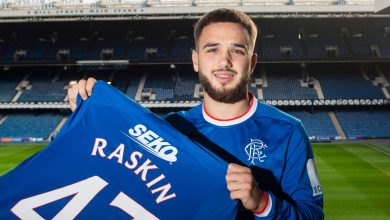
There is a modern parallel in the way Rangers have approached players in recent months. Earlier in this conversation we looked at Nicolas Raskin, who wanted to leave in the summer, was blocked, and has since settled into the side. We also looked at Derek McInnes, who has stressed the importance of stability and of players who understand their roles. These are different situations, but they point to the same principle. A player who feels valued and has a defined place in the team will generally perform better than one who is uncertain of his position. De Boer’s story is a reminder that clubs can win recruitment battles not only with money but with clarity.
It is also a reminder that the best signings are often the ones that fit a moment. De Boer arrived at Rangers when the club had ambitions and the resources to match them, and he fitted into a team that needed experienced, technically gifted players. He was able to contribute immediately and to remain a key figure for four years. A transfer that suits the player and the club at the same time is rare, and it tends to produce results. That is why the story endures: it describes a match between a player and a club that worked out well for both.
If there is a lesson for current players and agents, it is that the biggest name is not always the best destination. A player in a position to choose should think about how he will be used, who will be coaching him and what the club needs from him. Prestige is a poor substitute for playing time, and a famous badge does not guarantee a happy career. De Boer understood that, and so did Steven, and their careers at Rangers reflect it.
The caveat, of course, is that hindsight flatters. We know that de Boer enjoyed his time at Ibrox and that the club did well in those years, so the decision looks wise. If things had turned out differently, if injuries had struck or the club had fallen apart, the same choice might look foolish. There is no way to know what would have happened at Manchester United, and he himself has made no claims about it. The most that can be said is that he made a choice that suited his priorities and that it worked out.
That humility is worth keeping in mind when we read stories like this. They are told from the perspective of someone who is happy with the outcome, and they tend to simplify the process of decision-making. In reality, de Boer was weighing uncertain factors, seeking advice and making a judgement call. The clean narrative of a hero who turned down a giant is the story as it appears afterwards, not as it felt at the time.
Still, the story endures for good reason. It captures something about the relationship between footballers and the clubs they choose, and about the way in which a different era of the game allowed a different kind of choice. It also gives Rangers supporters a moment of pride, a reminder that their club once had the pull to attract a player of de Boer’s quality away from Old Trafford. For fans who have lived through the financial collapse, the lower leagues and the long road back, that is a powerful memory.
The wider point is that football’s history is full of such crossroads, and the decisions made at them shape the sport in ways that are easy to overlook. A player who chooses one club over another changes the fortunes of both. De Boer’s decision brought Rangers a midfielder who helped them win trophies and gave Manchester United a different path. Whether United missed him is another question, and one that no one can answer. But the fact that the question can still be asked, a quarter of a century later, says something about the impact of the choice.
In the end, de Boer’s message is simple and appealing. Go where you are wanted, play where you can contribute, and trust your own judgement. He did, and he has no regrets. That is a rare thing to hear in the modern game, and it is why a story about a transfer that did not happen is still being told. It is a story about what makes a footballer happy, and about the value of a club that makes a player feel he is needed. Rangers did that in 2000, and the result was four years of memories that he still talks about with delight.
Perhaps that is the real answer to the question the headline poses. Manchester United were rejected, but not because Rangers were bigger or richer or more glamorous. They were rejected because a player wanted to play, and because a manager he trusted gave him a reason to believe he would. In football, as in most things, that is a powerful combination, and it is as true today as it was in the summer of 2000.