A headline promising an exit probability makes a promise that most transfer reporting cannot keep. A player’s departure is the product of a price, a buyer, a willing player and a selling club’s mood, and none of those can be turned into a percentage by a journalist. I should say plainly that I couldn’t find the Ibrox News article behind this headline, which is cut off mid-sentence, so I can’t tell you what probability it gave or what it was reacting to. What I can do is lay out everything the available coverage says about Nicolas Raskin’s situation, arrange it into a view of how likely an exit is and when, and be clear throughout about which parts are reported fact, which are sourced rumour and which are my own judgement.
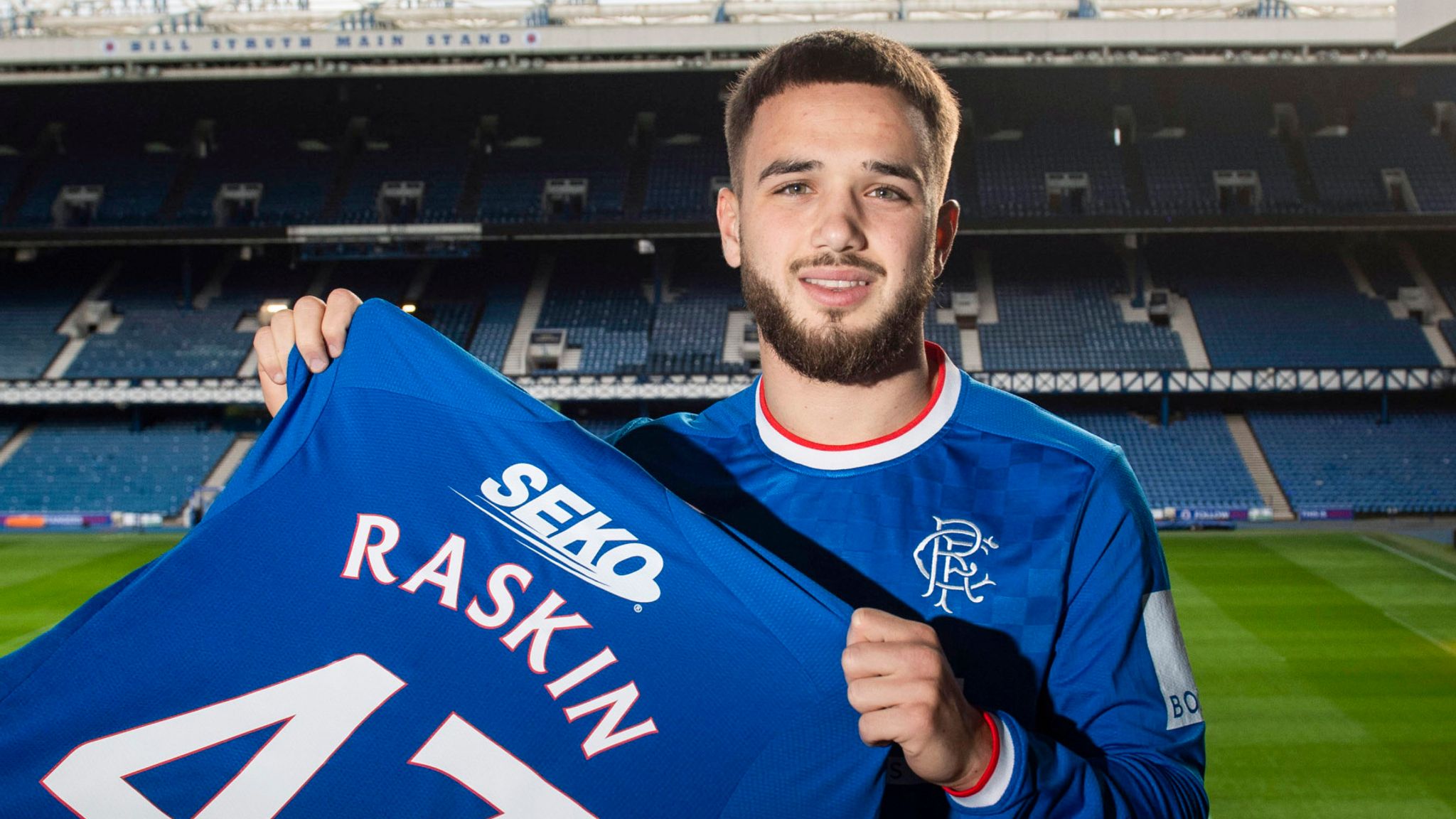
Start with the player, because the whole saga rests on how good he is. Raskin is a Belgian midfielder, 25, who joined Rangers from Standard Liège in January 2023, and he has become one of the most productive central players in Scottish football. When Ibrox News ranked Rangers’ players for the 2025-26 campaign, it named him the club’s best, and when the same site looked ahead to the summer, it said he had been rewarded with a place in Belgium’s World Cup squad for another fine season. The underlying numbers back that up. According to FotMob data quoted by Ibrox News, he averaged 1.62 shots, created 1.45 chances and took 2.84 touches in the opposition box per 90 minutes last season. Those are the figures of a midfielder who does not merely recycle possession but gets into the final third, shoots and creates, and that profile is exactly what clubs with money look for.
That is why his exit was treated as close to a foregone conclusion before the season began. By early June, Rangers Review’s Chris Jack had said Raskin would attract interest and was likely to leave, alongside Mohamed Diomande. Rangers had just finished a title race in which, as Ibrox News put it, Danny Rohl’s side picked up serious momentum before the split but still missed out on the Scottish Premiership title. A club that has fallen short, has a manager change coming and has two players with strong market value tends to sell, and the World Cup raised the stakes further. Andy Halliday, speaking on Open Goal, argued that the tournament would end with Raskin leaving, and Ibrox News described it as an inevitability that had only been boosted by his showings in North America.
The money being discussed was large by Rangers’ standards. One Ibox News piece noted that if Raskin left for around £20m, he would become the biggest sale ever seen at Ibrox, and the Daily Mail was quoted as saying the club’s record sale would certainly be broken if they did sell him. Halliday offered a more cautious view, saying he did not think Rangers would get £25m but that they would try to push as hard as they could. Ibrox News also reported that Real Betis had emerged as contenders, with Andrew Cavenagh looking to get over £20m from his sale. These are valuations circulating in the press, not offers, and they should be read as the range within which the discussion happened.
The suitors were many and varied. The same coverage lists Hull City, Real Betis, Atalanta and Bologna, and later adds Besiktas to the group. Hull were the side who had made the biggest step, with a reported bid in the region of £12m to £14m that fell short of Rangers’ valuation. Bologna’s interest came with a twist: Rangers were tipped to agree a swap deal that would bring Lewis Ferguson to Ibrox, a player who has been linked with the club since McInnes arrived. A swap is a sign of how complicated the discussions were. A club that wants to sell for cash and also wants a specific player in return has two negotiations to complete at once, and either can collapse.
The most telling detail in all this concerns who did not want him on a permanent basis. An Inside Ibrox piece, republished by LiveScore, said clubs had been reluctant to make a straight permanent commitment, noting that no formal offer had arrived at Ibrox despite reported interest from several clubs, and that a loan with an option to buy might provide the most realistic route out. It also reported, citing sources, that Raskin had had fallouts with managers at both Standard Liège and during his time at Ibrox. I would treat that last claim carefully, since it is reported from unnamed sources and I have not seen it confirmed elsewhere, but it points to something real in how the market viewed him. A player of obvious quality whom buyers hesitate to commit to permanently is a player whose reputation is more complicated than his statistics.
As the window moved towards its end, the picture sharpened and then dissolved. In late August, Derek McInnes confirmed that Raskin had not travelled with the squad for a European match, saying he was not injured but that interest had been high and had stepped up in recent weeks. Ibrox News said he had been left out of the last three matches, and some pieces concluded that the exit was about to accelerate. Then, Fabrizio Romano reported that Besiktas had reached a verbal agreement in principle with Rangers, with the decision now lying with Raskin about whether he wanted the move. The Turkish window did not close until Friday, September 4, and Ibrox News noted that Raskin still had a few days to decide. In the end he did not go.
Why he stayed is the question that shapes everything since, and the honest answer is that nobody outside the parties knows. The reported facts are these: the fee Rangers wanted was never met, the loan that was offered was rejected, and Besiktas could not match the valuation. The player himself later said, in comments to Belgian journalists during international duty, that it was a bit of a disappointment because he had been mentally ready to leave, and that he had not known whether he would stay even on the bus to a match. Those comments are from earlier in this conversation and I am relying on that earlier reporting. They are consistent with what Chris Jack said in August, that he did not think Rangers would let the contract run down, and with the broader picture of a club holding out for a price it considered fair.
Since then, the story has moved from tension to something calmer. A key piece of evidence is the report that Raskin is now happy at Ibrox and not pushing for an exit, credited to Mark Hendy of Football FanCast. It is accompanied by facts that support it: he has made 16 appearances in all competitions, has been a regular under McInnes this season and has risen into the top five of Ibrox News’s player power rankings for the first time this season. As discussed earlier in this conversation, he started each of Rangers’ five matches before the Motherwell game and was expected to start there, partnering Dan Neil in midfield. A player who is playing every week, performing well and saying the right things is not a player who is planning to force an exit.
The mood at the club matters too. Rangers are unbeaten in thirteen games and four points behind Celtic, and McInnes has built that run on stability, with a settled first eleven and a clear way of playing. Raskin is part of that. A midfielder who feels part of a title challenge has a reason to stay beyond the pay and the prestige: the prospect of winning something. As earlier discussion suggested, there is a logic to the idea that his best route to a bigger move runs through a successful season at Ibrox, because a title would enhance his reputation and his price at the same time.
That brings us to the report that is probably the most useful single piece of information for anyone trying to estimate the likelihood of an exit. Keith Wyness, speaking to Football Insider, suggested that Rangers have accepted Raskin could leave next summer, provided he remains committed during the current campaign, and that private discussions may have settled the matter. It is a single report from a former executive who is not at the club, and it should be read as informed speculation. But it fits everything else. A club that refused to sell in the summer, a player who was disappointed and then settled, and a contract with a year left at the next window all point to a mutually understood arrangement, whether or not it was ever formally agreed.
The contract is the structural fact that drives the timeline. The pieces from August said Raskin had two years remaining, which puts the expiry in the summer of 2028. That means that by the time the summer 2027 window opens he will have one year left, which is the point at which a selling club’s leverage begins to erode, because a player can leave for nothing a year later. Chris Jack’s view that letting the contract run down would be daft is the same logic stated from the club’s side. Rangers will want to sell before the clock becomes a problem, and Raskin will want to move before his own prime passes. That points to summer 2027 as the natural meeting point, as discussed before.
What about January? The honest answer is that it is possible but unlikely, and that the likelihood rises only if a particular kind of offer arrives. The earlier coverage said multiple bids had been reported from teams across Europe, with Hull City named, but also noted that it was unclear when those bids were made, and that one outlet said no club was in talks with him. The pattern in Rangers’ behaviour is a refusal to sell in the middle of a season, a position the owners have held before. In January, a selling club has little reason to part with a key player cheaply and a buying club has little time to adapt. For Raskin to leave, someone would have to pay a price high enough to overcome both the club’s reluctance and the sporting cost of losing a starter during a title race. A bid of the scale being discussed in the summer, £20m or more, might do it. A bid of £12m to £14m, like Hull’s, would not.
My own judgement, which I should label as such, is therefore as follows. A January exit looks unlikely, perhaps a small minority chance, because of the club’s stance, the player’s reported contentment and the timing of a title race. A summer exit looks more likely than not, because of the contract situation, the persistent interest and the apparent understanding that he can go if he stays committed. I am deliberately not putting numbers on it, because any figure would suggest a precision the evidence does not support. If the headline you saw offered a specific percentage, treat it as an editorial judgement and not a measurement.
There are factors that could change this, and they are worth listing because they are the things to watch. The first is a bid. A genuine offer in the region of £20m for a player with eighteen months left would test the club’s resolve, particularly if it came from a club in a major league. The second is injury. A serious injury to Raskin would eliminate the possibility of a sale and could reduce his value, while injuries to other midfielders would increase his importance and make Rangers less willing to sell. The third is form. A dip in his performances, or a loss of his place, would change the calculus for both sides. The fourth is the title race. If Rangers fall out of contention, the case for selling in January and reinvesting would strengthen. If they are still in it in March, the case for holding would be overwhelming.
There is also the matter of the replacement plan. Rangers prepared for his departure in the summer by signing Dan Neil, Cammy Devlin and Vanja Dragojevic, which Ibrox News noted would leave McInnes a harsh decision about one of his midfielders if Raskin stayed. That has played out in a way few predicted. Neil has become a regular alongside Raskin, Devlin has been injured and is expected back in early December, and Dragojevic is a depth option. If Raskin were sold in January, the midfield would still have Neil and Devlin but would lose its most creative member. And as we discussed in the context of Connor Barron, the other midfield options are not obviously ready to take his place. Lewis Ferguson has been linked as a possible alternative, but a 27-year-old on a big fee is not an obvious bargain, and Barron is stuck at Middlesbrough without a minute. A club that has just built a thirteen-game unbeaten run does not usually weaken its midfield in the middle of it.
The comparison with other cases in this conversation is instructive. Ryan Naderi has been the subject of interest from several clubs, and Rangers have reportedly refused to entertain a January sale. The reasoning is the same: the player is performing, there is no ready replacement, and the price is above anything on offer. Djeidi Gassama is in a similar position, with reports conflicting over whether he wants to leave but agreement that Rangers have turned down offers. The pattern is of a club with a clear policy for this window, which is to keep its best players and make small additions. Raskin fits it. He is a key player in a team that is winning, and the club has no financial pressure to sell.
It is worth thinking about what the player gains and loses. At 25, Raskin is at an age when a move to a bigger league makes sense, and his performances have earned him the chance. A delay of six months costs him little, particularly if it comes with a title challenge and a clear route to a transfer in the summer. The risk is injury or loss of form, which can reduce a player’s value quickly, and a footballer in his position is entitled to feel nervous about that. But he has also been told, if the reports are accurate, that the club will not stand in his way next summer, which gives him security. That reduces the risk of his becoming unsettled.
The relationship between player and manager is the other thing to consider. The Inside Ibrox report’s suggestion that Raskin has had fallouts with managers is the part of the story that is hardest to verify, and I would not give it too much weight. What can be observed is that McInnes has handled him pragmatically. He left him out when his future was unresolved and brought him back when the situation settled, and he has been candid in public about the interest. That is a sensible way to treat a player whose head may be elsewhere, and the result is a midfielder who is performing. If it is true that there was friction earlier, it appears to have been resolved.
There is a broader lesson here about how transfer sagas work. The coverage of Raskin has gone through several phases: the inevitability phase in June and July, the imminent-exit phase in August, the verbal-agreement phase at the end of the window, and now the content-to-stay phase. At each stage the headlines claimed to know what would happen next, and at each stage they were wrong or incomplete. That is not a criticism of any particular outlet. It reflects the fact that transfer outcomes depend on private negotiations that journalists see only partly, and that the incentives of everyone involved, agents, clubs and the press, encourage confident statements. A reader who treats each headline as a snapshot of one source’s information, not as a forecast, will be better informed than one who follows the drama.
For supporters, the practical conclusion is a modest one. Raskin is likely to be at Ibrox for the title run-in, and a January departure would need an unusual offer. The summer is the more likely time for a move, and the club appears to be preparing for that, with a contract situation that makes it sensible and an understanding, reportedly, with the player. In the meantime, the best thing the club can do is keep him performing and keep his value high, and the best thing the player can do is what he has been doing, playing well and saying the right things.
The Ibrox News piece that prompted this question may well say something close to this, with a sharper label attached. The phrase imminent exit probability in the headline suggests a judgement that an exit is not imminent, and the truncated ending, after what’s been, might well refer to the changing circumstances I have described. But I cannot confirm that, and I would rather say so than put words in the article’s mouth.
If I am wrong about any of this, the most likely reason is that something has happened since the most recent reports I could find. A new bid, an injury or a comment from McInnes can change the picture within a day, and the reporting I have is a snapshot from the last few weeks. The safest way to use it is as a guide to the structure of the situation, the contract, the valuation, the interest and the club’s stance, rather than as a prediction of what will happen next.
What is clear is that the Raskin story has moved from a question of whether to a question of when. The first phase ended in September with a player who stayed, and the second is now unfolding with a player who is performing and a club that is winning. That is a better place for Rangers to be than the uncertainty of the summer, and it gives them time to plan. Whether the summer brings a record sale, a swap, a loan with an option or another stalemate is a question for another day. For now, the evidence supports a simple reading: Raskin is staying, he is happy, and his exit, when it comes, will be on terms that suit everyone, or at least that everyone can live with.