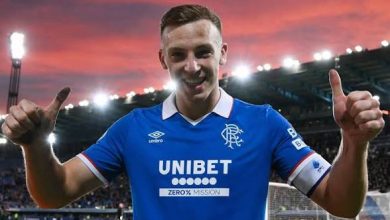
Found it. This is about Dujon Sterling, not Shankland.This aggregator only gives a summary line, with the full piece on “Ibrox News.” Let me find that original article.Derek Ferguson, the former Rangers midfielder turned pundit, has called Dujon Sterling’s comeback from his Achilles injury “incredible,” with the right-back now thriving under Derek McInnes after a long run of fitness setbacks. That is the substance of the story behind this headline, and it centres on Sterling rather than Lawrence Shankland, whom I wrote about earlier in this conversation. The available reporting comes from a brief roundup rather than a full feature, so this piece builds out the background as fully as the sources allow, while being clear about what is confirmed and what isn’t.
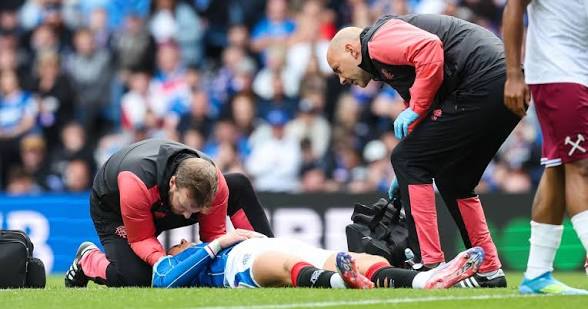
The injury itself was serious and came at a painful moment for Rangers. Sterling suffered a serious-looking injury during a Europa League quarter-final first leg against Athletic Bilbao at Ibrox, which finished 0-0, and he had to be stretchered off, raising concerns about how long he would be out. The club confirmed it was a long-term Achilles injury, and Barry Ferguson, then in interim charge of the team, said after the game that Sterling would be a long-term absentee. Barry Ferguson later revealed to Sky Sports that Sterling would need surgery on the injury on the Monday following the match. Sterling did go on to have the surgery, and at the time it remained unclear when he would be available for action again.
What makes the injury notable, beyond its timing in a European quarter-final, is what it interrupted. Barry Ferguson had been full of praise for Sterling only days earlier, saying that in the two performances since he had come back into the team, he had been nothing short of incredible, and joking that people were asking where he had been all season. In other words, Sterling was in the best form of his campaign at the exact moment his body gave out. That kind of timing is part of why Achilles ruptures carry such weight in football reporting. They are one of the injuries most associated with derailing a career outright, not just costing a player months. The tendon takes many months to heal, players often need a full pre-season to rebuild explosive power, and some full-backs and wingers never fully regain their previous pace. I haven’t found a direct quote from Ferguson or anyone else describing Sterling’s injury as “possible career-ending,” so that phrase in the headline looks like an editorial gloss rather than something said on the record. But it’s an understandable one, given how often Achilles injuries are treated that way in football media, and given Sterling’s own injury history, which made this setback feel less like bad luck and more like a pattern.
That history is worth setting out, because it’s central to why his return now reads as such a significant story. Even before the Achilles injury, Sterling had been described as a frustrating figure because of his fitness issues, with one pundit saying in January 2025 that he could never point to a run of games from Sterling that would suggest he was a long-term successor to James Tavernier at right-back. At that point Sterling had appeared to be cementing a place in the side because of a defensive injury crisis, only to be sidelined himself and join the treatment room alongside other players. Even a year later, in the spring of 2026, one assessment of the Rangers squad still described his persistent fitness issues as a genuine problem for the club, even while acknowledging he had done well whenever he had actually played. That is the backdrop against which “incredible” comeback has to be read. This isn’t simply a player recovering from one bad injury. It’s a player recovering from an Achilles rupture on top of a career that had already been repeatedly interrupted by fitness problems, to the point where pundits had started to doubt whether he would ever get a sustained run in the team.
The context around the club at the time of the original injury adds to the picture. Rangers, under Barry Ferguson, were battling through the Europa League tie with ten men for most of the game after Robin Propper was sent off with only thirteen minutes played, and they still had a huge amount of work to do to reach the semi-finals ahead of a daunting away leg in Bilbao. Losing Sterling to a long-term injury in the middle of that context meant the club had to manage a European campaign and a squad crisis at the same time, and it fed into a broader sense that things were unravelling that season. Around the same time, Sterling was even reported to be one of several players who might leave Ibrox altogether given the uncertainty hanging over the club during a period of takeover speculation and managerial change, with him, Leon Balogun, Ridvan Yilmaz and Tom Lawrence all unavailable through injury for a game against St Mirren that April. None of that departure talk came to anything, but it shows how precarious his position at the club looked at the low point.
There is also a slightly ironic layer to the story, because the man delivering this verdict, Derek Ferguson, has a long paper trail of comments about Sterling, and they haven’t always been about fitness. Back in the summer of 2024, before any of this happened, Derek Ferguson had already backed Sterling as the ideal long-term replacement for James Tavernier at right-back, telling Ibrox News directly that Rangers had a ready-made replacement in Sterling and that supporters kept telling him Sterling’s best position was in central midfield. He made that case at a time when Tavernier was being linked with a move away and Ferguson felt it was the perfect time for the long-serving captain to leave and hand the position to Sterling. That earlier confidence is worth remembering now, because it shows Ferguson has rated Sterling’s ability for some time. His problem, and the club’s problem, was never really about what Sterling could do on the pitch. It was about whether his body would let him do it consistently. That is exactly why an “incredible” comeback carries real weight from someone who has watched this particular saga for years, rather than simply meeting Sterling for the first time this season.
As for what the comeback actually looks like in numbers, the picture is a modest one so far, which fits with a player still building match sharpness after major surgery. In the 2025-26 Scottish Premiership season, Sterling has made six starts and two substitute appearances, without scoring a goal, though he has provided one assist. Those aren’t spectacular figures, but they’re not meant to be read that way. For a player who ruptured his Achilles the previous spring, simply being fit enough to feature regularly again, in a division as physically demanding as Scotland’s, is itself the achievement Ferguson seems to be highlighting. Football recovery from that injury is measured first in appearances, not output. The assist suggests he’s already contributing at the attacking end from full-back, which for a modern wide defender is an encouraging early sign.
The manager under whom this recovery is happening also matters to the story. Derek McInnes, who has taken charge at Ibrox since the period covered by the Bilbao tie and the earlier Barry Ferguson interim spell, inherited a squad that had finished third the previous season and needed a significant rebuild. A fit, effective Sterling is exactly the kind of asset that helps in a rebuild without costing a transfer fee, since he’s already at the club and simply needs to stay fit and play well. If Ferguson’s assessment holds up, Rangers effectively get a boost to their right-back options at no cost, at a time when the squad has already been stretched by long-term injuries elsewhere, including the striking department covered by the Shankland story earlier in this conversation. It also gives McInnes a defender who Ferguson has previously argued is versatile enough to play in the middle of the park if needed, which adds tactical flexibility beyond the right-back slot.
It’s worth being honest about the limits of what’s confirmed here, given how thin the original source is. The only piece of reporting I could find for the “incredible” comment is a single sentence inside a daily roundup published on 25 September 2026, which credits the fuller quote to an original piece on Ibrox News that I wasn’t able to load directly. That means I don’t have Ferguson’s exact words beyond the paraphrase, I don’t have any surrounding quotes about how Sterling has looked in specific matches, and I don’t have a direct comment from Sterling himself about the recovery. Everything about the original Bilbao injury, the surgery, and the earlier fitness struggles comes from separate, older reporting that provides solid background but wasn’t written about this particular comeback story. If you can find or paste the original Ibrox News piece, I can rewrite this with the actual quotes rather than relying on the roundup’s summary and the surrounding context I’ve gathered.
What can be said with confidence is the shape of the story: a player who suffered a serious, surgery-requiring Achilles injury during a big European night, on the back of a career already marked by recurring fitness problems, has returned to regular action for Rangers and is now being singled out by a Rangers legend and long-time analyst of the club as an example of an impressive recovery. The word “career-ending” doesn’t appear to be Ferguson’s own description, but it reflects a reasonable characterisation of how seriously that type of injury is generally regarded in football, and of how precarious Sterling’s Ibrox future looked when he was being linked with an exit during his lowest point. Whether he goes on to nail down the right-back shirt long-term, as Ferguson once predicted he would even before any of this happened, is still an open question that only a longer run of fit, consistent performances can answer. For now, simply being back and playing regularly appears to be the story worth telling.