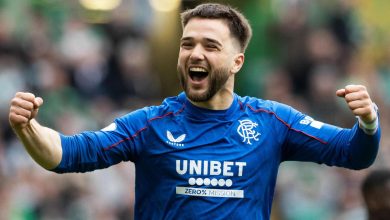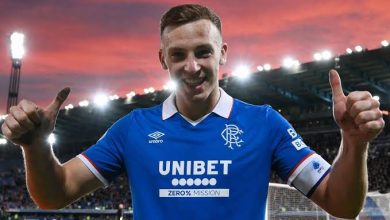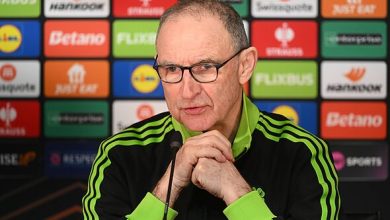
There’s a version of this story where Lawrence Shankland never wears a Rangers shirt, where a coaching staff decades ago sees a raw, undersized kid on trial, shrugs, and sends him home, and that rejection becomes just another forgotten footnote in the graveyard of released academy players Scottish football chews up every single year. That almost happened. Instead, on June 15, 2026, the day the transfer window creaked open, Shankland walked into Ibrox not as a hopeful trialist chasing a dream but as Scotland’s captain-in-waiting, a proven Scottish Premiership goal machine, and the man who had just scored the goal that ended a 28-year national nightmare. Rangers didn’t pay a penny in transfer fee, and somehow everyone involved still calls it a good deal. This is the story of how that happened — and why it’s so much messier, and so much more interesting, than the headline
Every great comeback story needs a fall first, and Shankland’s came early. As a boy, he supported Rangers — not casually, the way kids in Glasgow either bleed blue or green, no in-between — so when he got his shot on trial at Ibrox, it wasn’t just an audition, it was the dream. Then it ended. Rangers let him go. For most kids, that’s the story’s final chapter: the trial that didn’t work out, the club that moved on, the dream quietly buried under years of “what if.” Shankland has talked since about what that rejection did to him — not destroying him, but hardening something, building the kind of resilience that doesn’t come from being told you’re good enough. It comes from being told you’re not, and deciding to prove it wrong anyway. He didn’t prove it wrong quickly. He proved it wrong the hard way, over more than a decade, through club after club, level after level, in a grind so unglamorous it barely reads like the beginning of a fairytale
Aberdeen took a chance on the teenage Shankland in 2013, and it didn’t work out cleanly there either — he spent years being farmed out on loan, first to Dunfermline Athletic, then St Mirren, then Greenock Morton, three different dressing rooms, three different attempts to find a level where his game clicked, before Aberdeen decided he wasn’t part of their plans and let him leave too. Two clubs, two rejections, a player most fans outside the lower reaches of Scottish football had never heard of. Ayr United gave him a home in 2017, and something changed — the goals started coming consistently, and by 2019 he’d earned a move to Dundee United, a proper step up to a club with real ambition. It was at Tannadice that Shankland finally announced himself: top scorer as United stormed back into the Premiership in 2020, 40 goals in 78 appearances, the kind of numbers that get you noticed by clubs with much bigger ambitions than Dundee United. Belgium came calling in 2021, with Beerschot offering a fresh continent and a fresh test, but it lasted only one season, and by 2022 Shankland was back in Scotland — this time with Hearts waiting for
Nobody at Tynecastle could have predicted what came next. In his very first season back, Shankland became the first Hearts player in over three decades — since 1992 — to score 20 goals in a single campaign, not a fluke or a purple patch but a pattern, and by February 2024 he’d crossed 50 goals for the club, only the second Hearts player in the entire 21st century to reach that number. He wore the captain’s armband and became the face of the club; Hearts fans stopped seeing him as a squad player who might move on and started seeing him as the guy the team, the identity, and increasingly the hope, were built around. Then came the season that changed everything: 20 goals, four assists, and Hearts — Hearts, a club that hadn’t seriously threatened a title in a generation — taking the race to Celtic all the way to the final day before finally, agonisingly, falling short. By the time that campaign ended, Shankland wasn’t just a good Scottish striker anymore. He was a phenomenon, and phenomenons don’t stay hidden in Gorgie for
Here’s the moment that turned “very good domestic striker” into “national institution.” Scotland hadn’t been to a World Cup since 1998 — twenty-eight years of near-misses, playoff heartbreak, and the low-grade national despair that comes from watching smaller countries dance on the biggest stage while your own team watches at home, an entire generation of Scottish football fans grown up never once seeing their country at a World Cup. In the final qualifier against Denmark, with everything on the line, it was Lawrence Shankland who scored the goal — not a footnote, not a consolation, but the goal that ended the wait and sent Scotland to the 2026 World Cup in North America, into a group with Brazil, Morocco and Haiti, and turned Shankland from a well-regarded club captain into a man whose name will be attached to one of the defining moments in modern Scottish football history, regardless of what happens next in his career. Add to that his penalty record — 36 scored, only 8 missed across his career, the best conversion rate in Steve Clarke’s entire World Cup squad — and you have a player who by mid-2026 looked less like a transfer target and more like a national treasure that Hearts were somehow still, improbably, holding onto. That couldn’t
Here’s where the story stops being a fairytale and starts being a football business deal, because underneath the emotion there was a contract, and inside that contract was a landmine. A year before the Rangers move, Hearts had handed Shankland a new three-year deal, and buried in it was a release clause — a mechanism that would let him walk for free after just one more season, once triggered. At the time it barely made headlines, just another contract renewal, standard stuff. It wasn’t standard. It was a ticking clock, and Hearts had set it themselves. Sporting director Graeme Jones later explained the thinking: keeping Shankland at all required accepting terms that gave him an exit route, because the alternative was losing him sooner, for even less. It wasn’t recklessness; it was damage control dressed up as a renewal. Twelve months later, the clause detonated, and there was nothing Hearts could do to stop Shankland walking straight to their bigges
Here’s the twist that makes Ryan Flynn’s “win-win” verdict so loaded: Rangers could have had Shankland a full year earlier, for a fraction of the eventual cost. Back in 2023, with Ibrox dealing with an injury crisis up front and a summer recruitment drive that hadn’t convinced anyone, Shankland’s name had already been floated as a solution — eagle-eyed fans even spotted him liking a social media post of Rangers celebrating a domestic cup win, a tiny gesture that sent transfer speculation into overdrive at the time. Rangers didn’t move. They watched instead as Shankland kept scoring, kept captaining Hearts to a title race, kept building his reputation, kept climbing toward that qualifier against Denmark and the goal that would turn him into a household name in a way no Scottish Premiership statline ever could. By the time Rangers finally did come calling in 2026, they weren’t signing the same player they’d passed on three years earlier — they were signing someone with a nation’s gratitude attached to his name, someone who could command far bigger wages and a far bigger signing package, someone who cost them dearly in every currency except the one line on a transfer certificate that says “fee.” They got their man. But they paid the price of their own hesitation to ge
Let’s be precise about what actually happened financially, because “free transfer” is doing a lot of heavy lifting in the coverage of this deal. Rangers paid Hearts nothing — that much is true, the release clause did its job, no negotiation, no fee, no protracted summer saga over valuation. But a free transfer for a proven international captain doesn’t mean a cheap transfer. Financial analysts, including former Manchester City adviser Stefan Borson, have pointed out publicly that deals structured this way often carry hidden costs elsewhere — signing bonuses, elevated wages, structures that shift the cost from “fee” to “salary” without actually shrinking the total bill — though neither club has confirmed the full financial terms. What’s certain is that Bojan Miovski, who’d arrived at Ibrox only a year earlier expecting to lead the line, was reportedly furious enough about Shankland’s arrival to start eyeing the exit almost immediately, while Youssef Chermiti and Ryan Don Naderi, Rangers’ other forward options, suddenly found themselves fighting for scraps of playing time behind a captain who’d just helped send his country to the World Cup. That’s not the behaviour of a squad that thinks it just got a bargain-bin signing. That’s a dressing room that knows exactly how much this move actually cost them, in status, in hierarchy, in every currency except the transfer fee
Spare a thought for Hearts, because their side of this story is the one that gets lost in the romance of Shankland’s homecoming. Supporters watched their captain — a man who’d scored 88 goals in 171 appearances, the club’s most prolific forward since the legendary John Robertson — leave for a bitter rival without a fee, not a controversial low-ball offer or a drawn-out saga, just gone, on a free, because of a clause the club itself had signed off on a year earlier. The anger was real and understandable: this wasn’t some fringe player cashing in a release clause on his way out the door, this was the captain, the talisman, the player Hearts fans had built their title hopes around only months earlier. Jones’s explanation — that the alternative was losing Shankland even sooner, for even less — is the kind of argument that makes perfect sense in a boardroom and precisely no sense to a fan standing on the Gorgie Road end who just watched their hero walk into the away end at Ibrox. Hearts didn’t sit still: Josh McPake and MJ Kamson-Kamara arrived, while Amadou Ba-Sy, Calvin Miller and Tom Renaud were reported closing in on moves, as the club scrambled to rebuild an attack that had, for two years, essentially been Lawrence Shankland and whoever happened to be playing alongside him. Rebuilding a goalscoring identity around a group of new faces is a much harder, much slower job than replacing one departing striker with another, and Hearts are still working through exactly what that looks like.
Strip away the sentiment, and what Rangers signed is a 30-year-old striker entering his physical prime as a finisher, with the best penalty conversion record of any player in Scotland’s World Cup squad, a proven ability to carry a title challenge almost single-handedly, and — crucially — a point to prove to the club that once decided he wasn’t good enough. Under new manager Derek McInnes, Shankland became the very first signing of a summer defined by a push toward “ready-made,” domestic-quality reinforcements rather than gambles on unproven imports, and there is no bigger statement of that philosophy than landing a Scotland international captain who scored the World Cup qualifying goal of a generation. Shankland himself has made clear he’s not treating this as a lap of honour — he’s spoken about wanting to build a legacy at Ibrox, about knowing full well that reputation buys you nothing there if the trophies don’t follow, and that Rangers players who don’t deliver get forgotten fast, no matter who they are. That’s not the mentality of a player cashing in on a free transfer for one last big payday. That’s the mentality of a man who was told once, as a boy, that he wasn’t good enough for this club — and has spent every year since making sure nobody gets to say that twice
Ryan Flynn’s verdict holds up better for some parties than others. For Shankland, it’s an unambiguous win: the boyhood dream, achieved on his own terms, as a proven international captain rather than a hopeful trialist — there is no version of this story where he doesn’t come out ahead. For Rangers, it’s a win, but a costlier one than it needed to be; they had the chance to sign this exact player, at a fraction of the eventual cost, three years earlier, and hesitated, so what arrived instead was still a coup, but a coup they paid a premium for in wages and unrest inside their own forward line. For Hearts, it’s the murkiest “win” of the three: they kept their captain for one more spectacular, title-chasing season, genuinely valuable, but lost him for nothing to a direct rival, leaving supporters to reconcile the sporting director’s contractual logic with the simple, painful fact of watching their hero walk out the door for free. Three very different outcomes, dressed up in one tidy phrase
There’s a particular kind of football story that only makes sense in hindsight, the kind where every rejection, every loan spell, every unglamorous season at a club nobody’s paying attention to turns out to be a necessary chapter rather than a wrong turn. Shankland’s story is that kind of story. The boy Rangers released is now the man Rangers paid a premium to sign; the player nobody wanted at 16 is the captain everybody wants at 30. The rejection that could have ended everything instead built the resilience that carried him through Dunfermline, St Mirren, Greenock Morton, Ayr, Dundee United, Beerschot, and finally Hearts, all the way to a World Cup qualifying goal that will be replayed in Scotland for as long as people talk about football. And now, finally, back through the front door at Ibrox — not as a hopeful kid chasing a dream this time, but as the man who made Rangers wait for him, and made them pay for the privilege of finally getting him right.