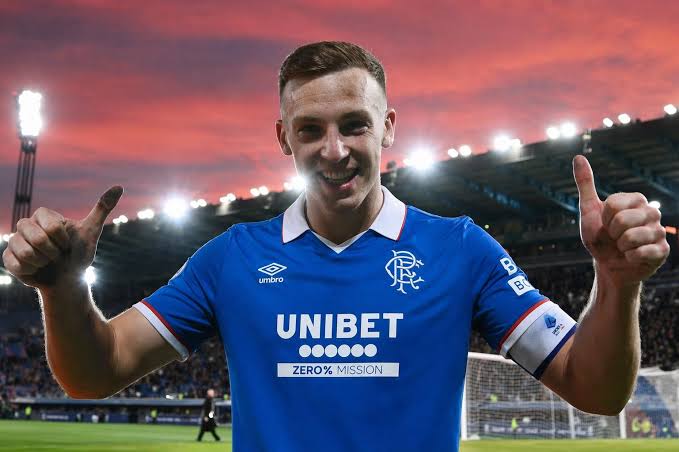
Few transfer stories spread as quickly as a returning-hero one. Rangers supporters have a natural appetite for the idea of Lewis Ferguson pulling on the royal blue, so it’s no surprise that headlines announcing his arrival keep appearing. The latest, a “stunning deal” that supposedly takes him from Bologna to Ibrox, sums up the problem with transfer coverage. It reads like news, but it isn’t.
As things stand, Ferguson is a Bologna player, and the story of his possible move to Rangers is one of interest, ambition and a large gap between valuation and budget. This article sets out what is actually known, why the idea appeals to so many people, and why it may or may not happen.
The most useful place to begin is the player’s own position. Ferguson has spoken openly this summer about rumours linking him with a move away from Bologna, and Rangers were reported to have shown an interest, with Juventus also linked in the past. He hasn’t dodged the subject, and he hasn’t declared his departure either.
His comments on his contract are the clearest signal of where he stands. He pointed out that he has two years left on his deal plus an option for a third, so there is still time on his contract, and that he is happy at Bologna and feels at home there, while remaining open to other opportunities. That is the language of a player who is settled but not closed to a move. It isn’t the language of someone whose bags are packed.
The contract situation is also confirmed elsewhere. He remains under contract with Bologna until 2028, and the Serie A club reportedly values him at up to £17 million. Any Rangers move would have to clear that hurdle, and the rest of this piece keeps returning to it.
So the honest summary is this. Rangers enquired, Ferguson has said he wants to play for the club one day, and Bologna hold a contract and a price. No deal has been reported as agreed, announced or completed. Anyone presenting it otherwise is ahead of the facts.
To understand why this story has such pull, you have to understand Ferguson’s connection to Rangers, which is far deeper than a normal transfer link.
His father is Derek Ferguson, a former Rangers midfielder. His uncle is Barry Ferguson, a name that needs little introduction to anyone who followed Scottish football in the 2000s. Both Derek and Barry lifted major silverware with Rangers, and Lewis has spoken about his dream of following them at Ibrox. Few players get to say their family helped write part of a club’s modern history, and Ferguson can.
His own connection began in the youth system. He played youth football for Rangers and for Hamilton Academical before making his senior debut for Hamilton in the 2017-18 season. He was at Rangers as a young player, then left, and the club has never quite been out of his story since. He spent time in the youth ranks at Ibrox before being released.
That detail matters. The sense of unfinished business, a boy who came through the academy, was let go and then built a career elsewhere, gives the link its emotional weight. The narrative writes itself, and fans and media alike have been drawn to it.
Ferguson hasn’t been shy about the feeling. Asked by Italian outlet Corriere dello Sport whether he could see himself playing for Rangers in the future, he called it his favourite team and said he has always wanted to play for them. The same report described him as confident he will play for Rangers at some stage in his career. Notice the wording, though: “at some stage,” “one day.” That is a statement of long-term ambition, not a confirmation that the move is happening now
Ferguson’s route to the top of Italian football is an unusual one, and it shapes what a club would be buying.
Hamilton Academical gave him his senior debut, and Hamilton has a long record of developing young talent in difficult conditions. The step up from academy football to first-team football at that level teaches a young player about physicality, decision-making under pressure and resilience. Those qualities have stayed with him.
Aberdeen was the next chapter and the one that made his name. After four seasons with Aberdeen he moved to Italian club Bologna in 2022. At Pittodrie he grew from a promising young midfielder into a player with real presence. He was a central figure in the middle of the park, contributing goals, energy and leadership beyond his years. He also worked under Derek McInnes there, a point that has come up again in the current coverage. He previously worked under McInnes at Aberdeen.
Bologna was a leap. Moving from the Scottish Premiership to Serie A is a big test for any midfielder, given the tactical sophistication and the emphasis on positional discipline. Ferguson didn’t just adapt, he became a fixture. He now plays as an attacking midfielder for Bologna, whom he captains, and for the Scotland national team. Note the wording of that source: it reflects his standing at the club, though as we’ll see, the captaincy has since changed.
At international level, he is a Scotland youth international who made his senior debut in 2021. He has since become a regular in the national setup, which adds another dimension to any transfer. A player performing weekly in Serie A is a valuable asset for his country too.
If there is one moment that defines Ferguson’s Bologna career, it is the Coppa Italia final of May 2025.
He was named Bologna skipper three years ago, and he led the side to a 1-0 victory over AC Milan in the Coppa Italia final in May 2025, securing the club’s first major trophy in 51 years. Fifty-one years is a long time for a club and a city to wait. To lead the team out and lift the trophy is the kind of achievement that lingers, and it explains why Ferguson is held in such regard in Emilia-Romagna.
It also changes how the transfer question should be viewed. A player who has captained a club to its first trophy in over half a century isn’t simply a squad member who can be pried away. He is a symbol of the club’s recent resurgence. That raises Bologna’s asking price, but it also raises the emotional cost of any departure, on both sides.
For Rangers, it raises the stakes in a different way. A trophy-winning captain from a leading Italian league is not a project signing. He is a proven performer, and that is a big part of why the interest is taken seriously and why the price is what it is.
Just as the transfer talk warmed up, something changed at Bologna that has fuelled the speculation further.
In his first match under new head coach Domenico Tedesco, a 1-0 home defeat by Lazio in the Serie A opener, Ferguson did not wear the armband, with Riccardo Orsolini leading the team out instead. For a player who had held the role for three years, it was a noticeable moment.
Tedesco had confirmed to Italian media before that match that a new leadership structure was in place, with veteran defender Lorenzo De Silvestri as first-choice captain, Orsolini as his deputy and Ferguson third in line. It was a structural decision as much as a personal one, and De Silvestri simply didn’t start that night, which is why Orsolini took charge ahead of Ferguson.
Some coverage framed it as a demotion. His family offered a different reading. Derek Ferguson said his son hadn’t been stripped of the captaincy. He explained that Orsolini has been at the club for seven or eight years and has just signed a six-year contract, that De Silvestri is the club captain who looks after off-pitch matters, and that Lewis, captain for two or three years, had been approached by the club about the change. In other words, the change was discussed with him rather than imposed.
There is also a nuance. Ferguson was back in his familiar role as captain on the Monday night after agreeing to relinquish the armband, though it had appeared his time as designated team leader was over. The picture is a little untidy, and it shows why single headlines about the armband can mislead. Was it a slight, a sensible reorganisation, or a bit of both? The reporting supports the family’s view that it was agreed, but it is understandable that observers link it to the transfer chatter.
The fair conclusion is that the captaincy change is a data point, not a smoking gun. New coaches restructure leadership all the time. It doesn’t prove Ferguson wants out, and it doesn’t prove Bologna want him gone.
The valuation reported is up to £17 million. His father’s own comments are more striking. Speaking on the Open Goal podcast, Derek Ferguson questioned whether Rangers’ enquiry was a waste of time, saying the club must have known the price was between €15 million and €20 million and that Rangers can’t go that far for a player. His frustration was blunt, and it came from someone who knows both the player and the club well.
That view deserves attention. It suggests that even people close to Ferguson don’t consider a straightforward move to Rangers realistic at the current valuation. Rangers, like most Scottish clubs, operate with a very different financial profile from a Serie A side that has just won a major trophy. A fee in that range would be an extraordinary outlay by the club’s usual standards.
There are ways such a gap can theoretically narrow. Contract length works against Rangers here, because with time remaining on the deal Bologna have no need to sell cheaply. As the contract runs down, that leverage shifts. A player with only a year or so left is worth less to his club, and a bidder can wait. Ferguson’s deal runs to 2028, so that moment is not close.
Wages are the other half of the equation. Serie A salaries for a captain-level midfielder are substantial, and a move to Scotland would likely involve some financial sacrifice from the player. Ferguson’s stated passion for the club suggests he might accept that, but it is speculation, and no reporting says so.
The takeaway is that the obstacle isn’t desire on either side. It is arithmetic.
Set the finances aside for a moment and ask a simpler question: what would Ferguson do for Rangers if the move happened?
The sources describe him in slightly different ways. One profile lists him as an attacking midfielder, while another data provider classes him as a defensive midfielder. That difference is telling. It shows a versatile player who can operate in several central roles depending on the system, which is exactly the type of midfielder modern managers prize.
His strengths, as they were visible at Aberdeen and in Italy, are energy, competitiveness and an ability to arrive late in the box. He is a player who contributes in both directions, which suits a team that wants to press and control the middle. Experience in Serie A also brings tactical maturity that is hard to develop in a league with fewer top-level tests.
It’s worth being careful with his recent numbers, though. In the 2025/26 Serie A season, one data provider shows him with one goal, no assists and four yellow cards, at an average rating of 6.55. That isn’t a sensational return, and it shows why a purchase at a high price would be a considered gamble rather than a no-brainer. Form in a single season doesn’t define a player, and midfielders’ influence is not fully captured by goals and assists, but any buyer would weigh it.
For Rangers, the appeal goes beyond output. A homegrown-in-spirit, Scotland-capped, trophy-winning captain would give supporters a figure to rally around, and on the pitch a leader for a dressing room. Those things are hard to price, which is partly why the interest persists even when the numbers look difficult.
With the facts on the table, the realistic outcomes look like this.Scenario one: he stays at Bologna.This is the most likely short-term outcome. He has a contract, he says he is happy, he is a valued player, and his club has set a price Rangers can’t easily meet. He continues in Serie A, perhaps in a revised leadership role under Tedesco, and the Rangers conversation is postponed rather than ended.
Scenario two: he moves elsewhere. Rangers aren’t the only club mentioned. Juventus have been linked in the past, and a player of his profile will always attract attention from bigger leagues and budgets. If a wealthier club moves, the boyhood dream would be deferred again.
Scenario three: he joins Rangers. This can happen, but it would likely need something to change: a lower valuation, a restructured payment plan, a creative deal, or a shift in Ferguson’s own priorities. His comments about wanting to play for the club show the willingness is there. Bologna’s willingness to sell at a workable figure is the missing piece.
Ferguson’s own words, that it will definitely happen, point to a longer horizon. He’s 26, and a career has many years left. The most natural reading of his statements is that he sees a Rangers chapter as something that could come later, not necessarily this window or the
It’s worth ending on the media side of things, because the “stunning deal” headline is a symptom of how transfer stories work.
Fan-run channels and aggregator sites compete for attention, and “player signs for club” performs far better than “player linked with club, price too high.” A headline that skips the uncertainty gets more clicks, and a viewer scrolling past may never open the video to find that no signing was announced. The result is a version of reality where speculation hardens into apparent fact.
Reading transfer news well means asking a few simple questions. Who is the source? Is there an official club announcement? Are there direct quotes from the player, his agent or the clubs? In this case, the direct quotes we have from Ferguson and his father point to interest and ambition, not completion. The sources in this article come from established Scottish outlets reporting on his comments, and none of them describes a finished deal.
Lewis Ferguson has not signed for Rangers. He is a Bologna player, under contract until 2028, valued at a figure that looks beyond Rangers’ usual reach, and by his own account happy in Italy while remaining open to the right opportunity. His love for Rangers is unquestionable, given his family’s history and his open statements, and the interest from the club appears genuine. The captaincy change under Tedesco adds intrigue without providing proof of an imminent exit.
What we have is a story about timing. A player with a deep connection to a club, a club with a long memory of his family name, and a price tag that keeps them apart for now. It may end at Ibrox one day, but that day hasn’t arrived, and any headline claiming otherwise is running ahead of the facts.