Transfer windows usually end with a press release or a shrug. For Nicolas Raskin, this one ended with a bus journey, a match and a lot of unanswered questions.

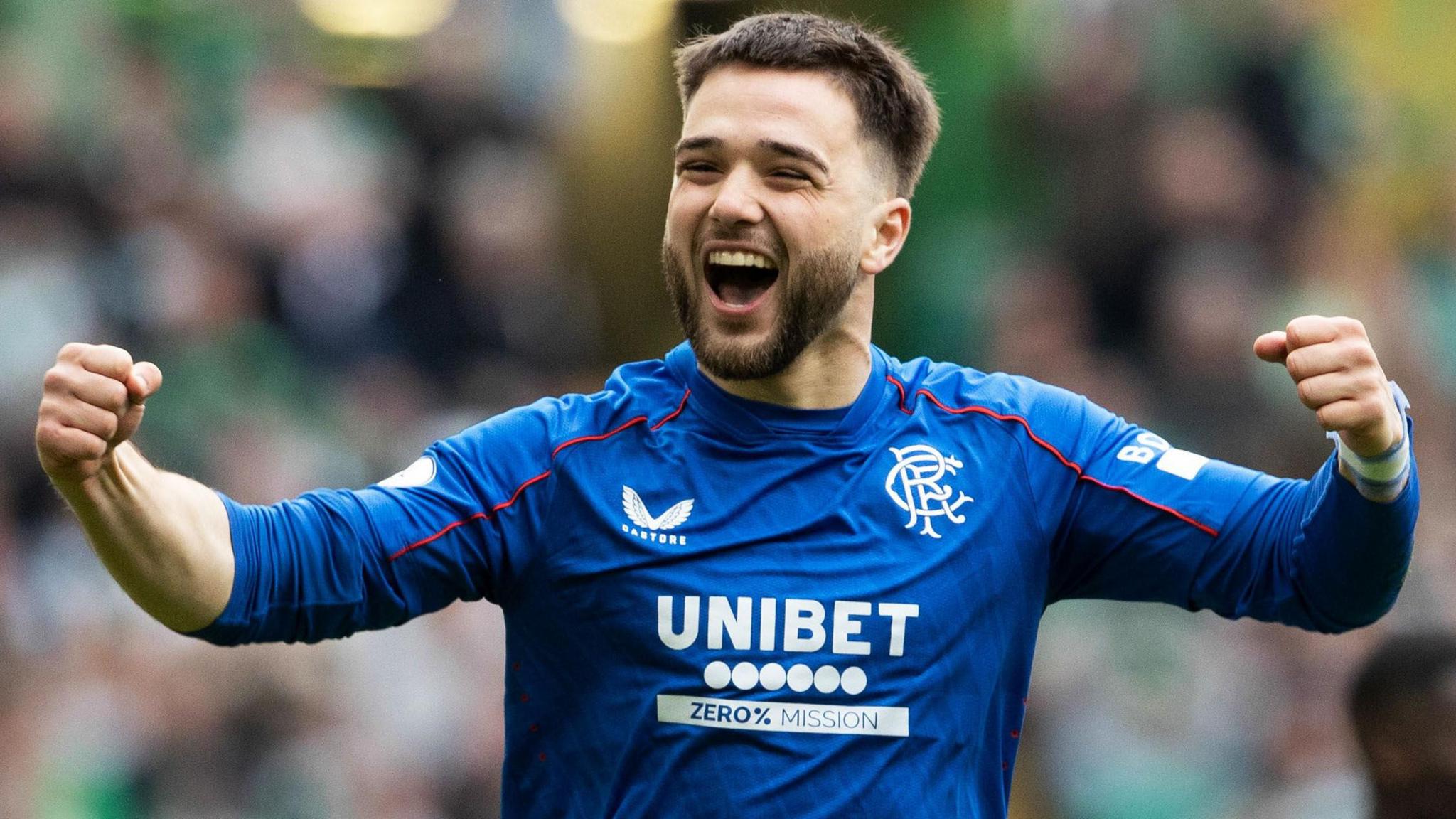
The Belgian midfielder has now spoken about a summer in which he was widely expected to leave Rangers and didn’t. He says he was “mentally ready to leave” until the final hours of the window, but insists the outcome was beyond his control and beyond that of the club. What follows is a look at what he said, why his situation was so unusual, and what it means for a Rangers side trying to rebuild under Derek McInnes.
To understand the disappointment, you have to understand the expectation. Raskin, 25, was widely expected to be sold after impressing at the World Cup with Belgium. A player who does well on the biggest stage draws attention, and the assumption around Ibrox was that a buyer would come forward and a fee would be agreed.
The summer then took an awkward turn. He was left out of McInnes’ squad on more than one occasion during August while speculation about his future swirled. Any club that omits a player during a transfer saga sends a message, whether intended or not. Supporters read it as a sign that a deal was close, and the player is left in limbo, unsure whether he is a first-team regular, a departing asset or something in between.
That is a difficult position for any professional. You are training, staying sharp and trying to keep your standards up, while everyone around you assumes you’re about to be somewhere else.
There was interest, but it came late. Besiktas showed interest close to the deadline, but Raskin remained at Ibrox. The Turkish club is the one named in the reporting, though the source describes it as believed rather than confirmed.
Raskin’s own account of the final day is the most vivid part of the story. On the morning of 2 September, he was told there was an offer, believed to be from Besiktas, and that an agreement was almost in place. That is about as close as a player can come to a done deal without it being one.
But football doesn’t pause for transfers. He had a match that evening, and on the bus to the stadium he still didn’t know whether he would be staying at Rangers. Rangers were preparing to face Falkirk, and an hour later he was on the pitch, with little time to think.
It’s hard to overstate how strange that situation is. Most people can picture a career-defining phone call arriving at an awkward moment. Few have to then go and perform in front of a crowd while the answer is still unresolved. Raskin has described having to cope with
He spoke to Belgian journalists while on international duty, and he was candid about how draining the period was. He described a transfer window like that as hard for everyone involved, not just the players but their families too, with a great deal of uncertainty and a constant wait for the phone to ring.
That point about families is easy to overlook. When fans debate transfers, they tend to talk about fees, positions and tactical fit. Behind each move is a household that may have to relocate, change schools, or simply live for weeks not knowing where they’ll be. Raskin’s remark is a reminder that the human cost of a window doesn’t show up in the headlines.
He also framed the summer as complicated, which is a diplomatic word for a period that clearly took some navigating.
What stands out is the tone. Raskin isn’t complaining. He admitted it is a bit of a disappointment because he was mentally ready to leave, but said that this is football and it isn’t a big deal.
He offered an explanation that is more grown-up than most transfer-window commentary. There are many parameters and off-field matters that have to be taken into account during a transfer. In other words, a deal involves two clubs, a player, agents, finances and timing, and any one of them can stall the whole thing.
He was also clear that he isn’t in a desperate position. He said he is not somewhere he necessarily has to leave, that Rangers is a good club, that he is playing his matches, and that the squad is a great one doing good things this year.
That balance is worth noting. He wasn’t pretending he hadn’t wanted to go, and he wasn’t pretending Rangers is a place he’s stuck. He wants to progress, but he can see the positives of where he is. Asked whether he wanted to take a step forward and keep moving up, he said yes.
One of the most interesting details is what Raskin doesn’t know. He is unsure why he wasn’t able to get the move he was anticipating.
That uncertainty fits with his earlier statement that the outcome was beyond his control and the club’s. Neither Raskin nor Rangers is casting blame in the reporting. The impression is of a deal that reached a late stage and then didn’t cross the line for reasons that were not fully clear to the player himself.
Late-window transfers are notoriously fragile. Paperwork, registration deadlines, medical timing and agreed terms all have to line up in the final hours, and a deal can collapse at any point. Without a fuller account from the clubs, it would be speculation to say which factor applied here, so it’s best to take Raskin at his word that even he can’t say for sure.
The upside for Rangers is that he stayed and has performed. Raskin has been a key player in the team’s upturn in form in recent weeks.
That matters a great deal. Rangers are trying to recover from a poor campaign. New manager Derek McInnes inherited a squad that finished a dismal third last season and needs a major overhaul. Losing a player of Raskin’s quality at the last moment, with no time to replace him, could have been damaging. Keeping him, and getting him focused, has effectively been a signing by default.
His attitude after the window supports that. He said that from now on his focus is on himself and on performing as well as he can, so that the next transfer window goes better. He added that he isn’t someone who gives up easily, that life goes on, and that there are worse things.
The remark about the next window is the one supporters will note. It suggests Raskin still sees his future as potentially elsewhere. That isn’t unusual, and it isn’t disloyal. Players who perform at a high level often keep one eye on the next step, and honest talk about it is arguably healthier than pretending otherwise. The practical point for Rangers is that his form is now both a benefit to the team and his own shop window.
For readers who need the background: Raskin joined Rangers from Standard Liège. He arrived in January 2023 as a 22-year-old and spent his early months adapting to breaking down defensive opponents in the Scottish league. He is a Belgian international, and the reporting notes his World Cup performances, which is part of what made him so attractive to other clubs.
In the years since, he has become a regular fixture in the Rangers midfield. Coverage of his early days described a player learning that the standards at Rangers must be high every day in training, which is the kind of habit that tends to carry over into consistency.
Raskin’s story sits inside a busy summer for the club. It isn’t the only departure that made the news in the same coverage. Clinton Nsiala has completed a permanent transfer to UAE Pro League side Sharjah FC. The contrast is clear: one player got his move, and another, who had prepared for one, did not.
For McInnes, this is part of a broader challenge. He is trying to shape a squad after a difficult season, with limited money and a fan base that expects results. Some players will leave, some will stay reluctantly, and some will arrive. The trick is to keep the dressing room focused when a player’s head might be elsewhere.
Raskin’s public comments help here. By saying he is happy to keep performing and to keep the door open for the future, he has defused what could have been a distraction. A player who publicly says he wanted to leave might, in some situations, cause friction. Here, the tone is professional enough that it reads as an He stays and thrives. If Raskin keeps playing well, the team benefits and his value rises. That could mean more interest next summer, and possibly a better offer than the one that fell through.
None of these is confirmed. What is known is that Raskin is at Ibrox, playing well, and speaking honestly about how close he came to a different path
There is a wider point here that fans might take from this story. Transfer sagas are usually told from the outside, through rumours, insider posts and assumptions. Raskin’s account is a rare view from the inside, and it is far messier than the tidy version.
There was no clean announcement, no farewell and no clear villain. There was a phone call, a bus ride, a match and then a window that shut. The player didn’t get to say a proper goodbye because he didn’t leave, and he didn’t get an explanation because there may not be a simple one.
It’s also a reminder to treat transfer headlines with caution. The phrase “expected to be sold” was accurate as a description of the mood around the club, but it didn’t turn out to be accurate as a prediction. Anyone who wrote him off as gone in August was working from a reasonable guess that proved wrong.
Nicolas Raskin’s summer ended in an unusual place. He prepared mentally to leave, came close to an agreement with what was reportedly Besiktas, and then found himself lining up for Rangers against Falkirk on the same night the window was closing. He doesn’t know exactly why the move fell through, but he isn’t bitter about it.
His response is the most encouraging part for Rangers. He is focused on performing, he has been a key figure in the recent improvement in form, and he has framed the setback as part of football rather than a grievance. If that attitude holds, Rangers get a motivated midfielder in good form, and Raskin gets what he says he wants: a strong platform for the next chance.
The next window is the real question. For now, the man who was mentally ready to leave is very much still a Rangers player, and by his own account he intends to make the most of it