Lewis Ferguson insists Rangers move ‘will happen’ in big transfer declaration

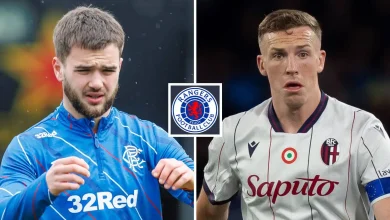
There are footballers who say the right thing when a microphone appears, and there are footballers who mean it. Lewis Ferguson has spent the past year giving the Rangers support plenty of reason to believe he belongs in the second group. The Bologna captain has once again put the prospect of an Ibrox homecoming on the record, and this time his message has been blunter than the usual shrug about “never say never”: in his view, the move will happen. When, and at what price, remain open questions.
## A familiar story with a fresh edge
The Scotland midfielder has been at the centre of Rangers speculation for months. Through the summer, his name was attached to the club more consistently than almost any other target. He is a Serie A captain, an international regular, and a player whose family history is stitched into the fabric of Rangers. Few names in the transfer pages carry as much emotional weight for the fanbase.
What has changed is the tone. Earlier in the window, Ferguson was careful, almost guarded, when asked about Ibrox. He acknowledged the link, spoke fondly of the club, and then steered back to his commitments in Italy. Now, quizzed again on the subject, he has been more direct about where he sees his career eventually leading. Headlines across the Scottish press have framed it as a declaration, and it is easy to see why. A player who says a move “will happen” is not hedging in the way players usually do.
It would be a mistake to read that as an imminent transfer. Ferguson is not announcing a January switch, and nothing he has said suggests Bologna are about to lose their captain. The message is about destination rather than timing. He wants to finish up at Rangers, and he is no longer pretending otherwise.
The story would not carry the weight it does without the history behind it. Ferguson grew up a Rangers supporter and was part of the club’s youth setup. But he was released as a youngster, an early setback that sent him down a very different path. He rebuilt his career at Hamilton Academical, where he came through the ranks, before moving to Aberdeen in 2018.
At Pittodrie he became one of the best young players in Scottish football. His performances earned him the Scottish Football Writers’ Association Young Player of the Year award and put him on the radar of clubs well beyond Scotland. When Bologna came calling, the step up to Serie A felt like a natural next chapter for a midfielder who had outgrown the domestic game.
That origin story matters because it gives Ferguson’s Rangers ambition an edge that a normal transfer link lacks. This is not a player flirting with a big club for leverage. He was once told he wasn’t wanted there, and he has spent the years since proving the decision wrong. A return would close a loop that began in his teens.
Ferguson’s surname is itself a selling point. His father, Derek Ferguson, is a former Rangers midfielder, and his uncle, Barry Ferguson, captained the club and became one of its most recognisable figures of the modern era. Growing up in that household meant growing up around Rangers.
Barry Ferguson has been among those speaking publicly about the possibility of his nephew coming to Ibrox. He has suggested Rangers would need to find somewhere in the region of €23 million (about £20 million) to get a deal done, a figure that reflects both the player’s standing and the realities of dealing with an Italian club that does not need to sell. Lewis himself has spoken about the hope that another Ferguson will one day pull on the jersey, a line that landed with supporters precisely because of how many of them remember the others who wore it.
Not every family voice has been so enthusiastic about the logistics. Derek Ferguson has questioned how Rangers handled the approach this summer, arguing that the club must have known what Bologna would demand before they ever picked up the phone. His frustration seems aimed less at the idea of Lewis playing for Rangers than at the manner of the pursuit, which he appears to regard as poorly judged.
To understand why Ferguson is being asked about all this again, you have to go back to the window itself. Rangers, under new manager Derek McInnes, were rebuilding. After a disappointing run, the club turned over a large part of the squad. Lawrence Shankland, Ross McCrorie, Ben Godfrey, Dan Neil and Ivor Pandur were among the arrivals, while goalkeeper Jack Butland left for Hull. The wholesale change signalled a manager determined to impose his own identity quickly.
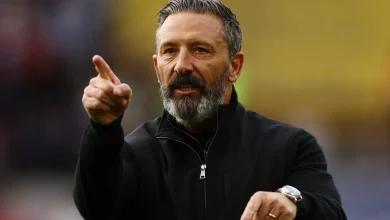
In that context, Ferguson was a logical target. McInnes knew him well, having worked with him at Aberdeen, and the midfielder offered exactly what the new manager wanted: quality on the ball, leadership, and the kind of competitive edge that comes from captaining a top-flight side in Italy. Reports at various points suggested talks were close, and the Scottish press followed every twist. Derek Ferguson has since confirmed that Rangers did make an approach to Bologna.
But nothing got done. Ferguson himself has said he was never close to leaving, which cuts against some of the more excited reporting from the summer. Bologna were never keen to lose their captain, and the valuation placed on him, with estimates around €20 million, put him at the upper limit of what Rangers could realistically manage. His own agent had been blunt about it, too. When the window shut, Ferguson was still a Bologna player.
McInnes, for his part, kept his cards close. Asked about the “obvious” link, he declined to be drawn on specifics, saying only that he was willing to be patient to get the players he wanted. In hindsight, that patience may have been as much necessity as strategy.
If there is a single figure who has done more than the player himself to keep the story alive, it is Bill McMurdo, Ferguson’s agent. A veteran of Scottish football’s business side, McMurdo has not been shy about telling anyone who will listen where he thinks this is heading.
His position has been consistent and emphatic. He has insisted that Ferguson will play for Rangers before his career is over, and when asked how certain he was, he said there was “absolutely no doubt about that.” That is an unusually firm statement from an agent, a profession that tends to prefer ambiguity. It also fits neatly with what his client is now saying publicly.
McMurdo has also been realistic about the obstacles. He has acknowledged that Ferguson could attract interest from bigger Serie A clubs or from the Premier League, and that any move would need to work for everyone involved. In other words, Rangers are not guaranteed to be first in the queue, even if they sit first in the player’s heart.
How much weight should supporters put on the latest comments? There are two honest answers.
The optimistic reading is that Ferguson has now said, more than once and in clear terms, that he wants this. He is 26 and in the prime of his career, which suggests he is not talking about a retirement-age swansong. If the player is genuinely set on Rangers and the club keeps the door open, a deal at some point looks far more likely than not.
The cautious reading is that “will happen” and “will happen soon” are very different statements. Ferguson was explicit during the autumn that he remains committed to Bologna, and he has said he gave serious thought to his future before deciding to stay. He has described the Rangers move as something that has always lingered in the back of his mind, which is the language of a long-held ambition, not an active negotiation. Reports earlier this season also suggested he could remain a central figure under Bologna’s new head coach, Raffaele Palladino, hardly a sign that the Italian club is preparing to let him walk.
There is also a reported line from Ferguson that he would listen to a concrete offer. That is a significant phrase. It suggests the door is open, but it also puts the onus squarely on Rangers: bring a serious proposal, one that meets Bologna’s valuation, and he will hear it. A vague approach will not do.l
Everything in this story ultimately runs through the transfer fee. Estimates of Ferguson’s value have clustered around €20 million, with his uncle talking about roughly €23 million. For a club that has just spent heavily on rebuilding the squad, that is a substantial outlay for a single midfielder.
There is a further complication. Ferguson is a regular starter and captain for a Serie A side, which means Bologna have little incentive to sell cheaply. In a normal market, that kind of player costs what the selling club says he costs. Unless his contract situation changes or Bologna’s attitude shifts, Rangers will have to pay close to the full figure.
That leaves the Ibrox hierarchy with a classic recruitment dilemma. The player is clearly a fit, both stylistically and emotionally. McInnes wants him, the family wants it, and the fans have been vocal. But Rangers’ recent spending and the club’s wider financial picture mean there is no obvious pot of money waiting to be thrown at a deal of this size. Making it work would require either a creative structure, a sale elsewhere in the squad, or a change in circumstances that lowers Bologna’s asking price.
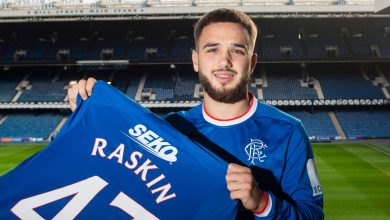
The reason this story keeps resurfacing is that Rangers’ midfield remains a talking point. The departure of Nico Raskin, and speculation about who might replace him, opened a gap that Ferguson’s name was always going to be attached to. Some reports have gone as far as describing him as Rangers’ preferred successor in that area of the pitch.
Ferguson’s profile is not an obvious copy of anyone who has recently worn the shirt. He is a box-to-box player with a knack for arriving in the penalty area, a decent range of passing, and the sort of aggression in the tackle that Scottish supporters tend to appreciate. He has also developed into a leader, which is part of why Bologna handed him the armband. Those are qualities McInnes values highly, and they are the same ones that made him such a force at Aberdeen under the manager who now sits in the Ibrox dugout.
For Rangers, the question is whether to treat Ferguson as a present-tense need or a future opportunity. Signing him now would be expensive but would deliver a proven, high-level performer who understands the club. Waiting could mean a lower price down the line, but it also risks losing him to a bigger rival or watching his value rise further.
Supporters have reacted to the latest comments the way they reacted to the summer ones: with a mixture of excitement and frustration. For many, the idea of a Ferguson returning to Ibrox is irresistible. The family connection, the boyhood backstory and the fact that he is genuinely good enough to improve the team make it an easy story to love.
But there is also fatigue. Rangers fans have been told for months that a deal was close, that talks were set, that it was only a matter of time. Each of those stories has faded when the window closed, and some supporters are wary of investing more emotion in a saga that has not delivered anything concrete yet. The latest declaration will not change that scepticism overnight. Only a signing will.
The next obvious flashpoint is the January window. Rangers will have a chance to revisit their pursuit, and Ferguson’s recent comments will not have gone unnoticed in the boardroom. If the club decides there is a realistic path to a deal, expect the speculation to reignite almost immediately.
Beyond that, the summer looks like the more natural moment for a move of this kind. It would give Bologna time to plan a replacement, give Rangers time to structure the finances, and give Ferguson a clean break at the end of a season. It is also the point at which the club’s new-look squad will have had time to settle and its needs will be clearer.
None of that is certain. Bologna could decide to dig in. A rival could swoop. Ferguson’s form, or his contract, or the club’s finances could shift the picture entirely. But the central point of the story has not changed. Ferguson wants this, his agent says it is inevitable, and his family clearly hopes it comes to pass. The only unresolved elements are timing and price.
For a player who spent his teenage years being told Rangers did not need him, Ferguson has built a remarkable case for why they should have kept him. He has become a captain, an international and one of the most sought-after Scottish players in Europe. And through it all he has kept the same ambition he had as a boy.
Whether the move happens in January, next summer or years from now, he has made clear it is something he fully expects. For Rangers supporters, that is both encouraging and slightly maddening. The player is saying yes. Now the club has to find a way to turn that into a signature.