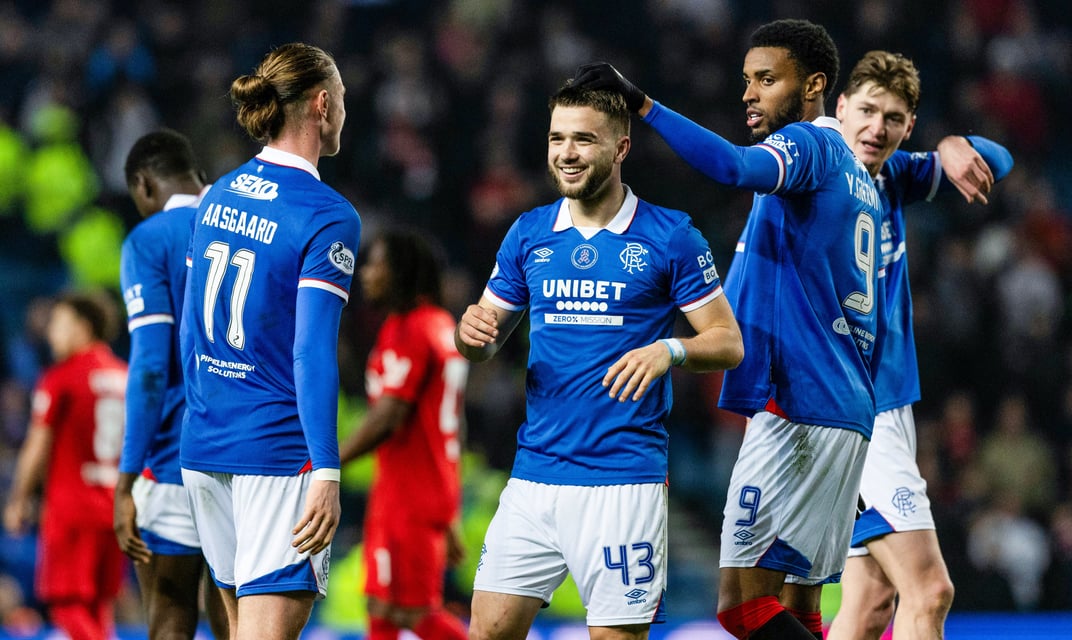
Footballers rarely say out loud that they wanted to leave their club, least of all while still wearing its shirt. Nicolas Raskin has done exactly that. The Rangers midfielder told Belgian media that he was disappointed his summer move never happened, and that he had been mentally ready to leave.
What makes the comments notable is their tone. Raskin is not angry and he is not agitating for a move. He is calm, accepting and slightly wry. He treats a failed transfer as part of the game, says he is not someone who gives up easily, and points out that life goes on. But the underlying message is clear: at 25, after a World Cup, he believed the moment had come to step up, and it did not happen.
Raskin was speaking on international duty, and the reports quote the Belgian outlet Sporza. The STV report says he described the summer as “complicated” and admitted a degree of disappointment, while stressing that it was not a big deal. He pointed out that transfers involve many factors beyond the player’s control, including matters off the pitch.
He also said he is not in a position where he necessarily has to leave. That is an important qualifier. It separates a player who wanted a move from a player who is unhappy, and Raskin makes that distinction himself. Another report has him praising Rangers as a good club, saying he is playing his matches and that the squad this season is a strong one. But he was equally candid about his ambitions: asked whether he wanted to take a step forward, he said yes.
Looking ahead, he said his focus is on performing as well as possible so that the next transfer window goes better. The Sporza quotes also include a note that the timing was not perfect, and that he wants to keep doing his best and see what the coming windows bring.
To see why the admission carries weight, it helps to recall how the summer looked from the outside. Raskin had been one of the standout performers in a Rangers side that has struggled for consistency, and he then went to the World Cup with Belgium and impressed. By any normal reading of the market, that is the moment a club sells.
The STV report says he was widely expected to be sold after shining at the World Cup. Inside Futbol adds that the time appeared ripe for Rangers to cash in, partly because they had signed other midfielders, naming Cammy Devlin and Dan Neil. That squad-building detail matters. A club that adds midfield depth is often preparing for a departure, and supporters read it that way.
Raskin had also drawn interest in earlier windows. Reports over the past year named Premier League and European clubs, and Rangers turned aside several approaches. The World Cup was supposed to change the calculation, because a good tournament raises a player’s profile and price at the same time.
The one concrete offer came late. Besiktas made what the reports call a big push before the Turkish window closed. Yahoo Sports describes an 11th-hour approach, and says Raskin ultimately decided to stay after snubbing a desperate late approach from Turkey while on the team bus to Falkirk. The same piece quotes him beginning to describe how, on the morning of 1 September, he was called about the situation, though the excerpt I found cuts off there.
Earlier reporting had said Rangers rejected a Besiktas loan offer that fell short of their valuation, which Football Insider put at more than £10 million. I can’t say from the material I have exactly how much of the collapse was down to the player and how much to the club, and Raskin himself said he is unsure why the move didn’t happen. Football deals often fall through because of small mismatches in timing, structure or money, and this one appears to have been no different
The disappointment was visible on the pitch. The STV report notes that Raskin was left out of Derek McInnes’ squad on more than one occasion during August amid speculation about his future. Yahoo Sports says he was even missing for the Europa Conference League exit away to Jablonec.
Managers usually leave a player out in that situation for practical reasons. A squad member who may leave in days is a risk, either because he could pick up an injury that ruins a deal or because his mind may be elsewhere. It does not necessarily mean a falling-out. Raskin was later brought back into the team, and McInnes has publicly described him as terrific.
Rangers’ European campaign made the situation more awkward. Inside Futbol says the club went out in the Europa League qualifiers and then the Conference League, so Raskin will have no European football this season to show himself off. The article suggests that could dampen interest in January.
There is a second half to this story, and it is more positive for Rangers. Once the window closed, Raskin got on with it. STV reports that he has been a key player in Rangers’ upturn in form in recent weeks.
That is arguably the most professional response available. A player who feels a move was blocked can sulk, and many do. Raskin’s public message, that he will focus on his own performances so the next window goes better, is the opposite. It also happens to be in his best interest. A midfielder who plays well for a recovering team keeps his value high, and Rangers benefit from every good game.
His attitude appears to have won him goodwill. The reports describe him as a fans’ favourite, and the way he has spoken about the summer, without bitterness, is unlikely to change that. Supporters tend to forgive a player who wanted a bigger stage as long as he gives everything while he is at the club.
Raskin has established himself in the Belgium squad under new head coach Rudi Garcia. Yahoo Sports says he has 19 caps and is expected to feature in Nations League matches against Italy, France and Turkey. International football gives him a platform that European club football, this season, does not.
That matters for his future. A player with a place in his national team, regular minutes and a good World Cup behind him is visible to scouts even without Europa League nights. The reports suggest that clubs will keep watching.
Raskin also spoke about fresh starts in general terms, saying that in football you begin every season with a blank slate. It reads like a man drawing a line under the summer and looking ahead.
Raskin’s comments come against a long-running discussion of his contract. Yahoo Sports describes him as being in the final two years of his Ibrox contract, which points to an expiry in 2028 and not 2027. That is consistent with earlier reporting that his deal, signed as a four-and-a-half-year contract plus an option year, runs to summer 2028. It also sits awkwardly with a recent report that Rangers won’t extend him and that he will be a free agent in 2027. I couldn’t reconcile those two claims, and the balance of the sources I found favours 2028.
The length of his contract shapes everything else. With two years left, Rangers still hold leverage. With one year left, they would be in a much weaker position, since buyers know the club faces losing him for nothing. That is why the next two windows are so important for both sides.
Inside Futbol offers a useful perspective on timing. It argues that a move next summer would likely suit Rangers better than one in January, noting that there could be more pressure to sell then and less desperation among suitors. In other words, the club’s bargaining position may improve if he plays well and there is no European football to distract from his form, but the buyers’ urgency may fade.
For Raskin, the calculation is different. He wants a step up, and he has been clear about it. The risk of waiting is that a good moment passes. The upside is that a strong season can raise his price and widen his options, including clubs from the Premier League and elsewhere that were linked with him before.
The Saudi Pro League also sits in the background. Earlier reporting said Rangers would block any move there until January, and an approach from that direction could reopen the question in winter. But Raskin’s own words suggest he is focused on Europe’s stronger leagues and on doing well enough that the next window “goes better.”
The STV report notes another departure from Rangers that did go through. Defender Clinton Nsiala completed a permanent move to Sharjah FC in the UAE Pro League for an undisclosed fee, reportedly around £300,000. He was 22 and made 17 appearances after joining from AC Milan in the summer of 2024. That is a very different kind of exit from the one Raskin wanted, but it shows the club has been moving players on, and that the summer was busy even if the biggest sale never arrived.
It would be easy to turn Raskin’s comments into a story of conflict. That would misread them. Nothing in the reports suggests a rift with the manager, and Raskin says the opposite: he is happy with life under McInnes for now, according to Yahoo Sports. What he expresses is ambition tempered with acceptanc.
He is honest about wanting more. Many players offer platitudes about being happy where they are. Raskin admits he was ready to go, which is refreshing and also useful to Rangers, because it tells them what they are dealing with.
*He does not blame anyone.** He speaks of off-field factors and timing rather than of individuals. That leaves the door open for a good working relationship.
He is planning for the long term.** By saying the next window should go better, he signals that he expects to leave at some point and that he intends to leave on good terms and at a good price.
He has kept his standards up. The upturn in form reported by STV suggests he has not let disappointment affect his play.
For Rangers, the interview is a reminder of the balance they must strike. A player who wants to leave is an asset at risk. Every month of good football raises his value, but every month also brings the contract closer to expiry, and a player who has said publicly that he was ready to go is not going to sign a long extension without a reason.
The club can manage this in a few ways. It can sell at the right price when the offer arrives. It can hold him and rely on his professionalism, using him as the foundation of the team while the market matures. Or it can offer improved terms that reflect his importance and try to persuade him that his future is at Ibrox. The reports don’t say which route Rangers prefer, and without an official statement it would be wrong to assume.
What is clear is that the January window will test all of this. Offers are expected, and the club’s response will show how it values him.
Raskin’s line, that he was mentally ready to leave, sums up a summer of frustrated expectations. He was widely tipped for a big move after the World Cup, drew a late approach from Besiktas, missed matches amid the noise, and then stayed. His reaction has been measured. He has called the outcome a disappointment, not a disaster, acknowledged that he doesn’t have to leave, and committed to playing well so that things work out better next time.
For Rangers, that is good news in the short term, since one of their best players is available and performing. In the longer term, it raises the question of how long he can be kept. The safest reading is that this is a temporary truce. Raskin has told the world what he wants, and the next transfer window will show whether Rangers can meet it on terms that suit them