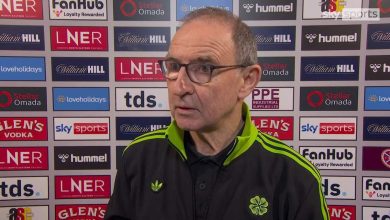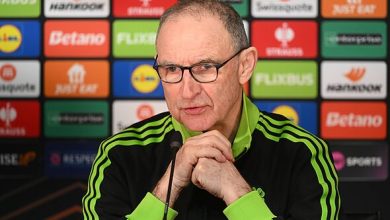
Rangers had every reason to feel positive. They were winning matches, had climbed to second in the Scottish Premiership, and had a fixture list about to deliver the biggest games of their season. Then their captain limped off with a hamstring injury. When Derek McInnes spoke about Lawrence Shankland’s injury, he did so with the tone of a manager who understands both the size of the loss and the size of the task ahead.
McInnes confirmed that Shankland had suffered a grade 2c tear in his hamstring, very similar to the one he sustained at Hearts in January. That was the headline, but the detail behind it, about scans, surgery, recurrence and cover, tells the fuller story of how Rangers must now reshape their attack. This piece walks through what McInnes said, what it means, and what it asks of the squad.
The reports agree on the essentials. The Rangers captain suffered a hamstring tear during a 1-0 victory on Saturday, and he came off early in the game. They disagree on the opponent. Yahoo Sports and Rangers Review name St Mirren, while Read Rangers, in pieces dated 8 September, says it happened against Motherwell, with a midweek St Mirren fixture to follow. I can’t settle that discrepancy from the sources, and it doesn’t change the substance of the story.
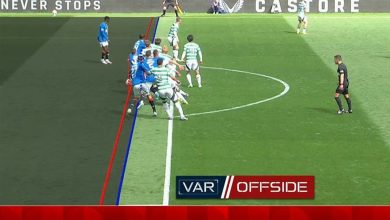
What is consistent is how McInnes described the moment. He said he could see when Shankland walked off that the player knew it was significant, and that it was Shankland’s very first sprint after two and a half minutes standing around while VAR held up the game. That detail is telling. The match had stalled for a video review, and the first burst of acceleration after the stoppage was enough to do the damage. Sprinting from a standing start after a long pause is exactly the kind of movement that stresses a hamstring, and it is a reminder of how the modern game’s stop-start rhythm creates its own risks.
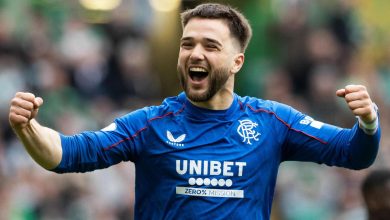
The scoreline was not the problem. Ryan Naderi scored the only goal of the match, his third of the season. Rangers won, but the result was overshadowed by what had happened to the man wearing the armban
McInnes was specific about the diagnosis. Grade 2c is a serious category of hamstring tear, a substantial partial tear with implications for recovery time. What made it worse is that it was a recurrence. McInnes compared it directly to the injury Shankland suffered at Hearts in January, and recalled that the player came back really smoothly last time and got to the World Cup.
That history cuts two ways. On one hand, it shows Shankland has the physical and mental resilience to return from an injury of this type, and he did it in time for the biggest stage in football. On the other hand, a second tear in the same area raises legitimate questions about durability and about how the muscle was managed on the way back, and it explains why the medical team took the decision they did.
Recurrence is a familiar problem in football. The hamstring is one of the most commonly injured muscle groups, and a tear that heals naturally can leave scar tissue and a lingering vulnerability. That is exactly the dilemma McInnes described.
The timeline was uncertain from the start, and it moved as the picture developed. McInnes said Shankland could be sidelined for up to three months. Rangers Review reported that the captain was facing up to 12 weeks out, and it revealed the news before the club spoke publicly. Read Rangers, meanwhile, put it at up to four months. The gap between those estimates is small in calendar terms but large in the number of fixtures missed, and it hinged on one decision: whether to operate.
The club was awaiting a follow-up scan with a specialist in London to decide whether surgery was necessary. McInnes laid out the trade-off in plain terms. He said that if Shankland has the surgery it may be three or four weeks less, but that increases the risk again, though the phrasing in the reports is muddled and the logic points the other way: avoiding surgery might speed up a return but leave him more prone to future tears. Either way, the principle is that a quicker route back carries a higher risk of another breakdown, while a slower route protects the muscle.
In the end, the surgical route was chosen. McInnes confirmed that Shankland would undergo surgery in London, with the operation due the following day. He explained that the club had made the decision as he thought they would, and that it was something Lawrence was leaning towards as well.
His reasoning centred on risk. Because it was a recurrence, McInnes said, having the surgery minimises the chance of it happening again. He acknowledged it can still recur, but said the club needs to be able to have a bit of confidence with that. That is an honest statement of what surgery offers: not a guarantee, but a better foundation.
The operation adds time to the initial three-month layoff. That means a return towards the end of the year or beyond looks more realistic than an early comeback. I couldn’t find an official return date, and any specific figure should be treated cautiously until the club confirms one.
Shankland was not alone. Daisuke Yokota was also facing an operation on the same day after a groin setback, and McInnes had told Ibrox News that the winger had picked up a groin injury that week. Two players scheduled for surgery in London on the same day is an awkward coincidence for the medical staff, and a further reduction in attacking options.
The injury list goes deeper than that. Youssef Chermiti was already absent through long-term knee damage. With Shankland and Yokota now out as well, Rangers have lost three forward players to injury at the same time, which is an enormous strain on any squad
The fixture list makes everything worse. Rangers face an Old Firm double-header, playing Celtic at Ibrox in the Premier Sports Cup before travelling to Parkhead the following weekend. Those are the two matches on which supporters judge a season, and Rangers would be without their captain and leading striker for both.
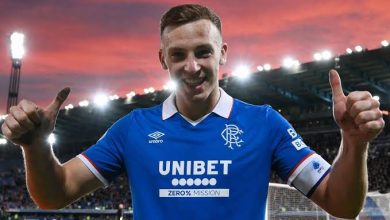
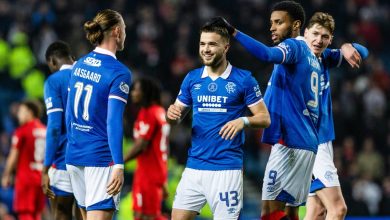
They had also been building momentum. Bojan Miovski’s dramatic 90th-minute chip earned a 1-0 win over St Mirren, Rangers’ fourth consecutive victory, which lifted them into second in the Scottish Premiership. The reports described the result as overshadowed by the news about Shankland. That is a fair summary: a winning run is a fragile thing, and losing a key player in the middle of one can disrupt the rhythm that produced it.
Coverage of Celtic’s recent difficulties, including their back-to-back defeats by Rangers, suggests Rangers have since won both of those Old Firm games. I haven’t verified the details, and won’t describe them he
The most practical part of McInnes’s comments concerned who steps in. He named three players, and each represents a different kind of answer.
Ryan Naderi. McInnes described the German forward as a significant investment and a handful who, when he plays with a partner, does the job. He added that Naderi did really well at the weekend. That praise is well earned: Naderi had scored the only goal of the game in which Shankland was hurt.Kevin Kelsy. Kelsy made his debut at the weekend following a £9 million move from Portland Timbers. McInnes said the club has spent a lot on him and that it is a big step, but that they think it is the right one. It is a strong statement of faith in a player who has barely started his Rangers career.
Bojan Miovski. Miovski remains at the club after a proposed loan move failed to materialise. McInnes said his goals per game in Scotland is very strong, that he has trained brilliantly, and that it looked as though he was maybe going elsewhere, but that he is glad to have all three in the building. As it happened, Miovski scored the late winner against St Mirren, so the manager’s gratitude was quickly justified.
The Read Rangers coverage put the position bluntly, noting that McInnes must rely entirely on internal candidates to reshape his attack. It also carried a comment from former goalkeeper Cammy Bell, who felt that the club would have wanted to give Kelsy a little time to settle in Scottish football, and that he is not going to get that now. That is a fair point. A new signing arriving for a significant fee is being asked to carry more of the load than planned, and the transition to a new league is rarely instant
It would be a mistake to see this only as a loss of goals. Shankland is 31, a Scotland international and the Rangers captain. The Read Rangers report describes him as a central figure who had stepped up to lead the squad. His absence removes a leader as well as a striker.
Captains provide a kind of stability that is difficult to replace. They set the tone in the dressing room, speak to officials, and represent the squad when things go wrong. In the build-up to two Old Firm matches, that leadership will be missed as much as his finishing.
There is also a tactical dimension. A striker of Shankland’s type does more than score. He links play, leads the press and takes the physical burden of holding up the ball. McInnes described Naderi as best with a partner, which hints at a possible pairing, and that suggests one solution is to play two forwards. The alternative is to rely on one, in which case the choice between Naderi, Kelsy and Miovski will shape the whole attacking approach.
It is worth stepping back to consider how clubs handle injuries like this. Modern football medicine has become highly specialised, and decisions such as whether to operate involve weighing several factors: the location and grade of the tear, the player’s injury history, the calendar and the risk of recurrence.
McInnes’s comments show a manager who understands that balance. He did not press for the quickest possible return. He deferred to the specialist and to Shankland’s own preference, and then accepted the longer route once the decision was made. That is a mature approach, particularly for a captain the club will need for the whole season, not just the next few weeks.
It also reflects a long-term view. A player rushed back and injured again could be lost for even longer. By choosing surgery, the club is investing in the second half of the season and beyond
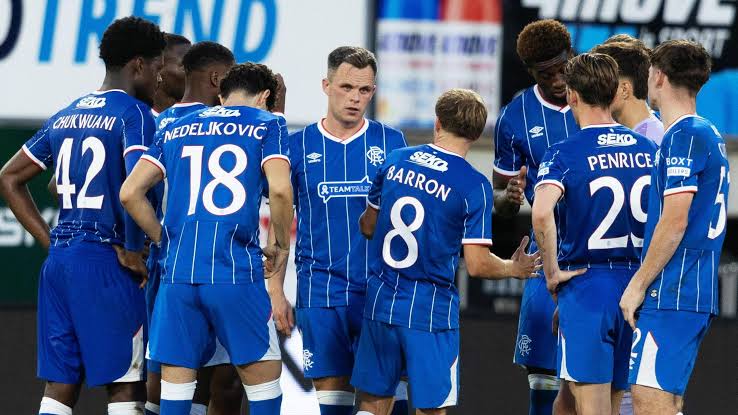
The wider picture is one of a squad being tested. Rangers’ attack has been reduced by Chermiti’s knee problem, Yokota’s groin operation and Shankland’s hamstring, all within a short period. That is the kind of run that exposes the difference between a squad with depth and one without.
The manager’s public tone has been steady. He did not dramatise the situation, and he framed the availability of three strikers as a positive, saying he was glad to have them. That is sensible communication. A manager who talks up a crisis risks creating one, and McInnes seems intent on projecting confidence in the players he has.
That confidence will need to be justified on the pitch. The early signs are encouraging, with Naderi scoring, Miovski delivering late and Kelsy making his debut, but the coming fixtures will be a far sterner test
The reports I found don’t line up on every detail. The match in which Shankland was hurt, the length of the layoff and the effect of surgery are all described slightly differently depending on the outlet and the date. The facts on which they agree are that Shankland tore his hamstring, that it was a grade 2c injury, that it was a recurrence of the January problem, and that he was to undergo surgery in London. Everything else should be treated as provisional until Rangers publish an official statement.
That caution is not just a matter of pedantry. Injury reporting is notoriously unreliable in football, with early estimates often revised as scans and specialist opinions come in. A three-month estimate can become five, or shrink, depending on how the recovery unfolds.
It is easy to lose the player in the analysis. Shankland is a striker who has already come back from one serious hamstring injury and made it to the biggest tournament in the sport. Now he must go through another rehabilitation, with the knowledge that the same muscle has failed twice. That takes resilience, and it is a reminder that behind every injury report is a person facing months of gym work, physiotherapy and uncertainty.
McInnes noted that Shankland was leaning towards surgery himself, which suggests the player is thinking about the long term as well. Captains tend to think in those terms, and it may be the sign of a leader who puts the squad’s interests alongside his own.
Derek McInnes’s message about Lawrence Shankland’s injury was measured and honest. A grade 2c hamstring tear, a recurrence of the January injury, and a decision to operate add up to a lengthy absence for Rangers’ captain and leading forward. The timing, just before a pair of Old Firm fixtures, magnifies the blow.
The response so far has been calm. McInnes has pointed to Naderi, Kelsy and Miovski as capable replacements, backed the decision to prioritise Shankland’s long-term fitness, and kept his focus on the players who are available. The team’s recent run of wins, and Miovski’s late winner in particular, show that the squad has resources to draw on.
Yet no amount of cover fully replaces a captain. Rangers will have to win without him, and the manager will have to find a formula that works with what he has. Whether that succeeds will be judged first in the Old Firm matches and then across a long season, but the foundations, a clear-eyed manager and a group of striking options, are in place. As McInnes made clear, this is a significant injury, and how the club handles it will say a lot about the strength of the squad in the months ahead