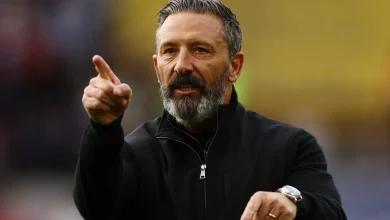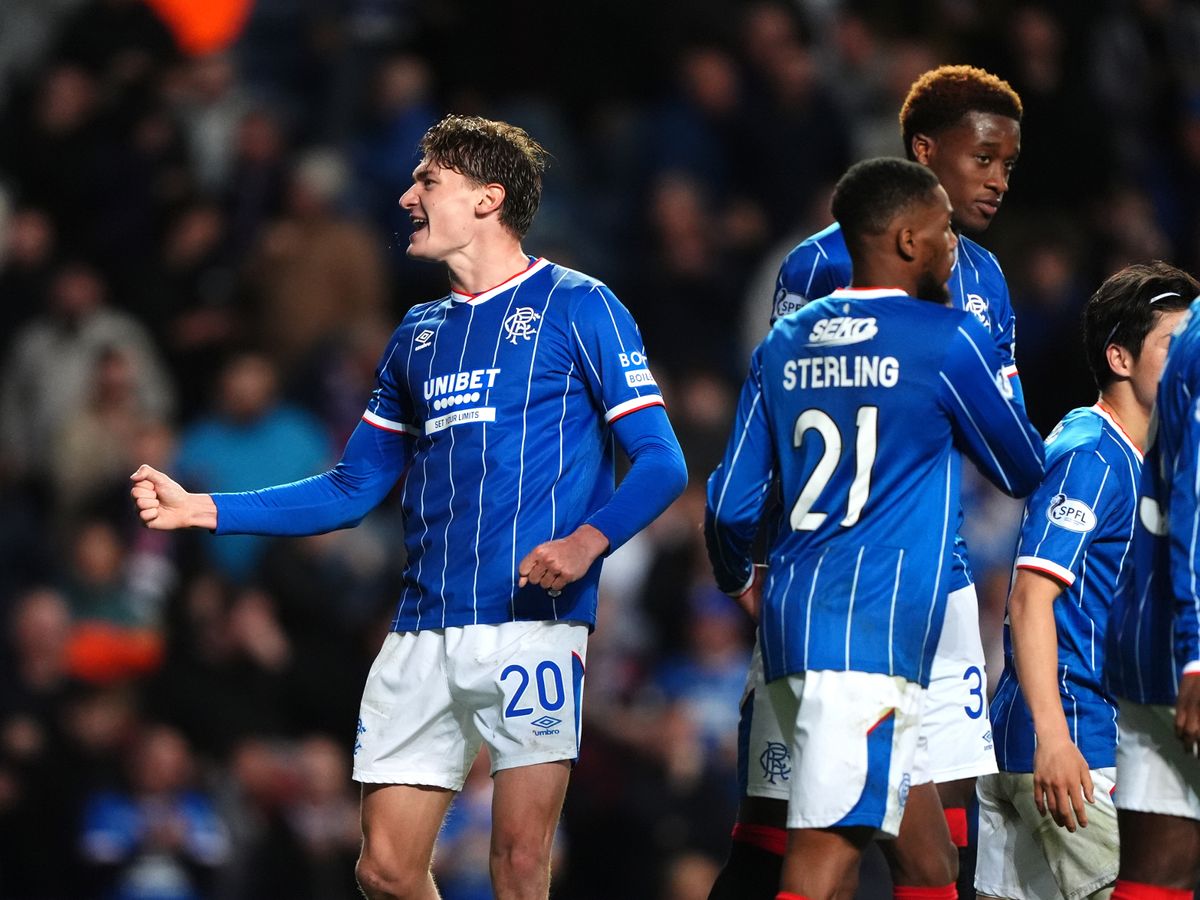
Managers rarely admit they tried to stop a player joining their rivals. Derek McInnes just did, and it tells you a good deal about where Rangers stand with Ryan Naderi.
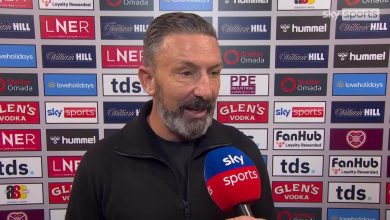
McInnes confirmed that Rangers are in contract talks with the striker, and he conceded that he once hoped the forward’s move to Ibrox would fall apart. The context matters. McInnes was Hearts manager when Rangers went for Naderi last January, and he wanted the player himself. A few months later he sits in the Ibrox dugout, and the man he hoped to keep out of Glasgow is one of his most useful attackers.
The admission is amusing on its face. It is also the best argument for giving Naderi a new contract. If a manager who scouted a player from the opposing bench still rates him after working with him every day, the player is probably worth more than the price on his original paperwork. The harder question is whether “worth more” means “worth a new contract right now”. That is what Rangers have to settle, and it is less obvious than it looks.
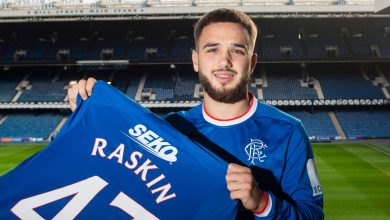
Rangers’ interest in Naderi came during a hectic January window. The club paid a reported £5 million to Hansa Rostock for him. That is a meaningful outlay for a player who arrived from the German third tier rather than a top-flight league.
The fee also came with a shrug of reluctance from inside the club. Reporting on how the window played out suggested the price was higher than Rangers would have liked to pay, but it was sanctioned because of what strikers cost elsewhere. There was a cheaper route on the table. Rangers had also been in talks over a loan for Cameron Archer from Southampton, though they knew Southampton’s other outgoings could affect that deal. A short-term loan would also have carried its own fees and wages, so the permanent signing began to look sensible.
Naderi signed a long-term contract running to the summer of 2029. That detail is the key to the present conversation. His deal has years left, so nobody is facing an expiry cliff, and nobody is panicking about losing a player for nothing.
The talks are therefore about something else. They are about reward, retention and signalling, which is a different calculation from the usual “re-sign him or lose him” scramble.
The report presents the discussions as part of a wider conversation between McInnes and chief executive Jim Gillespie. The two discuss which players deserve a little more security, and McInnes wants no club or agent to believe they can pick off a Rangers player mid-season.
McInnes was fairly direct about the philosophy. He said the squad is meant to stay together for the season, that the club’s goal is domestic success and that he does not want players looking over their shoulders wondering what comes next. His idea is that Ibrox should feel like a destination, not a stepping stone. He wants players to see a chance to be successful and to showcase themselves while playing for a club that is in demand.
Read plainly, that is a retention strategy dressed as a motivational speech. Squads built on short stays and quick profits tend to leak their best players the moment a bigger offer appears. McInnes is saying that Rangers will not play that game this winter, and a visible contract renewal for a rising striker is the clearest way to prove it.
There is a market reason too. Naderi’s value has risen since Rangers paid £5m, and the club have told interested parties that he is staying in January. Saying “he is not for sale” is far more convincing when the player has just signed an improved deal. Intent is cheap. A new contract is evidence.
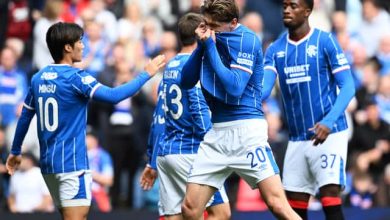
He has already delivered. Naderi has scored 10 goals this season. That is a respectable return for a striker adjusting to a new country, a new league and, since the summer, a new manager. Few forwards can claim a smooth transition on all three fronts.
The market is already noticing. The report notes that Naderi was a name in other conversations before he ever reached Ibrox. Club Brugge had also shown interest in him before the fee put them off. A striker who has caught the eye of a continental side, and who is now producing in the Scottish Premiership, is exactly the sort of asset other clubs circle in January. Strengthening his contract reduces the risk that Rangers become a feeder for someone with a bigger budget.
It protects the investment. There is a straightforward financial logic here. Rangers committed £5m, and every goal and every strong performance increases what a buyer would pay. Locking him into better terms means that if he is ever sold, Rangers control the timing and the price. Without a new deal, a transfer fee could be undercut by contract length or by agent pressure.
**It supports the manager’s message.** My own view is that this is the most underrated reason. McInnes has staked his credibility on not allowing mid-season raids. If the club let a key forward drift towards the market while telling everyone else the squad was staying, the policy would sound hollow. A new contract is the practical form of the promise.
**It rewards the right behaviour.** Dressing-room economics matter. If Rangers reward a player who has produced and then visibly keeps faith with him, other players learn that performance is noticed. That helps morale and, in a season where Rangers are chasing Celtic in the league, every marginal gain counts.
Ten months is a small sample. The analysis behind the original piece points out that Naderi arrived from the German third tier, and that under a year is a short body of evidence for a long contract. Football is full of strikers who looked excellent for a season and then settled into something more ordinary once defences learned their habits. The league table is unforgiving about the risk of paying for a peak.
The goals came with a particular backdrop. Many of his goals arrived while Lawrence Shankland was injured. That does not make them less valuable, but it affects how you read the numbers. A striker who scores more when a first choice is unavailable has shown he can step up. He has not necessarily shown he would outscore the first choice, or that he would perform to the same level in a squad where the competition is healthy.His profile suggests dependence on the team around him. The same analysis describes his dribbling and hold-up numbers as those of a striker who needs service rather than one who creates alone. I would put that in neutral terms. It is a description of a type of forward, not a flaw. Plenty of excellent strikers live off chances created by others. But it matters for valuation. A finisher whose output depends on supply is more exposed to changes in the team, such as an injury to a creative midfielder or a change in tactics, than a player who can generate his own openings.
Competition for places is real. Shankland, who arrived in Glasgow on a free transfer from Hearts and is reunited with McInnes, is a proven performer and a manager’s favourite. Rangers also hold other attacking options. Handing out improved terms to one forward creates expectations elsewhere, and wage structures are delicate things. A raise that feels deserved in November can look awkward in March if form dips.Leverage runs both ways.* Because Naderi’s contract already runs to 2029, Rangers hold the stronger hand. There is no urgency forcing their hand, and the club can afford to wait and see how the season develops. That is an argument for patience. The counter-argument is that patience carries its own risk: if Naderi has a strong spring, his demands, or those of his representatives, will climb.
The analysis I found lands, rightly in my view, on terms over timing. Its suggestion is a modest wage increase, a contract running beyond 2029 and bonuses tied to trophies, which the player reportedly wants most. There is real wisdom in that structure, and it is worth spelling out why.A modest rise, not a leap. The base wage is the part of a contract that is hardest to undo. If Rangers lift it too far, they take on fixed cost based on ten months of evidence. A smaller increase acknowledges his progress and keeps the club flexible if his form changes.
Extra years. Extending beyond 2029 serves two purposes. It lengthens the period over which Rangers control a valuable asset, which in turn raises his resale value. It also gives the player the security McInnes talks about. A longer deal costs little in the near term if the wages are measured, and it hands the club a stronger position in any future sale negotiation. Bonuses tied to success. This is the cleverest piece. If the player genuinely wants silverware above all, then pay that is linked to trophies aligns his incentives with the club’s. It also shifts risk. Rangers pay more only if the team succeeds, and a successful team can afford it. If the season goes badly, the cost stays lower.
Performance-linked add-ons.** Though the report does not go into this, a natural extension would be appearance or goal-related clauses that reward continued contribution. I am offering that as my own suggestion rather than something the club has discussed. It would speak directly to the “is this a peak?” worry, since the extra money would only flow if he keeps delivering.
An eye on any release terms. I would also expect Rangers to think carefully about any buy-out or similar clause. The aim of this exercise is to discourage mid-season approaches, and a contract that leaves an easy exit would undercut the point of signing it.
Step back and this story is as much about McInnes as it is about Naderi.
McInnes arrived in June. He was appointed on a three-year deal following Danny Röhl’s departure, after Rangers finished third the previous season. He took over a club with a fraught recent history, and became Rangers’ seventh permanent appointment in eight years. Stability is not a given at Ibrox, so a manager who talks publicly about keeping a squad together is making a deliberate contrast with that churn.
His early contract business matches the theme. One of the first deals of his time in charge was a one-year extension for the teenage midfielder Bailey Rice, who had been linked with moves to England and abroad. Keeping Rice, signing Ross McCrorie, and now discussing improved terms for Naderi all point the same way. The approach is to build around people who want to be there and to reduce the number of loose ends that other clubs can pull.
The question is whether that strategy suits the finances. Rangers’ ownership is pursuing a broader plan, and some behind-the-scenes decisions are not McInnes’s alone. One report notes that McInnes holds the position of manager rather than head coach, so he influences long-term planning but does not control every staffing decision. Contract policy is a shared responsibility, which is why the conversation involves Gillespie as much as the manager.
There is also a competitive dimension. If Rangers are to close the gap on Celtic, they need a settled group with a clear sense of purpose through the winter, when squads are most vulnerable to January approaches. Removing a high-profile uncertainty, such as whether a leading scorer might leave, is a cheap way to protect momentum.My answer is yes, with conditions, and not in a rush.
The yes comes from a combination of reasons. Naderi has produced, the market is watching, the club have publicly said he is staying, and a contract is the most credible way to back that statement. McInnes has also built a public case on keeping the squad intact, and the cheapest way to show he means it is to reward a player who has justified his place.
The conditions are about structure. The evidence base is still thin, the context of some of his goals is favourable, and his profile suggests he benefits from good service. Those are reasons to avoid a big increase in basic salary and to rely instead on length, incentives and bonuses that pay out when the team wins. A deal built that way protects the club if things cool off and rewards everyone if they do not.
The “not in a rush” part comes from the leverage Rangers already hold. With the contract running to 2029, they do not need to be pushed into terms they dislike. They can afford to settle the figures carefully, and to decide what they want from the player over the next few seasons rather than over the next few weeks
There is a pleasing symmetry in all of this. A manager who once hoped a signing would never happen is now trying to make sure it lasts. That is not hypocrisy. It is what good managers do when they see a player up close and revise their view. The only remaining question is whether Rangers can write the contract that matches the faith McInnes now shows in publi