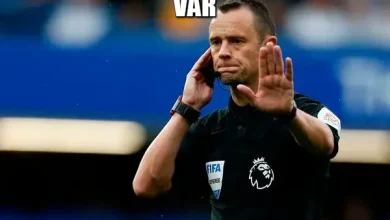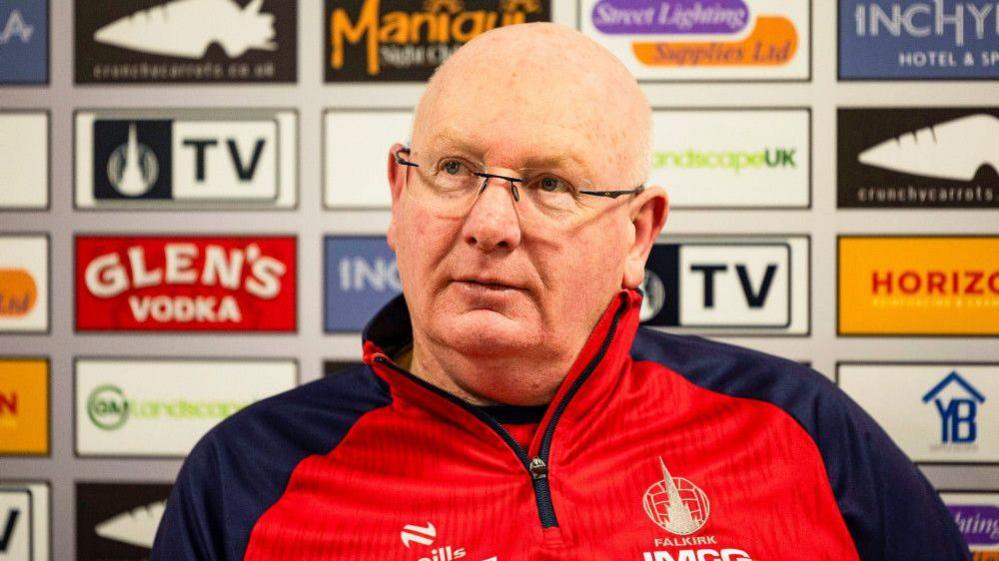
A penalty decision at Ibrox has done what penalty decisions in Scottish football so often do: it has produced a statement, a disagreement and a long argument about what the rules are for. Rangers were punished from the spot against Falkirk after VAR sent the referee to the pitchside monitor. The Scottish FA has since clarified what the officials saw, and former Ibrox players have lined up to say they disagree with it.
The incident came early in the contest, with Falkirk’s Ethan Ross attacking a looping cross inside the Rangers box. As he tried to get on the end of it, Tuur Rommens tussled with him, and Ross went to ground. Referee Ryan Lee waved play on, and the ball ran on to its intended target.
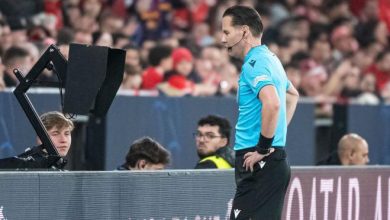
The sequence did not end there. In the VAR room, Duncan Nicolson drew Lee’s attention to the contact, and the referee went to the monitor to look again. After reviewing the footage he pointed to the penalty spot. Jacob Murrell took the kick and beat Ivor Pandur to give Falkirk the opening goal.
The decision was confusing in the moment. Emmanuel Fernandez had also been flagged for a flashpoint during the build-up, and it was not immediately clear which Rangers defender had been penalised. Pundits and supporters spent several minutes working out who was responsible for the foul.
The Scottish FA’s guidance cleared that up. According to the BBC, the explanation said that VAR intervened for holding and shirt pulling by Rommens. In other words, the officials identified Rommens, not Fernandez, as the offender, and the offence as a pull on the attacker’s shirt rather than a challenge on the ball.
That framing matters. Under the protocol, VAR is supposed to intervene only for a clear and obvious error, or a serious missed incident. By saying the intervention was for shirt pulling, the governing body is signalling that Lee’s original decision to let play continue was judged to have missed a foul that met that threshold.
The explanation did not settle the argument. If anything, it moved the focus onto whether the pull was serious enough to merit a penalty at all.
Andy Halliday, speaking on BBC Sportsound, said he had initially thought the foul was given against Fernandez, which he considered soft. On learning that it was Rommens, he judged the decision even softer. He described the kind of contact involved as something you see many times in a game and said he did not think it was a penalty. After reading the SFA’s wording, he said he completely disagreed with the decision.
Rory Loy, another former Ibrox player, made a different point. He argued that Rommens’ involvement had not affected the delivery or Falkirk’s ability to attack the ball. In his view, the ball landed where it was meant to land, and Murrell jumped and directed it on target. Loy also questioned the timing of the VAR check. If the referee did not see enough to give a penalty at the time, he asked, why should a delayed review bring it back? His summary was that it was a strange decision overall.
Those two reactions highlight different criticisms. Halliday’s is about the severity of the contact, a question of whether a foul of this size should be punished. Loy’s is about the process, a question of whether VAR should reach back for an incident that did not obviously change the outcome of the attack
To understand why this kind of decision divides people, it helps to look at how VAR is supposed to work in Scotland. The system is designed to correct clear errors in four categories: goals, penalties, direct red cards and mistaken identity. In the case of penalties, the video official can recommend a review when the on-field referee has missed a foul inside the box, or awarded one that was not there.
The key phrase is “clear and obvious.” A foul that is arguable is not supposed to be overturned. The difficulty is that officials and fans often read “clear and obvious” very differently. Shirt pulling is a classic example, because it exists on a spectrum. A light tug that does not affect the attacker’s movement sits at one end. A grab that visibly pulls a player back sits at the other. Everything in between is a matter of judgement.
That judgement is why decisions of this kind attract so much criticism. When the video official intervenes on something borderline, it can look as though the system is second-guessing the referee rather than correcting a mistake. When the video official stays out, it can look as though obvious fouls are being ignored. There is no setting that satisfies everyone.
This is not the first time Rangers’ penalty record has been picked over this season. In September, the SFA’s head of refereeing, Willie Collum, addressed a different penalty on the VAR Review Show, one given against Rangers midfielder Vanja Dragojević for an off-the-ball block. Collum said at the time that this was not a referee problem and not a VAR problem, but a problem for the players, and that captains across the league had backed the approach in a meeting at Hampden. His message was that players should stop blocking and grappling with opponents and compete for the ball instead.
The same programme also covered a decision that went Rangers’ way. In the 1-0 win over St Mirren at Ibrox on 9 September, Fernandez stood on the foot of a St Mirren winger, and no penalty was given. Collum later said the officials had got that wrong, and that it should have been a penalty and a yellow card.
Put together, those incidents show the SFA scrutinising calls in both directions. Rangers have benefited from at least one error this season and been on the wrong end of a debated penalty in another. The Falkirk decision adds a third data point, and it will probably be reviewed on the same show.
The club’s relationship with the governing body has not always been calm. Rangers have issued strongly worded statements about refereeing in the past, and have clashed with the Scottish FA over how its rules are applied. In June 2025, the club was fined £3,000 after Rangers TV commentary included a remark from John Brown calling a decision in a match at Hibs “corrupt.” The club responded with a long statement questioning whether the rule on criticising officials was applied consistently across the game.
More recently, the club were vocal after the Premier Sports Cup final defeat to Celtic, when the SFA admitted that a penalty should have been awarded for a pull on Vaclav Cerny. That episode led to a formal exchange between Rangers and the governing body, and a statement questioning the reinstatement of the VAR officials involved.
Against that background, the Falkirk decision is likely to be read through a particular lens. Supporters have long memories, and a decision against Rangers at Ibrox feeds into a wider story about how the club feels it is treated. That does not mean the call was wrong. It does mean the reaction will be larger than the incident alone might justify.
It is worth setting out the argument for the decision, because the criticism has been loud.
The first point is that a foul is a foul regardless of whether the attack ultimately succeeds. The law is concerned with whether a defender has held or pulled an opponent, not with whether the opponent would have scored. Shirt pulling in the box has been a focus for referees for years, and the guidance to officials is that holding that restricts movement should be penalised.
The second point is that the video official does not have to prove the pull changed the outcome. The test is whether there was a clear and obvious error in not penalising a foul. If the pull was visible on replay and the attacker was impeded, the review is justified.
The third is consistency. Referees have been told to take action on this type of contact, and applying the law only when it suits a particular team would be worse than applying it strictly. Collum’s September remarks on the block by Dragojević show the governing body wants players to stop treating the penalty area as a wrestling arena. The Falkirk decision fits that direction of travel.
None of that settles whether the contact in this case was enough. But it explains why the officials acted, and why the SFA’s explanation emphasised the shirt pulling rather than any subsequent effect on the play.
The opposing argument is equally easy to state. Contact between attackers and defenders at a corner or a cross is a constant feature of the game, and most of it goes unpunished. Football would struggle to function if every tug were penalised.
Critics also point out that the decision came through VAR rather than on the pitch. The referee, who was well placed, did not think the contact deserved a penalty. A video official then brought him to the monitor for something that, in the view of Halliday and Loy, did not stop the attacker from getting to the ball. If the standard is clear and obvious, they argue, a contested incident like this should not meet it.
There is also the question of advantage. Loy’s remark about timing speaks to a recurring frustration: if play was allowed to continue and the attack developed naturally, it can feel strange to go back and punish an earlier incident. The protocol allows it, but it rarely feels satisfying, particularly for the team on the receiving end.
Beyond the debate, there is a practical question about what the penalty did to the match. Conceding first changed the shape of the afternoon for Rangers, who had to chase a game they might otherwise have controlled. I don’t have the final score, so I can’t say how that played out, but the immediate effect was that Falkirk went ahead and Rangers were forced to respond.
For McInnes, the incident is both a problem and a lesson. The manager has been building a team with a strong defensive record, and the squad had been on an unbeaten run in the league that reached 11 games as of last week. Conceding a penalty for a small amount of contact is not something he can control through tactics, but it is something his defenders can control through discipline. Collum’s message in September, aimed at players across the league, applies here too.
There is also the matter of how the club responds publicly. Rangers have sometimes taken a combative approach to officiating decisions, and the question is whether they will do so this time. The SFA’s clear explanation of what the officials saw gives them less room to argue that the decision was confusing, even if they still disagree with i
For the governing body, the exercise of explaining decisions has become a standard part of the process. The SFA publishes guidance on high-profile incidents, and the head of refereeing appears on the VAR Review Show to address the most contentious ones. That transparency is meant to build trust, and in some cases it does. When officials admit mistakes, as they did after the cup final, it can defuse anger. When they defend a call that divides pundits, it can inflame it.
The challenge is that no amount of explanation will make everyone agree. The interpretation of a pull on a shirt is subjective by nature. What the SFA can do is ensure that the standard is applied consistently from week to week and that clubs can see the logic. If a similar incident occurs at Celtic Park next week and is treated the same way, the Rangers decision will look consistent. If it is treated differently, the criticism will return with force.
The most likely next step is the VAR Review Show, where Collum or a colleague will go through the incident and give the SFA’s view in more detail. If they back the decision, as the early guidance suggests, expect more discussion among pundits. If they concede it was too harsh, the debate will move to why the video official recommended a review.
For Rangers, the focus will move quickly to the next fixture. The club is in a title race, with Celtic setting the pace and Rangers close behind, and there is little time to dwell on one decision. A single penalty rarely defines a season, but the cumulative effect of marginal calls can matter in a tight race, which is part of why every incident draws so much attention.
For supporters, the episode is a reminder of how finely balanced these decisions are. The same type of contact can be a penalty in one match and nothing in another, and the debate about where the line sits will continue as long as VAR is used.
The Scottish FA’s statement has told us exactly what the officials saw: a shirt pull by Tuur Rommens on Ethan Ross, picked up by VAR, and punished with a penalty that Jacob Murrell converted. What it has not done is end the argument about whether the pull deserved that punishment.
Two former Rangers players have said no, one on severity and one on process. The governing body’s position is that the officials followed the protocol. Both views can be held at once, and the truth is probably that this was a borderline call that a different referee might have decided differently.