The match report has come through, so I can write this properly now. Rangers beat Falkirk 2-1 at Ibrox. I’ve built a ~3,000-word piece from the reports on the match and the manager’s post-match comments. I haven’t invented any quotes, and where I don’t know a detail, such as the lineups or the exact minute of Falkirk’s late equaliser, I’ve left it out.
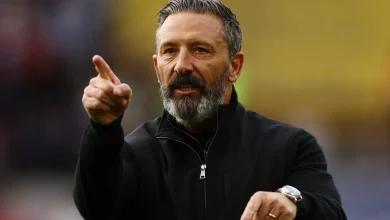
There are afternoons at Ibrox that a team plays well and loses its patience, and afternoons that it loses its patience and wins anyway. This was the second kind. Rangers overturned a first-half VAR penalty, had a goal ruled out by the same technology, conceded a late equaliser and still found a winner in the 99th minute. Ryan Naderi’s penalty made it 2-1, stretched the unbeaten league run to 15 games, and lifted Derek McInnes’ side to the top of the Premiership for the first time this season.
The headline numbers are simple. Rangers are two points clear of Celtic, who have the chance to take the top spot back when they face Hearts on Sunday. The win capped a week in which Rangers collected maximum points from three league fixtures. For a side that finished third last season, the climb is striking.
Falkirk, meanwhile, saw a six-match winning run end in the most painful way possible. They had led through Jacob Murrell’s penalty and then equalised late through Kevin Kelsy, and were a few minutes from a point, or more, when Naderi converted from the spot in added time.
By the accounts of those at the ground, Rangers controlled much of the opening period without turning that control into goals. The home side pressed high, kept Falkirk pinned back for long spells and created enough openings to expect at least one goal. Falkirk’s threat was limited, and a first-half statistic summed it up: the visitors’ only shot of the opening 45 minutes was the penalty that put them in front.
That is not to say Falkirk were passive. Ethan Ross found a pocket of space and stabbed a shot goalwards that demanded a stunning stop from Ivor Pandur, who tipped the effort past the post. It was a reminder that Falkirk, who had been winning matches in a streak, are capable of hurting anyone if they are given room.
For the most part, though, the half belonged to Rangers. The frustration was that the finishing did not match the approach play, a recurring theme in a season where McInnes’ side have often needed more chances than they would like to score
The decisive moment of the first half came in the 36th minute. As Ross went to attack a looping cross, Tuur Rommens tussled with Falkirk’s attacker, and the referee, Ryan Lee, allowed play to continue. The ball ran on to Jacob Murrell, who was in the middle of the action, and the sequence continued.
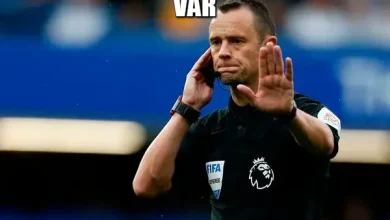
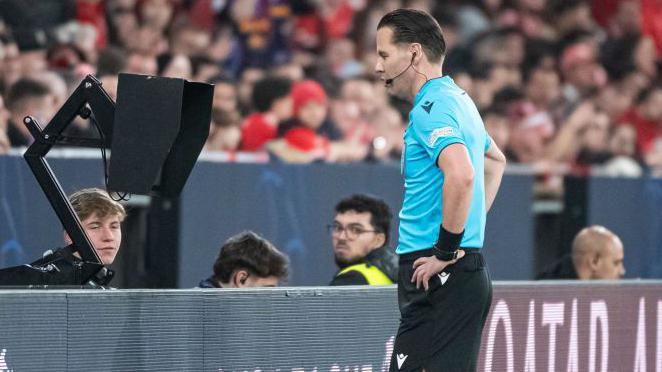
Then came the intervention from the video room. VAR flagged a pull of the jersey by Rommens, and Lee was sent to the touchline monitor. After a check, he pointed to the penalty spot. Murrell, who has now scored eight goals in eight games, stepped up and sent a right-footed shot into the bottom-left corner, beyond Pandur, in the 37th minute.
The decision was controversial in the moment and has remained so since. Former Rangers players have questioned whether the contact was enough to justify a penalty, and the Scottish FA’s guidance said VAR intervened for shirt pulling by Rommens. I covered that debate in more detail in my previous piece, but the match context makes it more significant. The penalty gave Falkirk a lead they scarcely deserved on the balance of play, and it forced Rangers to chase the game.
If one VAR decision went against Rangers before the break, a second followed after it. In the 57th minute, the hosts appeared to have drawn level. Findlay Curtis calmly finished a cutback from Naderi, and Ibrox erupted in relief.
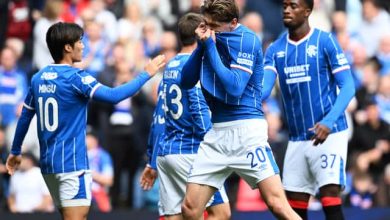
The celebrations were short-lived. VAR concluded that the ball had gone out of play in the build-up to the goal, and the strike was disallowed. For a stadium that had already been frustrated by the penalty, it was another moment of tension. The reports describe a sense of disbelief around the ground as the decision was confirmed.
It is worth noting how finely balanced these calls were. The first decision hinged on how much contact is enough to constitute a foul. The second turned on whether a ball had crossed a line during a passage of play that began several seconds before the finish. Both decisions were made by officials looking at replays rather than reacting in real time, and both had a direct effect on the
Rangers went into the interval behind, and the manager’s message was about staying composed. McInnes later explained that he and his players spoke about continuing much of what they had done in the first half and not letting negative thoughts creep in. That is a notable emphasis. With the penalty already conceded and tempers rising, the risk was that the team would lose structure and start forcing play.
It also reflected a recurring theme in how McInnes talks about this squad. He has repeatedly said he values resilience, and the afternoon tested it more than most. The second half turned into a prolonged siege of the Falkirk goal, with Rangers committing bodies forward and the visitors defending deep.
## The grind of the second half
For long periods after the break, the match followed a pattern familiar to anyone who has watched a team dominate against an organised defence. Rangers had the ball, Falkirk had numbers behind it, and the gaps were hard to find. Crosses were cleared, shots were blocked and the occasional counter-attack gave Falkirk a brief respite.
The disallowed goal added to the sense that this might be one of those afternoons. A team that had been through a long unbeaten run, and was chasing the top of the table, risked a damaging home defeat. Falkirk, for their part, were hanging on, but doing so effectively. Their manager, John McGlynn, had built a side capable of grinding out results, as the six-match winning run showed.
## Falkirk’s late equaliser and the final twist
The sequence that decided the match began when Kevin Kelsy scored a late leveller. The reports describe it as the equaliser that put Rangers back in the game, though the exact timing and the build-up aren’t clear from the coverage I’ve seen. What is clear is that the score was 1-1 with the clock running down, and the crowd’s anxiety had turned into urgency.
Then came the final drama. A penalty was awarded to Rangers in added time, and Ryan Naderi took responsibility. He converted in the 99th minute, sending Ibrox into raptures and turning a draw into a win. It was the kind of finish that gives a title challenge momentum, and one that the supporters will remember.
The reports I’ve read don’t describe the foul that led to that penalty in any detail, so I won’t speculate. What matters for the narrative is that the afternoon, which had been shaped by VAR decisions against Rangers, ended with a spot-kick going in their favour.
## McInnes: “I love this team”
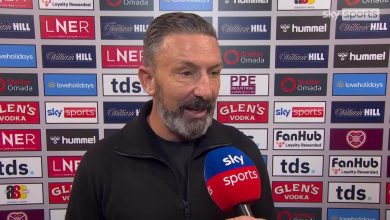
After the match, McInnes was emotional about the performance and the character of his players. He said the game lasts 90-odd minutes for a reason and that you have to keep going, and he spoke warmly about the togetherness in the squad. He described his players as a likeable group and said he preferred to like them, adding that he really loves this team.
That affection is no accident. The manager pointed to the connection between the players as the thing that matters when things get difficult, arguing that it is not just technique or ability that carries a team through those moments. He noted that Ibrox was full at the end, with supporters believing in the team, and said he believes there are goals in the side. Most importantly, he said, the players believe it.
He was also candid about the scoreline. McInnes said he would like Rangers to win games more comfortably, but that there is a resilience in the group. He had no issues with the result, thought Rangers deserved to win, and suggested the statistics would heavily favour his team.
## McGlynn’s verdict
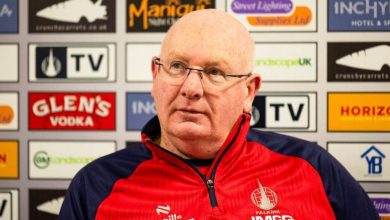
On the other side, Falkirk manager John McGlynn was gracious. He conceded that his side would have been fortunate to take anything from Ibrox, saying Rangers deserved to win. It was an honest assessment from a manager whose team had come close to stealing a point against the run of play.
For Falkirk, the disappointment will be tempered by the broader picture. Their winning streak showed that they can compete in this league, and being within minutes of a result at Ibrox is no small thing. But the way it ended, with a stoppage-time penalty, will sting.
## The VAR theme
It is impossible to discuss this match without returning to the officials. VAR shaped the afternoon more than any other factor. It created Falkirk’s lead through a penalty for a shirt pull. It took away Rangers’ equaliser for a ball that had gone out in the build-up. And it was, in a sense, the backdrop to the late drama, in a match where every decision was being scrutinised.
Rangers have a history of strong feelings about refereeing, and an afternoon like this would, in other circumstances, have prompted a combative reaction. The fact that the club won may take some of the heat out of it, but the underlying debate about how these decisions are made will not go away. The Scottish FA has already provided its explanation of the penalty, and further discussion on the VAR Review Show is likely.
For supporters, the episode is a reminder of how much the margins matter. A team can dominate a game, concede from a contested call, have a goal chalked off, and still win. That is the nature of a long season, and it is also why the title race is so tight.
Among the individual performaes, Ryan Naderi stands out. His cutback created the goal that was disallowed, and his nerve from the penalty spot won the match. He has been among the most productive attackers in the Premiership this season, and he was reported to have seven league goals earlier this month, which suggests that his contribution to the title push is growing.
Findlay Curtis deserves credit too. His finish for the disallowed goal showed composure, and he was involved in the kind of attacking moves that gave Rangers a chance to turn the game. Pandur, meanwhile, made a key stop from Ross that kept the deficit at one, and his handling in a tense second half helped the team stay in the contest.
At the other end, Murrell’s penalty extended his goal-scoring streak to eight goals in eight games, a reminder of how dangerous Falkirk can be in front of goal. They arrived at Ibrox with confidence, and the first-half lead was a product of that
Perspective matters here. Rangers top the table by two points, but the gap is thin and the leaders can change on a weekend. Celtic face Hearts on Sunday, and a win would put them back on top. The distance between first and third is small enough that every dropped point can alter the picture.
What Rangers have shown is consistency. A 15-game unbeaten run is no accident, and winning three league matches in a week, including a late rescue against a side on a winning streak, is the kind of evidence that persuades observers a team is serious. At the same time, the manager’s own comments acknowledge that the wins have not always been comfortable.
That is both a strength and a risk. Late goals and comebacks build belief, but a team that relies on them regularly can come unstuck if the late goal does not arrive. The challenge for McInnes will be to convert the dominance that was evident in the first half into earlier goals, so that the pressure of a final-minute rescue is not required.
The result also adds weight to the debates about reinforcements. Rangers have been linked with several attacking targets for January, with the manager making clear that he wants to strengthen. An afternoon like this one, in which creating chances was not the problem but finishing them was, will inform that thinking. A cutting edge, or simply more options in the final third, could make the difference in a tight race.
At the same time, the strength of the squad’s spirit is a factor in how the club approaches the window. A group that is bonding and winning games is one that managers are cautious about disrupting. McInnes’ comments about the team’s togetherness suggest that any additions will need to fit the culture as well as the formation
Rangers 2-1 Falkirk was one of those results that will be remembered more for its ending than its football. A penalty that divided opinion, a goal ruled out by a replay, a late equaliser and a winner in the 99th minute packed a season’s worth of drama into an afternoon.
For Rangers, the outcome is clear: top of the table, unbeaten in 15, and with a squad that believes it can find a goal when it needs one. For Falkirk, it is a defeat that may feel harsh but one that they can take pride from. For everyone else, it is a reminder of why the title race is so compelling this season.
The next test comes quickly, and there will be questions about whether Rangers can repeat the trick. But for now, McInnes has the result he wanted, a squad that he says he loves, and the best seat in the Premiership.